Introduction
The biggest misunderstanding that coffee drinkers have in the modern world of coffee is between a Pod and a Capsule. These terms are used interchangeably, but they are actually different systems of pressure, different mechanisms of brewing, and hardware requirements. To coffee enthusiasts who want to have a superior coffee experience, the coffee world requires one to navigate this technical divide. This is the technical gap that is the primary reason why even with the fact that capsule coffee has over 40 percent of the home consumption in 2026, the consumer mis-purchase rate is still an astounding 15 percent.
Regardless of whether you are using the Nespresso and Keurig machine or you are experimenting with the special E.S.E. pods, you should be conversant with the web of proprietary lock-ins and third-party options. This guide will assist you in locating the best coffee pods and compatible pods, and transitioning to a new system without any difficulties. We will further subdivide the three levels of brewing systems into hard-shell aluminum capsules to soft paper pods and discuss the economics of your daily habit.
Furthermore, we will discuss the science of freshness and material safety, and how the industry is being revolutionized by new packaging technologies and new sustainable materials like compostable paper. By the end of this guide, you will have the secrets of compatibility to leave trial and error behind and go directly to a more precise, cost-effective and flavor-focused daily ritual.
Coffee Pods vs. Coffee Capsules: Are They Actually the Same?
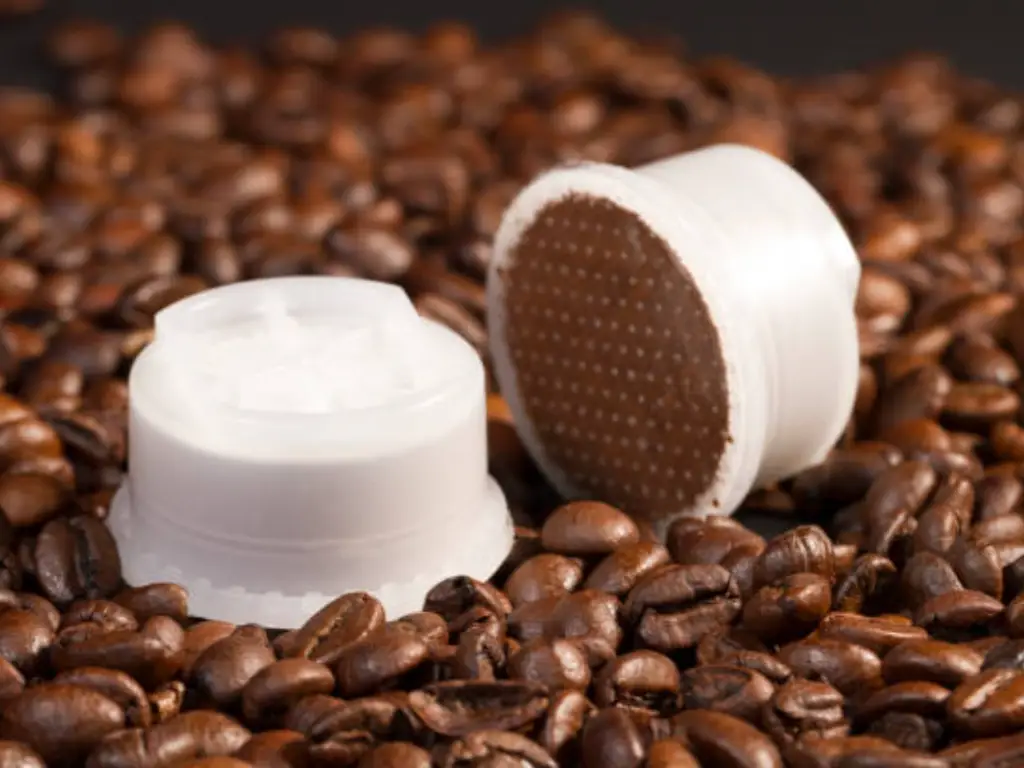
The terms pod and capsule are used interchangeably in the layman language, but they are two completely different engineering philosophies and brewing results. Hard capsules are hard, hermetically sealed, aluminum or plastic containers, which are designed to be used as high-pressure chambers. Once these shells are punctured by a machine and the process of filling coffee pods (capsules) enables water to be forced through at a pressure of up to 19 bars, it emulsifies the coffee oils to form a thick, golden crema. The outcome of this is a thick and rich espresso that has a long shelf life due to the airtight armored seal of the container.
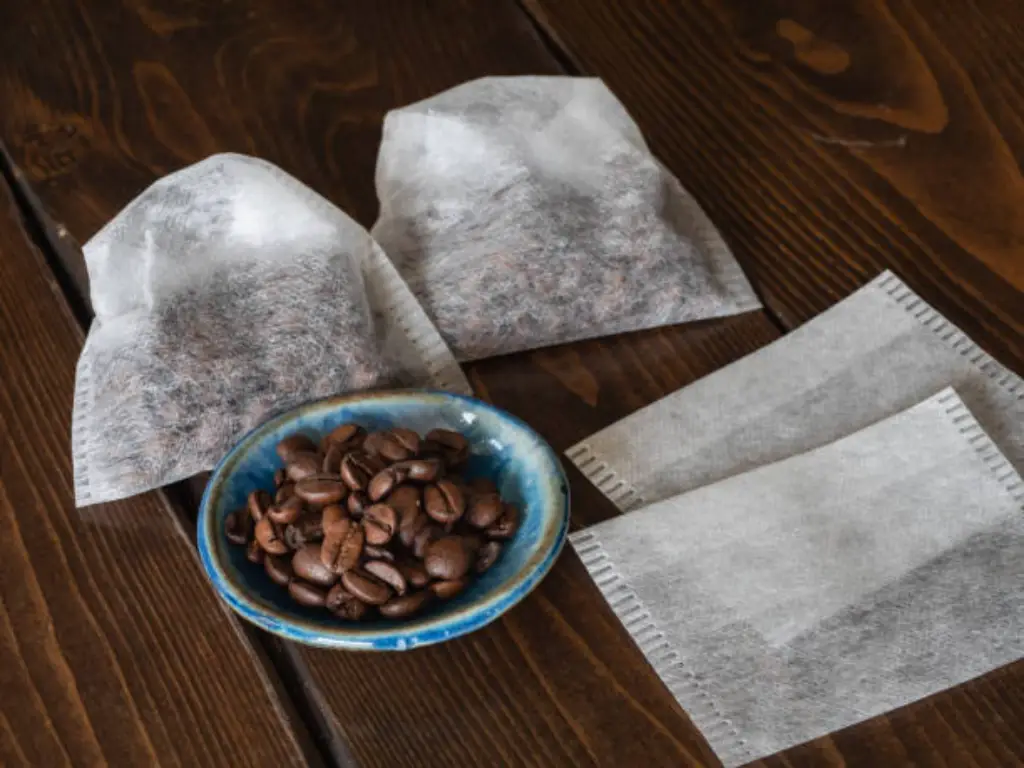
Soft pods (or pads) are porous filter paper discs, however, resembling flat, round tea bags. The size of the grind within is optimized to low-pressure systems or gravity-based systems where water flows through the coffee grounds naturally. The result is a lighter form of coffee that resembles a drip or pour-over coffee since the paper is used to filter the heavier oils and sediments. Besides the flavor profile, the primary benefit of the soft pod is its environmental footprint; the paper is typically compostable and does not require the plastic or metal casing that capsules require.
Lastly, there is the technical gap between emulsification and filtration. The capsule is the device you require in case you desire the strong taste and creamy texture of a cafe-like espresso. The soft pod would be more appropriate when you desire the transparency and greater quantity of a breakfast mixture. This disparity is also the cause of the disparity in naming between the areas: North Americans have popularized the term K-Cup to refer to the big-mug experience, but in Europe, the Dutch-inspired Pad and the Italian Capsule are often differentiated to ensure that they receive the texture and strength they are seeking.
Popular Brewing Systems and Their Matching Capsules
To manoeuvre in the market, we must subdivide these systems into Tiers based on their physical construction and logic of brewing.
Comprehensive Coffee Capsule & Pod Classification Table
System | Physical Characteristics | Third-Party Alternatives | Compatible Machines | Extraction Logic & Market Status |
Nespresso Original | Small conical shape; flat aluminum base; 3-pin puncture. | Widest Variety: Starbucks, Peet’s, L’OR, Lavazza, Illy. | Pixie, Essenza Mini, Citiz, Lattissima. | 19bar high pressure; Global industry standard; Open ecosystem since 2012. |
Nespresso Vertuo | Hemispherical, bowl-like; laser-etched barcode on rim. | Extremely Limited: Starbucks by Nespresso is the only major option. | Vertuo Next, Vertuo Pop, Vertuo Plus. | “Centrifusion” (spinning) technology; Barcode-locked “technical lock” by Nestle. |
Keurig K-Cup | Plastic “bucket” shape; internal paper filter. | Incredibly Diverse: Dunkin’, McCafé, Green Mountain, Swiss Miss. | Keurig K-Elite, K-Mini, Ninja Dual-Brew. | Low-pressure drip brewing; BrewID barcode control; North American powerhouse. |
Dolce Gusto | Bulbous, lamp-shaped; pointed funnel-like bottom. | Available: Starbucks, Nesquik, Costa Coffee. | Genio S, Piccolo, Infinissima, Lumio. | Variable pressure; Multi-beverage specialist (handles milk-powder capsules). |
Tassimo (T-Discs) | Flat, UFO-shaped; protruding barcode zone on side. | Limited: Partnerships like Costa, Cadbury, and L’OR. | Bosch Tassimo models exclusively. | INTELLIBREW precision (within 1℃); Best for temperature-sensitive tea/coffee. |
Lavazza A Modo Mio | Stout, rigid plastic; reinforced grid structure on bottom. | High-Quality: Traditional Italian roasters like Kimbo and Borbone. | Desea, Jolie, Idola. | 7.5 g heavy-bodied espresso; Replicates Italian café-style “thick” palate. |
Illy Iperespresso | Thick, transparent plastic shell; internal patented valve. | Zero: Strict patenting ensures official supply only. | Francis Francis X1, X7.1, Y3.3. | Two-stage extraction; Coffee never touches machine parts; Zero sediment. |
Caffitaly (CBTL) | “Sandwich” design; dual internal filters. | Limited: Primarily a “closed-loop” regional ecosystem. | Select Gaggia and Saeco models. | Switchable pressure: High-pressure espresso or low-pressure filter coffee. |
Delta Q / Martello | Slender and elongated geometry. | Niche: Difficult to source without dedicated importers. | Regional Portuguese/Central European machines. | Optimized for “Bica” (short, intense Portuguese espresso); Southern European focus. |
Philips Senseo (62mm) | Large, flat 62mm discs; fibrous paper; no plastic. | Endless: Douwe Egberts, Segafredo, Supermarket labels. | Philips Senseo Original, Select, Quadrante. | Non-pressurized; 100% biodegradable; The global benchmark for eco-friendly pods. |
Melitta Soft Pads | Standard 62mm shape; proprietary high-density filter paper. | Premium Substitutes: Fits any Senseo-style machine. | Any machine accepting 62mm soft pods. | Finer weave prevents sediment/sludge; Positioned as a cleaner, premium soft pad. |
Bunn / Hamilton Beach | Sturdier and thicker than Senseo; often asymmetrical edges. | Specific: Found via Baronet or Reunion Coffee. | Bunn MyCafé, Hamilton Beach Pod Brewers. | Zero-pressure extraction; B2B/Hotel focus; Watery 8oz American-style mug. |
44mm E.S.E. | Hard, symmetrical 10mm discs; small paper removal tab. | Professional Grade: Illy, Lavazza, Borbone, Lucaffé. | DeLonghi Dedica, Gaggia Classic Pro, Smeg ECF01. | Pre-tamped puck for high-pressure extraction; Universal open standard; Pro-sumer choice. |
38mm & 55mm Niche Pods | 38mm (thinner/wider); 55mm (broad/narrow). | Zero: No third-party options in grocery stores. | Boutique Italian hardware (La Piccola, Spinel). | Technical lock-in; Rare, expensive proprietary refills; Best avoided for mainstream use. |
Tier 1: Hard Shell Capsules (Aluminum and Plastic)
These are the market leaders that cannot be challenged and their packaging of the pods is of high quality. They seal out oxygen using aluminum or high-density plastic to ensure that the coffee grounds retain their fresh flavor as long as 12 months.
Nespresso Original: The Global Industry Standard
Nespresso Original concentrates on the classic espresso and is the international standard of high-pressure extraction in the industry. The capsule is described as small conical in shape with a flat base made of aluminum foil that is punctured with three pins. This system is designed to extract at high pressure of 19bar to create a thick crema and has the largest range of third-party specialty beans available. Some of the most famous compatible brands are Starbucks, Peet Coffee, L’OR, Lavazza, and Illy, and there are many boutique roasters. These capsules are compatible with the following machine series: the Pixie, Essenza Mini, Citiz, and Lattissima. This has been the most open and affordable ecosystem of espresso lovers since the core patents expired in 2012.
Nespresso Vertuo: The Barcode-Locked Centrifugal System
This system has a bowl-shaped, hemispherical capsule with a clear laser-etched barcode around the rim. It applies this barcode technology to manage extraction parameters through a digital handshake. It is also powered by the Centrifusion technology unlike its predecessor, which spins the pod at high speeds to mix coffee and water. This is a centrifugal spinning technology that is specifically designed to work with large cup volumes and creates a characteristic thick crema. Since the machine needs to read the barcode to work, the choice of third-party options is very limited, and the only significant authorized alternative is Starbucks by Nespresso. It is only compatible with Vertuo Next, Vertuo Pop, and Vertuo Plus series. This sentence is a tactical technical lock by Nestle to reclaim the consumable market.
Keurig K-Cup: The North American Powerhouse
The K-Cup looks like a big plastic cup and has a paper filter inside that is used to drip-extract. It is low-pressure brewed and therefore suited to large cup volumes and American coffee as opposed to concentrated espresso. The system is based on barcode technology to regulate the extraction parameters (so-called BrewID) to get the ideal brew of each roast. Although it provides the convenience of a large mug, it is not similar to systems that create signature thick crema through centrifugal spin technology, but rather emphasizes on clarity and variety. The ecosystem is so diverse with household brands such as Dunkin, McCafes, Green Mountain and even non coffee such as Swiss Miss cocoa. These pods are compatible with the Keurig K-Elite, K-Mini, and Ninja Dual-Brew. Following an unsuccessful effort to secure the system with 2.0 sensors, Keurig is a relatively open platform, which is the convenience standard in the US market.
Dolce Gusto: The Multi-Beverage Specialist
The bulbous, lamp-shaped plastic body and the pointed funnel-shaped bottom of this capsule make it easily recognizable. It has an internal design that enables it to have variable pressure, and that is why it can be used to prepare layered lattes or hot chocolates without a separate frother using milk-powder capsules. In addition to the official pods, there are compatible versions of Starbucks, Nesquik, and Costa Coffee. It is the main option of the households that use the Genio S, Piccolo, Infinissima, or Lumio machines. The value of the market in this case is versatility and its popularity in Europe and Asia.
Tassimo (T-Discs) Precision Brewing
These capsules are in the shape of flat discs that resemble UFOs with a barcode area sticking out on the side. This code is read by the “INTELLIBREW” sensor on the machine to change the water temperature and volume with surgical accuracy, usually within a 1C range. The third-party support is mostly associated with such large partnerships as Costa Coffee, Cadbury, and L’OR. The system only works with Bosch Tassimo models. Although it is not as open as Nespresso, it is well-known due to its capability to process sensitive to temperature tea and specialty coffee beans.
Lavazza A Modo Mio: The Bold Italian Soul
This capsule is a sturdy, stiff plastic pod with a reinforced grid design on the bottom, designed to imitate the heavy-bodied espresso of Italian cafes. This design enables it to fit about 7.5g of coffee in each pod, which is much higher than the 5g of a typical Nespresso pod. Although the blends of Lavazza are the priority, the traditional Italian roasters such as Kimbo and Borbone are also of high quality. It can be used with such machines as Desea, Jolie, and Idola. This system is a niche in the market that is considered too thin by the global standards by those who have a palate that is too fat.
Specialized and Niche Ecosystems
Although Nespresso and Keurig control the world market, there are a number of specialized systems that satisfy the local preferences and technical requirements. These closed-loop ecosystems are concentrated on high-end engineering and exclusive beans, and they offer a high-end alternative to those who are ready to go beyond the shelf of the supermarket.
Illy Iperespresso: This system is designed to suit the pure espresso enthusiasts. The capsules are characterized by a thick transparent plastic shell with an internal valve that is patented. This design allows a two-step extraction, which does not allow coffee to come into contact with the internal components of the machine, which guarantees zero sediment and an unusually silky crema. It can be used with Francis Francis X1, X7.1 and Y3.3 series. There are no third-party pods because of the strict patenting, and you are completely reliant on the official supply of Illy.
Caffitaly (CBTL): This capsule has a sandwich-shaped design and has two internal filters. This special physical design enables the system to switch between high-pressure espresso and low-pressure drip coffee using one machine. Although it can be used with some Gaggia and Saeco models, it is a rather closed ecosystem. It is perfect to people who desire a concentrated shot and a regular mug of coffee at the same machine.
Delta Q / Martello: The Delta Q capsules are very thin and long and dominate the Portuguese and Central European markets. This particular geometry is optimized to make a Bica- the traditional, short, and strong Portuguese espresso. Martello is a similar niche in Central European discount chains. These systems are of high quality dark roasts and are hard to find around the world unless an importer is specifically assigned to them.
Tier 2: Soft Paper Pods (The Tea-Bag Style)
These are tea-bag style pods that are not pressurized and are fully biodegradable, sometimes known as hard capsules. They lie between a standard drip brew and a robust espresso, producing a creamy crema coffee that produces no plastic or aluminum waste, and are frequently the coffee pods of choice among compostable coffee users.
Philips Senseo (62mm)
These pods are physically in the form of large flat circular discs measuring 62mm in diameter. They are made entirely of fibrous paper, the world standard of compostable coffee. They are made to fit the Philips Senseo line, such as the Original, Select, and Quadrante. It is an entirely open ecosystem since the fundamental patents on the 62mm shape have expired. You will have unlimited third-party options of old-established brands such as Douwe Egberts and Segafredo, and almost all large supermarkets have their own-label (e.g., Lidl or Aldi).
Melitta Soft Pads
Although they use the standard 62mm geometry to be compatible with any Senseo-style machine, they are in a premium third-party market niche. Their physical characteristic that makes them stand out is proprietary high-density filter paper. The finer weave of Melitta is a better sieve compared to generic paper pods where fine sediments can pass through the cup. This technical advantage enables them to sell at a premium in a market that is otherwise dominated by low-end products, to users who desire a cleaner, sediment-free cup without having to switch to a more expensive capsule system.
Bunn / Hamilton Beach Pods
These pods are physically stronger and tend to be thicker than European discs, and are specifically designed to fit the Bunn MyCafé and Hamilton Beach Pod Brewers. In North America, they are virtually B2B (Hospitality and Office) only. The extraction is notoriously watery since the brewing process is zero pressure. This low flavor profile environment has deterred specialty brands such as Starbucks or Peet to venture into the space. Rather, utility roasters such as Baronet or Reunion Coffee serve the market with a volume and cost-effective approach to hotel guest rooms instead of gourmet quality.
Tier 3: Compressed E.S.E. Pods (The Espresso Pucks)
These hardcore pods are pre-tamped espresso pucks, which are designed to simulate the high-pressure extraction of a professional machine without the mess of loose grounds.
44 mm E.S.E. (The Universal Standard)
The universal open standard of the coffee world is the 44mm E.S.E. (Easy Serving Espresso). These are physically hard, symmetrical disks, approximately 10mm thick, and have a small paper tab to make them easy to remove. Due to the fact that the fundamental patents on this format have since expired, it is now a completely open ecosystem with no entry barriers to third-party roasters. It is this patent-free that has seen high-quality products of the traditional Italian roasters such as Illy, Lavazza, Caffè Borbone, and Lucaffe rather than supermarket brands.
It is the standard of pro-sumer convenience in terms of market status. These pods can be used with semi-automatic machines with an E.S.E. filter basket, such as the De’Longhi Dedica (EC680/685/885), Gaggia Classic Pro, and Smeg ECF01. They are also used as the benchmark of portable espresso machines such as the Handpresso, which offers a true shot of espresso anywhere.
38 mm and 55 mm Niche Pods
Most consumer equipment cannot physically fit into these niche pods. The 38mm pod is slimmer and broader and looks like a small plug, but the 55mm one is much broader and narrower. Although they seem to be like the regular 44mm puck, they are a technical lock-in and not an open market.
Since these sizes are associated with low-volume, boutique Italian hardware like La Piccola 38mm or Spinel 55mm, there is practically no third-party competition. The absence of a mass-market audience implies that big roasters and grocery stores have no reason to create compatible alternatives. Until you have one of these particular machines, it is better to use the 44mm standard to avoid the costly and difficult process of locating proprietary refills.
SANEU: Tailored Packaging Solutions for Every Major System
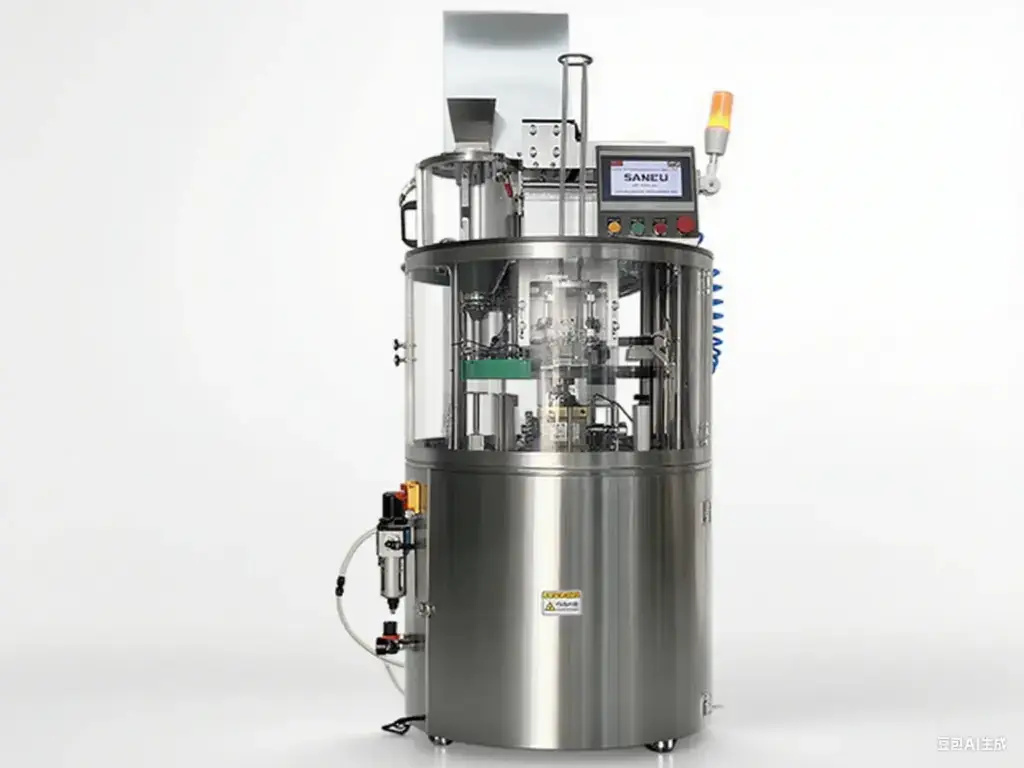
Knowing the variety of coffee pods is just the beginning and the real magic occurs when it is packaged and freshness is preserved in time. Having worked with 100+ coffee businesses and having more than 12 years of experience, SANEU has perfected the technical accuracy of each of the major systems, including Nespresso and K-Cup, Dolce Gusto and Lavazza.
Whereas conventional capsules tend to lose aroma because of the remaining oxygen, the nitrogen flushing technology of SANEU has reached an impressive 99.9 percent of nitrogen purity, compared to the 99.5 percent industry standard. This makes your coffee remain lively and fragrant in months. Each pod is packed with surgical precision, with a ±0.1g tolerance, through Schneider servo systems, to ensure uniform flavor in each brew.
Regardless of your focus on biodegradable and compostable sustainability or the world-class reliability, SANEU uses the global components of Siemens and Omron to provide hardware that is in compliance with the strict SCA and FDA requirements. With these high-quality solutions at 30 percent less than the competitors, SANEU will make sure that professional brewing is affordable and sustainable to all coffee lovers.
A Quick Way to Identify Your Machine’s Pods
When you are in front of a coffee machine and you do not have the original box or manual, the hardware is a technical roadmap. The loading style, the internal piercing mechanism, and the control interface allow you to correctly determine what “ecosystem” the machine is part of and select the best capsules to use in your morning coffee.
Vertical Drop-In Slot with a Metal Lever
In case you notice a narrow opening on the top of the machine and a strong lever that is used to close the chamber, you must select Nespresso Original (Hard Shell Aluminum) capsules. Such machines are designed to be used in high-pressure extraction at 19bar. The slit is made to fit the rigid conical shape of aluminum or high density plastic pods, which are required to resist the high water force without breaking. Since the fundamental patents are out of date, this arrangement provides the most freedom to utilize third-party brands such as Starbucks or L’OR.
Top-Loading “Clamshell” Lid and Deep Chamber
The presence of a hinged lid that opens to show a deep and round chamber signifies that the machine needs Keurig K-Cups (Plastic Buckets) or 62mm Soft Paper Pods. This hardware uses low pressure, gravity-fed brewing logic to manage the high volume of coffee grounds required to fill an 8oz to 12oz American-style mug. You can further distinguish by examining the center: a sharp central needle will mark a K-Cup system, and a flat mesh plate will mark the necessity of tea-bag style paper pods.
Removable Capsule Drawer or Sliding Tray
In case the machine asks you to insert a plastic tray in and out to load the coffee, you should choose Dolce Gusto (Lamp-shaped) or Lavazza A Modo Mio pods. This is a physical characteristic of multi-beverage systems that are versatile in nature. The tray gives the required space to larger capsules which usually hold milk powder or chocolate and the machine can make layered lattes and specialty beverages without an additional frother.
Integrated Optical Sensors or Scanning Rings
The machine is an intelligent one with a glass lens or a glowing light around the rim of the capsule, which needs Nespresso Vertuo (Hemispherical) or T-Discs (Barcode Discs). Such systems do not use manual buttons to program the amount of water to be dispensed, but rather a digital handshake is needed to scan the barcode printed on the rim of the pod. The scanner informs the machine of the speed at which to rotate the pod or the temperature to apply, which forms a technical lock that cannot allow generic, non-barcode capsules to work.
Removable Portafilter (Professional Espresso Handle)
A semi-automatic hybrid with a heavy metal handle that you screw in is a machine that is best used with 44mm E.S.E. Pods (Hard Paper Pucks). They are physically differentiated by being firm and compressed, i.e. pre-tamped espresso pucks that are meant to replicate the process of professional-level extraction. Since the machine uses a high pressure pump like those used in cafes, the paper should be tough and symmetrical to resist the pressure. This is the best option among environmentally conscious users who want to have a real, sediment-free espresso shot.
Learning about Roast Levels, Intensity, and Flavor Profiles
The best way to know how a capsule will taste before you brew it is by understanding the roast levels. Although intensity scales (1-13) are mistakenly used interchangeably with caffeine content, they are in fact a measure of roast depth, body and bitterness.
Light Roasts Emphasize Acidity and Delicate Aromas
Light roasts (also known as Blonde) are usually of intensity 1-4 and retain the original properties of the coffee bean. These capsules create a tea-like clarity with bright citrus, berry and flower notes. These pods are best eaten black since the profile is so delicate and any addition of milk will obscure the flavors and leave a bitter taste.
Although they have a mild flavor, lightly roasted beans contain more caffeine than dark ones. A light roast is the best option in case you need a high-caffeine kick to get your day going but do not want a heavy, bitter flavor.
Medium Roasts Offer a Balanced and Versatile Profile
Medium roasts fall in the range of intensity 5 to 8 and are the most popular to drink on a daily basis. They are the sweet spot where acidity starts to dissolve into formed sugars, creating smooth flavors of milk chocolate, toasted nuts, and caramel. This balance suits them perfectly to both normal espressos and longer 110ml Lungos.
Oat milk is the best match with medium roasts in case you are a vegetarian who does not consume dairy. The cereal sweetness of the oats is natural and does not overpower the nutty undertones of the coffee like the darker roasts.
Dark Roasts Provide Bold Intensity and Heavy Body
Dark roasts take the highest position in the scale with intensities between 9 and 13. The roasting process is the center stage at this level, producing a syrupy and heavy bodied cup with smoky, spicy and dark chocolate aromas. They are the only capsules that are strong enough to slice through the creaminess of milk in lattes or cappuccinos.
Do not be tempted to make a dark espresso pod twice to fill a large mug. This gives off bitter, dry tastes of the over-extracted grounds. To make a large, bold cup, two individual capsules are much better or one can simply buy Mug sized dark roast pods.
Aluminum vs. Plastic vs. Compostable Paper: Which Preserves Flavor Best?
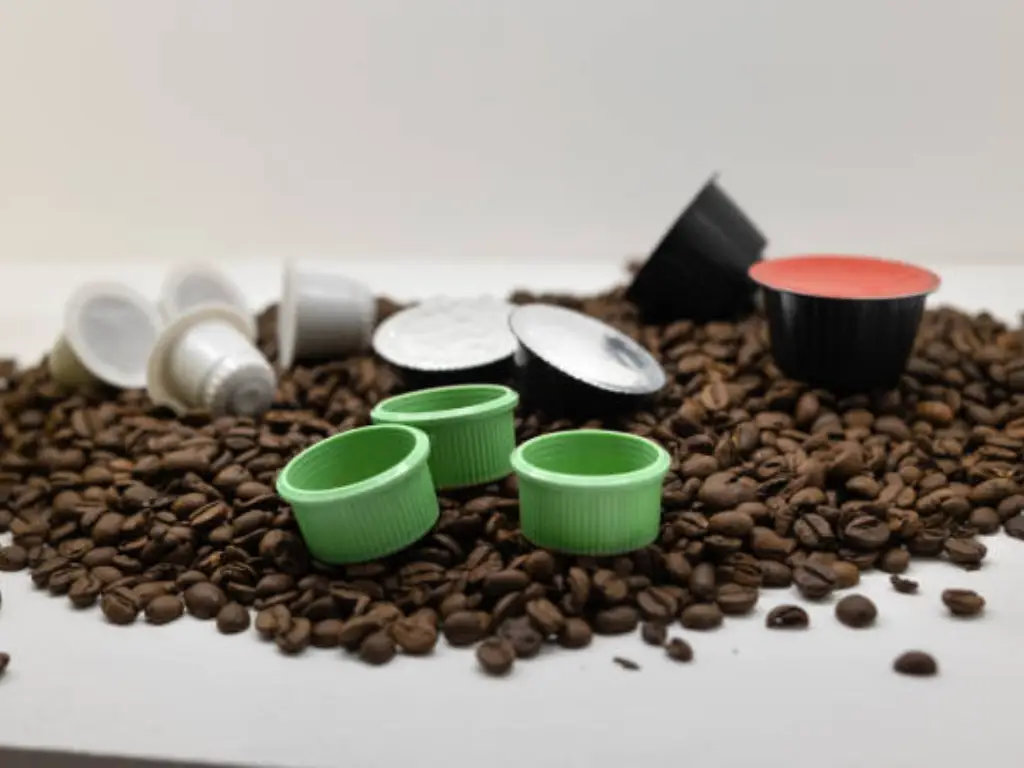
The most significant aspect of a coffee capsule in terms of preserving the flavor and compatibility with a machine is the material. The classification of capsules according to their construction will help you to better comprehend why some pods remain fresh in a year and others lose their aroma in weeks.
Aluminum: Aluminum is the gold standard of high-end systems as it is 100% oxygen-proof, light-proof and moisture-proof. This forms a hermetic seal that preserves coffee grounds up to 12textmonths. In addition to freshness, the material is hard enough to be pierced with surgical precision, which guarantees a steady flow of water and a thick crema.
Plastic: The majority of low-cost pods and multi-beverage systems are constructed of high-density plastic. Plastic is porous in nature, although it is cheaper to manufacture. In the absence of an extra foil over wrap, oxygen gradually leaks in with time and the optimum shelf life is approximately 6months.
Compostable paper: Paper pods, such as 62mm soft pads and 44mm E.S.E. pucks, are the choice of environmentally-conscious drinkers. But paper does not provide any protection against the elements and coffee starts to oxidize as soon as the outer bag is opened.
As the quality of the material you use will eventually determine the maximum freshness of each cup, Saneu offers the accuracy of packaging solutions that will help you perfect the art of the perfect seal.
How SANEU Technology Preserves Peak Freshness?
It is the process of engineering that links a factory and a fresh cup. SANEU machines have a high-precision Nitrogen Flushing system in the filling cycle to prevent oxidation, which is the primary cause of flavor loss. This is achieved by substituting the reactive oxygen with non-reactive nitrogen to freeze the sensory profile of the coffee with time.
Our advanced technology achieves a high level of nitrogen in the capsule of 99.9 percent as compared to the standard industry level of 94 percent. We basically capture the volatile aromatics and the delicate essential oils of the coffee by lowering the remaining oxygen to less than 1 percent. Not only does this high concentration significantly increase the shelf life of the product, but it also makes the rich and intense aroma that is released when the beans are pierced as vivid as the time the beans were ground.
The Truth About Eco-Friendly and Compostable Pods
The green coffee movement can be rather confusing, and one should distinguish between Home Compostable and Industrial Compostable certifications. Home-ready pods are the most accessible and are designed to break down in a standard backyard bin at room temperature. They are typically composed of paper or starch-based polymers which can be naturally degraded within a few months.
On the other hand, Industrial Compostable pods require special facilities that maintain the level of heat at a high level of 60C C to begin the process of breaking down. The backstage secret is that without these special municipal programs, these capsules are not always of any real environmental value. In a typical landfill, oxygen is absent and this causes anaerobic conditions that cannot support decomposition. Even the most advanced compostable materials can require decades to break down in such conditions, and they behave like traditional plastic. These greener alternatives do not necessarily fulfill their sustainable promise unless you happen to have a local facility that takes coffee pods in particular.
Future Trends: Connected Coffee Machines and Smart Pods
The most significant shift in consumption is the introduction of functional, or Nootropic Pods. These capsules go a step further to include coffee with other components like L-Theanine or Lion Mushroom in the process of roasting. These are specifically formulated to enhance mental capabilities and sustained concentration, which in effect eliminates the jitters that are normally associated with regular espresso.
Smart Inventory Management has also added some intelligence to the hardware besides the beans. The new machines are equipped with internal sensors to check the amount of capsules you are left with in real time. Once you have a low stock, the machine will order a replenishment to your favorite roaster using your home Wi-Fi. This will ensure that your supply chain is as smooth as the brewing process itself.
Finally, the new generation of hardware has Connected Extraction Technology that can work with your smart home ecosystem. These machines can determine the precise resistance of the coffee puck in a pod, allowing the AI-controlled pump to adjust pressure and temperature parameters throughout the process. The machine is also linked to smartphone applications and it gets to know your taste profile and customizes each brew to create a precision-grade output that is as good as the manual, professional-level extraction.
The Economics: Pods, Capsules or Ground Coffee?
When calculating the value of convenience in the premium, it is necessary to start with the Cost Per Brew (CPB). A bag of specialty ground coffee is very expensive, 15 dollars, but it yields approximately 30 cups, which translates to 0.50 CPB. In comparison, the cost per day can nearly triple when original manufacturer capsules are used.
The comparison of different forms of a two-cup-a-day habit is the following to visualize the long-term effect:
Coffee Source | Avg. Cost Per Brew (CPB) | Annual Cost (2 cups/day) |
Reusable Pods (DIY Fill) | $0.15 | $110 |
Specialty Ground Coffee | $0.50 | $365 |
Third-Party Capsules | $0.45 – $0.75 | $328 – $547 |
Original Brand Capsules | $0.85 – $1.35 | $620 – $985 |
The choice of original capsules is essentially a subscription to a luxury ecosystem where you pay an additional fee to guarantee consistency and branding. Third-party capsules by boutique roasters can be as good as original quality, and can save you hundreds of dollars per year when you want the sweet spot in the market. Reusable pods are the cheapest in CPB, however, they require the manual labor of grinding and cleaning, which is not the most cost-effective to the most budget-conscious users.
Besides the raw numbers, there is one more economic advantage of capsules which is not so evident at first sight: waste reduction. Unlike the traditional drip machines that tend to empty half-full carafes, pods provide on-demand production. The wasted coffee and time saved in cleaning the capsule format to most people justifies the higher CPB of the capsule format.
Pro Hacks to Improve Your Capsule Coffee Taste
These small technical adjustments can assist you in bridging the gap between an ordinary brew and a cup of professional quality to get the most out of your capsule machine.
The Pre-Brew Blank Shot: Before your first brew, brew a cycle of hot water without a capsule. This preheats the internal delivery pipes and the brewing chamber and removes the thermal shock that results in sour, under-extracted coffee.
Single-Use Integrity: Do not use the same pod. Besides the extraction of bitter tannins and woody flavors, over-pressure on the grounds can lead to the extraction of unwanted heavy metals and minerals that are not extracted during a normal brew.
Optimization of Filtered Water: Coffee is 98 percent water, and whatever is in your tap water is the carrier of flavor. Filtered water provides the ideal proportion of minerals to highlight complex aromatics, and hard water can mask subtle aromas with a chalky finish.
The Crema Incorporation: Stir your coffee a little and gently and then take your first cup. The crema layer is beautiful but it is a concentration of bitter CO2 and oils. This layer is stirred back into the body to create a balanced and homogenous flavor profile.
Conclusion
Coffee pods and capsules represent an interface between gastronomy and high-tech engineering. Even though the list of systems can be overwhelming, you can be in control of your daily ritual by understanding the physical requirements of your machine and coffee preservation science.
You are a customer and want to discover the best CPB, or you are a producer and want to scale production with the high-precision filling technology of SANEU, the goal is the same: the ideal, effortless cup of coffee that will taste exactly as the roaster wanted it to taste.
FAQS
Q: What are the 12 types of coffee?
A: The 12 most popular coffee beverages are Espresso, Americano, Latte, Cappuccino, Flat White, Macchiato, Mocha, Cortado, Affogato, Cold Brew, Red Eye, and Irish Coffee. Each of them varies in the ratio of espresso to milk, water or other flavors.
Q: Can all coffee capsules be used in all machines?
A: No. Coffee capsules are proprietary systems (Nespresso, Keurig, or Dolce Gusto) and cannot be used interchangeably. Each system is unique in shape, size and extraction and thus a Nespresso capsule cannot physically fit or operate in a Keurig or Lavazza machine.
Q: What are the 5 most popular coffees?
A: The 5 most popular coffee beverages in the world are Espresso (the base of most other coffee drinks), Cappuccino, Caffe Latte, Americano and Flat White. These are the top coffee shop menu and the most purchased capsule flavors in 2026.
Q: Are K-Cups different with K-Cup pods?
A: K-Cup is technically the hard plastic capsule with an internal filter and Coffee Pods are usually flat soft paper discs. However, Keurig has repackaged its capsules in K-Cup Pods, which is confusing. In order to be compatible, you always have to look whether your machine requires a hard shell (K-Cup) or a soft paper pod.