What actually makes coffee packaging the "best"? Ask a consumer, and they'll describe a bag that keeps beans fresh and looks great on their counter. Ask a roastery owner packaging 200 kilograms a day by hand, and they'll give you an entirely different answer — one measured in labor hours, fill accuracy, and production bottlenecks.
The truth is, the best coffee packaging isn't any single material or design. It's the packaging solution that aligns with your product, your production scale, your brand values, and your budget. This guide covers all four dimensions — from the materials that protect your beans to the machines that fill your bags — so you can make decisions that work for your roastery, not someone else's.
What Are the Main Types of Coffee Packaging?
Coffee packaging isn't one thing. It spans primary packaging (the material touching your beans), secondary packaging (retail boxes and sleeves), and tertiary packaging (shipping cartons). For most roasters, the primary packaging decision is where the stakes are highest — it's what preserves freshness, carries your brand, and determines how efficiently you can scale.
Here's a quick-reference map of the five most common coffee packaging formats:
| Format | Typical Product | Freshness Mechanism | Best For Scale | Key Limitation |
|---|---|---|---|---|
| Multi-layer laminate pouch (foil + PE + paper) | Whole bean & ground coffee retail bags | One-way degassing valve + aluminum foil light barrier | Small-batch to large-scale | Not recyclable (mixed materials) |
| Capsules/pods (K-Cup/Nespresso/Dolce Gusto) | Single-serve coffee pods | Nitrogen flushing + hermetic seal | Medium to large-scale | Higher equipment investment required |
| Metal cans & aluminum bottles | Premium whole bean, RTD cold brew | Airtight seal + full light barrier | Medium to large-scale | Heavy shipping weight, higher unit cost |
| Paperboard box + inner foil bag | Drip coffee bags, capsule multipacks | Inner bag barrier + outer structural box | Small to medium-scale | Outer box = structural only, no barrier function |
| Stand-up pouch with gusset | Specialty coffee retail | Degassing valve + resealable zipper | Manual to semi-automated | Lower shelf rigidity compared to flat-bottom bags |
Each of these formats has its place. But what separates adequate packaging from truly great packaging? That depends on which side of the supply chain you're asking.
What Defines the Best Coffee Packaging? 5 Non-Negotiable Quality Factors
"Best" is a loaded word in coffee packaging. For a consumer, it means freshness and shelf appeal. For a roaster, it means cost per unit and fill speed. For a production manager, it means yield rates and machine uptime.
The coffee packaging that actually works in the real world satisfies all three perspectives — not just the prettiest one. Here's what that looks like across the dimensions that matter most.
Freshness Preservation: The Non-Negotiable Baseline
Before you think about design, before you calculate costs, and before you scale — the packaging has to keep the coffee fresh. If it fails at this, nothing else matters.
Roasted coffee faces four enemies from the moment it exits the cooling tray:
Oxygen is the primary driver of staling. It oxidizes coffee oils, producing rancid flavors within days if the barrier is insufficient. Research published by the Specialty Coffee Association (SCA) found that reducing oxygen content to just 0.5% in a coffee container can extend shelf life by up to 20 times (SCA 25 Magazine, 2026). For most specialty roasters, the practical target is residual oxygen below 3% inside the sealed package. This is achievable with nitrogen flushing on automated packaging lines. For smaller operations, working quickly and sealing immediately after filling can get close.
Moisture is the second threat. Coffee beans are hygroscopic — they absorb ambient humidity, and when water activity (aW) climbs above 0.5, staling accelerates and mold risk appears. A packaging film with moisture vapor transmission rate (MVTR) below 0.5 g/m²/day is the industry benchmark for multi-month shelf stability.
Light — specifically UV wavelengths between 200–400nm — triggers photo-oxidation of coffee's lipid fraction. This is why transparent or windowed bags, while visually appealing, systematically underperform opaque formats in shelf-life testing. Aluminum foil or metalized film remains the only reliable full-spectrum light barrier for coffee packaging. Any reduction in barrier here directly shortens the window of peak flavor.
CO₂ buildup is the paradox of coffee packaging: freshly roasted beans release 3–5 mL of gas per gram in the first 24 hours. Without a release mechanism, bags swell and risk bursting. This is where the one-way degassing valve — opening at roughly 2–5 millibars of internal pressure — becomes essential for any coffee that won't be consumed within days of packaging. It lets CO₂ out without letting oxygen in. It's simple physics, but skipping it is one of the most common packaging mistakes made by new roasters.
Quick freshness checklist: Residual O₂ < 3% ✓ MVTR < 0.5 g/m²/day ✓ Full-spectrum UV barrier (foil or metalized film) ✓ One-way degassing valve (unless sold within 72 hours of roast) ✓
Cost Efficiency: The Factor Nobody Talks About in Design Blogs
Browse the top ten results for "best coffee packaging," and you'll find endless design inspiration. You won't find a single article that breaks down what packaging actually costs to produce at scale — yet for any roastery owner, this is where the real "best" decision lives.
Packaging cost isn't just the price of the bag. The full equation is:
Total packaging cost = material cost per unit + labor or machine cost per unit + waste/scrap rate + inventory carrying cost
The structure of this equation shifts dramatically depending on how you fill those bags:
Manual packaging (hand scooping + heat sealer): Labor dominates — roughly 60–70% of per-bag cost. A single person can seal 2–5 bags per minute. At U.S. labor rates ($15–22/hour for production staff), a roastery manually packaging 200 kg per day is spending $25,000–40,000 annually on packaging labor alone. Fill accuracy is also the weakest link here — manual scooping typically drifts ±2–5 grams per bag without systematic calibration, which quietly adds up to hundreds of kilograms of "free coffee" given away each year.
Semi-automated packaging (auger or combination weigher + conveyor sealer): The balance shifts. Machine cost amortizes over production volume, and labor becomes supervision rather than direct filling. Speed jumps to 15–30 bags per minute. Fill accuracy tightens to ±0.5–1.0 gram.
Fully automated packaging (multi-head weigher + form-fill-seal or rotary filling line): Equipment depreciation becomes the dominant fixed cost, but per-unit variable cost drops to its lowest level. Speed reaches 40–120 bags per minute with fill accuracy of ±0.1–0.3 grams. At this tier, the "hidden savings" from precision alone — giving away 1 gram less per bag across 500,000 bags per year equals 500 kg of coffee saved — often covers the machine payment.
Labor = 60–70% of cost
Best for < 50 kg/day
Balanced labor + machine cost
Best for 50–300 kg/day
Machine = primary cost
Best for > 300 kg/day
The takeaway: "best" packaging, from a cost perspective, isn't about finding the cheapest bag — it's about matching your fill method to your volume. A $0.12 bag filled on a $50,000 machine with 0.1g accuracy can be cheaper per unit than a $0.08 bag filled by hand with 3g of giveaway per unit. The math changes at every scale, and the roasters who understand this are the ones who stay profitable as they grow.
Shelf Impact & Consumer Experience
Consumers don't read spec sheets. They scan shelves — and they do it fast. Eye-tracking research consistently shows that shoppers make initial packaging engagement decisions within 3–5 seconds of visual contact (Tobii Packaging Research, 2020). In that window, three things happen, often subconsciously:
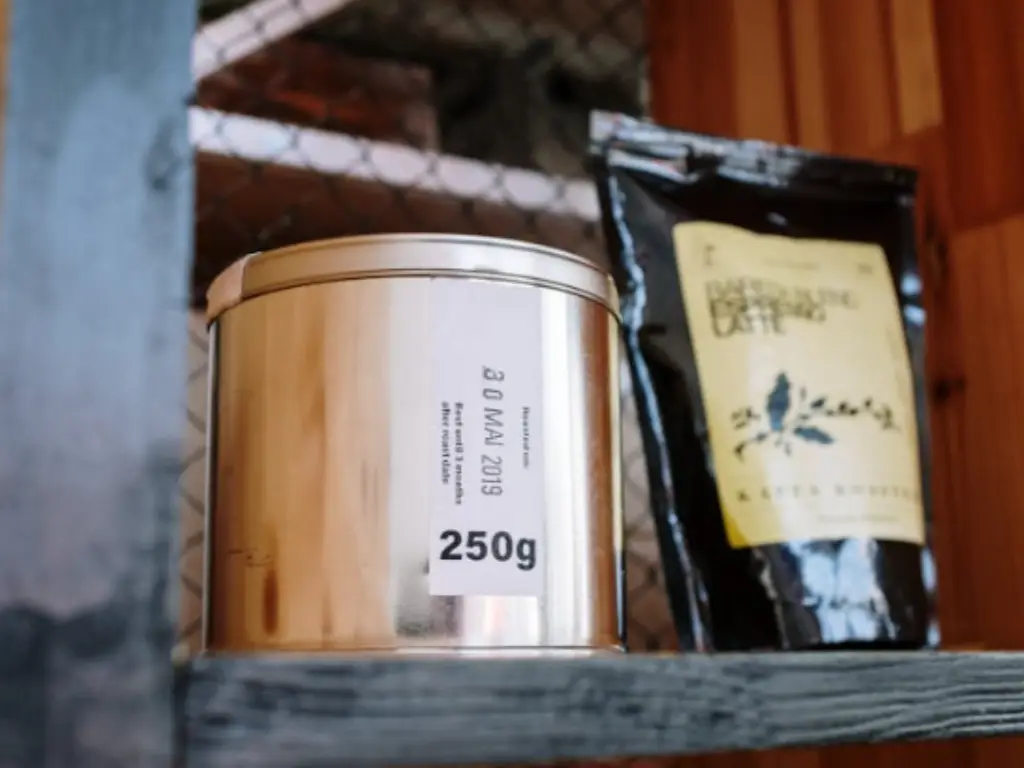
Visual pop. Your bag competes against 20+ other coffees on the same shelf. Color contrast, distinctive silhouette (flat-bottom bags stand upright; pillow bags slump), and surface finish (matte, metallic, or soft-touch) create the first filter. Among recent award-winning designs, a clear pattern has emerged: the strongest performers use one bold visual anchor — a holographic film (Couplet Coffee), an unusual structural format (BIGFACE Coffee's geometrically impossible box), or a narrative-driven concept (Ember Goods' matchbox-style outer box containing a fire starter made from recycled grounds).
Tactile confirmation. Once picked up, the bag's material feel and structural rigidity communicate quality before the customer reads a single word. A gusseted flat-bottom bag that stands confidently on a counter sends a different signal than a flimsy pillow pouch.
Usability. Does it reseal cleanly? Does it pour without mess? A resealable zipper rated for 50+ open-close cycles and a tear notch that actually works are small details that determine whether a customer buys your coffee twice. These features cost fractions of a cent per bag and return multiples in repeat purchase behavior.
How Packaging Design Communicates Your Coffee's Story
Design is where most "best coffee packaging" articles start and end. It's important — but it's only one chapter of the story. Here's what's actually shaping coffee packaging design in 2026:
The minimalist-maximalist split. The market has bifurcated. On one side, clean typography, unbleached kraft paper, and restrained color palettes signal "serious coffee." On the other, maximalist illustrations — Kloo Coffee's "caffeine-buzz squiggle," hand-drawn origin maps, full-coverage patterns — signal personality and approachability. Both work. What doesn't work is the middle ground: a generic brown bag with a logo in the center. That's invisible on any shelf.
Sustainability as a design language. Some of the most visually compelling packaging today doesn't try to hide its sustainable materials — it makes them the aesthetic. Uncoated kraft paper with soy-based ink, minimal print coverage, and visible fiber texture communicate environmental values more authentically than a green leaf icon on a glossy laminate.
QR codes and digital layers. A growing number of roasters embed QR codes on packaging that link to origin stories, brewing guides, or producer interviews. This turns a static bag into a content portal — and for roasters selling direct-to-consumer, it's one of the highest-ROI design additions available.
Structure as storytelling. The most talked-about coffee packaging designs of the past two years — Verve's Dwell Dripper box that transforms into a display stand, Ember Goods' matchbox-inspired outer package — use structural design, not just graphics, to tell the brand's story. These formats are more expensive to produce, but the earned media and brand differentiation they generate can justify the investment for the right brand positioning.
Here's the part that design articles rarely mention: every one of these design decisions ultimately has to be executed on a production line. That beautiful matte finish needs a film that runs smoothly through your heat sealer. That custom die-cut window requires precision registration on the filling machine. The best packaging design in the world is worthless if you can't produce it consistently at the volume your business needs. This is where the conversation shifts from "what looks good" to "what actually works" — and it's the dimension that separates roasters who stay small from those who scale.
Is Sustainable Coffee Packaging Actually Possible? The Real Trade-Offs
Sustainability is the most talked-about topic in coffee packaging — and the one with the widest gap between marketing claims and operational reality. The question isn't whether sustainable packaging exists (it does). The question is whether it can meet your specific requirements for freshness, cost, machine compatibility, and shelf life.
Sustainable Materials: What Actually Works for Coffee?
Four material pathways currently dominate the sustainable coffee packaging conversation, and each involves genuine trade-offs:
| Material Pathway | Barrier Performance (OTR) | Recyclability | Coffee Shelf Life Viability | Best For |
|---|---|---|---|---|
| Mono-material PE (single-polymer) | ∼1–5 cc/m²/day (10–50× weaker than foil laminate) | Fully recyclable in PE streams | 3–6 months (adequate for most specialty) | Roasters prioritizing recyclability over maximum shelf life |
| PLA/compostable bioplastic | ∼5–20 cc/m²/day (poor barrier) | Industrial compost only (EN 13432/ASTM D6400) | 1–3 months (short shelf life only) | Limited-edition or subscription-model roasts |
| Paper + PLA/POA blend with certified coating | ∼3–15 cc/m²/day (moderate barrier) | Industrial compost | 2–4 months | Brands wanting plastic-free shelf presence |
| Recyclable foil laminate (thin-gauge aluminum + mono-polymer sealant) | < 0.1 cc/m²/day (excellent barrier) | Depends on local recycling infrastructure for laminates | 6–12+ months | Large roasters unwilling to compromise on freshness |
The reality check: mono-material PE is the most pragmatic path for the majority of specialty roasters right now. It's recyclable in standard PE waste streams, costs are coming down as production scales, and the 3–6 month shelf life window covers most specialty coffee's realistic distribution timeline. The trade-off is lower barrier performance — which means if your coffee sits on a supermarket shelf for 9 months, mono-PE won't cut it.
PLA and paper-based compostables carry stronger environmental messaging, but the operational constraints are real. PLA's heat-seal window is narrow — roughly 130–160°C versus 110–180°C for conventional LDPE — which means your filling equipment needs tighter temperature control. And both EN 13432 (European) and ASTM D6400 (North American) compostability certifications require industrial composting facilities operating at 55–60°C (ASTM D6400 Standard, 2026). These materials will not break down in a backyard compost pile or a landfill — a distinction that matters for brands making consumer-facing sustainability claims.
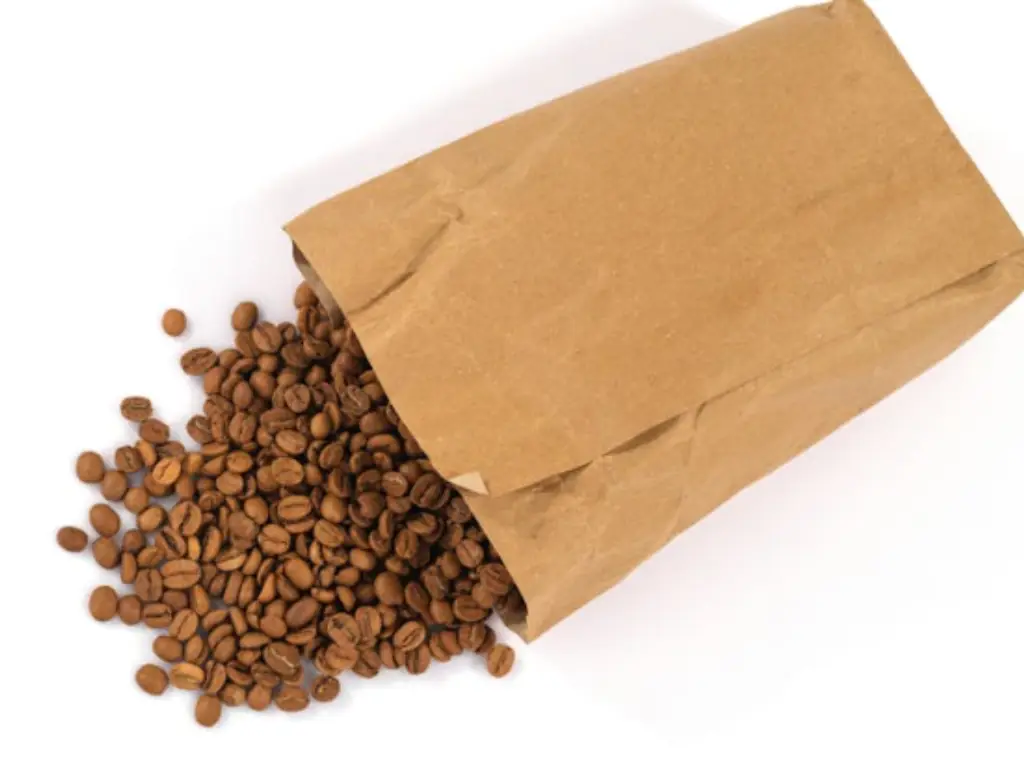
Certifications That Matter (and Those That Don't)
Not all green labels on coffee packaging carry equal weight. Here's a quick field guide:
Certifications with real teeth:
- Rainforest Alliance Certified — Requires compliance with 100+ sustainability criteria across farming practices, biodiversity, and worker welfare. Annual third-party audits. The seal on your packaging signals verified farm-level sustainability, not just material claims.
- USDA Organic / EU Organic — Certifies the coffee inside, not the packaging itself. Only valid on-pack if the contents are certified. This is the most common certification misuse: brands implying the packaging is "organic" when organic certification applies exclusively to agricultural products.
- Fairtrade International — Verifies minimum price guarantees and labor standards for producers. Relevant to packaging only insofar as it communicates your sourcing values.
- OK Compost (TÜV Austria) / BPI Compostable — These are the only two certification marks that reliably verify industrial compostability per EN 13432 or ASTM D6400. If your packaging claims compostability without one of these logos, treat the claim with skepticism.
Labels to be wary of: Self-declared "eco-friendly" or "green" labels with no certifying body, "biodegradable" claims without a specified time frame and environment (biodegradable in what conditions? over what period?), and "natural" as a standalone descriptor — it has no legal definition in packaging.
Important: USDA Organic and Fairtrade certify the coffee — not the packaging material. If your bag claims "organic packaging," it's almost certainly misleading unless the bag material itself holds a separate organic certification, which is exceptionally rare.
The Overlooked Link: Can Your Machine Run Sustainable Materials?
Here's the dimension that 99% of sustainable packaging articles miss entirely — and it's the one that matters most when you're standing next to a filling machine at 7 AM with a new roll of eco-friendly film that won't seal properly.
Every packaging material has a set of physical properties that determine how it behaves on automated equipment. When you switch from conventional laminated film to a sustainable alternative, three things change immediately:
Heat-seal behavior. PLA seals within a 130–160°C window — roughly 30°C narrower than LDPE. If your machine's temperature controller drifts by ±8°C (common on entry-level equipment), you'll oscillate between weak seals and melted film. Machines with PID temperature control accurate to ±5°C or better are effectively a prerequisite for consistent PLA sealing.
Film friction and traction. Paper-based composite films have a coefficient of friction roughly double that of plastic films (0.4–0.6 versus 0.2–0.3). This means your machine's film traction rollers need roughly 30–50% more grip force to maintain consistent web tension — and tension inconsistency is the #1 cause of misaligned seals and wrinkled bags on sustainable materials.
Gas barrier and nitrogen retention. This is the hardest problem. Paper-based and mono-PE films transmit oxygen 10–100 times faster than aluminum foil laminates. If your packaging line relies on nitrogen flushing to hit a residual oxygen target below 3%, switching to a lower-barrier film may require increasing nitrogen flow rates, extending flush duration, or accepting a shorter shelf-life claim.
The bottom line: sustainable packaging isn't just a material decision. It's an equipment decision. The machines that run conventional films flawlessly may struggle with sustainable alternatives — and the machines that handle both smoothly are the ones with the precision engineering to adapt.
For roasters navigating this transition, working with equipment manufacturers that offer broad multi-material compatibility can eliminate the trial-and-error cycle. SANEU, for example, engineers its filling and sealing machines with PID temperature control accurate to ±5°C — tight enough for PLA's narrow heat-seal window — and adjustable traction systems that accommodate the higher friction coefficients of paper-based films. The machines are built on Siemens and Schneider core electrical components, which keeps the price roughly 30% below European equivalents at the same component specification, while still maintaining compatibility across K-Cup, Nespresso, and stand-up pouch formats from a single engineering team. (Explore SANEU's multi-format packaging equipment.)
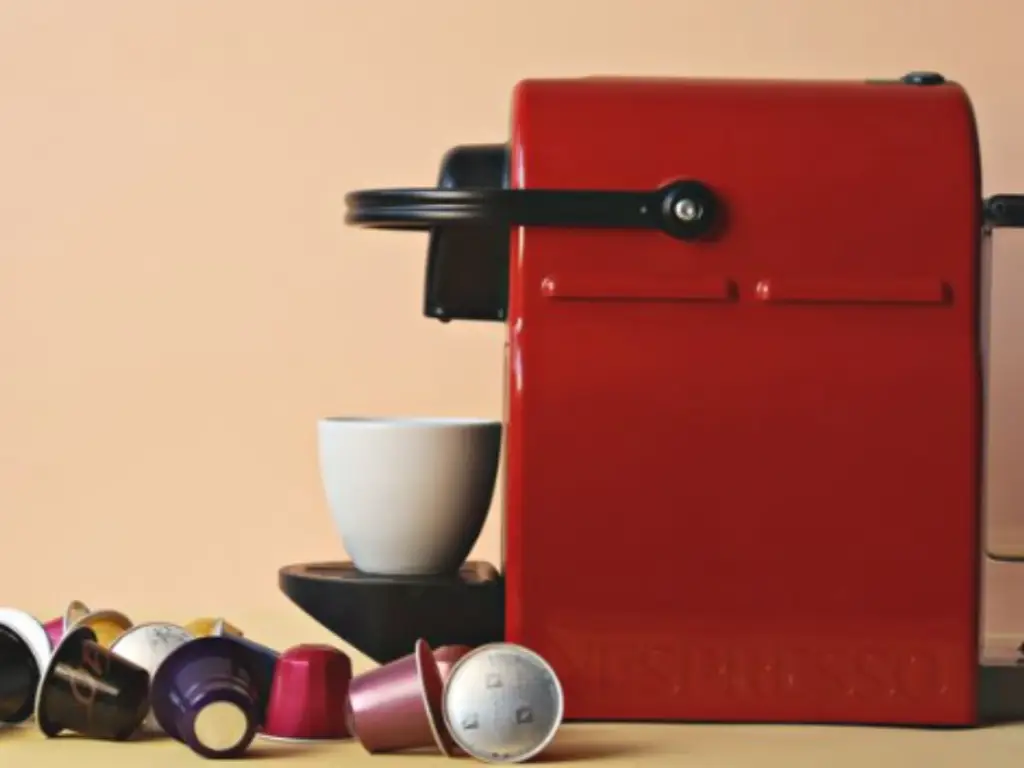
Scaling Up: When Should Coffee Roasters Move from Manual to Automated Packaging?
So far, this guide has covered materials, design, and sustainability — the topics every "best coffee packaging" article includes. What follows is the dimension that none of them cover: the production reality of getting coffee into those packages at scale.
This is the moment when packaging stops being a creative decision and becomes an operational one. And for most growing roasters, it's the moment when "best packaging" starts meaning "the packaging I can produce consistently, affordably, and fast enough to keep up with orders."
The Production Scale Spectrum: Where Are You Now?
Most roasters don't think about packaging automation until they feel it — physically. The back pain from leaning over a heat sealer for four hours straight. The Sunday evening dread of Monday's packaging shift. The orders you couldn't ship on time because two people called in sick.
Here's how to self-diagnose where you are on the automation spectrum:
Manual stage (< 50 kg/day). You're scooping beans onto a scale, pouring into bags, and sealing with a handheld heat sealer or impulse sealer. It works. It's cheap. The problems are gradual — inconsistent fill weights, variable seal quality, and labor that doesn't scale linearly. Your signal to move up: you've started saying "packaging day" with the same tone people use for "dentist appointment."
Semi-automated stage (50–300 kg/day). You've added a semi-automatic weigh-filler or auger filler fed by a hopper, with bags moving along a conveyor through a band sealer. One operator oversees the line instead of doing every step manually. Your signal to move up: packaging is no longer a bottleneck, but you're hitting the ceiling on speed — and the machine's fill accuracy limitations are costing you real money in product giveaway.
Fully automated stage (> 300 kg/day). A multi-head combination weigher feeds a vertical form-fill-seal (VFFS) machine or a rotary pre-made pouch filler, with integrated nitrogen flushing, sealing, and labeling — all running 40–120 bags per minute with one or two operators. Your signal you're here: packaging capacity, not roasting capacity, is your business's growth constraint.
| Stage | Throughput (bags/min) | Labor per shift | Fill Accuracy | Signal to Upgrade |
|---|---|---|---|---|
| Manual | 2–5 | 1–3 people | ±2–5g | "I dread packaging day" |
| Semi-Automated | 15–30 | 1 operator | ±0.5–1.0g | Fill accuracy costing you real money |
| Fully Automated | 40–120 | 1–2 operators | ±0.1–0.3g | Packaging is your growth bottleneck |
Types of Coffee Packaging Machines: What's Actually Out There?
If you're new to packaging equipment, the landscape can feel overwhelming. Here's a straightforward taxonomy:
| Equipment Type | What It Does | Best For | Speed Range | Investment Range (USD) |
|---|---|---|---|---|
| Semi-automatic weigh-filler | Auger or combination weigher fills pre-made bags at a station | Roasters moving off manual, 50–150 kg/day | 15–30 bags/min | $5,000–20,000 |
| Automatic weigh-fill line | Multi-head weigher + bag placer + filler + sealer integrated | Mid-size roasters, 150–500 kg/day | 40–80 bags/min | $30,000–120,000 |
| Vertical form-fill-seal (VFFS) | Forms bags from roll stock, fills, and seals in one continuous motion | High-volume bagged coffee, powders, granules | 40–120 bags/min | $25,000–100,000 |
| Capsule filling & sealing | Fills and seals K-Cup, Nespresso, Dolce Gusto, Lavazza pods | Pod co-packers and brands launching pod lines | 30–300 capsules/min | $8,000–80,000 |
| Band/impulse heat sealer | Heated belt or jaw seals pre-filled bags | Manual to semi-auto transition, all scales | 5–15 bags/min (manual feed) | $200–2,000 |
One reality worth knowing upfront: most equipment suppliers specialize in one or two machine types. The company that builds excellent VFFS machines rarely also builds capsule fillers. The company known for weigh-fillers probably doesn't do can seamers. If your roastery produces both bagged whole bean and K-Cup pods — a common combination for growing roasters — you may end up managing relationships with two or three different equipment vendors, each with different service terms, spare parts lead times, and technical support quality. The few manufacturers that offer genuinely broad, multi-format equipment lines — covering bags, pods, stick packs, and cans from a single engineering team — are worth seeking out, because the operational simplicity of one support contact and one spare parts pipeline compounds as you scale.
The ROI of Automation: When Does a Machine Pay for Itself?
Every packaging machine purchase is fundamentally an ROI decision disguised as an equipment decision. Here's the framework:
Payback period (months) = Total equipment cost ÷ (Monthly labor savings + Monthly waste reduction + Monthly incremental profit from added capacity)
Let's run the numbers for two realistic scenarios:
Scenario A — Small roaster moving to semi-automatic:
- Current: 80 kg/day, 2 people × 3 hours of packaging daily, $18/hr each = ~$2,800/month in packaging labor
- Target equipment: Semi-automatic weigh-filler + band sealer, ~$8,000
- Post-automation: 1 person × 1.5 hours daily = ~$900/month in packaging labor
- Monthly savings: ~$1,900 in labor alone
- Payback: 4–5 months. Add in the 1–2 grams per bag you stop giving away (roughly 15–30 kg/month at this volume = $150–400/month depending on green coffee cost), and the payback shrinks closer to 3–4 months.
Scenario B — Mid-size roaster moving to full automation:
- Current: 300 kg/day, semi-automatic line with 2 operators, packaging running 5–6 hours/day
- Target equipment: Automatic weigh-fill line with nitrogen flushing, ~$50,000
- Labor savings: Reduce from 2 operators × 6 hours to 1 operator × 4 hours: ~$2,500/month
- Giveaway savings: ±2g → ±0.2g accuracy × 300 kg/day = roughly 5–8 kg/day saved = $50–120/day = $1,200–2,800/month
- Scrap reduction: Manual error rate 3–5% → automated < 0.5%: ~$300–600/month
- Payback: 10–14 months. After that, the machine is printing money.
The hidden return is harder to quantify but often more significant: automation buys back your time. Every hour your team spends hand-scooping and hand-sealing is an hour they could spend roasting, cupping, selling, or developing new products. You don't buy a packaging machine because you can't afford the labor. You buy it because you can't afford to keep your best people tied up on a task a machine can do more accurately.
A Practical Framework for Choosing Your Coffee Packaging Setup
By now, one thing should be clear: "best coffee packaging" has no universal answer. It has an answer for your situation. Here's the five-step decision sequence to find it:
Step 1: Define your product form. Whole bean? Ground? Single-serve pods? Cold brew cans? Your product dictates the packaging format, and the format dictates everything downstream — from material requirements to equipment selection.
Step 2: Know your daily volume. Not your best month. Not your ambition. Your actual daily output in kilograms. This number alone determines whether manual, semi-automated, or fully automated packaging makes financial sense.
Step 3: Clarify your brand position. Are you a supermarket brand competing on shelf visibility? A DTC subscription roaster competing on unboxing experience? A wholesale roaster competing on consistency and price? Your market position determines your packaging's design investment, material grade, and finish quality.
Step 4: Choose your sustainability lane. Are you a pragmatist (mono-material PE, recyclable in existing streams) or a pioneer (PLA/paper compostables, pushing the envelope on barrier innovation)? Be honest about which one matches your brand and your operational reality — there's no wrong answer, only mismatched execution.
Step 5: Calculate your budget against your ROI tolerance. Equipment financing exists. The question isn't "can I afford the machine?" — it's "how long until the machine pays for itself, and am I comfortable with that timeline?"
The roasters who get packaging right aren't the ones who spend the most. They're the ones who match every layer of the decision — material, design, sustainability, and equipment — to their actual operation, not an Instagram version of it. The packaging that works is the packaging that protects your coffee, communicates your values, and fits your production reality. Everything else is just a pretty bag.
With over 100 coffee company partners across 30 countries, SANEU offers free packaging solution consultations — reach out to discuss your setup.