With continued consumer demand for single-serve coffee, K-Cup coffee has emerged as a solution that offers great taste and the potential for large-scale production.
For coffee capsule manufacturers looking to expand their business, entering the K-Cup market is no longer just an option—it is a strategic move to align with market trends.
With a high-performance K-Cup filling machine, you can transform freshly roasted coffee beans or ground coffee into standardized, long-lasting products. From precise filling to nitrogen preservation and airtight sealing, advanced equipment plays a crucial role in ensuring product quality and maintaining brand reputation.
This article will provide an in-depth look at how K-Cup filling machines benefit the coffee industry and help your coffee business stand out in a highly competitive market.
How Keurig Coffee Machines Changed the Coffee Industry?
The emergence of Keurig marked a turning point in the coffee industry; it not only changed the way people drink coffee but also completely reshaped the business model of the coffee supply chain.
Before Keurig, home coffee was primarily brewed in large pots using drip coffee makers. Then, Keurig introduced the K-Cup concept, addressing three major pain points: speed, waste, and consistency.
With K-Cups, people can enjoy a cup of coffee in just a few dozen seconds, without waiting for water to boil or for the drip cycle to complete; they can brew just one cup at a time, avoiding the waste of pouring out leftover cold coffee; and with the push of a button, they get the same flavor every time, significantly lowering the technical barrier to brewing coffee.
Keurig doesn’t rely on machine sales for its main revenue; its core profits come from K-Cup pods. This model locks in long-term consumer purchasing behavior, transforming coffee from a “bulk commodity” into a highly branded packaged consumer product. By licensing brands like Starbucks and Dunkin’ to produce K-Cups, Keurig has built a vast ecosystem.
Initially, Keurig targeted the office environment, replacing the communal coffee pot that was always burning and allowing employees to choose from different flavors based on their personal preferences.
Subsequently, this convenience extended to home kitchens, completely transforming people’s breakfast habits—drinking coffee is no longer a ritual that requires preparation, but simply an action completed in an instant.
Keurig’s distribution platform enables a wide variety of niche flavors—such as caramel, hazelnut, and seasonal limited editions—to reach consumers’ coffee cups at very low cost.
In the past, you might have been reluctant to buy an entire bag of Blue Mountain coffee beans, but you’d definitely be willing to try a single capsule.
However, the emergence of K-Cups also brought environmental concerns; the billions of non-biodegradable plastic capsules produced each year sparked significant environmental controversy. This forced Keurig and the entire capsule coffee industry—including Nespresso—to invest heavily in researching recyclable and biodegradable packaging materials, driving a green transformation across the entire packaging industry.
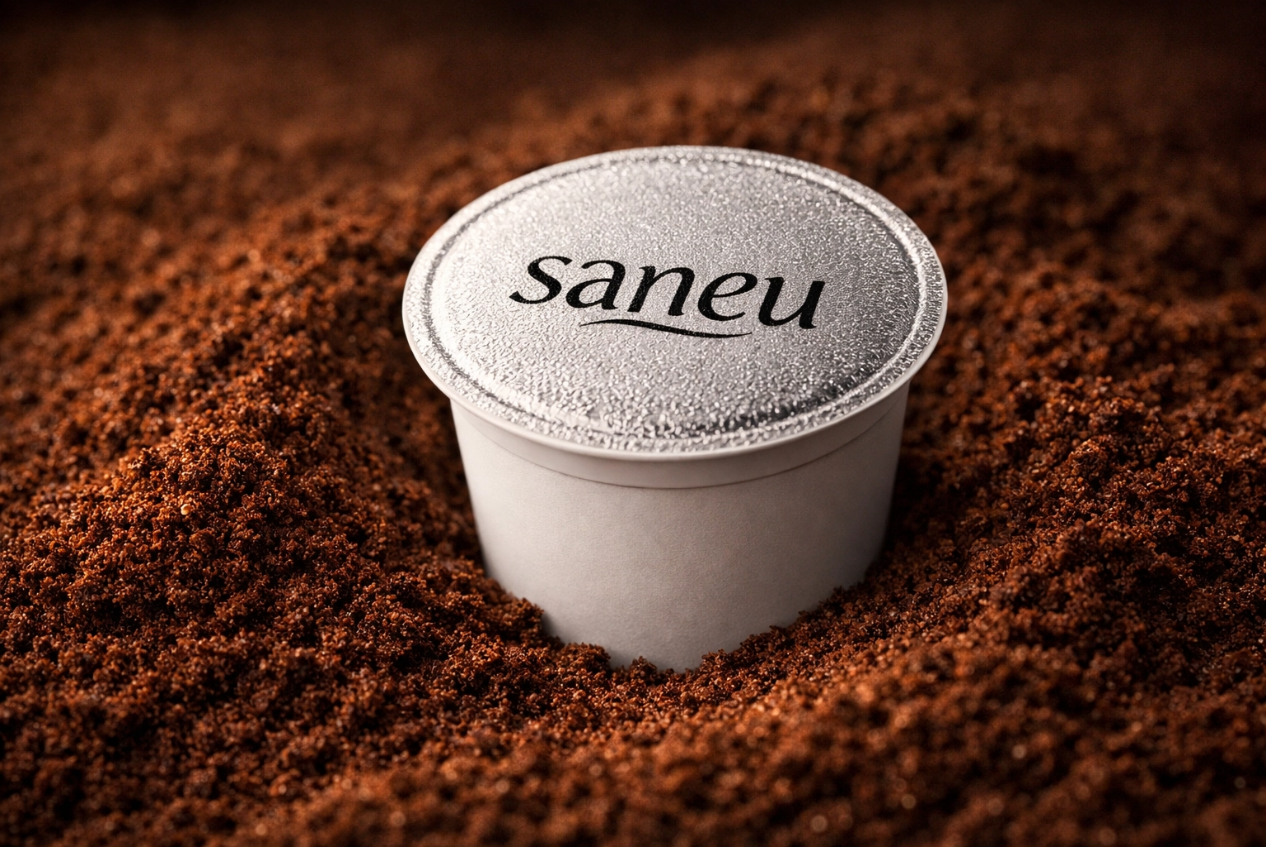
K-Cup Market Innovation: How Small Coffee Brands Can Capture Market Share
Keurig’s patents expired back in 2012, removing technological barriers and leading to a flood of competitors and an ever-expanding variety of products—even brands like Nespresso have entered the fray. On the bright side, this competition could actually help expand the capsule coffee market.
On the other hand, due to the pandemic, people have grown accustomed to brewing coffee at home, and K-Cups meet this need perfectly.
However, today’s consumers are no longer satisfied with simply “having something to drink”; they are now seeking more advanced equipment, more unique flavors, and eco-friendly packaging.
These stringent packaging requirements have also prompted K-Cup coffee capsule filling machine manufacturers to increase R&D investments, developing packaging equipment compatible with biodegradable materials while ensuring higher filling precision—all to meet brands’ dual pursuit of quality and environmental sustainability.
2026 is an optimal time for small-scale coffee roasters and independent coffee shops to enter the K-Cup coffee capsule market.
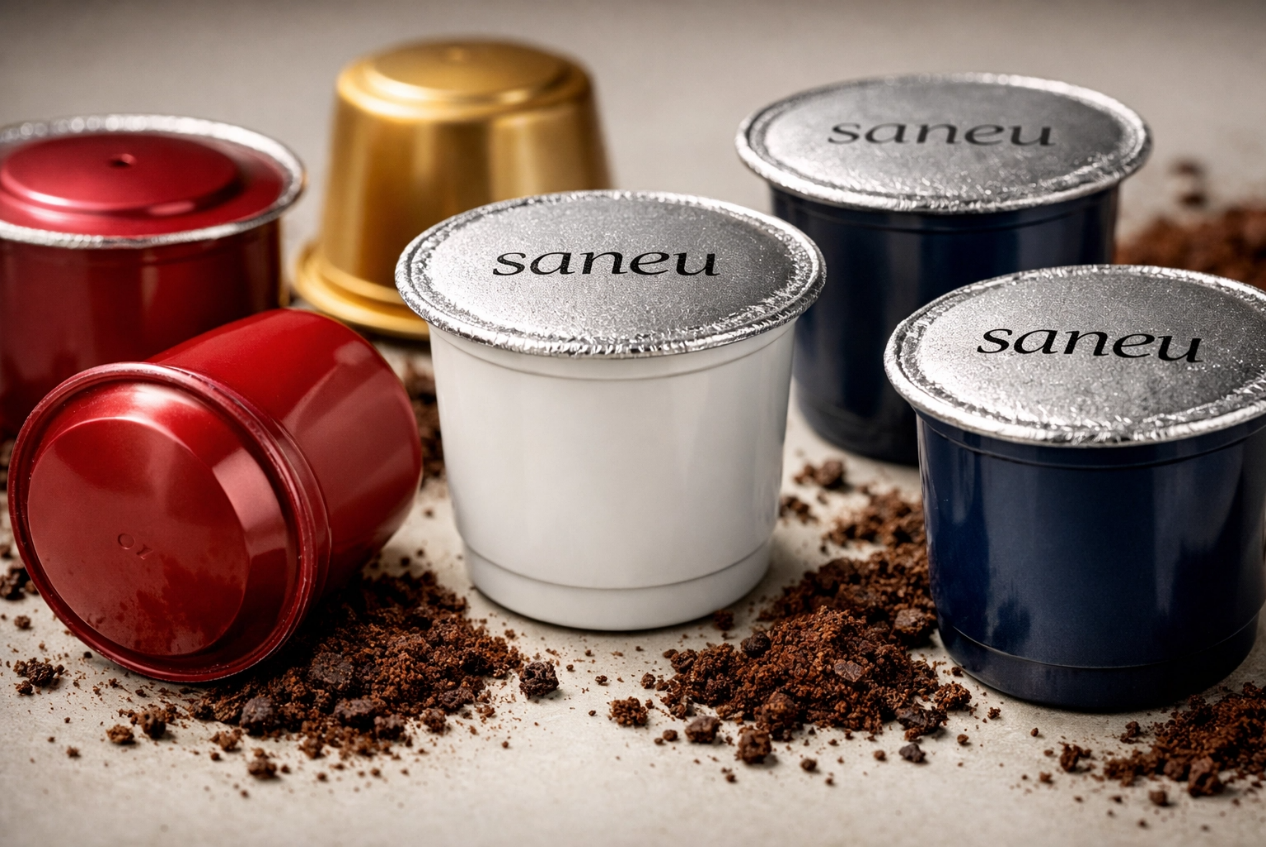
Are K-Cup Filling Machines Meeting the Growing Single-Serve Coffee Demand?
K-Cup filling machines not only meet growing market demand but also inject new vitality into the market through technological innovation. Currently, K-Cup filling equipment has evolved from large-scale industrial production to intelligent systems that balance high efficiency, versatility, and flexibility.
Flexible Production Capacity
For major brands, modern filling machines can produce 200 to 1,000 capsules per minute. This ensures a stable supply during peak sales periods. For roasters, manufacturers have also developed entry-level automatic filling machines capable of producing 15 to 50 coffee capsules per minute, lowering the barrier to entry and enabling smaller brands to enter the market at a lower cost.
Freshness Preservation and Weighing
K-Cup filling machine manufacturers like SANEU understand that today’s consumers seek not only convenience but also superior taste. Therefore, they enhance the coffee’s flavor through nitrogen flushing and precise weighing.
SANEU’s filling machines can reduce residual oxygen levels in coffee capsules to below 1%, maximizing capsule shelf life. To ensure consistent weight per capsule, the machines are also equipped with high-precision servo motors.
The Challenge of Eco-Friendly Packaging
Traditional plastic capsules are easy to process, but modern machines must be capable of handling biodegradable materials, which impose stricter requirements on sealing temperature and pressure. SANEU’s K-Cup filling machine employs a smarter PID temperature control system to ensure a tight seal.
Production Automation
Driven by rising global labor costs and the pandemic’s impact, K-Cup filling machines have become increasingly sophisticated. From cup placement, filling, tamping, and sealing to final cartoning, fully automated production processes reduce manual contact, enhance hygiene standards, and boost production efficiency.
Advancements in filling machine technology have become a secret weapon for small roasters to compete with giants like Starbucks. Without these more flexible and precise machines, small coffee shops would struggle to transform specialty beans into standardized K-Cup products.
Types of K-Cup Filling Machines
K-cup filling machines are generally divided into two types: turntable/rotary and linear. Of these, turntable machines are considered small-scale equipment, while linear machines are large-scale equipment.
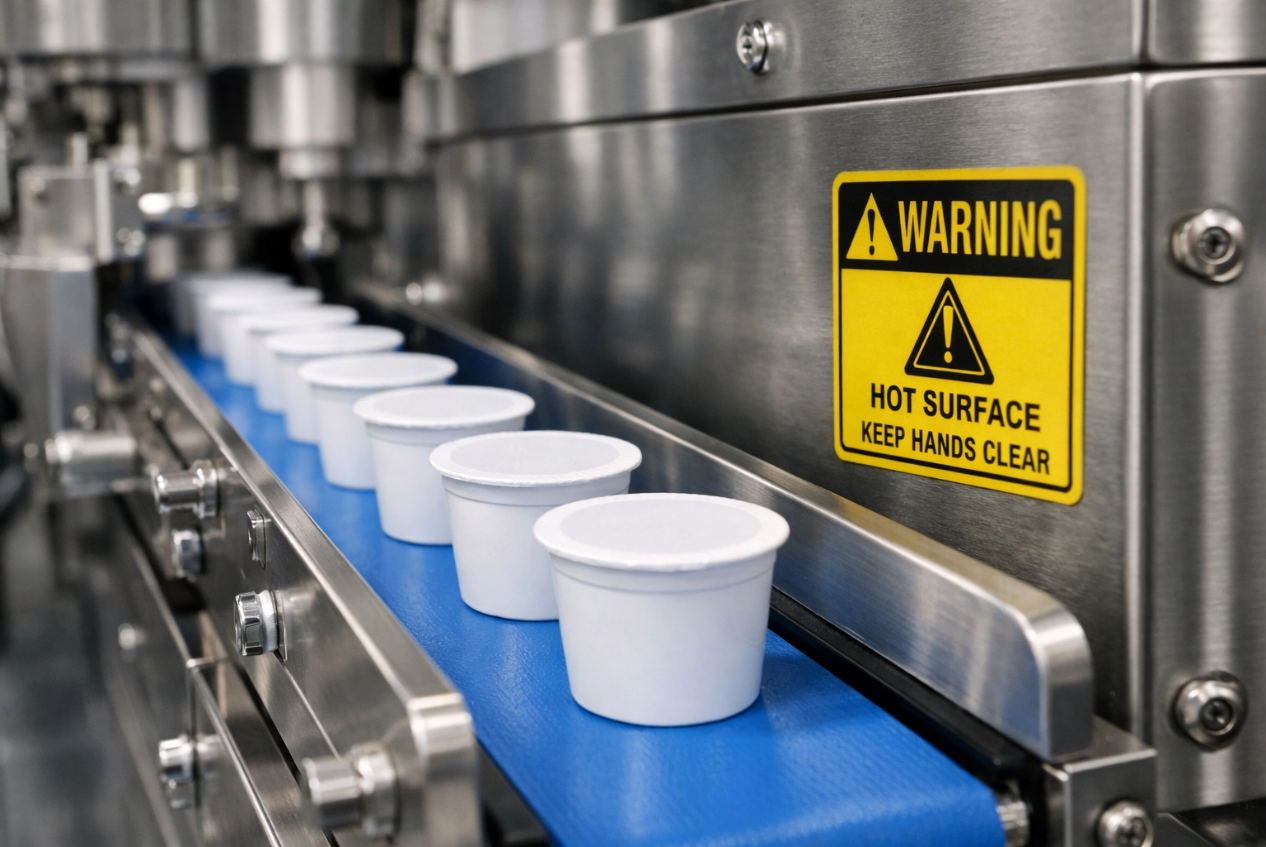
Coffee cups are placed on a continuously rotating platform that moves them from one station to the next, similar to an assembly line.
The cups undergo different processes at each station: First station: Filling (pouring coffee or beverage into the cup); Second station: Sealing (attaching the lid or sealing the film); Third station: Ejecting the finished product (ejecting the finished coffee cup). It can produce approximately 1,200 to 12,000 cups per hour, or even more. This production capacity range covers both entry-level and high-end rotary filling machines.
Because this rotary coffee machine can complete multiple production steps continuously and quickly, it offers very high production efficiency and is suitable for mass production. If you have limited space and your business is just starting out, this machine is a relatively economical choice.
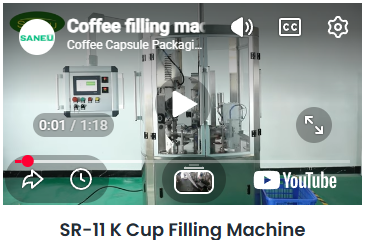
Here, K-Cup coffee capsules are filled and sealed along a linear production line, rather than moving in a circular path as on a rotary production line.
The specific process is as follows: First, the coffee grounds are precisely measured to ensure consistent weight in each capsule; then, the coffee grounds are filled into the capsules; next, the capsules move along a straight line and are sealed during this movement.
Hourly output ranges from 1,500 to 7,000 cups. While the capacity of a single production line is slightly lower than that of a rotary filling machine, the system allows for unlimited line expansion, making it particularly suitable for large-scale production projects.
Currently, both rotary and linear filling machines have achieved full automation. For example, SANEU’s K-Cup filling machine has achieved full automation throughout the entire process, from the arrival of empty cups to the packaging of finished products. It even features a nitrogen flushing system that removes oxygen from the cups and replaces it with nitrogen—a key feature for extending the shelf life of K-Cups.
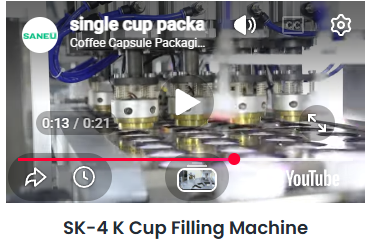
5 Essential Features of K-Cup Filling Machines
A basic K-Cup filling machine should feature a precise filling mechanism, reliable sealing technology, a flexible production line, and exceptional production efficiency.
In addition, to extend the shelf life of coffee capsules, you may need a filling machine with a nitrogen-flushing function, a feature that has become increasingly standard in recent years.
Precision Filling
For coffee capsules, the amount of coffee grounds directly affects the taste; too much or too little can result in coffee that is too bitter or too sweet, compromising quality consistency.
Therefore, a high-quality K-Cup coffee filling and sealing machine must be equipped with a highly precise filling system to ensure the weight of dispensed coffee grounds remains consistent every time, thereby guaranteeing consistent coffee quality.
Today, high-performance K-Cup filling machines, such as SANEU’s SR-11 K-Cup Filling Machine, achieve a ±0.1g filling accuracy, ensuring that the weight of coffee grounds in each cup is virtually identical.
Nitrogen Flushing
Another factor affecting taste is shelf life.
Nitrogen flushing technology replaces the air inside the cup with nitrogen before sealing, thereby removing oxygen. If the oxygen concentration is too high, the coffee grounds in the K-Cup will undergo oxidation, which not only makes the coffee bitter but also causes aroma loss, thereby shortening the shelf life.
Currently, one brand has taken this to the extreme—SANEU. Take the brand’s SN-1 K-Cup filling machine as an example: this machine can virtually eliminate all oxygen, filling the cup almost entirely with nitrogen, with a purity of up to 99.9%!
This means the coffee grounds taste closer to how they would right after grinding.
Superior Sealing Technology
A high-quality K-Cup filling machine must be able to seal the cups extremely tightly and securely, leaving absolutely no gaps. If the seal is not tight, it can lead to issues such as air or liquid leakage, thereby compromising the quality of the coffee.
Automation and Integration
Automation refers to the machine’s ability to independently complete an entire production cycle, including automatic cup loading, filling, nitrogen flushing, sealing, and cup discharge. The entire process requires no manual intervention—only machine supervision.
For clients with flexible business needs, integration is also a key consideration, as it directly impacts future scalability.
Production Capacity
To meet your order requirements, the K-Cup filling machine must produce a sufficient quantity per unit of time.
Higher production capacity means greater output per unit of time, allowing for more efficient allocation of labor and equipment costs.
For example, a small coffee capsule production facility must produce at least 3,000 cups per hour.
Optional Modules
Vision Inspection System
In-line Weighing / Checkweighing Module
Multi-Material Compatibility Module
Quick Changeover System
Automatic Feeding / Storage System
Anti-static / Dust-proof System
Automatic Discharge / Sorting / Conveying System
Saneu: Your Trusted Expert in K-Cup Filling Machines
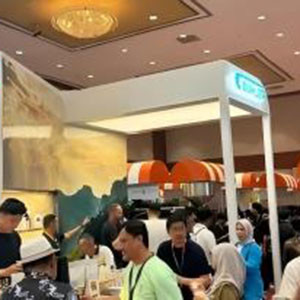
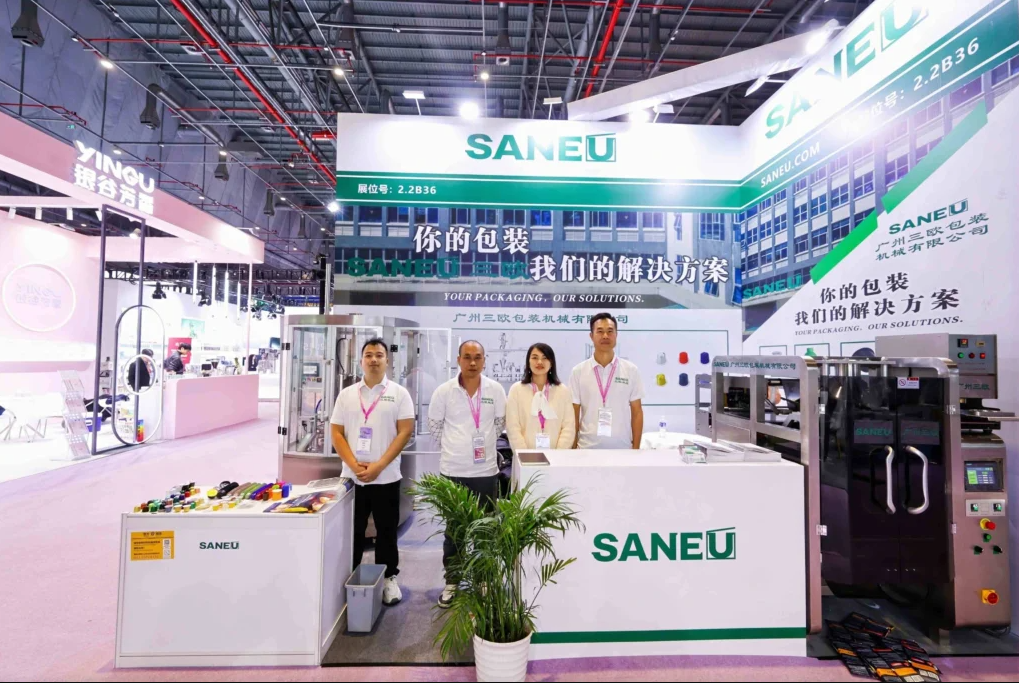
SANEU is a professional manufacturer of K-Cup filling machines based in Guangzhou, China. Founded in 2013, the company has extensive experience in overseas marketing and a track record of successful projects. They have exhibited at Gulfood in Dubai and Hotelex in Shanghai, and the brand maintains a high level of visibility.
For K-Cups, the biggest concern is that coffee grounds lose their flavor due to oxidation. SANEU’s core competitive advantage lies in its nitrogen flushing technology, which can control residual oxygen levels inside the cup to below 1.5% (meaning nitrogen content is over 98.5%) and can even reach 99.9%. This ensures that the produced coffee capsules have a longer shelf life.
Additionally, SANEU’s product line is thoughtfully designed to meet needs at every stage. They offer the entry-level SR-11, the versatile SN-1, and even industrial-grade models like the SK-2 and SK-4. If you only require basic filter welding or nitrogen sealing, they also offer modular machines tailored to these needs.
If your production line is flexible—for example, if you also produce tea powder, cocoa powder, or even sauces—you can switch production lines simply by changing the molds.
More importantly, SANEU offers a 2-year warranty, reflecting their confidence in the 304 stainless steel frame and internal drive mechanisms.
Key Tips to Consider Before Investing in a K-Cup Filling Machine
As mentioned earlier, a high-quality K-Cup filling machine should offer high precision, excellent sealing performance, and superior freshness retention.
Therefore, when selecting a reliable K-Cup filling machine manufacturer, you should first evaluate them based on these three fundamental criteria and assess the future costs of mold replacement in advance—particularly whether compatible replacement parts can be sourced quickly in the event of component failure.
Take the SANEU K-Cup filling machine, for example. It uses Schneider Electric servo systems and Siemens PLCs, so you can find replacement parts at your local electrical supply store, further reducing downtime.
In addition, you may also want to consider the following points:
1. Nitrogen Flushing Rate and Residual Oxygen Control
Residual Oxygen Specification: High-end filling machines must be equipped with an efficient nitrogen-flushing system to ensure residual oxygen levels remain below 1% after sealing.
Nitrogen Flushing Range: Determine whether the machine can continuously flush with nitrogen throughout the entire process—from cup placement to filling to sealing—or only during the sealing step. Continuous nitrogen flushing significantly extends the product’s shelf life.
2. Filling Weight Tolerance Control
Servo Motor Drive: Models with servo-driven screw feeders are preferred.
Error Range: High-quality equipment should be able to control the per-cup error within ±0.1g–0.2g. If each cup is overfilled by 0.5g, the resulting raw material waste from producing 1 million cups would be staggering.
3. Ease of Mold Change
Quick Mold Change: Assess how long it takes to switch between molds of different specifications; tool-free assembly and disassembly designs can significantly reduce downtime.
Material Compatibility: Can the machine handle plastic, biodegradable, and aluminum foil cups simultaneously? Different materials have completely different requirements for sealing temperature and pressure.
4. Reject Rate and Intelligent Inspection Systems
No Cup, No Filling/Sealing: This is a basic feature that prevents coffee grounds from spilling onto the conveyor belt and causing contamination.
Visual Inspection and Weight-Based Rejection: Determine whether the equipment can be equipped with optional in-line weighing and visual inspection functions to automatically reject defective products with misaligned seals or insufficient weight, ensuring 100% product compliance before shipment.
5. Hygienic Design and Ease of Cleaning
Material Standards: All components in contact with coffee grounds must be made of 304 or 316L stainless steel.
Hard-to-Clean Areas: Ensure the hopper and filling head are easy to disassemble and clean to prevent flavor cross-contamination when switching production lines.
6. Equipment Footprint and Scalability
Space Efficiency: Rotary designs typically save more floor space than linear designs and are better suited for production facilities with limited space.
Line Integration: Consider whether the machine can be easily integrated with automatic cup sorters, in-line inkjet printers, and downstream cartoning machines in the future to achieve a fully automated production process.
Conclusion
As you can see, both coffee capsule manufacturers and K-Cup filling machine manufacturers have recognized the immense business opportunities in this market and have established a presence in their respective fields.
In the future, the K-Cup coffee capsule market segment will offer limitless possibilities, enabling everyone to build their own brand.
If you are planning to expand your business, feel free to contact Mr. Ken, the head of SANEU. He is not only an engineer specializing in K-Cup filling machines but also possesses unique insights into the coffee capsule market.