A roaster's decision guide to the five single-serve formats, the machines that fill them, the nitrogen science behind freshness, and what a production line actually costs.
The Single-Serve Coffee Format Landscape
Walk into a hotel room, an office pantry, or a grocery aisle, and single-serve coffee looks deceptively simple: a small packet, one cup. But behind that convenience lies a landscape of fundamentally different formats — each with its own production economics, equipment requirements, and shelf-life characteristics.
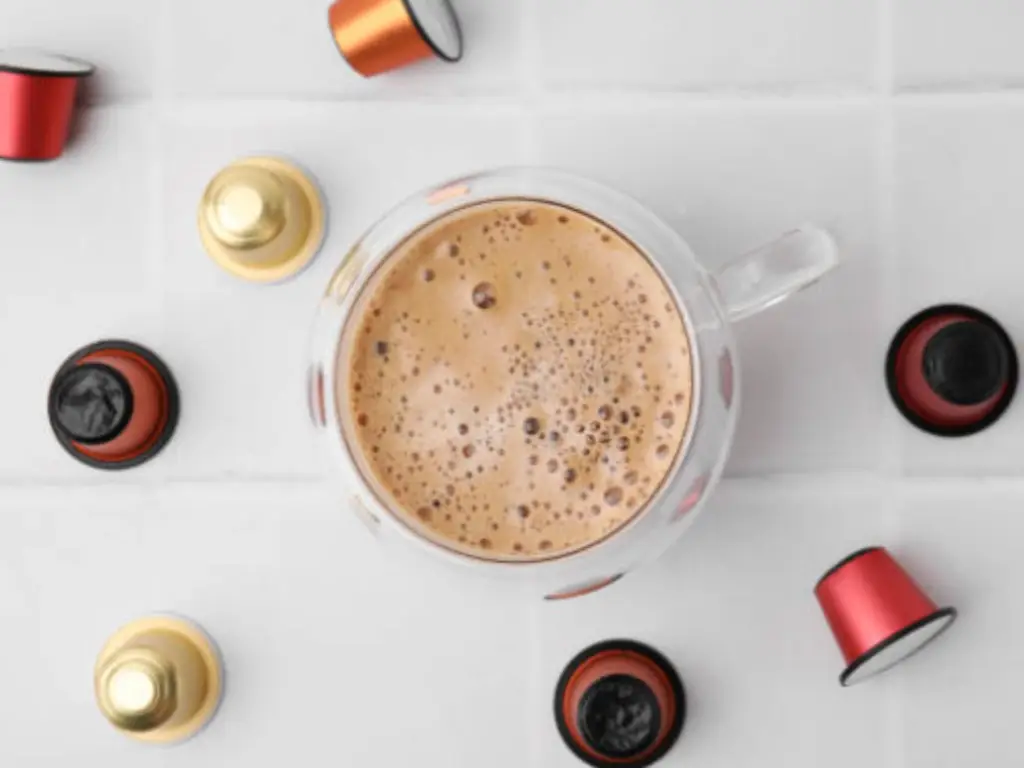
The five formats that matter for coffee businesses are: stick packs (long, narrow tubes holding 1–15 g of powder, ideal for instant and specialty coffee), K-Cup style pods (hard plastic cups with built-in filters, the format behind 12 billion units sold annually in North America alone), Nespresso-compatible capsules (aluminum or plastic, 5–7 g fill weight, dominant in Europe), drip bags (filter-paper bags brewed like tea, growing in specialty and hospitality segments), and sachets (flat rectangular packs for larger doses or liquid concentrates).
Each format answers a different business question. The one you choose determines your equipment budget, your per-unit cost, your shelf-life ceiling, and which customers you can reach. The following sections walk through the decision step by step.
How to Choose the Right Single-Serve Format for Your Coffee Business
Before diving into individual formats, anchor your decision on three questions: What is your target retail price point? What is your monthly production volume in kilograms? And where does your brand sit on the spectrum from value to ultra-premium? Keep your answers in mind — each format below will be evaluated against all three.
Stick Packs — The Premium Choice for Instant and Specialty Coffee
If you are launching a premium instant coffee, a functional mushroom-coffee blend, or a single-origin specialty soluble, stick packs are almost certainly your answer.
The format's core advantage is precision: servo-driven auger fillers achieve ±0.1 g dosing accuracy, which means every stick delivers exactly the brew strength your label promises — critical when your cost of goods is high and portion consistency is your quality signal. Stick packs also use 15–25% less packaging film than equivalent four-side-seal sachets, and the long, narrow geometry minimizes internal air volume, reducing oxidation risk for moisture-sensitive powders.
On the production side, multi-lane stick pack machines run 4 to 12 lanes simultaneously, delivering up to 600 sticks per minute. The film stack is typically a high-barrier laminate — PET/aluminum/PE or PET/metallized-PET/PE — providing the moisture and oxygen barrier that instant coffee demands. For a roaster producing 500–5,000 kg per month, a 4-to-6-lane machine is the sweet spot: enough throughput to serve retail accounts without overcapitalizing.
If you are comparing formats, consider the consumer signal. A Starbucks VIA stick pack and a bulk bag of instant coffee both contain soluble coffee, but the stick pack commands a premium because it communicates portion control, freshness, and portability in a single object. That signal is worth real margin.
Pods and Capsules — The Dominant Format for Brewing System Compatibility
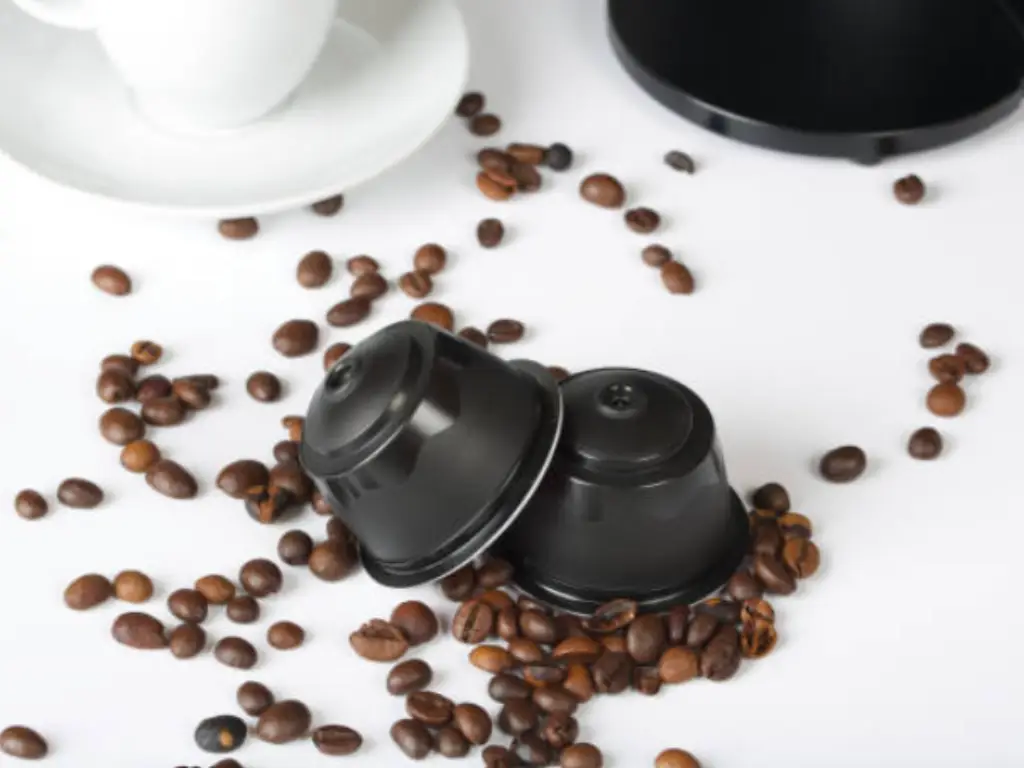
K-Cup and Nespresso-compatible capsules are not the cheapest format to produce, but they reach the largest installed base of brewing hardware. According to the National Coffee Association's Spring 2024 National Coffee Data Trends report, 28% of past-day American coffee drinkers use a single-cup brewer — second only to drip machines. With over 25 million single-serve brewers in North American households, a roaster entering the pod market is not building demand from scratch; they are plugging into existing behavior.
The equipment range is wide. Entry-level one-to-two-lane capsule fillers produce 35–60 capsules per minute and occupy roughly 10 m² of floor space — appropriate for a roaster testing the format with a single SKU. Mid-scale four-to-six-lane machines reach 200–360 capsules per minute, and high-speed rotary lines from manufacturers like IMA hit 1,200 capsules per minute for national-scale production.
The key technical decisions in pod production are: capsule material (plastic, aluminum, or compostable — each with different sealing behavior and oxygen transmission rates), lid film compatibility, and nitrogen flush integration. The nitrogen question is significant enough that it gets its own section below. For now, the decision rule is: if your customers are offices, hotels, or grocery retailers in North America, K-Cup compatibility is nearly mandatory; if your market is European or premium direct-to-consumer, Nespresso-compatible capsules give you more pricing power with a smaller but loyal audience. Machines that support both formats — K-Cup and Nespresso — with tool-free changeover between runs give mid-scale roasters the flexibility to serve both channels from one line.
Drip Bags and Sachets — The Niche Players with Growing Appeal
Drip bags and sachets occupy specific niches that the dominant formats do not serve well. Neither is likely to be your primary format, but each solves a problem the others cannot.
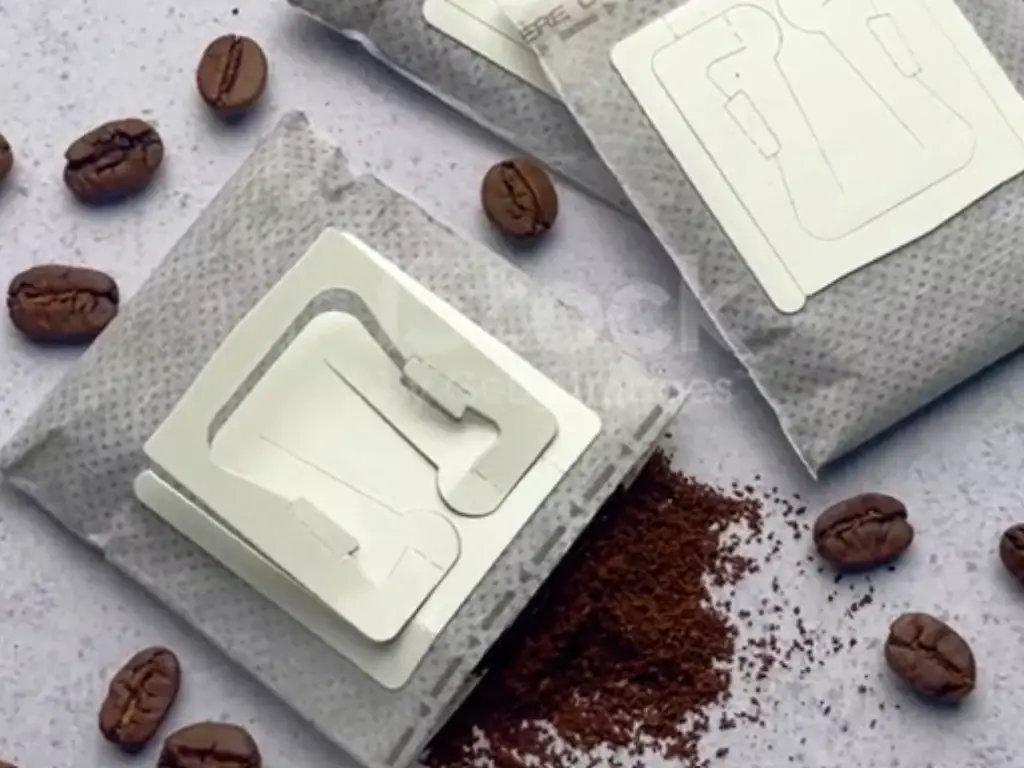
Drip bags — filter-paper pouches with cardboard arms that rest on the rim of a cup — deliver a pour-over experience without any equipment. They are popular in Asian markets, high-end hotel rooms, and specialty coffee subscription boxes. Steeped Coffee built a brand on this format, winning "Best New Product" at the 2019 Specialty Coffee Expo with nitro-sealed, compostable single-serve bags that carry a six-month shelf life. The limitation is throughput: drip bag filling is slower than stick pack or pod production, and the format's retail price ceiling is lower than capsules in most Western markets. Think of drip bags as a complementary SKU — a way to offer a "trial format" for customers who do not own a pod machine — rather than a production backbone.
Sachets are the workhorse format for larger doses (10–50 g), liquid coffee concentrates, and coffee syrups. They cost less per unit to produce than stick packs and offer more branding surface area, but they lack the precision-pour experience and premium shelf signal that stick packs deliver. For a roaster selling bulk coffee samples or co-packing 3-in-1 instant mixes, sachets are practical; for a brand building premium perception, stick packs win.
Packaging Equipment: Matching Machinery to Your Production Scale
Format chosen, the next question is how much machine you need. The single biggest mistake first-time buyers make is over-buying capacity ("we will grow into it") or under-buying flexibility ("we will only ever make one format"). Both paths are expensive to correct. Start by locating your monthly output on this scale:
- Under 500 kg/month: You are testing a market or launching a first single-serve SKU. Capital preservation and format flexibility matter more than throughput.
- 500–5,000 kg/month: You are a growing roaster with established retail or DTC accounts. Throughput and changeover speed directly impact your unit economics.
- Over 5,000 kg/month: You are scaling across multiple formats and channels. System integration — how your filler talks to your nitrogen generator, your checkweigher, and your cartoner — becomes the binding constraint, not just individual machine speed.
Entry-Level to Small-Scale Production (Up to 500 kg/month)
At this stage, a one-to-two-lane capsule machine or a single-lane stick pack filler is the rational starting point. A compact capsule filler producing 20–60 units per minute fits in roughly 10 m² and can be operated by a single trained technician. Stick pack machines at this scale run around 45 cycles per minute — enough for a few thousand sticks per shift.
The most important investment at this stage is not speed, but room to grow. Choose a machine with a modular frame that accepts additional lanes later. Confirm that the electrical cabinet has spare slots for future servo drives. Standardized small machines typically ship in 10–30 days, which matters when you are racing a retail launch deadline. And if you are unsure about committing to a format, some manufacturers offer free sample testing — send your coffee, and their technical team will run it on the recommended machine so you can verify compatibility before signing a purchase order.
Mid-Scale Production (500–5,000 kg/month)
Mid-scale is where the economics start to work in your favor — and where equipment decisions have compounding consequences. A four-to-six-lane capsule filler producing 240–360 capsules per minute, or a four-to-eight-lane stick pack machine running 300–500 sticks per minute, is the core workhorse for this volume.
At this tier, component quality directly determines your uptime. Core electrical components from Siemens, Schneider, Mitsubishi, Omron, or SMC cost more upfront but reduce troubleshooting time and spare-part lead times over the machine's life. Equally important is changeover speed: if you run K-Cups on Thursday and Nespresso-compatible capsules on Friday, a tool-free changeover system that completes the switch in minutes rather than hours preserves your line's effective capacity. Food-contact surfaces should be 304 stainless steel as a minimum; for capsule machines, cup droppers and lid dispensers made from aerospace-grade aluminum rather than electroplated iron eliminate rust risk entirely — a detail that matters when your customer is a grocery chain with a supplier quality audit checklist.
High-Volume Production (5,000+ kg/month)
At scale, individual machine speed matters less than system-level throughput. A high-speed capsule line (450–1,200 capsules per minute, like IMA's SYNkRO or UNIKA series) requires upstream roasting and grinding capacity to feed it, in-line checkweighing to reject out-of-spec capsules without stopping the line, vision inspection to verify lid positioning and inner-component presence, and downstream cartoning (80–90 cartons per minute) to avoid creating a packaging bottleneck that cancels out your filling speed.
Large automated lines typically ship in 35–45 days from order, and installation requires coordinated mechanical and electrical commissioning. The procurement question at this tier is not "which machine?" but "which integrated system, and who designs the integration?" The right supplier handles mechanical design, electrical integration, and on-site commissioning as a single scope. You should not have to stitch together a filler from one vendor, a nitrogen system from another, and a cartoner from a third.
Nitrogen Flushing and Freshness: The Technology Behind Shelf-Stable Single-Serve Coffee
If you take one technical concept away from this guide, make it this: ground coffee in a single-serve format has dramatically more surface area exposed to oxygen than whole beans or even a valve-sealed bulk bag. Without nitrogen flushing — a modified-atmosphere packaging (MAP) process that displaces oxygen with inert nitrogen gas just before sealing — your single-serve coffee will show noticeable staling within two to four weeks. For any roaster selling through retail channels where the product may sit on a shelf for months, nitrogen flushing is not a premium upgrade. It is the price of entry.
How Nitrogen Flushing Works in Single-Serve Packaging
The process has three stages, all happening in rapid succession inside the sealing station. First, the filling system doses ground coffee into the capsule or stick pack with at least 99.5% accuracy — any powder on the seal area compromises the hermetic closure. Second, food-grade nitrogen (99.0–99.9% purity) floods the package cavity, pushing ambient air — and the oxygen it contains — out. Third, the package is heat-sealed instantly to lock the protective atmosphere in place.
The difference this makes in shelf life is stark. An unflushed single-serve coffee pack tastes noticeably stale within two to four weeks. A properly nitrogen-flushed soft pack holds peak freshness for 6–12 months. An aluminum capsule — which has a near-zero oxygen transmission rate through its walls — can maintain quality for 12–24 months when flushed and sealed correctly. These are not marketing numbers; they reflect the physical reality that coffee staling is, at root, an oxidation reaction, and removing oxygen slows that reaction to a crawl.
Nitrogen Purity and Residual Oxygen: The Quality Tiers That Matter
Not all nitrogen flushing is equal. The metric that separates good from exceptional is residual oxygen (RO₂) — the percentage of oxygen remaining inside the sealed package after flushing.
The industry breaks into four tiers. Commercial grade (1–2% RO₂) is the baseline for mainstream retail products — adequate but leaves headroom for quality loss over a 12-month shelf life. High grade (under 1% RO₂) is the target for premium brands, achieved with higher-purity nitrogen and optimized flush timing. Premium grade (under 0.5% RO₂) requires advanced rotary nitrogen injection systems and in-line O₂ monitoring — this is the tier where specialty roasters who stake their brand on freshness compete. Below these, anything above 2–3% RO₂ is considered minimum acceptable, and the shelf-life clock ticks fast.
The nitrogen purity of the gas source itself is part of the equation. Most international-brand capsules are produced with nitrogen at around 99.5% purity. The most advanced capsule filling systems, equipped with rotary nitrogen injection and verified by German Oxybady testing equipment, achieve 99.9% purity — a seemingly small 0.4% gap that, across a million-capsule annual production run, translates to thousands of capsules with measurably better aroma preservation. For a roaster bidding on a hotel chain contract, that difference is a quantifiable technical advantage in a procurement spreadsheet.
Equipment manufacturers who combine this level of nitrogen performance with internationally recognized manufacturing certifications — including CE, RoHS, ISO, CSA, FDA compliance, and Specialty Coffee Association membership — give buyers a single point of accountability for both machine quality and food-safety documentation. SANEU, a Chinese packaging machinery manufacturer with over 12 years of specialization in coffee capsule filling systems, is one of the few suppliers offering 99.9% nitrogen flush capability verified by in-house Oxybady testing, alongside full CE / ISO / FDA-certified production. For roasters comparing equipment specifications across suppliers, nitrogen purity and residual oxygen data should be requested as part of any quotation, not treated as an afterthought.
Integrating Nitrogen Systems into Your Production Line
You have three integration paths. Built-in nitrogen — where the filler's sealing station includes the gas injection manifold as a standard module — is the simplest: one machine, one control panel, one supplier to call. On-site nitrogen generation, using a membrane air-separation system that extracts N₂ from ambient air, is the most cost-effective long-term option for mid-to-high-volume production, cutting gas costs by roughly 50% compared to purchasing liquid nitrogen in dewars. Liquid nitrogen tanks (dewars) make sense for small-scale or trial production where the upfront cost of a generator is not yet justified.
The critical constraint is dwell time. High-speed lines running over 200 cycles per minute have fractions of a second for the nitrogen flush to displace oxygen before the seal bar closes. Matching your nitrogen injection pressure and nozzle design to your line speed is an engineering parameter — not a setting you adjust from the touchscreen. When you are evaluating equipment, ask the supplier to demonstrate residual oxygen readings at your target speed with your coffee grind profile.
What Single-Serve Coffee Packaging Actually Costs
No equipment manufacturer publishes a price list online — and that silence creates the single biggest frustration for roasters evaluating single-serve expansion. What follows are not exact quotes but cost-structure benchmarks, built from publicly available component pricing, industry wage data, and film-supplier catalog rates. Use them to build your own pro forma, not as a substitute for supplier quotations.
| Cost Dimension | Small Scale (<500 kg/mo) | Mid Scale (500–5,000 kg/mo) | Large Scale (>5,000 kg/mo) |
|---|---|---|---|
| Typical format | Stick pack or entry capsule | Multi-lane stick / mid-speed capsule | High-speed capsule line |
| Equipment investment | $15,000–$60,000 | $60,000–$250,000 | $250,000–$1,000,000+ |
| Film per 1,000 units | $18–$35 | $12–$22 | $8–$16 |
| Nitrogen per 1,000 units | $3–$8 (liquid dewar) | $1–$3 (on-site gen) | $0.50–$1.50 (on-site gen) |
| Labor per 1,000 units | Varies by region ($8–$30) | Varies by region & automation | Highly automated |
| Est. total per 1,000 | $35–$80 | $20–$50 | $12–$30 |
These ranges are wide because configuration matters enormously. A machine built with Siemens/Schneider electrical components costs more upfront than one with unbranded alternatives, but the difference amortizes over years of reduced troubleshooting and faster spare-part availability. Chinese-manufactured equipment with European-spec components typically costs 20–30% less than equivalent European-built lines — a gap driven by integrated in-house production and supply chain consolidation, not by cutting corners on component quality. For example, SANEU's capsule filling machines are priced roughly 30% below European peers with the same Siemens/Schneider/Mitsubishi component specification, supported by a 3,000 m² in-house manufacturing facility in Guangzhou that keeps production overhead lean. Whether that cost advantage matters depends on your total cost of ownership calculation: factor in equipment price, freight, installation, training, spare parts lead times, and warranty coverage over a five-to-seven-year depreciation window. A machine that is 20% cheaper to buy but takes three weeks to get a replacement servo drive is not cheaper at all if it costs you a retail chain's replenishment window.
In-House Production vs. Co-Packer: Making the Strategic Choice
After working through formats, equipment, nitrogen systems, and costs, one structural decision remains: should you own the production line, or pay someone else to run it?
In-house production is the right path when you have at least 500 kg/month of consistent volume, a brand whose value proposition includes freshness or quality control, and the willingness to build — or hire — a small technical team. The economics favor in-house at scale: once your equipment is depreciated, your per-unit cost consists mainly of film, nitrogen, and labor, all of which you control directly. The trade-off is capital outlay and the operational reality of maintaining a packaging line: preventive maintenance schedules, spare-parts inventory, operator training, and troubleshooting when the seal bar misaligns at 4 PM on a Friday.
Co-packing is the right path when you are testing a market, your volume is seasonal or unpredictable, or you lack the technical team to run packaging equipment. A co-packer charges either on a tolling basis (you supply roasted coffee, they charge a per-unit processing fee) or a turnkey basis (they source, roast, and pack — you provide the brand). The major North American co-packers, such as Westrock Coffee Company, offer full private-label services with SQF Level 2/3 food-safety certification, but their minimum order quantities tend to favor mid-to-large brands. The recent closure of NuZee — a specialist single-serve co-packer that served smaller roasters with drip bag and pour-over formats — has left a gap in the US market for accessible, small-batch single-serve co-packing.
The pragmatic path for many growing roasters is a hybrid: co-pack your first production runs to validate the market and refine your format choice, then bring production in-house once volume justifies the equipment investment. This approach lets you switch formats without stranding capital while you build the sales data to confidently spec a production line.
Five questions to ask yourself before deciding:
- Is your monthly volume consistent or highly variable?
- Do you have — or can you hire — at least one technician comfortable with PLC-controlled machinery?
- Can you fund the equipment out of cash flow, or will you need financing?
- Does "made in our own facility" matter to your brand story and retail buyers?
- How quickly do you need to launch — weeks or months?
If you answered "no" to questions 2 and 3 but "months" to question 5, start with a co-packer. The equipment will still be available when your volume proves the investment.
If you are ready to compare equipment specifications and pricing for your specific production scale, SANEU provides free 24-hour quotations with detailed machine configurations — including nitrogen flush capability and certified manufacturing documentation — and backs every installation with a two-year warranty and lifetime technical support.