If you’re reading this, you’ve probably reached the point where outsourcing your single-serve cup production no longer makes sense. Maybe your co-packer just raised their minimum order quantity again. Maybe you’re tired of explaining your quality standards to a third party who doesn’t share your obsession with freshness. Or maybe you’ve run the numbers and realized that bringing filling in-house would pay for itself within 18 months.
Whatever brought you here, you’re now facing a genuinely difficult purchasing decision — one where a wrong turn can cost you tens of thousands of dollars and months of downtime. This guide walks through the types of machines available, the one technical specification that matters more than any other, what these machines actually cost when you factor in everything beyond the sticker price, how to evaluate after-sales support before you need it, and a practical framework for matching machine capacity to where your business is today — and where it’s heading.
Types of Single Serve Cup Filling Machines Explained
Before you compare specs or negotiate prices, you need to know which category of machine fits your operation. Single serve cup filling equipment falls into three broad types, and choosing the wrong one is the most expensive mistake you can make.
| Machine Type | How It Works | Typical Speed Range | Best For | Approx. Price Band (FOB China, 2026) |
|---|---|---|---|---|
| Rotary Cup Filler | Multi-station rotating cycle: cup drop → auger fill → nitrogen flush → heat seal → outfeed. Compact footprint. | 600–12,000 cups/hr | Small to medium roasters producing under 2,000 kg of ground coffee per month | $6,000–$80,000 |
| Linear In-Line Filler | Stations arranged in a straight line with walking-beam or belt transfer. Easier maintenance access, smaller footprint. | 1,000–8,000 cups/hr | Startups and small roasters who prioritize simplicity and budget | $2,000–$30,000 |
| Form-Fill-Seal (FFS) System | Cups thermoformed from roll stock (PS/PET/PP/PLA) on the same machine, then filled, sealed, and cut — all inline. Requires mold sets for each cup format. | 7,000–90,000 cups/hr | High-volume producers (2,000+ kg/month) who need end-to-end automation | $50,000–$300,000+ |
A quick self-check: if you’re packaging under 500 kilograms of ground coffee per month, a rotary filler will serve you well. Between 500 and 2,000 kilograms, consider a linear machine for its balance of output and simplicity. Above 2,000 kilograms, an FFS system starts to make economic sense — the higher upfront cost is offset by per-unit savings at volume.
Nitrogen Flush Quality — The Spec That Actually Determines Shelf Life
Coffee staling is primarily oxidative. Every 0.1% of residual oxygen you eliminate translates to measurable shelf-life extension. The difference between a “checkbox” nitrogen system and a precision nitrogen system is the difference between your coffee tasting fresh on a retailer’s shelf six months from now — or going stale before it ever reaches the consumer. That uncomfortable truth is something most machine specification sheets won’t volunteer.
How Nitrogen Flush Works in Capsule Sealing
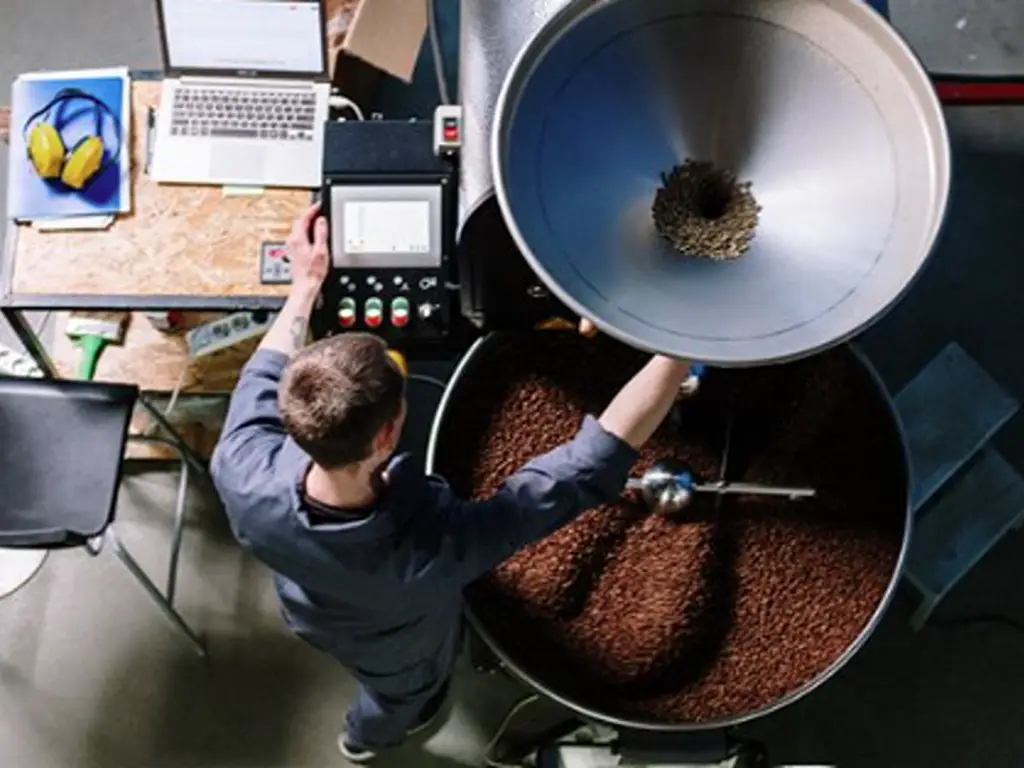
The principle is straightforward, even if the engineering is not. After ground coffee drops into the capsule, a nitrogen injection nozzle flushes the headspace — the empty volume above the coffee — displacing oxygen-rich ambient air with inert nitrogen. The sealing head then immediately applies a heat-sealed lid, trapping the nitrogen atmosphere inside.
The critical window is narrow: from the moment nitrogen injection stops to the moment the lid seals, you have roughly 1–3 seconds before ambient oxygen begins diffusing back into the capsule. The faster and more precisely the machine executes this transition, the lower your residual oxygen level. This is why machine speed isn’t just about throughput — it’s about seal integrity. A machine that moves capsules through the nitrogen station too slowly is quietly undoing its own work.
The sealing temperature also matters. Aluminum foil lids typically require 180–220°C for a reliable bond, while PET/PE composite films seal at 140–170°C. If your machine can’t hold temperature within a tight band across thousands of cycles, seal consistency drifts — and so does shelf life.
99.5% vs 99.9% Nitrogen Purity — Why the 0.4% Gap Matters
On paper, the difference between 99.5% and 99.9% nitrogen purity sounds like a rounding error. In practice, it’s the difference between roughly 6–9 months of shelf life and 12–18 months.
With 99.5% nitrogen, your capsule headspace still contains approximately 0.5% residual oxygen. At 99.9%, that drops to 0.1% — a 5× reduction. Coffee oxidation follows roughly first-order kinetics: the rate at which coffee oils degrade is directly proportional to oxygen concentration. Cut residual oxygen by 80%, and you can realistically double the time before your coffee develops perceptible stale notes.
Shelf life: ~6–9 months
Shelf life: ~12–18 months
Ask any supplier for a third-party residual oxygen test report using an Oxybady (German-made, industry standard) or Dansensor analyzer. Request that they test capsules 24 hours after sealing — not immediately — because some seals leak slowly and initial readings can be misleading. If a supplier hesitates to provide this, treat their nitrogen purity claim as unverified.
The practical takeaway: when you’re comparing machines, ask “what residual oxygen level can you guarantee in production, not just in a lab demo?” Then ask for the test data to prove it. The answer will tell you more about the machine’s real-world performance than any brochure.
What a Single Serve Cup Filling Machine Really Costs
If you’ve been collecting quotes, you’ve probably noticed that prices are all over the map — from a few thousand dollars to well over a hundred thousand. The sticker price, however, is only part of the picture. The machine itself typically represents just 65–75% of your first-year total cost. The remaining 25–35% comes from auxiliary systems, shipping, installation, and consumables that nobody puts in the headline quote.
Machine Price Ranges by Type and Automation Level
| Automation Level | Typical Output | Price Range (USD) | Typical Buyer |
|---|---|---|---|
| Manual Sealer | 1–7 capsules/min | $200–$2,000 | Home or micro-roaster doing R&D batches |
| Semi-Automatic | 5–30 capsules/min | $2,000–$15,000 | Small roasteries and startups testing the market |
| Fully Automatic (Linear) | 30–200 capsules/min | $15,000–$60,000 | Mid-scale production, established roasters going in-house |
| Fully Automatic (Rotary) | 200–600+ capsules/min | $60,000–$300,000+ | Industrial high-volume lines and large co-packers |
For context, European-manufactured machines (IMA, Optima, Synerlink) typically carry a 40–80% premium over Chinese-made equivalents at comparable specifications. The gap isn’t always about build quality — it’s often about brand equity, local service infrastructure, and compliance with specific EU equipment directives. Most small to medium roasters buying their first machine will end up in the $15,000–$60,000 range for a fully automatic system. If that number still feels high, remember: a semi-automatic machine at $6,000–$10,000 is a perfectly viable entry point — you just need to be honest about whether you’ll outgrow it in 12 months.
Hidden Costs — Nitrogen Systems, Auxiliary Equipment, and Installation
First-time buyers tend to get blindsided here. The costs that typically don’t appear in the machine quote:
- Nitrogen generator: $5,000–$15,000. PSA (pressure swing adsorption) units are the sweet spot for most coffee operations — they produce 99.5–99.9% purity nitrogen from compressed air at reasonable cost. Skip this and you’re buying nitrogen cylinders, which works for a few hundred capsules a day but becomes absurd at any commercial scale.
- Auxiliary equipment: $5,000–$15,000. Conveyor belts, screw feeders (to deliver ground coffee to the filler hopper), and elevator systems add up quickly.
- Installation and commissioning: $2,000–$10,000 domestically; $5,000–$15,000 if a technician needs to fly internationally.
- Freight and customs: $1,500–$4,000 for sea freight from China to a US or European port, plus customs duties.
- First-year spare parts inventory: $1,000–$3,000. At minimum, you want sealing heads, heating elements, and sensor modules on your shelf — not in a warehouse across the ocean.
- Empty capsules and lids: $0.03–$0.07 per capsule for standard materials; $0.08–$0.23 for certified compostable or biodegradable options.
Think of it like buying a printer. The machine itself is only the beginning — the “ink” (empty capsules, nitrogen, replacement sealing heads) is where the ongoing commitment lives.
First-Year Total Cost of Ownership — A Realistic Calculation
Let’s put numbers to it. Imagine you’re a mid-size roaster buying a fully automatic rotary machine quoted at $35,000 FOB. Add a PSA nitrogen generator ($8,000), a conveyor and screw feeder package ($5,000), on-site installation by a factory technician ($5,000), sea freight ($2,500), and a starter spare parts kit ($1,500). That’s $57,000 before you’ve packaged a single capsule.
Now add consumables. If you’re producing 50,000 capsules per month at an average capsule cost of $0.05, that’s $30,000 in empty capsules alone over the first year. Your realistic first-year total: roughly $87,000.
Machine cost ≈ 40% of first-year total. Consumables (capsules + lids) ≈ 35%. Auxiliary equipment ≈ 12%. Logistics and installation ≈ 8%. Spare parts and maintenance ≈ 5%. Use these ratios to sanity-check any quote you receive.
The good news: once you understand this, you can negotiate from a position of strength. Ask every supplier for a total cost of ownership breakdown, not just a machine price. The ones who can provide it readily are the ones who’ve done this before.
After-Sales Support — The Factor That Determines Your Real Downtime Cost
When a filling machine goes down, every hour of downtime is lost revenue — not just in production stoppage, but in labor sitting idle, orders shipping late, and customer trust eroding. The quality of after-sales support isn’t a “nice to have” afterthought. Over a five-year ownership period, the support infrastructure behind your machine will have a larger financial impact than the initial purchase price.
What to Look for in Warranty Terms and Spare Parts Availability
Not all warranties are created equal, and the differences hide in the details most buyers skip:
| Dimension | Industry Standard | What to Look For | Why It Matters |
|---|---|---|---|
| Warranty Length | 1 year | 2 years | The second year is when most infant-mortality issues have been resolved but wear-related failures begin — you want coverage through this transition |
| Spare Parts Dispatch Time | Not specified | “1 business day from warehouse” | A sealing head failure with a 2-week lead time on the replacement costs you 14 days of production. A 1-day dispatch costs you 2–3 days total. That’s $10,000+ in throughput for a mid-size operation |
| Free Spare Parts During Warranty | Customer pays shipping | All costs covered (parts + shipping) | The shipping on a $600 sealing head from China to North America can be $150–300 — small but cumulative |
| Remote Diagnostic Support | Email only | Video call + remote PLC access | 80% of common faults (PLC alarms, parameter drift, sensor calibration) can be resolved remotely in under 2 hours vs. days of email back-and-forth |
| Wear Parts Coverage | Excluded | Clearly documented with replacement intervals | Sealing heads (6–12 month life, $200–$600) and heating elements (1–2 year life) will need replacement. Know before you buy whether these are covered or out-of-pocket |
Remote Support vs On-Site Service — What Your Operation Actually Needs
Think of machine faults in three tiers. This framework alone can save you thousands of dollars and weeks of downtime:
- Level 1 (roughly 80% of issues): PLC alarm resets, parameter adjustments, sensor recalibration. These can be resolved via remote video diagnosis in 15 minutes to 2 hours — if your supplier has engineers who can connect to your machine’s PLC remotely and talk your operator through the fix.
- Level 2 (roughly 15% of issues): Mechanical component replacement — a worn sealing head, a stretched belt, a fatigued spring. Your operator can do the swap themselves if they have the spare part on hand and a video call with a technician guiding them.
- Level 3 (roughly 5% of issues): Servo motor failure, PLC mainboard damage, structural component breakage. These genuinely need a field engineer on-site.
The implication is striking: if you stock Level 1 and Level 2 spare parts and choose a supplier with strong remote diagnostic capability, 95% of your machine faults never require an on-site visit. This is the difference between a machine that’s back online by tomorrow morning and one that’s down for two weeks while you wait for an engineer to fly in.
Modern industrial PLCs — Siemens S7, Schneider Modicon, Mitsubishi FX series — all support remote connectivity. The question isn’t whether the technology exists; it’s whether your supplier has invested in the engineering team that knows how to use it effectively. Ask your sales contact directly: “Can your engineers remotely access the PLC to diagnose issues, and what’s your average response time for Level 1 faults?” If they hesitate, that tells you something.
When evaluating suppliers, look beyond the warranty headline. One manufacturer worth examining against these criteria is SANEU, whose standard terms include a 2-year warranty (double the industry norm), free spare parts replacement with standard components dispatched within 1 business day, and a 12-year engineering team that provides remote PLC, electrical, and mechanical diagnostics via video call. Their distributor network also includes one free annual on-site inspection visit per year — a practice that shifts after-sales from reactive firefighting to preventive maintenance. Whether or not SANEU is on your shortlist, their warranty structure gives you a benchmark: if a supplier offers less than this, ask why. You can review their support infrastructure at saneu.com/expert-training or reach out for a detailed quote at saneu.com/contact-us.
Matching Machine Capacity to Your Production Goals
You now have a framework for understanding machine types, the nitrogen flush spec that determines shelf life, the real cost picture, and how to evaluate after-sales support. The final step is connecting all of this to your specific situation. A three-step process:
Step 1: Convert your monthly production to required machine speed. Take your monthly ground coffee volume (in kilograms), divide by your average coffee dose per capsule (typically 0.01 kg for a standard Nespresso-compatible capsule), and you get your monthly capsule count. Divide that by your monthly operating hours, and you have your baseline required speed in capsules per hour. Then multiply by 1.3–1.5 — the safety factor that accounts for maintenance downtime, operator breaks, and the growth you expect over the next 2–3 years. A roaster doing 800 kg per month, running a single 8-hour shift 22 days a month: (800 ÷ 0.01) = 80,000 capsules/month ÷ 176 hours = 455 capsules/hour × 1.3 = approximately 600 capsules/hour minimum machine speed. A mid-range rotary filler handles this comfortably.
Step 2: Be honest about format flexibility. If you only produce K-Cups today, will you want to add Nespresso compatibility in 18 months? Machines that support multiple formats cost more upfront but eliminate the need for a second machine later. If multi-format capability matters to you, prioritize it now — retrofitting is rarely economical.
Step 3: Run your TCO numbers with your actual production volume. Take the formula from the cost section above, plug in your monthly capsule volume, and calculate what your first year actually looks like. If the number surprises you, you’ve just avoided an expensive mistake.
A final word of advice: don’t buy more machine than you need. The industry is full of roasters who bought a $100,000 high-speed rotary line for a production volume that a $25,000 machine could have handled — and then spent two years underutilizing it while the warranty clock ticked down. Start with a machine that fits your current volume plus reasonable growth, not your five-year fantasy. You can always add a second machine when demand proves itself — and by then, you’ll know exactly what specs matter to your operation.
Before making your final decision, reach out to 2–3 shortlisted suppliers and request sample testing with your own coffee blend. A factory acceptance test — where you send your coffee to the manufacturer and they run it through the machine while you watch (in person or via video) — is the single best investment you can make before signing a purchase order. It costs a few hundred dollars in shipping and sample preparation, and it can save you from buying a machine that doesn’t perform with your specific roast profile and grind size. SANEU, for example, offers free sample testing as part of their pre-sales process — their technical team runs your coffee through the recommended machine and provides a detailed report on fill accuracy, residual oxygen levels, and seal integrity before you commit. You can explore their single serve cup filling machine range at saneu.com/coffee-capsule-filling-machines.
References
- Robertson, G. L. “Food Packaging and Shelf Life: A Practical Guide.” CRC Press, 2010. https://www.routledge.com/Food-Packaging-and-Shelf-Life-A-Practical-Guide/Robertson/p/book/9781420078442
- Specialty Coffee Association. “Coffee Standards.” https://sca.coffee/research/coffee-standards