
Say a roaster plans to launch six coffees, three box sizes, and a subscription on day one. That is 18 stock-keeping units before the first customer has brewed a capsule. It is a bit like printing an 18-page menu before the restaurant has tested its stove.
A stronger US online launch starts smaller. Pick one customer, one brewing system, and one reason to buy. Then prove that the capsule tastes good, survives fulfillment, complies with the applicable rules, and leaves money after fees and advertising. More products can come later. First, make one offer work.
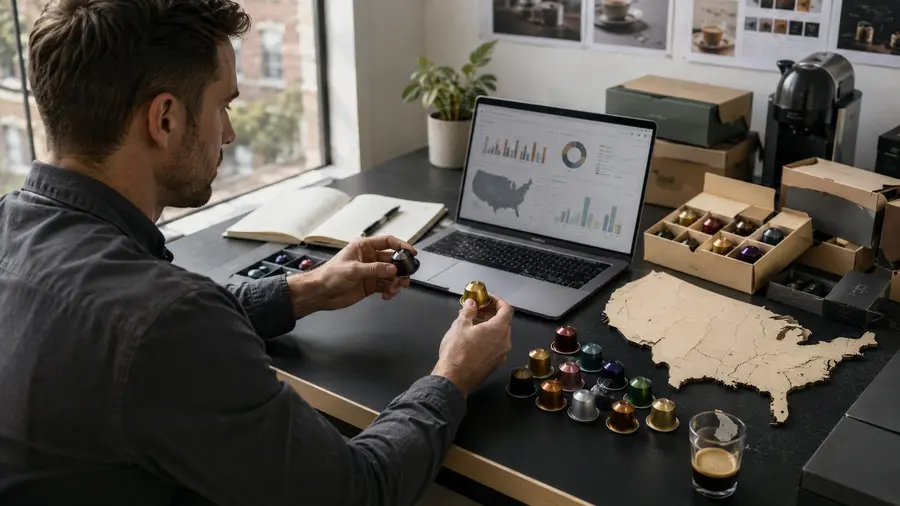
Start With a US Online Customer, Not a Capsule Catalog
“People who own espresso machines” is not a useful target audience. A product becomes easier to build when it solves a specific job.
Perhaps it is a dark, milk-friendly espresso for busy mornings. Maybe it is a traceable single origin for existing customers of a specialty roaster. It could be a dependable decaf for the evening. Each choice points toward a different coffee, price, pack size, and message.
Online buyers cannot smell the roast or taste a sample through the screen. Your offer has to do more work. A known roaster can transfer some existing trust into capsules. A new ecommerce brand may need a sharper use occasion, stronger proof, or a trial bundle to earn the first order.
The online grocery opportunity is broad, but broad demand does not validate one new capsule. According to Amazon’s current grocery-selling guide, groceries and household essentials produced $100 billion in gross sales in Amazon’s online stores in 2024. That is Amazon’s combined figure for two large categories. It is not the size of the compatible-capsule market, and it is certainly not your sales forecast.
Before developing the product, write down what would justify a reorder. Useful evidence includes paid sales beyond friends and family, contribution after advertising, compatibility complaints, returns, review themes, repeat purchase, and inventory days. A busy launch week can feel wonderful. A second purchase tells you more.
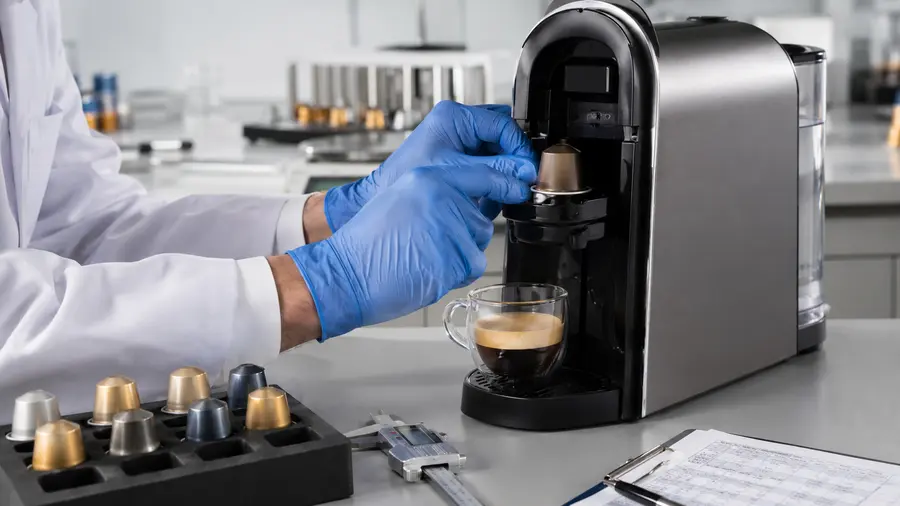
Choose the Private-Label Model Before Choosing the Box
Manufacturing model and sales channel are separate decisions. A white-label capsule can sell on Amazon. A custom private-label product can sell through a Shopify store. An OEM coffee factory can serve both. If the terms feel blurry, compare coffee capsule business models before requesting quotes.
| Operating model | Best use | Main trade-off |
| White label | Testing an audience with an existing coffee and capsule specification | Faster launch, but less product distinction |
| Private label | Creating a branded product with selected coffee, capsule, or packaging options | More control, with higher development and inventory commitment |
| Co-packing | Putting your own coffee into capsules without building a factory | Access to production, but dependence on the partner’s schedule and process |
| In-house filling | Serving stable volume where control can justify a production operation | Equipment, people, maintenance, and quality responsibility |
Do not let a supplier’s preferred label decide the deal. Write down who owns the coffee specification, artwork, tooling, test results, and unused printed materials. Assign responsibility for label review, product release, complaints, withdrawal, and recall support.
A pilot order also needs an exit. If the product fails, who holds 20,000 printed lids and cartons? That awkward question is cheaper before the purchase order.
Define the Exact Nespresso-Compatible Product
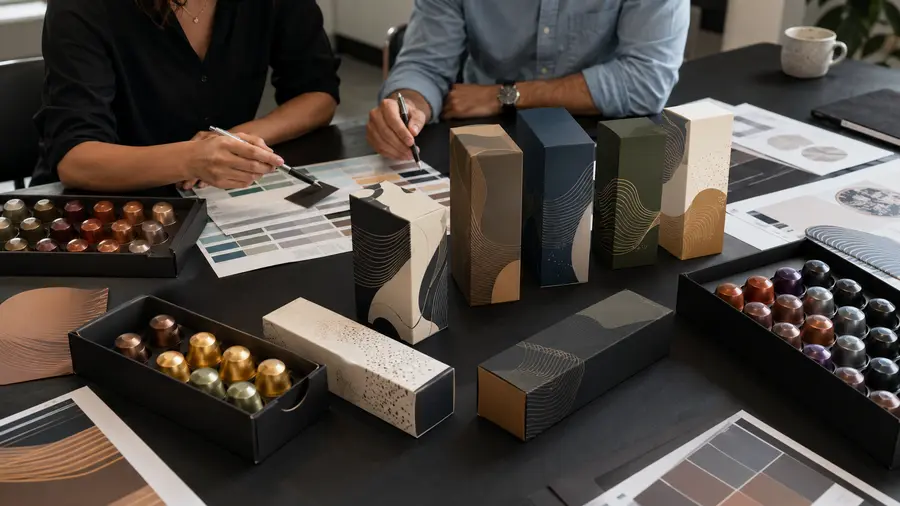
Start with OriginalLine compatibility, not the word “Nespresso”
For this launch, define the product as compatible with specified Nespresso OriginalLine machines. OriginalLine is not Vertuo, and it is not the Professional system. A statement such as “works with all Nespresso machines” creates avoidable complaints.
Build a test matrix with representative brewers sold or used in the US. Record capsule insertion, piercing, water flow, beverage output, leakage, ejection, and visible damage. Brew samples from more than one production point. One perfect handmade capsule cannot prove a commercial run.
Compatibility wording should describe the intended use without suggesting an affiliation that does not exist. Nespresso is a trademark of its owner. Have qualified US counsel review the final name, disclaimer, packaging, and listing presentation rather than copying another seller’s footnote.
Develop the coffee inside the capsule
A roast that works in a portafilter or retail bag is only a starting point. The capsule gives you a small dose and a fixed brewing environment. Roast development, grind distribution, dose, density, flow, and seal behavior interact.
Too fine, and the coffee may run slowly or taste harsh. Too coarse, and the cup may be thin. Too much coffee can crowd the rim or restrict flow. The practical approach is to test several combinations in the actual capsule, then cup them blind across the agreed brewers.
SANEU’s lower-risk capsule production roadmap for US roasters explains why extraction, sealing, oxygen, and repeat production should be developed together.
Keep the first assortment easy to understand
A hero SKU plus one useful alternative is often enough to learn. That might be a balanced espresso and a decaf, or a house espresso and a stronger milk drink option. This is a planning method, not a universal SKU rule.
Choose the pack structure around the order, not just the shelf. A small trial pack lowers the commitment but may be expensive to pick and ship. A 60-count box can improve shipping economics but raises the first-purchase price. A variety pack adds discovery while creating more assembly and forecasting work.
Every extra coffee, capsule color, lid, and pack count creates another forecast. Online, a beautiful slow SKU still occupies real warehouse space.
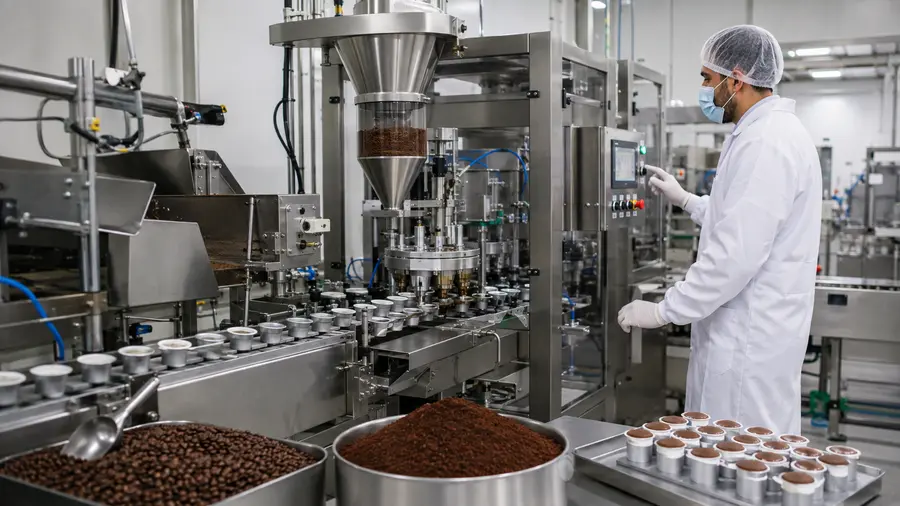
Match Capsule Materials to Quality and Online Claims
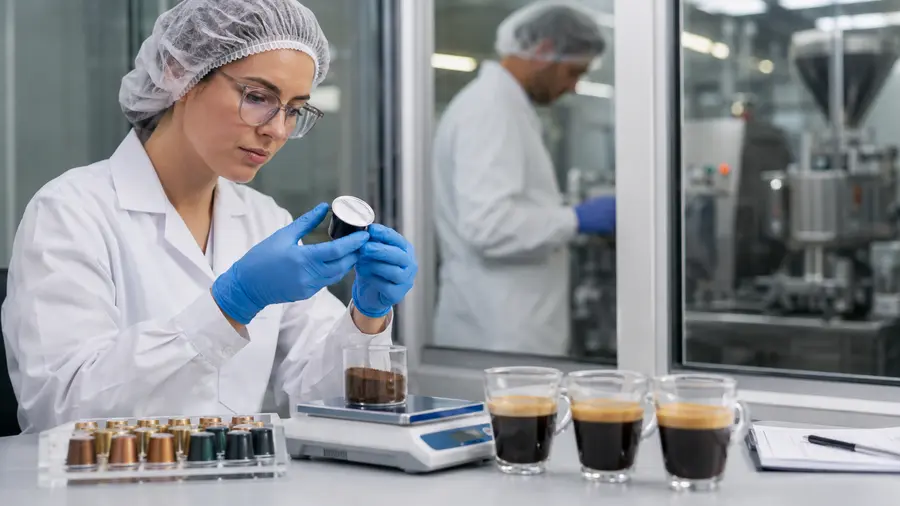
The capsule is a packaging system, not a colored cup. Review the body, internal coating or barrier, rim, lidding foil, heat-seal layer, ink, and any filter or ring. Then test the finished combination with the coffee.
SANEU offers customizable Nespresso-compatible empty capsules in several material routes. Use those options to start a technical discussion, not to skip validation. This explanation of how capsule bodies and lidding structures work provides further background on why the small components matter.
| Material route | Useful strengths | Questions before launch |
| Aluminum | Strong barrier potential, rigid form, and a familiar premium appearance | Which alloy, coating, lid, seal window, transport test, and collection route apply? |
| PP or barrier plastic | Color flexibility, lower weight, and potentially economical production | Is it mono-material or multilayer? What are the barrier data, seal limits, and local recycling reality? |
| Compostable structure | A distinct environmental position for the right audience | Does finished-product evidence cover home or industrial composting, the lid, shelf life, and US disposal conditions? |
No material creates shelf life by itself. Freshness depends on the coffee’s condition, barrier, flange cleanliness, sealing window, residual oxygen, storage, and transport. “Nitrogen flushed” describes a process input. It is not proof that every sealed capsule meets an oxygen limit for 12 or 24 months.
For the production pilot, agree acceptance criteria for fill weight, seal integrity, residual oxygen, appearance, brewing, and defects. Retain samples and run a written shelf-life program under realistic conditions. An accelerated test can reveal risk. It should not be used to invent an expiry date.
Build a US-Ready Label and Product Detail Page
The carton, online listing, and master case should tell the same story. If the box says 60 capsules, the product images, item data, and fulfillment carton cannot quietly say 50.
Create a label checklist covering the statement of identity, net quantity, responsible company, ingredients and allergens when applicable, lot or date coding, storage, origin statements, barcode data, and any required nutrition information. Plain coffee may qualify for certain nutrition-labeling exemptions in some circumstances, but formulation and claims matter. Flavored coffee, milk ingredients, functional additions, or nutrient claims can change the analysis.
The FDA Food Labeling Guide is a useful starting point. FDA also warns that the guide’s nutrition-labeling chapter is being revised and does not reflect every current requirement. Check current regulations and updated guidance, and use qualified review for the finished product. Neither “all coffee needs a Nutrition Facts panel” nor “coffee is always exempt” is a safe shortcut.
Amazon has its own current category, label, date, approval, and fulfillment rules on top of legal requirements. Confirm them in the seller account before printing inventory. Platform acceptance does not replace FDA compliance, and a compliant label does not guarantee category approval.
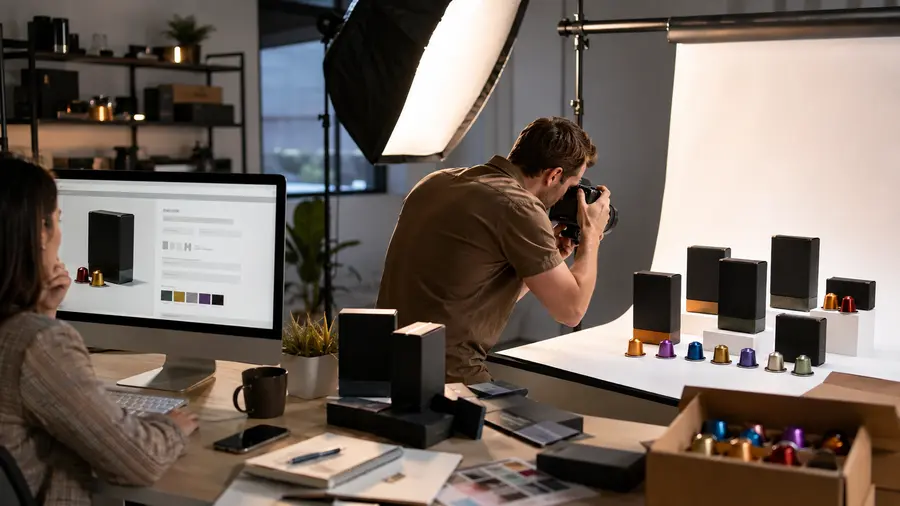
Make the product page precise enough to prevent returns
The main image should show your own brand and actual pack. Other images can explain:
- OriginalLine compatibility and exclusions;
- capsule count and coffees included;
- roast, tasting notes, and intended drink size;
- brewing suggestions;
- capsule material and disposal instructions;
- the evidence behind certifications or origin claims.
Intensity numbers are useful only if your brand defines them consistently. “Premium,” “fresh,” and “sustainable” also need substance. A shiny green leaf is not a disposal system.
For environmental claims, follow the FTC guidance for environmental marketing claims. Compostable and recyclable statements need suitable evidence and, where necessary, clear limits about available facilities. Avoid broad claims such as “eco-friendly.” Even a third-party certificate does not support benefits outside its scope.
Keep review and influencer activity clean too. Real feedback is valuable because compatibility and flavor are hard to judge online. Incentives and material relationships need proper disclosure, and a brand should not manufacture praise or suppress genuine product problems.
Make the Online Unit Economics Work Before the Launch
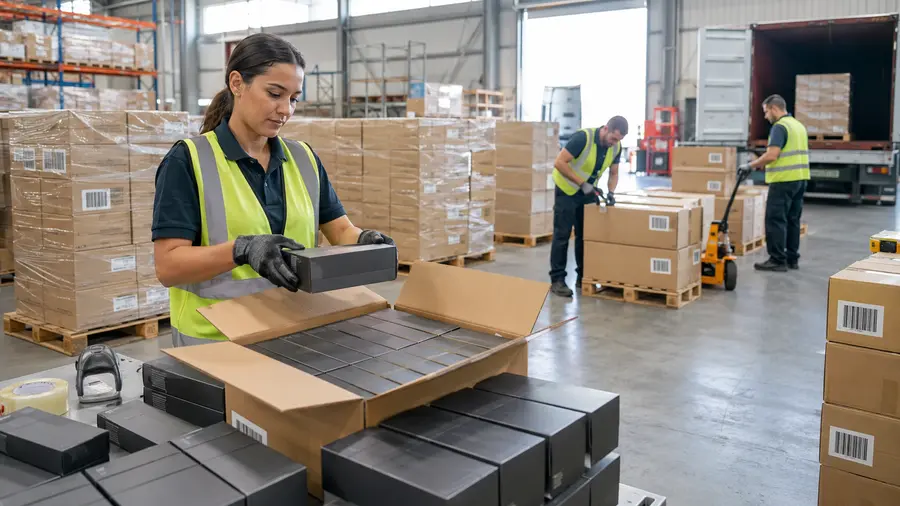
Factory cost is not online profitability. Start with the shipped order:
Net selling revenue – landed product cost – fulfillment – platform or payment fees – discounts – advertising – returns allowance = contribution
Here is a hypothetical 60-count order. These are teaching numbers, not supplier quotes or Amazon fee estimates.
| Illustrative order item | Amount |
| Customer payment after discount | $29.00 |
| Capsules, retail box, and inbound landed cost | -$11.40 |
| Pick, pack, and outbound fulfillment | -$5.20 |
| Marketplace or payment fees | -$4.30 |
| Advertising allocated to the order | -$5.00 |
| Returns and damage allowance | -$0.80 |
| Illustrative contribution | $2.30 |
The arithmetic is simple. The assumptions are not. A slightly lower selling price, higher ad cost, or oversized fulfillment tier can erase that $2.30. Recalculate with current supplier quotes, package dimensions, freight, duties, warehouse charges, platform fees, coupons, and expected returns.
Give Amazon and DTC different jobs
Amazon can provide discovery and convenient fulfillment, but the brand operates beside many alternatives and pays for that access. Reviews, listing quality, stock availability, and ad efficiency matter quickly.
A DTC store gives more room for education, bundles, email, and subscriptions. It also needs a reliable source of traffic. Owning the website does not make customer acquisition free.
A mixed approach can work. Amazon may handle search-led purchases while DTC carries origin stories, gifts, and subscriber relationships. Keep prices and promotions coordinated. Otherwise, the two channels start arguing in public.
Track first-order contribution and later reorder contribution separately. A subscription discount only helps if customers stay long enough to recover acquisition and service costs.
Pilot, Launch, Learn, and Reorder
Treat the launch as four gates rather than one huge order.
- Bench sample: Screen coffees, capsules, and lids for taste and obvious compatibility.
- Production pilot: Run the intended components on commercial equipment and record quality results.
- Online launch batch: Test real listings, fulfillment, returns, reviews, and paid demand.
- Reorder gate: Use contribution, compatibility issues, repeat purchases, and inventory age to decide what grows.
Before requesting samples or pricing, prepare an OEM or ODM capsule brief. Include the exact system, material, coffee, dose, lid, artwork, pack count, quantity, destination, test scope, and delivery expectations.
During launch, read complaints like product-development data. “Weak” may point to coffee, dose, or drink volume. “Leaked in my machine” may point to fit, seal, damage, or a buyer using an excluded brewer. Ask for the machine model, lot code, photos, and brew details before guessing.
Bring filling in-house only when the model earns it
A private-label launch does not have to end with a factory. Co-packing may remain the better model for years. Consider Nespresso-compatible filling equipment when repeat demand, control needs, cash, people, and factory capability support the move.
Evaluate the whole line: grinding, feeding, filling, sealing, nitrogen, inspection, coding, cartoning, cleaning, training, spares, and quality staff. Buying only a filler is like buying an oven and calling it a bakery.
Conclusion
A strong US online capsule launch does not begin with the largest catalog or the fastest machine. It begins with one clear buyer promise and a product that keeps it.
Specify OriginalLine compatibility, develop the coffee in the final capsule, validate materials and shelf life, review US claims, and price the shipped order. Then let paid demand, complaints, contribution, and reorders decide the next move. That path is less dramatic than ordering a mountain of custom boxes. It is also much kinder to cash.
FAQs
Can a private-label brand legally sell Nespresso-compatible capsules in the US?
Compatible products can be sold, but the exact product, packaging, claims, and trademark presentation require review. Describe compatibility accurately, avoid implying affiliation, and have qualified US counsel check the final brand name, disclaimer, carton, and online listing.
Are OriginalLine-compatible capsules the same as Vertuo capsules?
No. They use different capsule formats and brewing systems. A capsule designed for OriginalLine should not be marketed for Vertuo or Professional machines unless that exact system has its own suitable product and supporting tests.
What is a realistic MOQ for a private-label capsule launch?
There is no universal MOQ. It may be driven by roasting, filling, capsule color, printed lids, cartons, cleaning, or freight. Ask for the minimum at each component level and calculate how many months that inventory represents.
Should a new online brand choose aluminum, PP, or compostable capsules?
Choose against the product position and evidence. Compare barrier, seal performance, compatibility, landed cost, transport, shelf life, and disposal claims. Test the complete capsule and lid; a material name alone is not a finished specification.
Does plain coffee in capsules need a Nutrition Facts panel?
Some plain coffee products may qualify for an exemption, but ingredients, nutrient or health claims, business circumstances, and current rules matter. Review the finished product under current FDA requirements instead of relying on a generic supplier answer.
How should a brand test Nespresso-compatible capsule fit and extraction?
Use production samples in an agreed matrix of OriginalLine machines. Record insertion, piercing, flow, beverage output, leaks, ejection, damage, and sensory results. Test multiple lots and retained samples, not one carefully chosen capsule.
Is Amazon or a DTC store better for the first launch?
Neither is automatically better. Amazon offers search discovery and fulfillment tools but brings fees and close competition. DTC offers more brand control and customer data but requires traffic. Choose using contribution, capabilities, and audience access.
How many capsule flavors should a private-label brand launch with?
Start with the smallest assortment that tests the main customer promise. One hero coffee and one meaningful alternative may be enough. Add SKUs when sales and feedback show a distinct need, not simply because more colors look impressive.
How is shelf life established for private-label coffee capsules?
Use a written protocol covering the final coffee, capsule, lid, seal, residual oxygen, storage, transport, and sensory performance. Retain samples for real-time checks. A material brochure or nitrogen-generator setting does not establish finished-product shelf life.
When should a private-label brand bring capsule filling in-house?
Evaluate it when repeat demand is stable and greater control has measurable value. Include equipment, utilities, labor, quality systems, maintenance, working capital, and downtime. A rising sales month alone is not enough reason to build production.

 English
  Spanish
  Arabic
  Russian