Shopping for K-Cup coffee on Amazon can feel like standing in front of a very long supermarket shelf. The logos look familiar. The roast labels sound helpful. Then you notice 32-count, 60-count, 96-count, variety packs, “bold” coffee, and a small jungle of ratings.
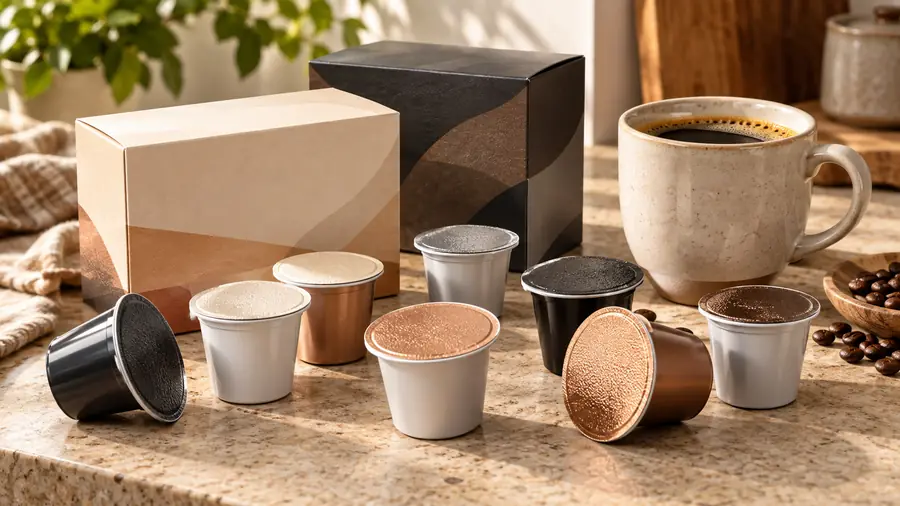
This guide uses a dated Amazon US search-market snapshot to show ten high-selling listings, then helps you choose by roast, pack size, value, and daily routine.
One thing first: popular does not automatically mean delicious to you. Coffee is personal. A sales list is a useful map, but it is not your tongue.
How This Amazon K-Cup Ranking Was Built
The list comes from an ASInsight report covering Amazon US search results for “k cups”. According to the report, its March 2026 dataset tracked 164 products and ranked individual ASIN listings by estimated monthly units sold.
That wording matters. These are third-party estimates, not sales figures released by Amazon. The table is also not Amazon’s official Best Sellers Rank. It does not show what is leading today, and it is not a SANEU taste test.
Each row represents an Amazon listing, so different pack sizes of the same coffee can appear more than once. The Original Donut Shop Regular, for example, has separate 32-, 72-, and 96-count listings.
Prices, coupons, sellers, ratings, and review totals move too quickly to be useful as fixed facts here. So, the table keeps the stable identifiers—the product title, ASIN, roast or type, and pack count—and leaves the checkout-day details to checkout day.
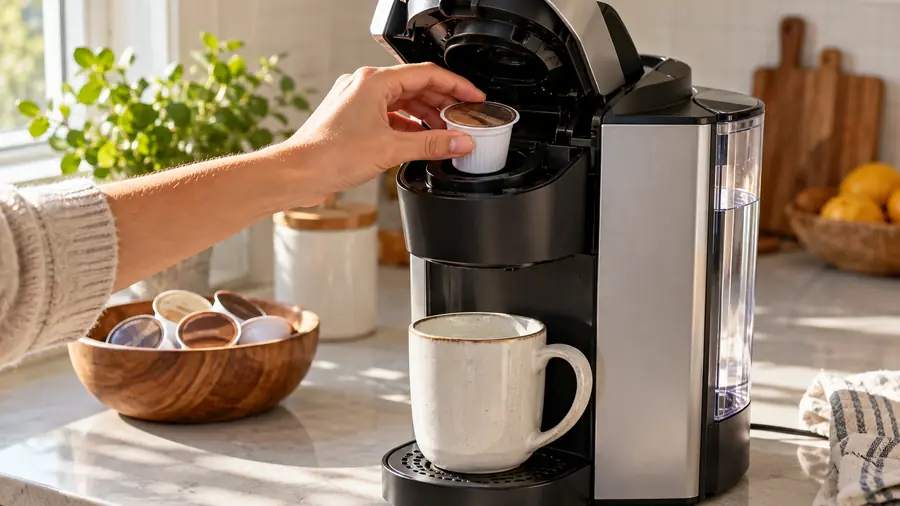
The Top 10 Best-Selling K-Cup Coffee Listings in the Snapshot
| Rank | Amazon listing | ASIN | Roast or type shown in the listing | Pack count | Estimated units per month |
| 1 | Peet’s Coffee Major Dickason’s Blend | B01N2KFHRS | Dark roast | 75 | 50,000 |
| 2 | McCafé Premium Roast | B08DBYJKVW | Medium roast | 96 | 40,000 |
| 3 | The Original Donut Shop Regular | B00I08JAYG | Medium roast | 72 | 30,000 |
| 4 | Dunkin’ Original Blend | B00XA1075Y | Medium roast | 60 | 30,000 |
| 5 | The Original Donut Shop Regular | B007TJGY6O | Medium roast | 96 | 20,000 |
| 6 | Green Mountain Coffee Roasters Breakfast Blend | B007TJGZ54 | Light roast | 96 | 20,000 |
| 7 | Starbucks Pike Place Roast | B009GDBNF8 | Medium roast; hot or iced use mentioned | 96 | 20,000 |
| 8 | Two Rivers Assorted Flavored Variety Pack | B00N0JIACS | Flavored variety | 40 | 20,000 |
| 9 | The Original Donut Shop Regular | B0798F3MPV | Medium roast | 32 | 20,000 |
| 10 | Amazon Brand Happy Belly Dark Roast | B07NYQ6ML7 | Dark roast; compatible pod | 100 | 20,000 |
Which Popular K-Cup Fits Your Coffee Routine?

1. Peet’s Major Dickason’s Blend: A Dark-Roast Shortlist Pick
This 75-count dark-roast listing leads the snapshot. It is a sensible shortlist choice for people who already prefer darker roasts.
Just be careful with the word “strong.” One person means a roasty flavor. Another means more caffeine. A third means a concentrated brew. Those are not the same thing. Roast level alone does not tell you the caffeine in your finished cup, and the amount of water still matters.
2. McCafé Premium Roast: A Familiar Medium-Roast Bulk Buy
McCafé’s 96-count Premium Roast listing suits an everyday medium-roast drinker. A box this large makes sense for a household or office that already knows the coffee.
The trade-off is commitment. Ninety-six cups is a lot of mornings if the flavor is not your thing. New buyers may want to taste a smaller pack locally before buying the big Amazon box.
3. The Original Donut Shop Regular, 72 Count: The Middle Bulk Size
This is the first of three listings for the same named medium-roast coffee. The 72-count format sits between the 32- and 96-count boxes.
That makes it useful for explaining Amazon rankings. The coffee may be the same, but the listing is a separate commercial product with its own ASIN, pack configuration, price, seller history, and availability.
4. Dunkin’ Original Blend: Brand Familiarity Lowers the Guesswork
Dunkin’s 60-count Original Blend offers a familiar name and a less imposing quantity than many 96- or 100-count competitors.
Still, a pod brewed at home should not be treated as a guaranteed copy of a café-made cup. Water, machine condition, brew volume, and how you take your coffee all change the result.
5. The Original Donut Shop Regular, 96 Count: Same Coffee, New Economics
Here comes the same Donut Shop coffee again, now in a 96-count listing. It shows how pack architecture can occupy several places in search results.
Compare the current total price divided by the number of usable pods. Do not assume the biggest box always has the lowest unit cost. Coupons and seller changes can make the math a little weird sometimes.
6. Green Mountain Breakfast Blend: The Light-Roast Option
Green Mountain Breakfast Blend is the one clearly labeled light roast here, giving lighter-roast buyers an obvious alternative.
A 96-count box is still a serious stock-up purchase. Roast label narrows the field, but it cannot tell you whether the coffee will taste bright, thin, balanced, or intense to your palate. Try first if you can.
7. Starbucks Pike Place Roast: A Familiar Hot-or-Iced Listing
The 96-count Pike Place listing mentions hot or iced use. For an iced cup, dilution matters. A large brew over melting ice can become thin rather fast.
Use the pod and brewer instructions as the starting point. A smaller brew over ice, where supported by the machine and product directions, may give a more concentrated base than the largest cup setting.
8. Two Rivers Flavored Variety Pack: Built for Exploration
This 40-count assorted pack gives curious drinkers several flavored options without requiring 40 servings of one choice.
The downside is the snack-box problem: there may be favorites and a few pods that sit around forever. Buyers should check the current assortment because variety contents can change. Coffee manufacturers also need careful ingredient and allergen-label review when flavors introduce additional ingredients or shared-line risks.
9. The Original Donut Shop Regular, 32 Count: A Lower-Commitment Entry
The 32-count listing is the smallest here. It may not have the lowest price per pod, but it reduces the cost of a bad guess.
It also suits slower users. A huge box is not much of a bargain if it occupies the cupboard for ages or gets passed over for another coffee.
10. Happy Belly Dark Roast: The 100-Count Compatible-Pod Option
Happy Belly closes the list with a 100-count dark-roast product described as compatible with Keurig 2.0 brewers. Buyers should check the current listing against their exact brewer.
“Compatible” is not magic dust. Brewer generations, pod construction, needles, and product updates matter. A large box is best for someone who has already confirmed fit and actually likes the roast category.
What This Ranking Reveals Beyond Brand Names
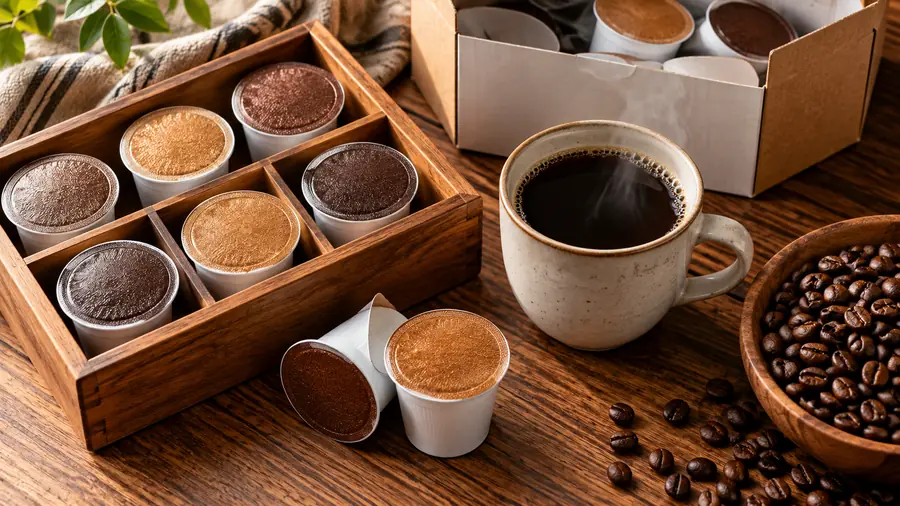
Pack Count Is Part of the Product
The repeated Donut Shop entries make one lesson hard to miss: Amazon ranks listings, not just coffee recipes. Pack count, ASIN structure, availability, seller performance, and price can turn one coffee into several marketplace offers.
The median pack count is 85.5 pods. That describes this snapshot only, but bulk buying was clearly a major feature.
Familiar Medium Roasts Take Plenty of Space
Five rows are clearly labeled medium roast, and three of those belong to the same named Donut Shop coffee. This does not prove permanent US market share. It does show the appeal of familiar, broadly positioned coffee in this particular search snapshot.
Bulk and Variety Solve Opposite Problems
Bulk packs reward certainty. Variety packs reduce boredom and make experimentation easier. Buying 100 pods of an unknown coffee is a bit like ordering a case of shoes before trying the size. The unit price may look great. The experience may not.
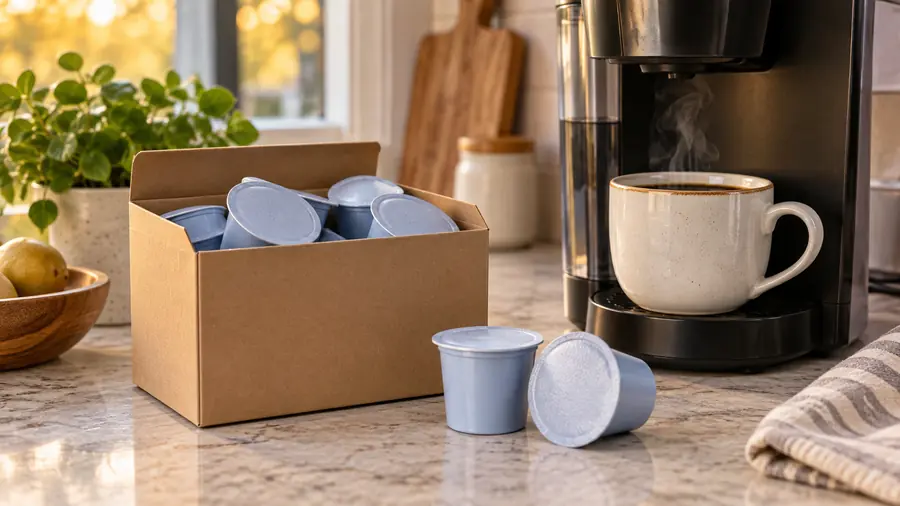
How to Choose Without Letting a Bestseller Badge Decide for You
| If you care most about… | Check first | Common mistake |
| Bold flavor | Roast label, product description, and brew volume | Treating dark roast as a caffeine guarantee |
| Value | Current price divided by the exact usable pod count | Comparing box prices with different counts |
| A low-risk trial | Smaller pack or a well-described variety pack | Buying 96–100 pods before tasting |
| Iced coffee | Recommended brew size and expected ice dilution | Brewing the largest cup over a full glass of ice |
| Office use | Preference range, regular/decaf mix, and storage | Choosing one intense profile for everyone |
| Environmental priorities | Exact material and local disposal rules | Assuming a symbol makes the complete used pod recyclable locally |
Online coffee discussions often circle back to watery K-Cups. Brew volume is one possible cause, especially when one pod is stretched into the largest cup. Old pods, poor storage, mineral buildup, water, machine temperature, and personal expectations also matter.
Try the product’s recommended setting first. Clean and descale the brewer as directed. If the coffee still feels thin, compare a smaller serving before blaming the brand. Simple, yes, but it saves a lot of random pod shopping.
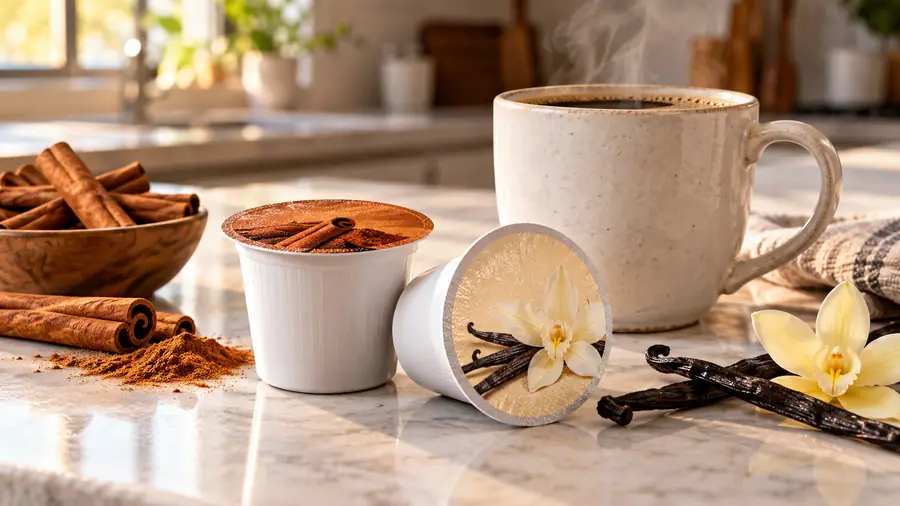
What Is Inside a K-Cup-Style Coffee Pod?
The little cup looks simple. It is actually a compact brewing and packaging system.
| Component | Job | What a brand must verify |
| Ground coffee | Provides the soluble flavor and aroma compounds | Roast, grind, dose, flow, and sensory target |
| Cup body | Holds the product and supports brewing | Food-contact suitability, dimensions, puncture behavior, and barrier structure |
| Filter | Retains grounds while allowing brewed coffee to flow | Material, placement, strength, and extraction behavior |
| Foil lid and seal layer | Closes the cup and provides a printable barrier | Seal window, adhesion, puncture behavior, and ink suitability |
| Carton or outer pack | Protects, groups, labels, and ships the pods | Count accuracy, compression strength, labeling, and traceability |
Many compatible cups use polypropylene, sometimes with EVOH or another barrier structure. Filters may be paper or nonwoven. Lids often combine aluminum foil with coatings or seal layers. Construction varies, so a material name alone cannot prove freshness, recyclability, or compatibility.
Brands comparing empty K-Cup-compatible cup and filter options should test the complete combination: cup, filter, coffee, lid, seal settings, brewer set, distribution conditions, and intended shelf life.
What Coffee Brands and OEM Factories Can Learn
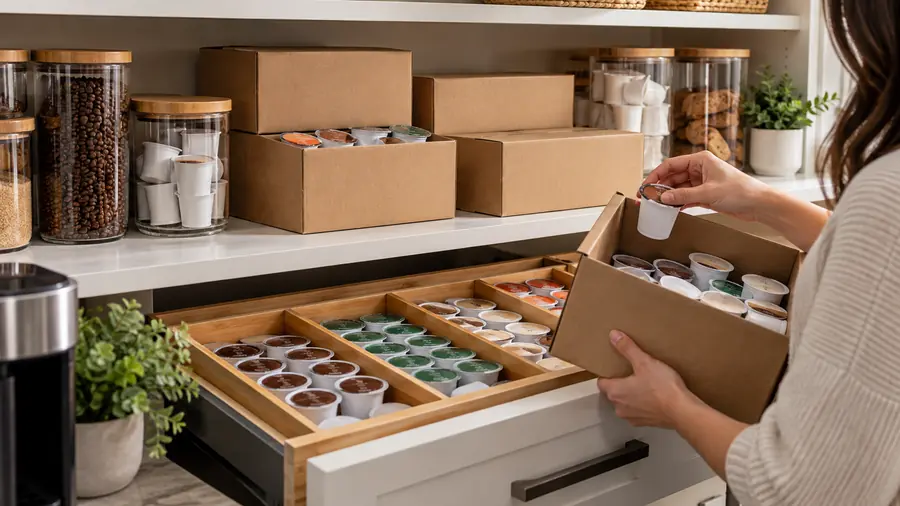
Build a SKU Ladder, Not a Flavor Pile
The snapshot suggests a practical portfolio shape: an approachable core roast, a darker option, a lighter option, and perhaps a controlled variety pack. It does not tell a new brand to copy those exact coffees.
Start with a real customer brief. Who drinks it, where, and how? Is the first purchase a trial or monthly replenishment? A private-label K-Cup-compatible range should answer those jobs before adding flavors.
Treat Pack Size as Product Strategy
A trial pack, middle multipack, and bulk box serve different buyers. Each changes carton cost, Amazon fees, shipping risk, inventory, and cash tied up in stock.
Three ASINs for one Donut Shop coffee are a useful reminder: the offer is not only the blend. The count and listing are part of the product.
Make Consistency Boring—in a Good Way
Once a buyer finds a favorite, surprise is bad. Roast, grind, dose, filter position, rim cleanliness, lid placement, sealing, and finished-pack integrity all need control. The K-Cup filling and sealing process is where a brand promise becomes a repeatable physical product—or fails to.
For US manufacturing, applicable duties may include cGMP, hazard analysis, preventive controls, sanitation, and records under 21 CFR Part 117. Obligations depend on the facility, product, activity, and exemptions, so use qualified regulatory review.
Flavored products may add ingredient, allergen cross-contact, and label questions. Environmental claims also need care. “Recyclable” depends on the complete item, preparation instructions, and local collection system. “Compostable” needs evidence for the claimed conditions. Nice green wording on a carton is not the same as proof.
Understand the Brand Ecosystem
The market includes owned brands, licensed partners, private labels, compatible formats, roasters, co-packers, converters, and retailers. Keurig Dr Pepper describes owned, partner, and private-label activity in its 2025 annual report.
That ecosystem creates room for new products, but wording matters. “K-Cup” appears in official product names and is associated with Keurig’s system. Independent products should use accurate compatibility language and must not imply endorsement or affiliation they do not have.
Match the Filling Line to the Commercial Brief
A production line should follow the product plan. Inputs include cup and lid construction, fill range, speed, SKUs, changeovers, atmosphere, inspection, coding, and secondary packaging.
When a brand is ready to move from market idea to engineering brief, it can compare K-Cup filling machine configurations against representative materials and coffee. Run trials. Define acceptance criteria. A machine brochure cannot replace either step.
Conclusion
This March 2026 snapshot offers a useful view of popular Amazon US K-Cup listings. It is not a permanent leaderboard, and it cannot choose your favorite coffee.
For buyers, the sensible path is simple: match the roast to your taste, compare the real price per pod, choose a pack count you can finish, and brew it at a suitable volume. For coffee brands, the list carries a second lesson. Pack architecture, listing clarity, compatibility, and boringly consistent production can matter just as much as adding another blend.
Check the current listing before buying. If this article is refreshed later, the date and ranking method should move with it.
Frequently Asked Questions
What is the best-selling K-Cup coffee on Amazon?
In the March 2026 third-party snapshot used here, Peet’s Major Dickason’s Blend 75-count listing ranked first by estimated monthly sales. That is not an official or live Amazon ranking, so the leading product may be different now.
What is the best-tasting K-Cup coffee?
There is no universal winner. Start with your preferred roast and whether you drink coffee black, with milk, or over ice. A small pack is a better taste test than trusting sales or review counts alone.
Which K-Cup makes the strongest cup of coffee?
“Strongest” can describe dark flavor, caffeine, or coffee concentration. Check the product label and brew instructions, then avoid stretching one pod with too much water. Dark roast by itself does not prove higher caffeine.
Are dark-roast K-Cups higher in caffeine?
Not necessarily. Caffeine depends on coffee species, blend, dose, roast, extraction, and serving size. Use a product’s declared caffeine information when available instead of estimating it from the words “dark” or “bold.”
How can I compare K-Cup prices when box counts differ?
Divide the current final price by the number of pods you will actually receive. Check coupons, subscriptions, shipping, and seller identity. Also consider waste: a cheap 100-count box is poor value if you dislike it.
Why does my K-Cup coffee taste watery?
The brew volume may be too large for the pod, but storage, water, brewer cleanliness, temperature, and personal taste also matter. Start with the product directions, clean the machine, and compare a smaller cup setting.
Are K-Cups and coffee pods the same thing?
People often use “pod” as a broad term for single-serve coffee. Technically, formats differ in shape, material, brewing system, and compatibility. A K-Cup-style rigid cup is not interchangeable with every capsule or soft coffee pod.
Do all K-Cup-compatible pods work in every Keurig machine?
Do not assume they do. Check the current product listing and packaging against the exact brewer model. Pod geometry, lid behavior, puncture points, and brewer generations can affect compatibility.
Are K-Cup pods recyclable in my community?
That depends on the pod material, local program, sorting capability, and preparation instructions. Some programs do not accept small items even when the plastic resin is normally recyclable. Ask the local collector and follow the product’s directions.
What should a coffee brand test before selling compatible pods on Amazon?
Test the coffee, dose, flow, cup, filter, lid, seal, brewer compatibility, package integrity, shelf life, labeling, carton, and distribution conditions. Validate the actual production settings and keep traceable records for every approved combination.