A coffee bag isn't just a container. It's the last piece of your supply chain that the customer actually touches — the only physical ambassador for everything you invested in sourcing, roasting, and cupping. Get it right, and the bag sells the coffee before the first sip. Get it wrong, and the best beans in the world sit on the shelf.
So what actually makes a coffee packaging design "best"? Not the most award-winning — the one that protects your coffee, communicates your value, and converts a browser into a buyer. This article unpacks the question from three angles most trend pieces skip: the science of what consumers actually look at, the structural elements that determine freshness, and the equipment decisions that quietly set the ceiling on what your packaging can achieve.
What Defines Great Coffee Packaging Design
Before you pick a color palette or a bag style, you need a framework. The most useful one comes from asking three questions about any coffee package you pick up:
1. Before opening — was the coffee protected? (The functional layer.)
2. From three feet away — can you tell what it is? (The visual layer.)
3. Three seconds in hand — do you know why this one, not the one next to it? (The decision layer.)
These aren't abstract design principles. They correspond to measurable consumer behavior — and the data tells a clear story about what works.
The Science of Shelf Impact — Where Consumers Actually Look
In 2025, researchers at Brazil's Federal University of Lavras (UFLA) published one of the most revealing studies on coffee packaging ever conducted. Using Tobii Pro Fusion eye-tracking equipment, they measured exactly where 105 regular specialty coffee consumers looked when evaluating labels — and, critically, which elements drove purchase intent.
The findings upend a lot of conventional packaging wisdom.
Sensory tasting notes showed a 0.92 correlation with purchase intent — the strongest signal in the entire study. Traceability information (origin, farm, variety) followed at 0.85. These two elements, when placed prominently, did more to drive buying decisions than any other on-pack information.
What didn't move the needle? Weight, best-before dates, and contact information — the legally required elements most roasters cluster in prime real estate — drew negligible attention. Sustainability claims attracted visual fixation but showed a weak link to actual purchase intent (Souza et al., UFLA, 2025).
The study's most sobering finding: one label in the test contained all the "right" information cues but scored the lowest purchase intent — because poor visual hierarchy buried those cues where no one looked. Content alone isn't design. Placement is.
The Three-Layer Design Evaluation Model
If the UFLA data tells you what to prioritize, the three-layer model tells you how to organize it.
Functional layer (Protection). Does the bag have a properly spec'd one-way degassing valve? Is the material providing adequate oxygen and moisture barrier for your roast level and distribution timeline? If a dark roast in permeable packaging loses color stability after roughly 200 hours — confirmed by Flávio Meira Borém's team at UFLA in a separate 2025 study — your packaging has already failed before the customer sees it.
Visual layer (Identification). This is where the UFLA eye-tracking data hits hardest. Your tasting notes and origin information belong in the center of the front panel — the "hot zone" where eyes land first. Brand logo, certification marks, and weight belong at the periphery. Try this: stand six feet from your bag on a shelf. Can you read the tasting notes? If the answer is "I can see the logo," your design hierarchy is backwards.
Decision layer (Conversion). The three seconds after someone picks up your bag are when purchase decisions happen. The back panel should answer three questions in scan order: what does this coffee taste like (sensory notes), where is it from (origin + producer), and why should I trust it (roast date + cupping score). A QR code linking to the full producer story and brew guide extends this without crowding the panel — and 72% of millennial and Gen Z consumers now prefer brands that offer this level of transparency.
Materials and Sustainability — The Design Foundation
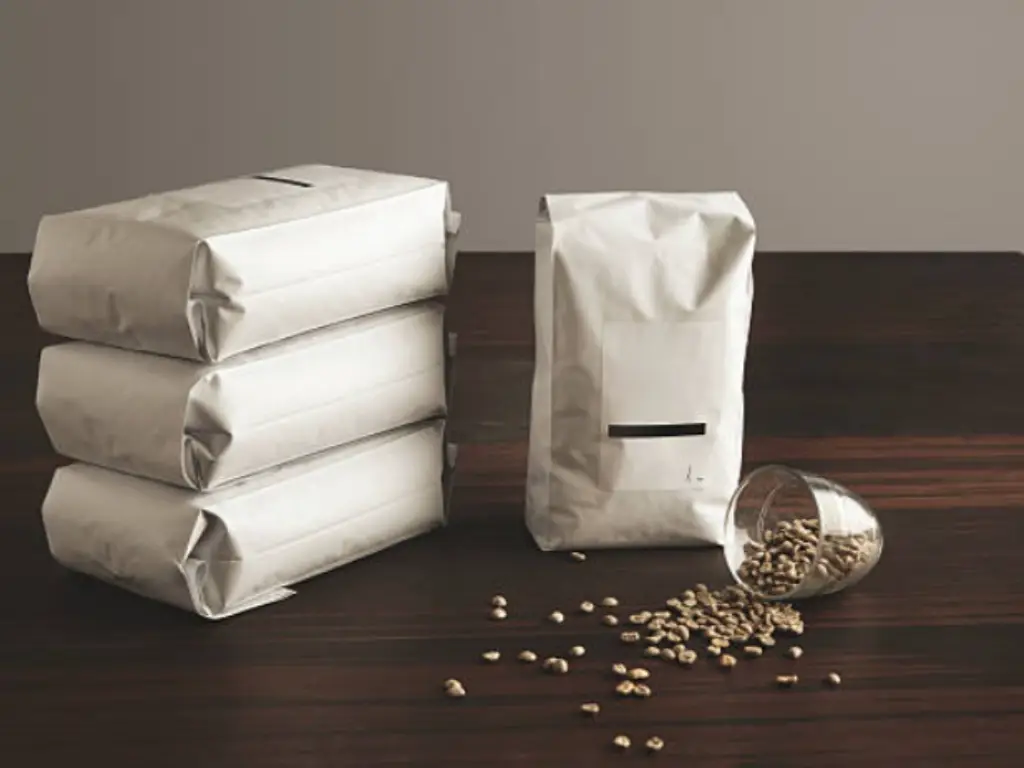
Material choice isn't a downstream printing decision. It's a design decision that determines barrier performance, shelf presence, and how your sustainability story reads.
Comparing Coffee Packaging Substrates — Protection, Perception, and Cost
Three substrate families dominate specialty coffee packaging in 2026. Each comes with genuine trade-offs — there's no universal "best."
| Substrate | Protection (O₂/Moisture Barrier) | Sustainability Reality | Cost Range | Best For |
|---|---|---|---|---|
| Kraft + barrier liner (PET/Alu/PE) | High — multi-layer blocks O₂ effectively | Hard to recycle in standard streams (mixed-material laminate) | $–$$ | Roasters prioritizing shelf life and craft aesthetic |
| Mono-material PE/PP | Medium-High — improving rapidly, supplier-dependent | Clearer end-of-life path (single polymer = easier to recycle) | $$ | Sustainability-forward roasters with moderate distribution timelines |
| Home/industrial compostable | Medium — shorter shelf life, moisture-sensitive | Strong end-of-life story IF facilities exist | $$$ | Local/regional roasters whose customers can actually compost |
The decision logic is straightforward but contextual. A dark roast shipping internationally needs oxygen barrier performance above all else — the melanoidin degradation that Borém's UFLA team documented happens faster in permeable packaging, and dark roasts are more susceptible to oxidation. A light roast sold locally through a subscription model can afford to prioritize compostable materials — the coffee reaches the customer within days of roasting, well before barrier limitations matter.
One critical variable most substrate guides skip: your packaging equipment. Not every filling machine can seal compostable film. Its heat-seal temperature window is narrow — often ±5°C tolerance — and older or lower-precision machines will produce inconsistent seals or burn-through. If you're considering switching substrates, verify your equipment's material compatibility before ordering printed bags. (The equipment-design connection gets its own section below.)
Research reference: Borém et al. (2025) demonstrated in Coffee Science that hermetic packaging with a one-way valve preserved melanoidin content and color stability in roasted coffee significantly better than permeable packaging over 60 days. Medium roasts in hermetic packaging maintained color stability for roughly 200 hours; dark roasts extended to roughly 480 hours (Borém et al., UFLA, 2025).
How to Talk About Sustainability Without Greenwashing
Specialty coffee buyers have developed a sharp nose for vague eco-claims. The difference between "eco-friendly packaging" and "industrial compostable certified to EN 13432 — please check local composting facility availability" is the difference between eye-roll and trust.
Three rules for credible sustainability communication on packaging:
1. Name the material, not the virtue. Skip "Sustainable pouch." Use "Mono-material PE pouch, recyclable where PE film collection exists."
2. State the end-of-life path, including its limits. If your compostable bag requires industrial composting facilities — and only 15% of communities in your target market have them — say so. Honesty builds more trust than omission.
3. Lead with quality, support with sustainability. The UFLA eye-tracking study showed that sustainability claims attract visual attention but convert weakly to purchase intent. Your sustainability story belongs on the back panel as supporting evidence, not as the headline replacing sensory notes on the front.
Design Aesthetics That Win on Shelf
If materials are the foundation, aesthetics are the argument. And in 2026, there are exactly two poles that work — and one massive middle that doesn't.
Minimalist "apothecary" style. Single-color ink on uncoated kraft. Small type, generous negative space, one focal element. Signals purity, restraint, and confidence. Picture a black serif label on a natural kraft bag with nothing but the farm name, varietal, and "blueberry · dark chocolate · jasmine" in 14pt type. This approach works because it refuses to compete on noise — and in a category full of illustrated coffee cherries and steam swirls, silence is the loudest statement.
Maximalist illustrative style. Full-bleed artwork, layered typography, vivid color. Signals personality, creativity, and "this isn't a commodity." When executed well — custom illustrations that tell the producer's story, not stock vector art — this approach turns the bag into a collectible. The SCA Coffee Design Awards gallery is full of examples.
What doesn't work: the generic middle. Stock photos of coffee beans. Steam rising from a stylized cup. Brown color palettes because "it's coffee." These designs communicate nothing except "we didn't invest in packaging." Shoppers scan past them in under a second — they look identical to the seven other bags on the same shelf running the same playbook.
A practical rule: if your bag can be described as "it looks like a coffee bag," you're in the generic middle. The bags that win shelf space in 2026 either go confidently minimalist or richly maximalist — there's no safe average.
Beyond the aesthetic direction, one layout shift has become nearly standard: flavor notes as headline typography. Moving tasting notes from a footer block to 60–80pt display type occupying the upper third of the front panel. This isn't a design trend — it's a direct response to the UFLA data showing that sensory descriptors are the single strongest purchase-intent driver. Treat them accordingly.
Structural and Functional Elements That Matter
Beneath the visual design sits a layer most articles skip: the physical structure of the bag. These decisions determine whether the coffee arrives fresh, pours cleanly, and functions in a busy café environment.
| Element | Options | Why It's a Design Issue | Guidance |
|---|---|---|---|
| Bag style | Flat-bottom / gusseted / pillow / stand-up pouch | Flat-bottom bags stand confidently on retail shelves and stay open on café counters. Pillow bags are cheaper but collapse. | Retail → flat-bottom or stand-up. Wholesale/samples → pillow. |
| One-way degassing valve | Present / absent; single vs. dual | Whole-bean coffee releases CO₂ for days after roasting. No valve = ballooning bags or burst seams. | Mandatory for whole bean. Position the valve where it doesn't fight your tasting-note typography. |
| Closure | Zipper / tin tie / press-to-close / none | A barista opening the same bag 40 times a shift needs one-hand operation. | Retail consumer → zipper. Wholesale/café → tin tie or hook-and-loop. |
| Size-to-fill ratio | 8oz / 12oz / 1kg / custom | A bag too large for its fill weight slumps on the shelf and accelerates staling. | Test with real product, not estimates. 12oz whole-bean ≈ 5"×8.25"×3" gusset starting point. |
Most design guides stop here. They'll tell you what to choose but not how those choices are constrained by the machinery on your production floor. A machine limited to pillow bags only can't deliver the shelf presence of a flat-bottom pouch — no matter how good your graphic design is. This production-design connection, almost entirely absent from coffee packaging content, is where the conversation gets real.
The Hidden Foundation — How Equipment Choice Shapes Packaging Design
You can design the most beautiful coffee bag in the world. But if your filling machine drifts ±3g per bag, your 12oz label becomes unreliable. If your sealer can't hold a consistent temperature window, your compostable film burns through or seals weak. If your machine only runs one bag style, your entire brand is confined to a single format — permanently.
Equipment isn't the execution layer that comes after design. It's the physical boundary within which design is possible.
Precision, Flexibility, and Material Compatibility — The Design Enablers
Three equipment capabilities have outsized impact on packaging design outcomes:
Fill precision. A servo-driven filling system delivering ±0.1g accuracy means every bag leaving your line weighs exactly what the label promises. A basic motor-driven auger at ±3g means roughly one in four bags is noticeably under or over. For a roaster charging $18–22 per 12oz bag, a 3g shortfall isn't a rounding error — it compounds into a brand trust issue with every shipment.
Format flexibility. Roasters who start with a single product often outgrow their bag format within two years. They add a single-origin line that calls for a stand-up pouch, or a wholesale channel that needs gusseted bags, or a limited release that justifies a four-side-seal flat pack. Equipment that supports pillow, gusseted, stand-up, and four-side-seal formats — with tool-free changeover measured in minutes, not hours — gives your packaging design room to evolve. Single-format machines lock your brand into one shape permanently.
Material compatibility. Compostable films seal within a narrow temperature band — often ±5°C. Run them on a machine with imprecise temperature control, and you get either weak seals that open in transit or burn-through that wastes bags and product. Recyclable mono-materials have different slip characteristics than traditional laminates, affecting how they feed through the forming tube. If your machine can't handle the substrate you want, your sustainability story stays on the drawing board.
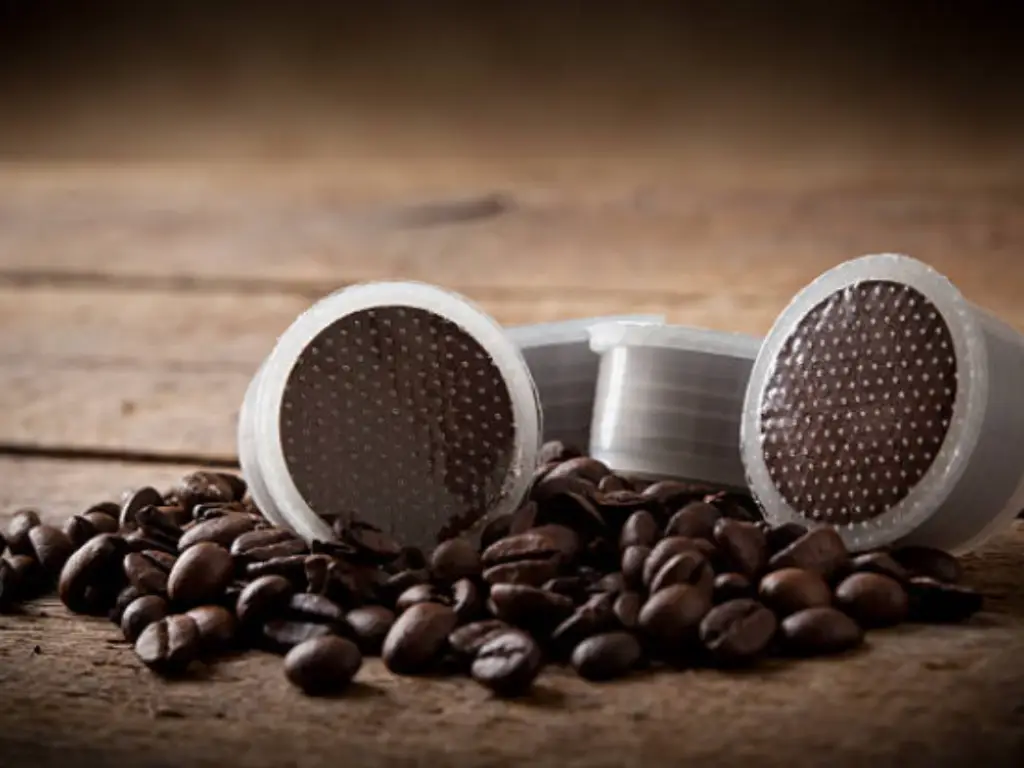
Some manufacturers have addressed these constraints directly. Saneu, for instance, builds its filling and sealing lines with Schneider servo drives for ±0.1g fill accuracy, supports pillow, gusseted, stand-up, and four-side-seal formats on a single platform, and offers tool-free rapid changeover between bag styles. Their machines are engineered to handle compostable and recyclable film materials — a capability that directly enables the sustainable packaging choices discussed earlier. More details on their coffee packaging equipment page and custom packaging solutions.
Nitrogen Flushing and Freshness — The Invisible Design Variable
Freshness preservation is part of packaging design — but it's invisible. A consumer can't see nitrogen. They can, however, taste oxidation three weeks after roast.
Nitrogen flushing displaces oxygen inside the sealed bag, slowing the oxidation that degrades coffee's volatile aroma compounds. The key metric is residual oxygen: 99.9% nitrogen flush leaves roughly one-fifth the oxygen of the industry-standard 99.5% — and since oxidation rate scales with oxygen concentration, that 0.4 percentage point gap translates to measurably slower staling.
This matters most for roasters whose packaging design makes a freshness claim. If your bag says "Peak flavor within 14 days of roast" but your nitrogen flush is only hitting 99.5%, there's a gap between your marketing promise and your production reality. The best packaging design is one where the label and the product inside agree.
Making the Right Investment — In-House vs. Outsourced Packaging
Once you understand what makes packaging design work — from the science of visual attention to the equipment constraints on material choice and fill precision — the final question is operational: should you buy your own packaging equipment, or continue outsourcing?
There's no single right answer, but the framework is clear.
Outsourced packaging (co-packer). Lower upfront cost, no equipment maintenance burden, no learning curve. The tradeoff: less control over fill precision, bag quality, and format flexibility — and unit costs that don't decline with volume. Best suited for roasters under roughly 500 bags per day, or those whose packaging needs are stable and simple (one bag style, one size).
In-house packaging (your own equipment). Higher upfront investment, but full control over every bag that leaves your facility. You can switch substrates, change bag formats, design limited-edition runs, and guarantee fill accuracy. Equipment ROI typically lands in the 12–24 month range at volumes above 1,000 bags per day — faster if you're currently paying a premium for co-packing short runs.
The supplier evaluation factor. If you go in-house, the equipment supplier you choose determines your design ceiling for years. Key evaluation dimensions: multi-format support (can the machine run every bag style your brand might need?), precision specs (±0.1g or bust for premium positioning), material compatibility (does it handle the sustainable substrates your customers are starting to expect?), and after-sales support. A 2-year warranty with lifetime technical support is a meaningful differentiator — especially for first-time equipment buyers.
Saneu, for example, provides 2-year warranty coverage with free spare parts replacement for non-human-damage issues, lifetime technical support, and remote diagnostics via video call — a support structure worth considering when calculating total cost of ownership. Contact their team to discuss your specific packaging requirements.
References
- Souza, A.H.S., Pinheiro, A.C.M., et al. "Which On-Pack Information Drives a Marketable Specialty Coffee Label?" Foods, 14(24), 4235. 2025. doi.org/10.3390/foods14244235
- Silva, L.O., Borém, F.M., et al. "Stability of the color of roasted coffees stored in different packaging." Coffee Science, v.20, e202296. 2025. coffeescience.ufla.br
- SCA Coffee Design Awards Gallery. design.sca.coffee/latest
- Saneu — Coffee Capsule Filling Machines. saneu.com
- Saneu — Custom Packaging Machines. saneu.com
- Saneu — Contact. saneu.com/contact-us
- Saneu Homepage. saneu.com