Introduction
When you are roasting, packing, or selling quality coffee, your product is in an unending struggle with the elements since the time it comes out of the roaster. Maintaining coffee freshness plays a pivotal role in this process. The volatile compounds that give the aroma of your coffee and the flavor of the coffee their unique profile are extremely delicate. Protecting them to ensure a great cup of coffee involves a profound knowledge of materials, proper coffee storage, preservation technologies, and the business realities of retail and e-commerce.
This guide removes the marketing fluff and looks at the mechanics of successful coffee bag packaging. We will examine how various coffee products have specific requirements for preservation, consider the most prevalent types of packaging on the coffee market, describe a system of choosing the correct option to your brand, and explain how to apply best practices to expand your business in an efficient way.
Why Your Coffee Packaging Decisions Count So Much?
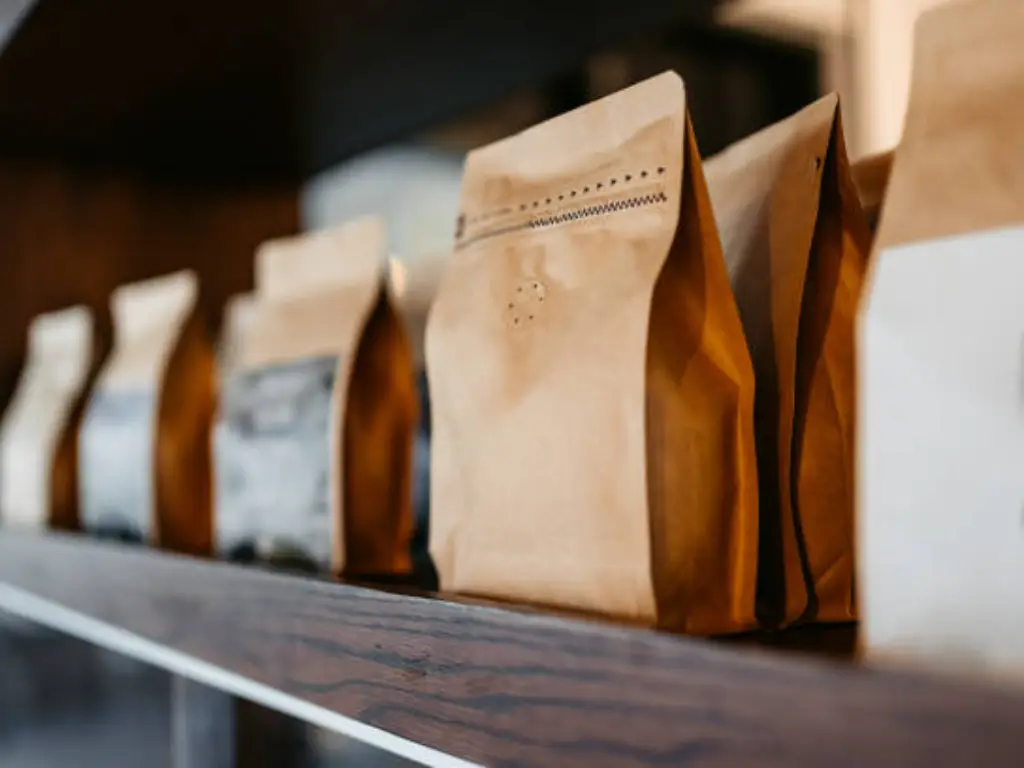
Your packaging has two masters, but equally important. First, it is the physical initial barrier to the four enemies of roasted coffee, oxygen, moisture, light exposure, and heat. While keeping beans at room temperature in a dark place away from direct sunlight is ideal at home, your packaging provides the vital first line of defense. Exposing whole coffee beans to oxygen causes them to oxidize and produce stale, flat and cardboard-like flavors. Humidity leads to deterioration of the beans and may bring about moulds, which is why moisture resistance plays a crucial role in preserving the quality of your coffee. Whereas UV light hastens the process of breaking down the fragile oils on the surface of the bean, making opaque containers essential. Having a high-barrier package is not a luxury, but a necessity in providing a product worth drinking over a long time.
Second, your packaging is a silent salesperson on the retail shelf or the online storefront. In a market that is becoming saturated, the shape, feel and look of your package conveys your brand positioning even before the customer takes a single bite of the product. It informs the buyer as to whether he or she is in possession of a rare, single-origin micro-lot or a consistent, daily dark roast.
Your operational efficiency is also determined by packaging. The type of materials you use and the formats you embrace directly influence your shipping weights, your shelf space, and the kind of automated equipment you will require to grow your business. The last thing to consider is to treat packaging as a secondary consideration, which is a sure method of undermining the quality of your products and losing your profit margins.
Tailoring Preservation Tech to Different Coffee Forms
Not all forms of coffee act in the same manner. The physical condition of the coffee determines the preservation technologies that are necessary to preserve it.
Whole Bean Coffee: Whole roasted beans are simply miniature CO2 factories. The beans emit large quantities of carbon dioxide days or even weeks after roasting. When you put fresh whole beans in a bag that is absolutely airtight, the bag will swell and then explode. The one-way degassing valve is the necessary preservation technology in this case. This is a small mechanical part that enables the accumulated CO2 to be released out of the bag and prevents the entry of ambient oxygen. This enables roasters to pack coffee right after roasting, and preserve optimum freshness without the danger of package failure.
Ground Coffee: When coffee is ground, you have multiplied its surface area exponentially. The staling process turns into a time bomb, and it goes off with a bang. The use of de-gassing valves is not as important in this case since much of the gas is emitted during the grinding process. Rather, it is focused on eliminating oxygen in the environment completely. This is done by vacuum packing, which literally removes the air in a rigid brick-like container, or by nitrogen flushing, whereby the air in the container is replaced by the inert nitrogen gas and then the container is closed.
Liquid Coffee and Concentrates: Ready-to-drink (RTD) coffee and liquid concentrates have other issues, which are not only associated with oxidation but also with microbial growth. Such formats need strong barrier films that can withstand pasteurization or retort processing.
Instant and Soluble Coffee: Freeze-dried and spray-dried coffees have already been extracted and dried. They do not necessarily need oxygen as their main enemy, but moisture. A small portion of ambient humidity will cause the soluble crystals to clump, sticky and degrade immediately. The preservation approach in this case is based on complete moisture barriers, which is usually done by using multi-layered metalized films or rigid containers with very secure and hermetic seals.
Top Packaging Types from Coffee Bags to Capsules
The market has become standardized with a number of basic packaging formats, each with a particular operational and commercial purpose. The most common types are broken down below.
Traditional Coffee Bags
Retail coffee is still packaged in the flexible pouch, although there are a number of different structural variations.
The standard of the Flat Bottom bag is the premium one. It is a box-shaped object with a perfectly flat base and four hard corners, which means that it will stand straight on the shelf. It provides five printable real estate panels, which is perfect when it comes to high-end specialty roasters that require a lot of space to tell their brand stories.
The commercial workhorse of the industry is the Stand-Up Pouch, commonly referred to as a Doypack. It has a bottom gusset which enables it to stand, but not as rigidly as a flat bottom bag. It is very cost-effective, can be operated on automated filling machines and can be used in both entry-level brands and mid-tier offerings.
The Side Gusset bag is the classic shape that is commonly used with larger volume, wholesale, or food-service coffee. It does not have a flat bottom and is therefore normally shown in a lying or propped position. It is very affordable and does not have the high shelf position of the other two types of bags.
Coffee Cans and Tins
Metal packaging provides the highest level of oxygen and light protection. Tins and cans convey the image of tradition, longevity, and high quality. They are very protective when shipping and can be recycled indefinitely, which is attractive to certain consumer groups. They are however much more costly to manufacture and ship than flexible film and take up more warehouse space when not in use. They are normally used in high-end product lines, gift lines, or in highly pressurized nitrogen-sealed applications.
Coffee Capsules and Pods
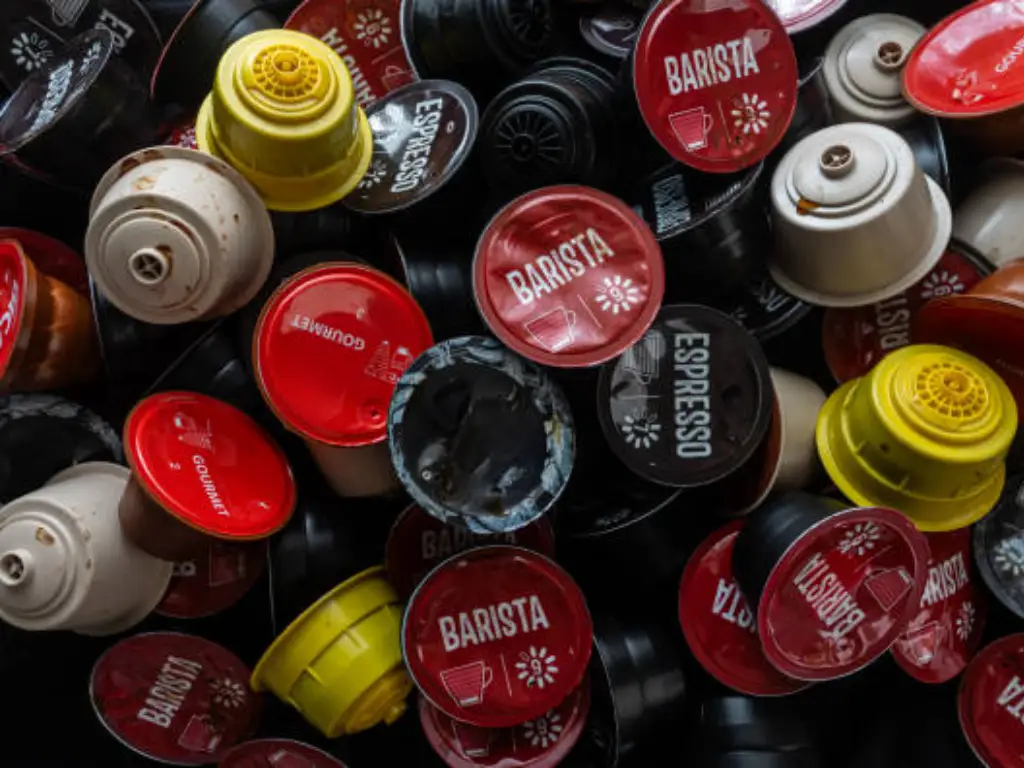
The single-serve package provides the ultimate convenience to the final user. K-Cups and Nespresso compatible aluminum capsules dominate the office and home-convenience markets. The barrier properties are good provided that they are made properly, and you have a fresh cup each time. The main disadvantage is that it is a complicated process to produce; filling capsules involves very specific and specialized equipment and the format is often questioned in terms of environmental sustainability, although compostable alternatives are quickly evolving.
Packaging Format | Barrier Protection Level | Relative Cost per Unit | Ideal Commercial Application |
Flat Bottom Bag | High (with proper film) | Medium to High | Premium specialty retail shelves |
Stand-Up Pouch | High (with proper film) | Low to Medium | Everyday retail and e-commerce |
Side Gusset Bag | High (with proper film) | Low | Wholesale, bulk, and food-service |
Coffee Cans/Tins | Ultimate (Airtight/Lightproof) | High | Premium lines, gifting, long-term storage |
Capsules/Pods | Very High (Individual dose) | Medium (High setup cost) | Convenience retail, office, hospitality |
How to Choose the Right Packaging for Your Brand?
To choose the appropriate packaging, it is necessary to balance the physical requirements of the coffee and the business strategy. Do not make this choice on the basis of aesthetics. There are a number of factors that are interrelated and you need to consider these factors to come up with the precise container that will safeguard your product and your profit margins.
Assessing the Physical Condition of Your Coffee
The physical condition of the product itself is the first thing you have to think about. Depending on the main form of your coffee, you can decide on the best packaging:
Whole Beans: You will definitely require a high quality one-way degassing valve and a thick film structure. The undisputed standard is a flexible stand-up pouch, or a flat bottom bag with a premium valve.
Grounds & Powders (Pre-ground, Drip, or Capsules): You need a package that can be vacuum sealed, nitrogen flushed or have a tight moisture barrier without losing its structural integrity. Vacuum-sealed side gusset bags, nitrogen-flushed metal tins, individual high-barrier foil wrappers, or aluminum/compostable capsules offer the required rigid barrier depending on your particular product.
Liquid Coffee and Concentrates: This type requires high barrier, leak-proof packaging to avoid oxidation. The common options here are aluminum cans, amber glass bottles or multi-layer foil stick packs.
Instant and soluble coffee (including freeze-dried and spray-dried): the preservation method is based on complete moisture barriers. You are supposed to use certain types such as glass jars with airtight lids, metal tins, single-serving metalized stick packs, or metalized stand-up pouches with secure resealable zippers.
Matching Volume to Format
The package structural requirements are determined by the weight of the coffee. A 250g or 12oz retail product is lightweight and fits well in a stand-up pouch, which offers sufficient base stability to that particular volume. But when you are filling 1kg or 5lb bags to wholesale customers, a stand-up pouch will be unstable, buckle and appear messy. The structural reinforcement of heavy-duty side gusset bag is required in high-volume applications to support the sheer weight without tearing or falling over. However, in the case of individual, single-serve portions, the choice is completely changed to large bags and shifted to rigid coffee capsules, pods, or highly efficient stick packs that are manufactured on multi-lane vertical machines.
Fitting in with Brand Positioning
Your price should be reflected in your packaging. When you are selling a very desirable, high-priced Geisha varietal, placing it in an inexpensive, unbranded side-gusset bag produces a great cognitive dissonance on the purchaser. Luxury positioning requires high quality tactile experiences. In such premium situations, custom-printed flat bottom bags with spot UV detailing, or extremely durable, infinitely recyclable metal tins are the very formats that can be charged a premium price. On the other hand, when your brand image is based on being approachable, offering everyday value, or high-volume turnover, the stand-up pouch is the most rational and economically viable option. Rigid tins with a daily value blend will be over-packed, and this will drive away your target market and will also be unnecessary in consuming your operating margins.
Taking into Account the Sales Channel
The location of the transaction alters the work of the package. When your main medium is a busy shelf in a grocery store, then visual appeal and standing upright are the most important. A bag with a flat bottom that is facing forward or a rigid, stackable metal can will always perform better than a floppy bag since they serve as a strong miniature billboard of your brand. When your main medium is direct-to-consumer e-commerce, retail shelf presence does not matter at all. Rather, you need to make your packaging strong enough to withstand the postal service, light enough to maintain low shipping expenses, and size-wise optimized. In this case, the flexible stand-up pouches or specially designed flat letterbox bags are superior, whereas heavy metal tins are a logistical and financial liability. In the case of B2B wholesale distribution to busy cafes and restaurants, aesthetics is secondary to pure utility and cost-effectiveness, and the large-format side gusset bag is the unquestioned leader of the back room.
Scale Your Production with Saneu Packaging Machines
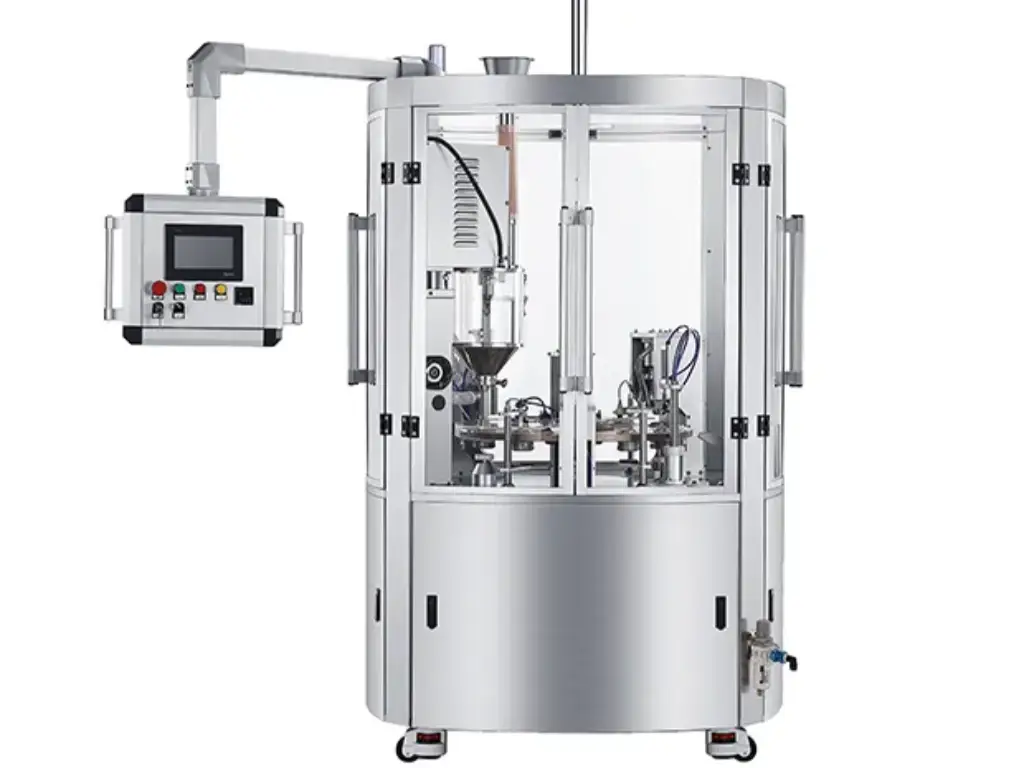
Selecting the appropriate packaging is one thing; filling it correctly and capping it safely on a large scale is where most coffee companies are choked to death. A shift to fully automated lines would necessitate machinery that ensures consistency without affecting the fragile nature of the coffee, especially when switching to fully automated lines or semi-automated lines. This is where the collaboration with an established manufacturer such as Saneu will be a strategic benefit. Having more than 12 years of dedicated industry experience and being ranked among the top five manufacturers of packaging equipment in China, Saneu offers strong solutions to coffee roasters, co-packers and brands.
In the case of businesses that specialize in the single-serve market, the capsule filling and sealing machines of Saneu provide unparalleled preservation features. Whereas the international standard of nitrogen flushing in capsules is at about 99.5, the rotary and desktop sealers of Saneu push the residual oxygen to extreme lows, producing a nitrogen content of up to 99.9. This is a key marginal difference that is important in locking in aroma and shelf life. Moreover, they have incorporated Schneider servo systems that guarantee filling accuracy of 0.1g. This accuracy will remove product giveaway and safeguard your profit margins in the high-volume capsule business in millions of K-Cup, Nespresso, or Dolce Gusto compatible pods.
When you are interested in flexible bags, Vertical Form Fill Seal (VFFS) machines of Saneu can work with the whole range, starting with pillow bags and ending with stand-up pouches. They have continuous and intermittent motion models to fit your speed needs, and tool-free changeovers that enable your operators to change bag sizes in minutes. In the case of ground coffee that needs the longest shelf life, they have a vacuum preservation model VFFS-520.
More importantly, Saneu constructs machines that are geared towards business realities. They produce in-house and have a robust supply chain, which provides equipment with the highest quality global components of Siemens, Mitsubishi, Omron, and SMC at very competitive prices. They support their engineering with a quick 24-hour quoting system, a full 2-year warranty, and lifetime technical support, so that your packaging line is an asset, not a liability.
Sustainable Trends and Eco Friendly Coffee Packaging
The packaging sector is experiencing a lot of pressure to meet the changing environmental policies and consumer demands. Coffee, however, is a special case: the high-barrier characteristics necessary to preserve coffee fresh are conventionally obtained by laminating a variety of various layers of plastic and aluminum. These composite buildings are almost un-recyclable.
The sector is shifting towards mono-materials. The package can be completely recycled at specific facilities by designing pouches with a single type of polymer, usually polyethylene (PE) or polypropylene (PP), and still offer an effective barrier.
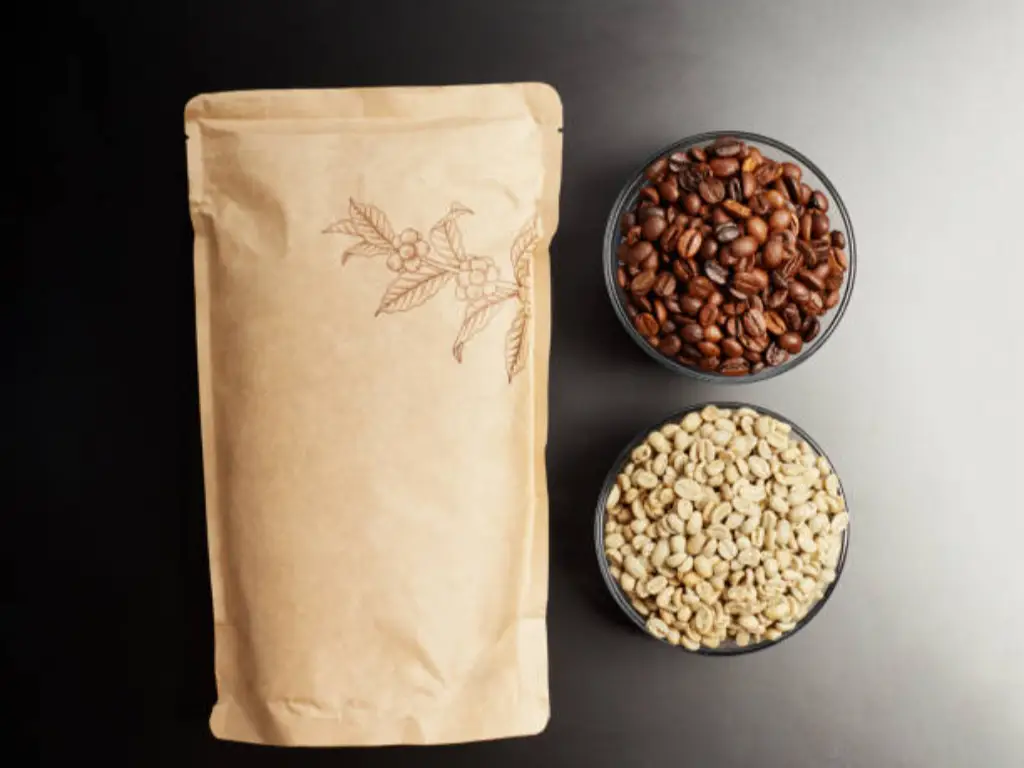
Kraft paper is so much in demand to create an image of an organic, artisanal one. Nevertheless, paper is only zero barrier to oxygen or moisture. Paper bags should be lined to be useful in coffee. The foil-lined paper is being replaced by plant-based, biodegradable bioplastics.
Compostable packaging is also becoming very popular. These are made of materials that are usually corn starch or wood pulp and are meant to decompose. It is important that brands differentiate between home compostable materials, which can be broken down in a backyard bin, and industrial compostable materials, which need the high temperatures of a commercial facility to be broken down. To find the way through these choices, you have to weigh your desire to be sustainable against the need to have your coffee fresh.
How to Design Smart Coffee Packaging to Increase Sales?
The way your consumers engage with your product is determined by the visual and functional design of your package. Good design is not just good graphics, but a means of generating revenue and making people buy again.
The psychology of color is crucial in consumer expectation. Deep jewel, black, and gold colors are sure indicators of high-quality, dark-roasted, or classic espresso mixes. On the other hand, specialty roasters with bright, acidic, lightly roasted single origins tend to use stark white packaging or bright, unconventional colors to indicate a modern, fruit-forward flavor profile.
Information architecture and typography should be mercilessly straightforward. Consumers desire to learn the origin, the level of roast, and the tasting notes at once. Do not inter this information in thick paragraphs. Use clear hierarchies. The roast date is the most important information of the specialty buyer; it should be printed clearly and in a prominent position, not buried on the bottom fold.
Lastly, focus on the end-user experience. A package that cannot be easily opened or resealed is frustrating in the first place. Add very useful tear notches to access. Better still, spend money on good pocket zippers or tin ties. When the consumer can easily reseal the bag, the coffee will last longer in his or her pantry, and the last cup will be as good as the first. It is that good experience that will ensure brand loyalty.
Conclusion
To learn coffee packaging, one needs to have a clear-cut evaluation of chemistry, commercial strategy, and mechanical engineering. Your packaging is not just a container, it is the ultimate determinant of whether your well-roasted coffee will arrive at the consumer in the intended state. Knowing the particular requirements of your coffee in its physical form, choosing the right structural format, and matching your design with your market positioning, you secure your product and promote your brand. When you are ready to scale, it is important to invest in accurate, dependable automated equipment so that your production line can satisfy the demand without compromising the quality that made your business in the first place. Take your packaging strategy as seriously as you take your roasting and the outcome will reflect in your product quality and your bottom line.
FAQS
Q: Which is the best way to package coffee?
A: Coffee can be best packaged in flexible stand-up pouches with one-way degassing valves, vacuum-sealed side gusset bags, hermetically sealed metal tins, and single-serve aluminum capsules.
Q: What is the most suitable container to use with coffee?
A: An ideal coffee container should have a tight lid, be made of opaque substances such as stainless steel or colored glass, should not allow moisture to enter, and should not absorb natural oils.
Q: What is the duration of coffee in a closed container?
A: Coffee has a shelf life of six to nine months on whole beans, three to five months on grounds, and two to four weeks on whole beans after the first seal has been opened.
Q: What do you never keep in plastic containers?
A: Oily dark roast coffee beans should never be kept in plastic containers since the porous surface absorbs natural oils, traps stale odors and hastens the loss of flavor.