A supplier says its machine can produce 3,500 pods an hour. Someone on the team multiplies that by eight hours, then by 250 working days. The spreadsheet suddenly looks wonderful.
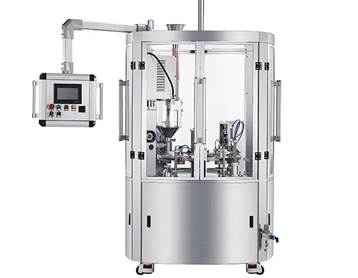
Well, slow down.
Rated speed is not sellable output, and production capacity is not customer demand. Buying on theoretical speed is a bit like planning every delivery route around a van’s top speed. The number is real. It just is not the number that runs the business.
Single-serve coffee has a strong use case. The Spring 2026 National Coffee Data Trends report says 66% of American adults drank coffee in the past day, while 85% of past-day coffee drinkers had coffee at home. Still, market demand does not prove demand for your pods.
A useful K-Cup filling machine business case starts with your orders, current costs, and realistic operating hours. Then it asks a less exciting but more valuable question: should we buy, keep co-packing, start with a smaller system, or wait?
Start With the Make-or-Buy Decision, Not the Machine
Define the decision before collecting quotes. Usually, there are four options:
- Continue using a co-packer
- Improve a manual or semi-automatic process
- Install an automatic filling and sealing line
- Delay the project until demand is firmer
Use the same evaluation period for every option. Three to five years is often long enough to capture startup costs, maintenance, and growth without pretending you can see the distant future perfectly.
Simple payback is useful, but it is not the whole answer. A machine with a two-year payback can still be a bad investment if it empties the bank account during installation. Look at cash timing, financing, downside risk, and the capacity left for growth.
Also define the scope. Are you comparing filling and sealing only, or finished pods in coded retail cartons? Comparing a bare machine with a co-packer’s finished-box price produces impressive nonsense.
Build a Demand Case the Machine Cannot Fake
Begin with evidence:
- Historical pod orders
- Repeat-customer rate
- Signed retail or office contracts
- A probability-weighted sales pipeline
- Seasonal peaks
- SKU-level forecasts
Separate produced pods from shipped pods and paid-for pods. The last one funds the machine.
Do not use the size of the U.S. coffee market as your sales forecast. A regional roaster needs proof that its own retail, hospitality, office, or private-label channels can absorb the volume.
Convert Demand Into Required Capacity
Start with:
Required good pods per hour = Annual sellable demand ÷ Available production hours
Available hours should exclude days when the line cannot run. Then account for cleaning, changeovers, breaks, maintenance, and normal production losses.
Rated Speed Is Not Sellable Output
Use a practical capacity formula:
Sellable output = Rated speed × scheduled hours × utilization × yield
Suppose a line is rated at 3,500 pods per hour. You schedule 400 hours per year, expect 70% utilization, and achieve a 96% yield.
3,500 × 400 × 0.70 × 0.96 = 940,800 sellable pods
The catalog math says 1.4 million pods. The operating math says about 941,000. That gap is where cleaning, small stops, adjustments, and rejects live.
Model capacity by SKU if changeovers are frequent. Five small seasonal products can consume more line time than one large house blend, even when annual pod volume is identical.
Establish the Co-Packing Baseline First
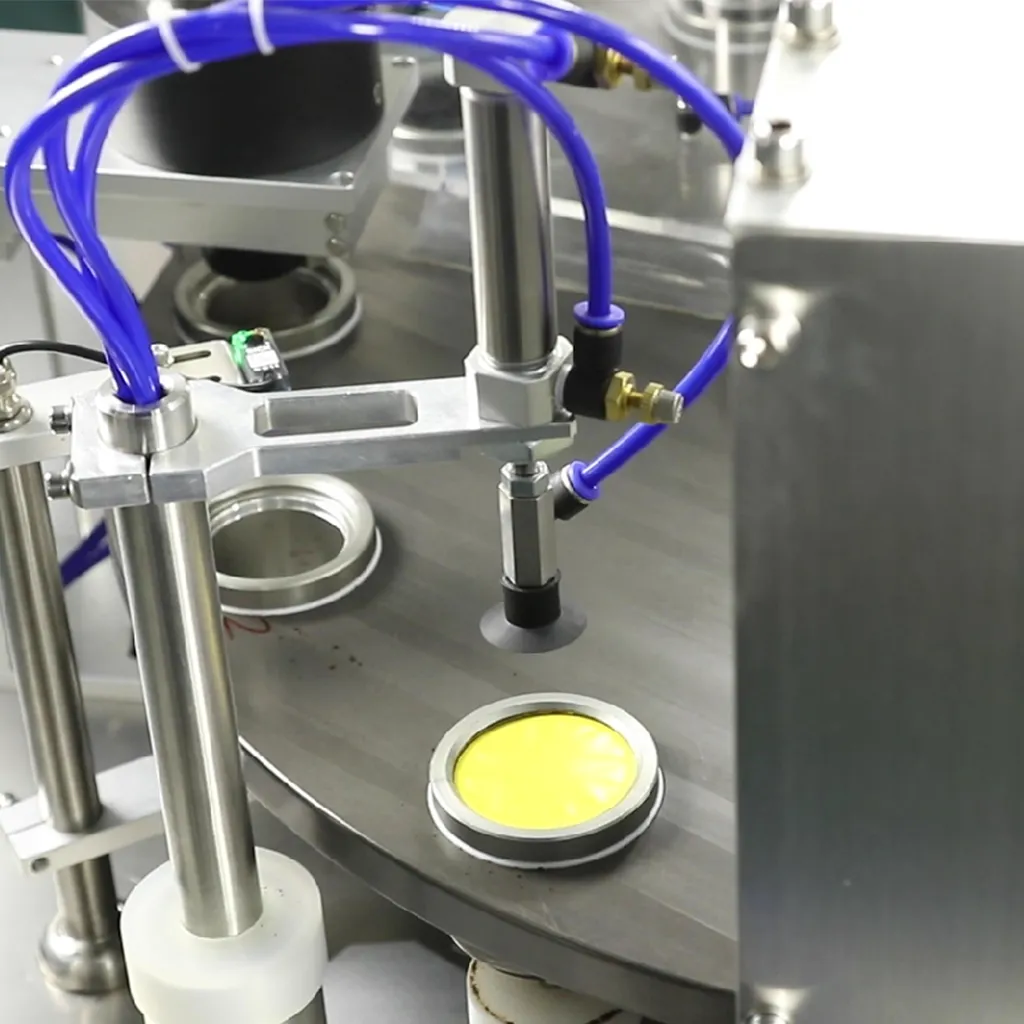
If you currently outsource, calculate what outsourcing really costs:
- Conversion or co-packing fee
- Inbound and outbound freight
- Printed-lid and carton minimums
- Storage and inventory carrying cost
- Rush charges
- Samples and quality checks
- Internal purchasing and supplier-management time
- Lost contribution from stockouts or slow lead times
Compare the same product specification. Coffee dose, cup, filter, foil barrier, nitrogen target, retail pack, testing, and reject policy should match.
Here’s the catch: avoid double-counting savings. If a co-packing price includes labor, nitrogen, sealing, and quality control, those items are already inside the avoided cost. Do not add them again as separate benefits.
The co-packer also carries some risk for you. It owns the equipment, finds operators, handles breakdowns, and spreads unused capacity across customers. That flexibility is part of the fee. Low or unstable volume may make outsourcing the cheaper decision, even when the co-packer’s unit price looks high.
Calculate the K-Cup Machine’s True Installed Cost
The purchase quote is the visible piece. The business case needs the whole cost stack.
| Cost bucket | Examples | Cash timing |
| Machine and options | Filler, sealer, nitrogen system, inspection | Order and shipment |
| Delivery and installation | Freight, duty, rigging, electrical, air | Before startup |
| Tooling and change parts | Cup molds, lid tools, extra formats | Purchase or expansion |
| Facility work | Hygienic area, guarding, ventilation, utilities | Before validation |
| Startup | FAT, SAT, training, test materials, initial scrap | Commissioning |
| Recurring costs | Labor, nitrogen, power, parts, maintenance | Monthly or annual |
| Downstream equipment | Coding, cartoning, case packing | Startup or scaling |
Published coffee packaging machine price ranges can help set an early budget, but a configured quote must reflect your product, speed, factory, and destination.
Put Every Material Into the Cost per Good Pod
The recurring material stack may include:
- Roasted and ground coffee
- PP cup with an integrated filter
- Printed foil lid and heat-seal layer
- Retail carton or barrier pouch
- Nitrogen
- Ink or lot-code consumables
- Shipping case
- Reject allowance
Fill accuracy matters because overfilling becomes material giveaway. An average 0.3-gram overfill across one million pods gives away 300 kilograms of coffee. Underfilling is not a clever saving either; it creates weak cups and complaints.
The complete K-Cup filling and sealing workflow also helps identify labor and bottlenecks beyond the filler itself.
Do Not Ignore Working Capital
Deposits, site work, material purchases, shipping, and ramp-up happen before savings arrive. Build a monthly cash-flow view, not just an annual average.
Depreciation belongs in an accounting view of cost per pod. It is not a cash saving for simple payback. Financing payments, however, are real cash outflows.
Turn the Model Into Cost per Sellable Pod
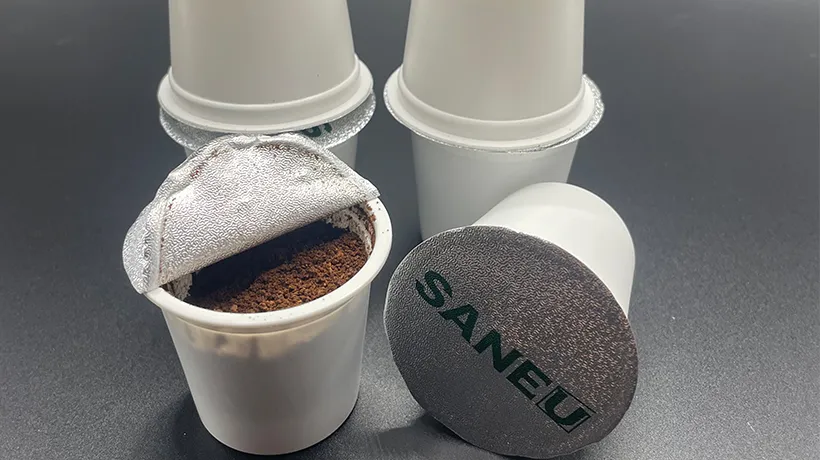
Use a few plain formulas:
Machine ownership cost per pod = Annual ownership cost ÷ Annual sellable pods
In-house cost per pod = Materials + labor + utilities + maintenance + financing/depreciation + waste
Annual net cash benefit = Avoided outsourced cost + new contribution margin − added operating cost
Simple payback = Initial installed investment ÷ Annual net cash benefit
“New contribution margin” means profit from sales that could not reasonably be served before. Do not count the same pod as both an outsourced-cost saving and a new sale.
An Illustrative Regional Roaster
Assume a roaster expects 900,000 sellable pods per year. Its like-for-like co-packing conversion, freight, and management cost is $0.23 per pod. Identical coffee and primary packaging materials are excluded from both sides.
The proposed in-house line has:
- $145,000 initial installed investment
- $0.12 variable conversion cost per good pod
- $18,000 in added annual fixed operating costs
Annual avoided variable cost is: ($0.23 − $0.12) × 900,000 = $99,000
Annual net cash benefit is: $99,000 − $18,000 = $81,000
Simple payback is: $145,000 ÷ $81,000 = 1.79 years
That looks attractive. It is not a promise or an industry benchmark. It is one transparent set of assumptions. Replace every input with your numbers.
Stress-Test the ROI Before the Budget Meeting
A forecast is a polite guess. Stress-testing shows how much wrongness the project can survive.
| Input | Downside | Base case | Upside |
| Sellable volume | 630,000 | 900,000 | 1,080,000 |
| Utilization | 48% | 70% | 78% |
| In-house variable cost | $0.14 | $0.12 | $0.11 |
| Added annual fixed cost | $22,000 | $18,000 | $18,000 |
| Approximate payback | 4.2 years | 1.8 years | 1.3 years |
The example keeps the co-packing baseline at $0.23 and the initial investment at $145,000. Its downside case is still positive, but much less exciting.
Test at least these variables separately:
- Sellable volume
- Yield and reject rate
- Labor rate
- Coffee giveaway
- Downtime
- Nitrogen cost
- Co-packer price
- Financing rate
If the project works only in the upside case, it is not a sturdy business case. It is a wish wearing a spreadsheet.
Count Benefits That Do Not Fit Neatly in One Cell
In-house capacity may create value through:
- Shorter lead times
- Smaller production batches
- Faster seasonal launches
- Better formula and quality control
- Less dependence on a co-packer’s schedule
- Private-label work for nearby brands
- Faster response to office or hotel orders
These benefits matter, but use evidence. A conversation with one possible co-packing customer is not contracted revenue. Put uncommitted opportunities in the upside case.
There are costs that spreadsheets also miss: management attention, production complexity, food-safety responsibility, and the opportunity cost of floor space. A roasting team may be able to run packaging. That does not mean it can absorb the work for free.
Match the Equipment Tier to the Approved Case
| Production model | Best fit | Business-case warning |
| Manual or tabletop | R&D and tiny runs | Labor dominates unit cost |
| Semi-automatic | Pilots and variable demand | Consistency can depend on operators |
| Automatic linear | Stable regional volume | Extra lanes become idle capital |
| High-speed integrated line | Co-packers and large CPG brands | Downstream packing must keep pace |
Review current K-Cup filling machine models and capacities only after the required good-pods-per-hour figure is known.
Specifications change the economics:
- Fill accuracy affects coffee giveaway and consistency.
- Changeover time removes sellable production hours.
- Residual oxygen and sealing affect shelf life and returns.
- Common electrical components can shorten spare-part lead times.
- Multi-format tooling may add revenue, but also cost and setup time.
If demand is promising but not ready for a larger line, a startup capsule production system can provide a lower-capacity validation step. For detailed manufacturer and specification comparisons, use the separate K-Cup filling machine buyer’s guide. That is the next decision, not this one.
Protect the Return With Quality, Safety, and Testing
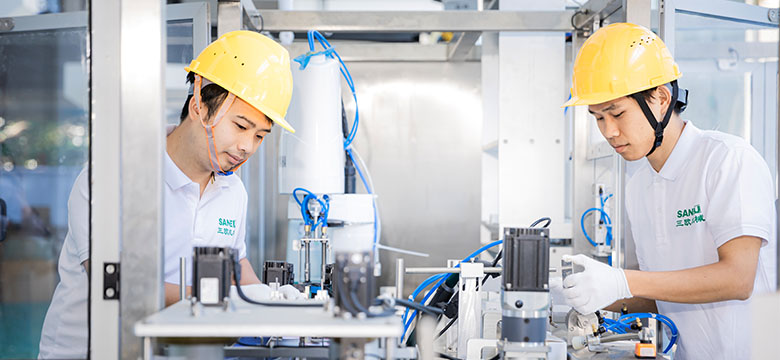
An ROI model quietly assumes the line can produce safe, saleable pods. Protect that assumption.
Food Quality and Hygiene
The FDA guidance for starting a food business covers facility registration, CGMP, preventive controls, recordkeeping, and labeling topics that may apply, depending on the operation and exemptions.
Consider HACCP or an ISO 22000-based food-safety system, hygienic product-contact design, cleanability, allergen controls, and documented batch traceability. Validate fill weight, seal integrity, residual oxygen, brewer compatibility, and shelf life.
Nitrogen purity at the supply point is not the same as oxygen remaining in a sealed pod. This guide to nitrogen packaging and oxygen control explains why the finished package must be tested.
Machinery Safety
The ANSI/PMMI B155.1-2023 packaging machinery safety standard emphasizes formal risk assessment and responsibilities for machinery suppliers and users.
U.S. operators should also assess OSHA machine-guarding and lockout/tagout requirements, including 29 CFR 1910.212 and 1910.147. Electrical and certification requirements depend on the installation market.
FAT and SAT Are Financial Controls
Factory Acceptance Testing and Site Acceptance Testing are not ceremonial checkboxes. Test the actual coffee, cup, lid, speed, nitrogen conditions, and changeovers.
Write acceptance criteria into the purchase agreement:
- Sustained good output
- Fill-weight tolerance
- Reject rate
- Residual oxygen target
- Seal quality
- Alarm and guarding checks
- Training and documentation
A machine that reaches rated speed for five clean minutes may still struggle through a real shift.
Where the Capacity Can Earn Revenue
An in-house line can serve:
- Your own retail and subscription products
- Private-label coffee brands
- Office coffee services
- Hotels and hospitality groups
- Local grocers
- Tea, cocoa, and soluble beverage formats
- Contract packing for nearby roasters
Count proven own-brand demand in the base case. Put credible but unsigned customers in a probability-weighted case. Leave “we could become a national co-packer” out of the model until there is evidence.
Conclusion
A credible K-Cup filling machine business case is not machine price divided by a co-packing fee. It follows a stricter order:
Demand → outsourcing baseline → installed cost → sellable output → sensitivity → risk controls
Use real orders, compare identical scopes, and model the downside. Then choose equipment that fits the approved case, with some sensible room to grow.
If the investment still works after lower volume, startup waste, and downtime, good. You have more than an attractive quote. You have a decision that can survive contact with the factory floor.
FAQs
Is a K-Cup filling machine worth the investment?
It can be when repeatable demand, co-packing savings, and new contribution margin support the full installed cost. It may not be worthwhile for low or uncertain volume. Run downside and base cases before buying.
How do you calculate ROI on a K-Cup filling machine?
Calculate the initial installed investment and annual net cash benefit. Simple payback equals initial investment divided by annual benefit. For a fuller view, model monthly cash flow, financing, tax treatment, and the time value of money.
What is a typical payback period for coffee pod equipment?
There is no reliable universal period. Payback changes with volume, utilization, labor, co-packing fees, yield, downtime, and installed cost. Treat fixed payback claims as examples until the assumptions are visible.
How much does a K-Cup filling machine cost?
Pricing ranges from small manual systems to six-figure integrated lines. Automation, speed, lanes, nitrogen, inspection, tooling, certification, installation, and downstream packaging all affect the final installed cost.
At what volume should a roaster move away from co-packing?
There is no magic daily threshold. Compare the cost of good, finished pods at realistic utilization. A stable contract can justify equipment sooner, while seasonal or uncertain orders may favor co-packing at a higher unit price.
What hidden costs belong in the business case?
Include freight, duty, rigging, electrical work, compressed air, nitrogen, molds, training, startup scrap, coding, cartoning, spare parts, maintenance, sanitation, testing, financing, and working capital.
How much labor does an automatic K-Cup line save?
It depends on the current process and the automation boundary. A filler may automate dosing and sealing while staff still load materials, inspect pods, pack cartons, move cases, clean, and change formats.
Should I buy a manual, semi-automatic, or fully automatic machine?
Match the system to required good output, SKU mix, labor availability, and forecast confidence. Manual equipment suits trials. Semi-automatic systems fit pilots. Automatic lines need steadier demand and stronger operating support.
How do filling accuracy and reject rate affect cost per pod?
Overfill gives away coffee, while underfill can cause quality failures. Rejects consume coffee, cups, lids, labor, and line time without generating revenue. Calculate cost per sellable pod, not per attempted pod.
What should be tested before accepting a K-Cup filling machine?
Test sustained output, fill accuracy, seal integrity, residual oxygen, reject rate, alarms, guarding, changeovers, cleaning, and compatibility using your actual coffee and packaging. Record the acceptance criteria before placing the order.