Introduction
In the global coffee market of 2026, packaging automation has transitioned from a luxury reserved for industrial giants to a mandatory entry ticket for roasters of all scales seeking consistency and survival. As labor costs climb and consumer tolerance for flavor degradation reaches an all-time low, a high-performance industrial coffee packaging line must evolve from a simple collection of machines into a unified digital-physical ecosystem. This guide serves as a technical whitepaper for decision-makers, deconstructing the complex physics of automation, dosing accuracy, and the mechanical orchestration required to prevent expensive downtime. We will explore how technical accuracy and system integration directly influence your bottom line, examining critical variables from the material science of 316L stainless steel to the physics of residual oxygen control. Our goal is to provide a strategic blueprint based on Total Cost of Ownership (TCO), helping you transform your packaging department from a cost center into a precision-engineered profit engine. The future belongs to those who master the mechanical and digital symphony of the modern packaging line.
What Exactly Makes Up a Complete Coffee Packaging Line?
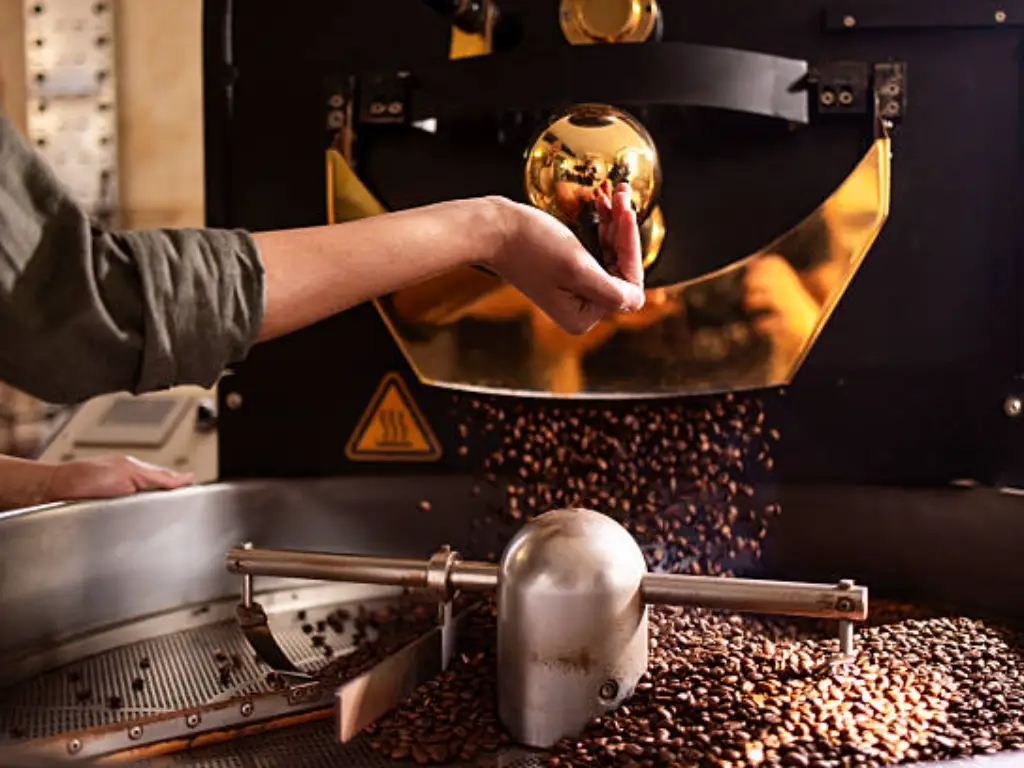
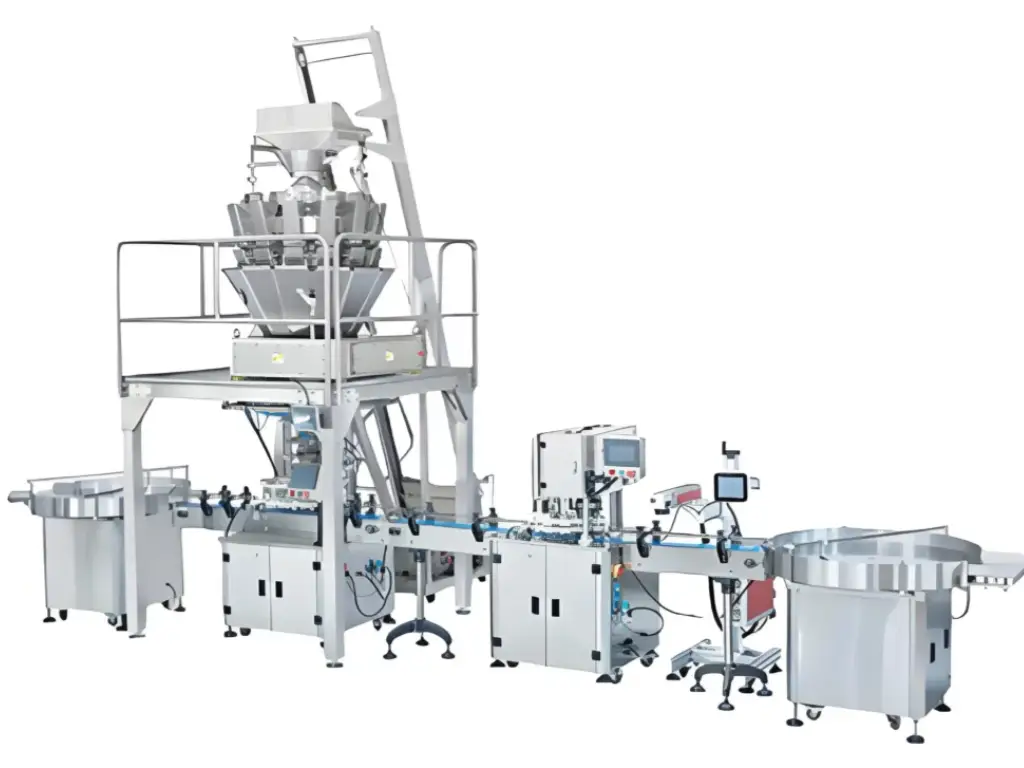
Constructing a world-class coffee packaging line begins with abandoning the standalone machine mindset and adopting a modular system engineering perspective. By 2026 standards, a mature production line is not merely a stack of robotic arms and conveyors but a perfect synchronization between material handling physics and electrical control logic. The primary objective is to maintain a continuous, non-interfering production flow, ensuring that every bean from the cooling bin to the final shipping case is protected from oxygen, dust, and mechanical shear forces. When these elements fail to harmonize, the resulting friction manifests as micro-stops, which can erode up to 15% of your annual production capacity.
The physical journey starts with material transport, where the vascular system of the plant is defined. For roasted whole beans, engineers prioritize Z-bucket Elevators. The logic behind this choice lies in the pendular bucket design, which allows for vertical transport at controlled linear velocities. This minimizes the impact force during transitions and effectively reduces bean breakage rates to near zero, maintaining the premium visual integrity and essential oils of specialty coffee. For ground coffee, however, enclosed Screw Conveyors are the gold standard. They utilize sealed vacuum designs to suppress dust clouds within the facility while preventing moisture absorption. All contact surfaces must strictly adhere to SUS 316L food-grade stainless steel standards to withstand the corrosive nature of coffee oils and the abrasive chemicals used in deep-cleaning cycles.
Downstream from transport, the brain of the line the PLC control system orchestrates the entire rhythm. It manages the complex handshake signals between the in-feed elevator, the dosing scales, and the primary filler. High-level electrical integration, often powered by Siemens or Schneider Electric, ensures that the line functions as one unified organism. When the sealing station requires a momentary micro-adjustment, the upstream feeding system automatically throttles its speed rather than triggering a hard emergency stop. This synchronization capability directly dictates the Overall Equipment Effectiveness (OEE) and is the primary differentiator between professional industrial lines and basic packaging machinery that lacks coordinated logic.
Choosing the Right Bag Format for Your Production Goals
Selecting your packaging format is a strategic commercial decision that dictates long-term capital expenditure and OEE. In the 2026 landscape, the choice between roll stock efficiency and premade pouch premiumization depends entirely on your market reach, SKU variety, and target margins. This decision anchors the hardware architecture of your facility and dictates the long-term profit ceiling of your operation.
VFFS Machines for High-Volume Roll Stock Packaging
Vertical Form Fill Seal (VFFS) technology is the cornerstone of high-volume wholesale operations. Its competitive edge lies in utilizing roll stock film to form bags on-site, a logic that can reduce material procurement costs by over 30% compared to pre-made alternatives. On a technical level, modern VFFS systems integrate Vacuum-Gas Displacement modules, pulling a vacuum and synchronizing a nitrogen flush within the milliseconds of bag formation to establish a protective barrier at the moment of creation. It is the king of mass-market efficiency.
Premade Pouch Fillers for Premium Branding
For roasters targeting premium retail, premade pouch fillers provide unmatched shelf presence. These rotary systems handle complex bag shapes with zippers or flat bottoms with extreme reliability. While the unit cost per bag is higher, the primary advantage is changeover efficiency. Thanks to tool-free adjustment systems, operators can switch from 250g to 1kg formats in under 15 minutes, making it ideal for co-packers handling small batches of diverse SKUs without sacrificing hours of productive uptime.
| Production Metric | VFFS (Roll Stock) | Premade Pouch | Capsule Filling Line |
|---|---|---|---|
| Primary Benefit | Mass Efficiency | Premium Aesthetic | Single-Serve Precision |
| Material Savings | 30% – 45% | Baseline | N/A |
| Switchover Speed | Moderate | Very Fast | Highly Specialized |
Freshness First: Integrating Nitrogen Flushing and Valves
In coffee packaging physics, freshness is a measurable chemical state defined primarily by the residual oxygen level. Oxygen is the ultimate predator of aromatic compounds. Once the internal oxygen content exceeds 1%, delicate volatile oils oxidize within weeks, causing the brand value to plummet as the flavor profile flattens into a stale commodity. Therefore, achieving an atmosphere that is nearly oxygen-free is the most critical technical challenge in the entire packaging process.
Mastering the 99.9% Nitrogen Atmosphere
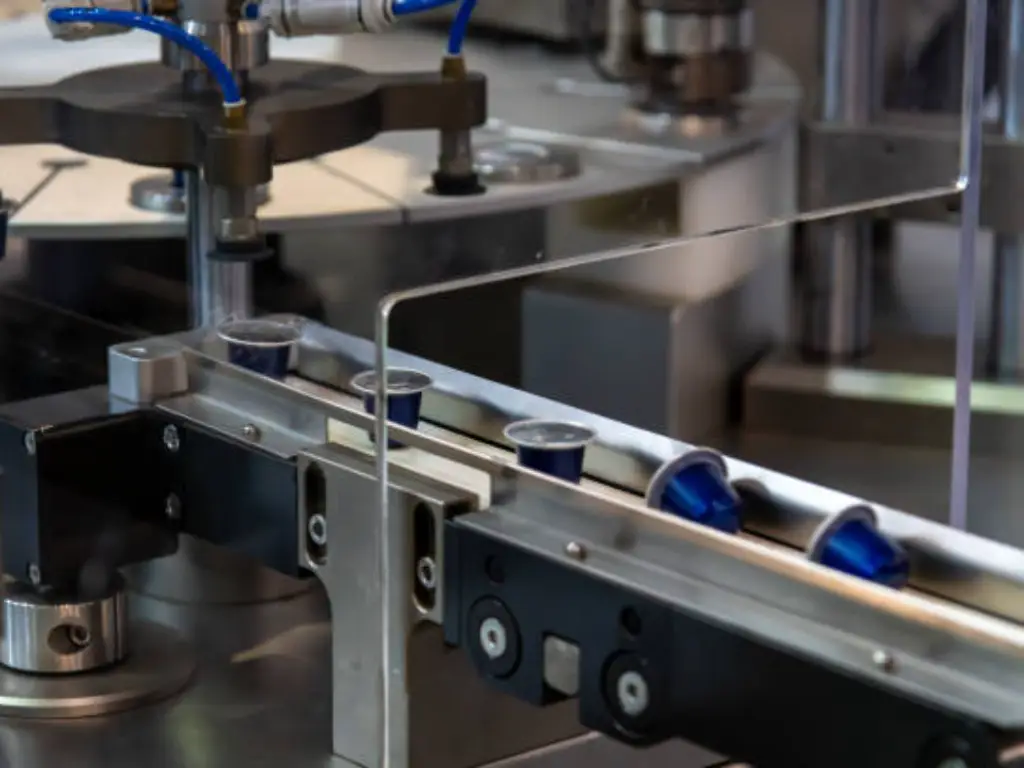
While the industry average for nitrogen purity within a package typically hovers around 99.5%, Saneu has pushed the engineering limit through continuous iteration. Our rotary coffee capsule packaging machines utilize a proprietary Multi-stage Gas Displacement logic, implementing precision nitrogen injection at every stage of filling and sealing. This effectively suppresses residual oxygen to well below 1.0%, often reaching a 99.9% nitrogen environment. Coupled with our revolutionary Filter-to-Cup Welding technology, we achieve a molecular-level bond between the filter and the cup, eliminating microscopic air ingress. This is more than mechanical progress; it is the ultimate guardianship of every specialty bean’s integrity.
In the bagged coffee sector, the integration of one-way degassing valves is equally vital. These components must allow CO‚ to escape while acting as a no-entry sign for oxygen. This requires the valve applicator to possess extreme heat-sealing pressure precision; any microscopic leak renders the entire expensive nitrogen flushing process obsolete, turning the packaging into a failed barrier. Reliability in valve application is a direct byproduct of the precision engineering of the mounting head and the heat-sealing jaw alignment.
Accuracy Matters: How to Stop Giving Away Your Profits
In a high-frequency B2B production environment, dosing accuracy is directly tethered to your cash flow. This involves a core concept known as the giveaway rate. If a production line generates a 2g overfill on a 250g bag, a medium-sized facility producing 10,000 units a day is effectively gifting tens of thousands of dollars in raw material annually. Precision is the invisible insurance policy for your profitability, turning raw grains into predictable revenue.
For whole beans, engineers utilize AL 6061-T6 hard-anodized aluminum alloy to manufacture rotating weighing components. This material choice significantly reduces the moment of inertia, allowing weighing hoppers to respond at higher frequencies to minute weight changes. This, paired with precision sensors, achieves a staggering ±0.1g feedback accuracy. For ground coffee, servo-driven augers utilize closed-loop feedback from end-of-line check-weighers to automatically adjust RPM, compensating for density shifts caused by roasting batch variations or changes in ambient humidity that naturally occur throughout the production day, which is essential to the precision engineering backbone of a modern industrial coffee packaging line.
Managing Coffee Dust: The Secret to Reliable Heat Sealing
Coffee dust is the “silent killer” of automated packaging lines. Due to electrostatic effects, microscopic dust particles cling to the edges of the heat-seal film, creating “leakers” that are nearly invisible to the naked eye but catastrophic for shelf life. Once a seal is compromised, all upstream freshness efforts are neutralized. Managing this requires a coordinated effort between active dust extraction and static neutralization immediately before the sealing station. This Clean-Seal architecture ensures that the molecular chain of the heat-seal remains unbroken and airtight. By utilizing static eliminators and vacuum hoods at the filling point, the seal area remains pristine. Furthermore, the design must comply with FDA and EHEDG washdown standards, ensuring the system operates in a low-noise, dust-free environment. This protects both the product and the long-term health of the operators. Reliable sealing is not just about heat; it is about the physics of surface cleanliness.
End-of-Line Automation: Beyond the Single Bag
A superior automation line should not only produce but also self-audit. The Quality Control Hub at the end of the line serves as the final filtration net for your brand integrity. By integrating check-weighing to reject underweight units, X-Ray detection to identify metal or stone contaminants, and AI-driven vision inspection to detect seal wrinkles, the system ensures that only 100% compliant products enter the shipping case. This automated vigilance is what allows a brand to scale without increasing its liability profile. For canning lines, the sealing rollers must possess a fatigue life of at least 100 million cycles. As the products move into automatic case erectors and palletizers, the data collected provides invaluable insights into your facility’s OEE. True automation ends only when the product is palletized, wrapped, and verified.
Avoiding the Nightmare of Machine Integration
In cross-border equipment procurement, the greatest anxiety for buyers is integration failure buying machines from multiple brands only to find they cannot synchronize. True integration relies on a digital handshake via OPC UA or MQTT protocols and scientific buffering logic. This ensures that minor downstream pauses do not trigger an emergency upstream shutdown, thereby protecting the overall OEE of the entire facility and preventing mechanical wear from frequent stops.
The Saneu 4-Step Seamless Integration Blueprint
Calculating ROI: When Should You Automate Your Line?
Automation is a financial lifecycle investment. roasters should abandon the narrow “initial price” perspective and adopt the Total Cost of Ownership (TCO) model. This includes maintenance man-hours, energy consumption, and raw material recovery due to precision gains. The real cost of a machine is the sum of its acquisition and its inefficiency over five to ten years.
Thanks to Saneu’s vertical manufacturing model, we maintain top-tier components while eliminating the 30% markup typically found in third-party distributions. Combined with a 2-year warranty and Siemens-powered reliability, payback is typically achieved within 6-12 months. Investing in automation is not just about speed; it is about building a scalable foundation that removes human error from your profitability equation and prepares your brand for the global stage.
Conclusion
Building a high-performance coffee packaging line in 2026 is a symphony of mechanical, physical, and digital technologies. As we have explored, every variable from the choice of 316L stainless steel to the precision of residual oxygen control plays a vital role in your brand’s market survival. Automation is no longer a luxury; it is a prerequisite for consistency in a volatile global market. By focusing on system integration, technical accuracy, and a data-driven ROI model, you can transform your packaging process from a cost center into a powerful engine for growth. The future belongs to those who master the mechanical and digital symphony of the modern packaging line. Precision, freshness, and integration are the three pillars upon which the next generation of global coffee brands will be built.