Introduction
In the competitive coffee business, the success of any coffee product in the market is based on a fine balance between the quality of agriculture, accurate roasting, and strict protection. After the coffee beans are ground to powder, the biological clock on coffee freshness starts to tick faster. To safeguard that investment and maintain top coffee quality, one needs to know material science, mechanical engineering and consumer psychology.
Whether you offer a special custom coffee or standard blends, this is a complete guide that dissects all the information you need to know about keeping coffee powder safe in the world of coffee, the appropriate physical formats, the preservation technologies behind the scenes, and the mechanical systems that will make your production floor run.
Why Packaging is So Important to Coffee Powder?
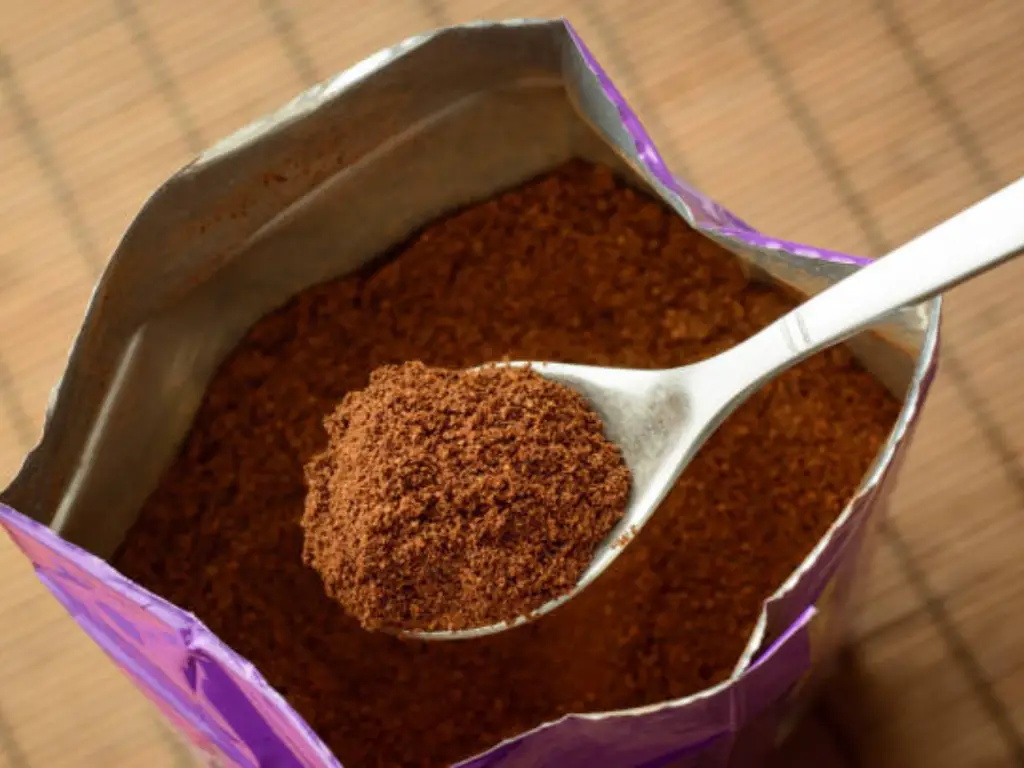
The physical change of the whole bean coffee to ground coffee essentially alters the manner in which the product should be safeguarded, highlighting the critical role of proper packaging. When a bean is ground, the amount of surface area that is exposed to the air is multiplied by hundreds of times. This huge growth implies that the volatile aromatic oils, which are the core of the coffee flavor all kinds of coffee, are now defenseless, and the process of flavor degradation occurs exponentially quicker than in whole beans. Due to this high level of vulnerability, standard food packaging is not sufficient; coffee powder requires much more rigid, high-barrier packaging to survive.
This tight packaging serves as the sole defense mechanism against the three main environmental foes of coffee. Unless it is airtight, the oxygen penetrates the powder very fast and causes oxidation to occur rapidly, transforming a rich, multi-layered roast into a one-dimensional and acidic failure. Simultaneously, ground coffee serves as a sponge to ambient moisture. A small rise in humidity will result in the fine particles clumping together – destroying the brewing extraction – or even promote the growth of mould. Moreover, any light and ambient heat exposure is a catalyst, which violently increases this loss of flavor and freshness. The packaging should be designed to prevent oxygen, moisture, and UV light at the same time to trap in the desired flavor profile.
Best Packaging Formats for Coffee Powder
The physical form and design of your coffee packaging determines how the product will be placed on store shelves, how the consumer will handle it, and what machinery will be needed to produce it. The following is a list of the detailed, commercially viable forms of ground coffee, with only the structural features and marketability in mind.
Packaging Category | Specific Formats | Structural Features | Primary Application |
Flexible Bags | Flat-bottom, Stand-up (Doypack), Side-gusset | Lightweight, large printable surface, flexible | Everyday retail, specialty roasters (250g – 1kg) |
Rigid Cans | Tinplate cylinders, Composite paper tubes | Crush-proof, rigid structure, easily stackable | Premium espresso, commercial kitchens |
Single-Serve Capsules | Nespresso-compatible pods, K-Cups | Pre-portioned, rigid micro-containers | Home and office brewing machines |
Single-Dose Packets | Tubular stick packs, Flat sachets | Ultra-compact, tear-open functionality | Instant coffee powder, travel amenities |
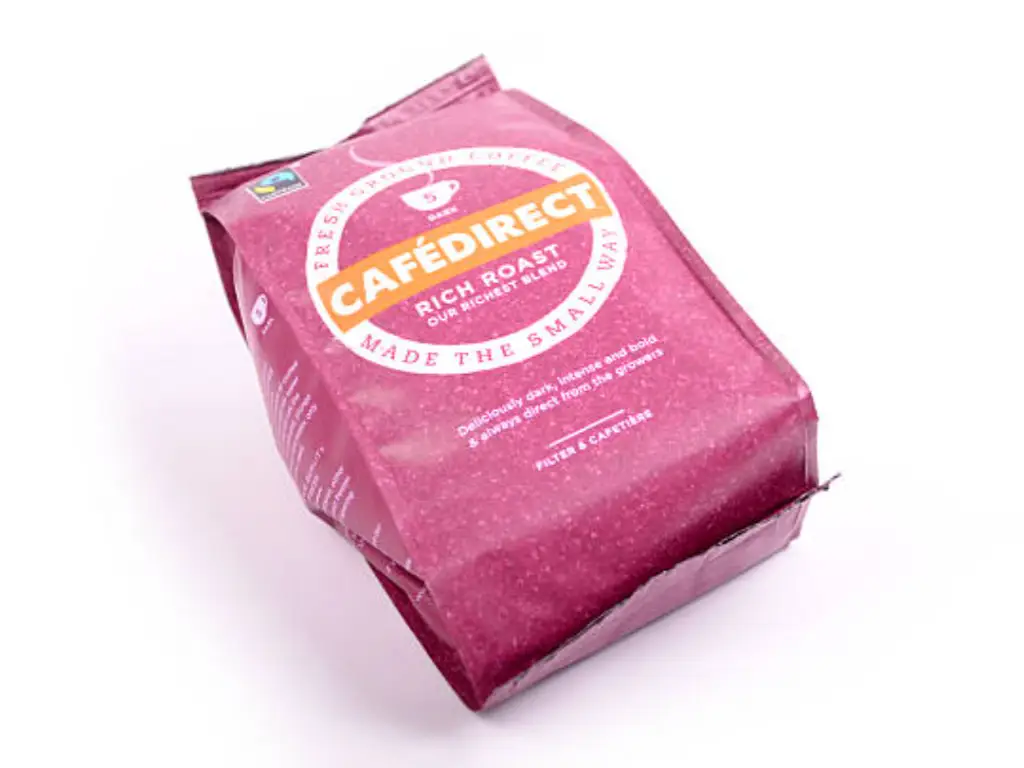
The most common retail shelf product is flexible coffee bags, which have an enormous selection of particular structural designs. Stand-up pouches, also known as Doypacks, have a bottom gusset that enables them to be fully erect and create a great billboard effect on overcrowded supermarket shelves. Flat bottom bags(block bottom) and side-gusseted bags are very popular when the volume is large or the coffee shop is more traditional. They are extremely lightweight, which ensures low shipping costs, and provide the greatest surface area to brand and apply labels, which makes them very versatile between local boutique roasts and mass-market grocery brands.
Rigid cans provide a radically different structural proposal by providing complete physical security. The most prevalent versions are the traditional cylindrical tinplate cans, the modern aluminum canisters and the composite paper tubes with metal bases. The main feature of these inflexible formats is that they are crush-proof and can be stacked in the same way. They are ideal in high-end espresso powders where a high-end, tactile feel is required, or in commercial kitchen settings where the packaging needs to be able to endure rough handling and repeated opening without losing its structural integrity.
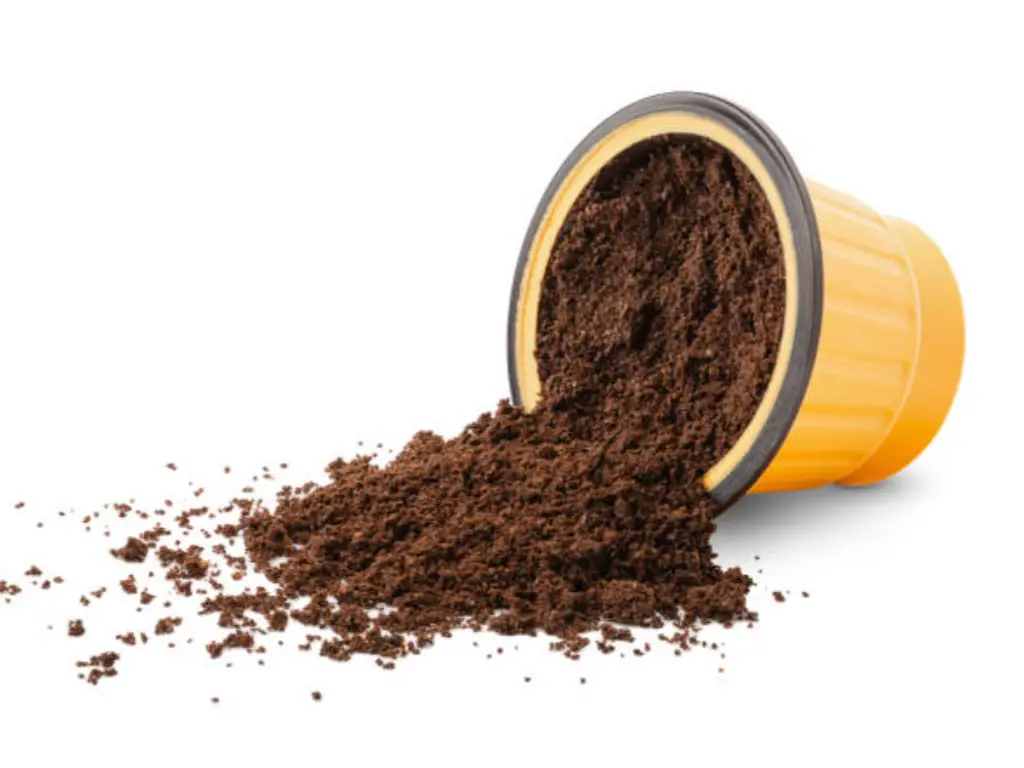
Single-serve capsules do not use any bulk packaging whatsoever, instead opting to use micro-containers that are pre-portioned and accurate for perfect portion control. Small aluminum cupules to fit Nespresso systems and larger, plastic-flanged cups to fit Keurig K-Cup machines are the most prevalent physical formats. The brewing equipment that these capsules are matched with completely determines the structural design of these capsules and they must be of precise dimensions to be perfectly compatible with the machine. This format is specially designed to suit the contemporary home and office market, where the ultimate convenience of zero-measure, zero-mess preparation is more important than bulk value.
Single-dose packets offer the highest structural efficiency in the case of instant coffee powder and high-mobility applications. Tubular stick packs are especially interesting as their long, thin shape consumes much less packaging film per serving than the traditional flat, square sachets (usually closed on three or four sides). These two micro-flexible formats have easy-tear notches and ultra-compact profiles. They are ideally suited to hotel facilities, travel kits, and on-the-go consumers who need a lightweight, instant preparation process without necessarily having to use specialized brewing equipment.
The Coffee Packaging Technology of Freshness-locking
The selection of a container is not the end, the internal environment should be actively controlled to avoid staling. Throughout the packaging process, every physical format demands a very particular preservation plan to maintain coffee powder in its optimum.
Flexible coffee bags are based on two major technologies. The one-way degassing valve is the most important part in freshly ground artisanal coffee. This vent enables carbon dioxide that is naturally released to escape without ambient oxygen entering. On the other hand, mass-market retail bags are vacuum sealed, mechanically removing all the air to form a hard, oxygen-free, brick that prevents oxidation and provides the highest shipping density.
Hermetic double-seaming is used to provide absolute protection to rigid cans. The can lid and body are highly interlocked by high-pressure machinery to form an airtight seal. This is always combined with liquid nitrogen dosing to ensure maximum shelf life. A liquid nitrogen drop is expanded into a gas, and then it is sealed, pushing out the remaining oxygen and keeping the coffee powder in a high quality over years.
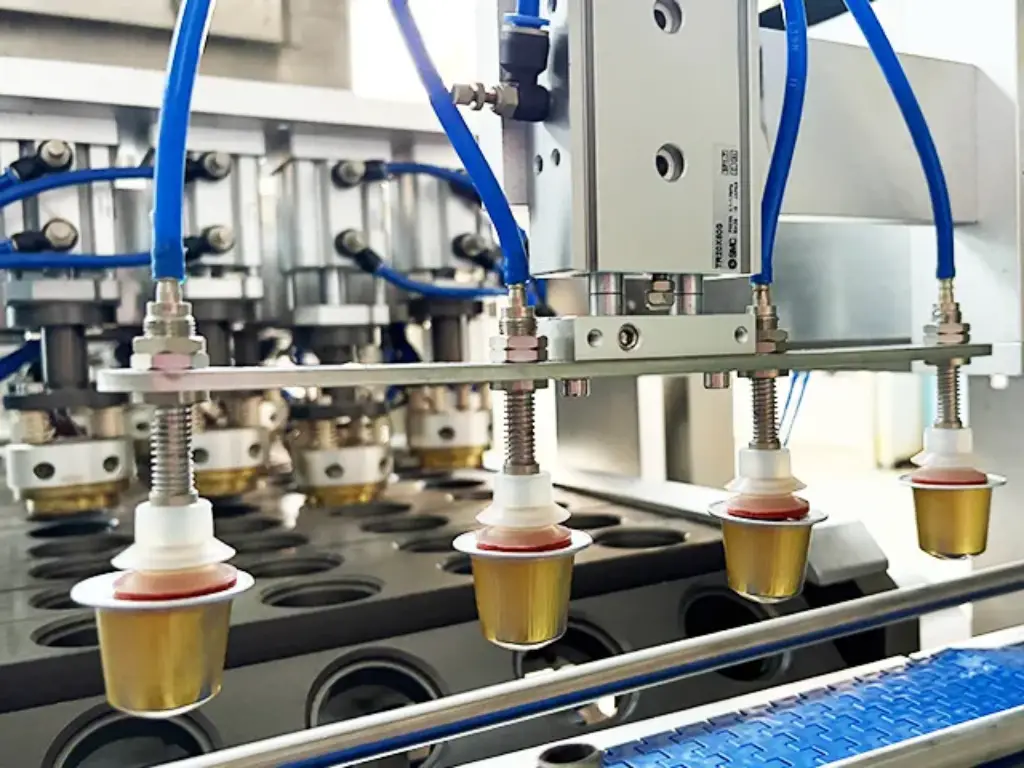
Single-serve capsules require high levels of accuracy since the powder is packed in micro-portions. The criterion in this case is high-speed nitrogen flushing. A specialized filling equipment is used to inject a fine jet of inert nitrogen gas into the small headspace just a few milliseconds before the foil lid is heat-sealed. This flush lowers oxygen to a fraction of a percent, freezing the precise flavor profile of freshly ground coffee.
Single-dose stick packs and sachets, which are intended for instant coffee packaging, put more emphasis on moisture protection than on degassing. Since instant powder clumps immediately in humidity, this form is a combination of high-barrier laminated aluminum foil films and accuracy thermal sealing. This main material choice, alongside the inner layers of polymer are melted together by high-temperature jaws to form an impenetrable moisture lock that ensures the powder remains perfectly free-flowing to travel and store.
Packaging Design: How to Make Your Coffee Shine in the Shelf?
Your package is a silent salesperson in the retail shelf, and the best coffee packaging designs convey your brand goals even before the customer tastes the product. Visual differentiation is a commercial requirement in a saturated market.
Flexible film printing and rigid container printing give a brand the opportunity to narrate their own story. Intricate designs, bright colors, and metallic finishes can be produced using high-definition rotogravure or digital printing and capture the eye. The visual presentation must instantly convey the level of roast, origin, and flavor notes of the powder within.
The premium coffee industry is now dominated by minimalist design languages. The use of clean lines, large areas of white space, and matte finishes imply a high-quality product that does not have to scream to be heard. This aesthetic is frequently combined with tactile features, including textured paper outers or soft-touch films, and appeals to the sense of touch of the consumer.
It is also very effective to incorporate environmentally friendly visual signals. The use of unbleached kraft paper textures, visible compostability certifications, and natural color schemes are indicators to the consumer that your brand is in line with their environmental beliefs.
Which Coffee Packaging Machine is Right for You?
To increase your commercial production, you need to switch to automated equipment that is specific to your preferred format, desired speed, and factory floor space. In the case of single-serve markets, capsule filling and sealing machines are designed to dose coffee, inject nitrogen, and weld lids perfectly. Whether it is thirty-five cups per minute on a rotary on the entry level or twelve thousand an hour on a huge linear line, they require absolute mechanical precision to ensure flawless seals and eliminate crushed cups.
In the case of flexible retail formats, Vertical Form Fill Seal (VFFS) systems are the heavy lifters. They convert continuous flat film to sealed bags in-flight, providing high-volume pillow, gusseted, or vacuum-sealed production with rapid and tool-free changeovers. Alternatively, when your brand uses complicated, zippered stand-up pouches, ready-made pouch packing machines offer that high-end retail look by automatically opening, filling, and heat-sealing pre-made bags.
Since the ground coffee does not pass freely as the whole beans, precise dosing is only possible through special handling. Auger filling systems use high-tech servo-driven rotating screws to force a precise amount of powder into cans, jars or pouches to ensure outstanding weight accuracy. In the case of instant coffee lines, multi-lane stick pack machines are the most efficient at small dose production with up to twelve lanes running at once, producing up to six hundred sticks per minute and a vertical design that reduces your factory size by a factor of four.
The choice of the appropriate mechanical system is not the only step. You require an established engineering partner to ensure uncompromising accuracy, bulletproof dependability, and nitrogen-retention perfection on your factory floor, and that is precisely why more than a hundred international coffee companies are approaching Saneu to construct and protect their packaging lines.
Why Trust Saneu for Coffee Packaging Machines?
Operational efficiency is determined by your machinery. Saneu is a leading five Chinese packaging company that provides strict engineering at a rate of up to thirty percent below the market average using the best of Siemens and Schneider.
The main advantage of Saneu is the precision capsule filling, which is compatible with the most popular formats, such as Nespresso, K-Cup, Dolce Gusto, and Lavazza. Fine coffee powder is to be handled with absolute precision. Saneu resolves this by using high-tech servo-driven auger weighing equipment, which ensures that the plus or minus one gram filling accuracy is achieved to prevent product giveaway. More importantly, their ninety-nine percent ninety-nine point nine percent nitrogen retention is strictly checked by imported German Oxybaby testing equipment, which guarantees maximum shelf life.
In addition to capsules, Saneu ensures your margins in all formats. Their VFFS machines offer high vacuum preservation of retail bulk bags and multi-lane stick pack machines offer high output efficiency of instant coffee. In high-end lines, strong canning systems have dual sealing to avoid contamination. Saneu offers a very stable base to scale your production with a two-year warranty and fast delivery of parts.
Making the Switch to Sustainable Coffee Packaging
The world market is increasingly requiring more environmental responsibility and the coffee industry is leading the pack. Switching to sustainable materials is not only an ethical decision anymore, but a business necessity that distributors must comply with and consumers anticipate.
Material science has resulted in the creation of very efficient compostable single-serve capsules. The equipment of Saneu is compatible with both home-compostable and industrial-compostable capsule formats, which means that brands can provide the convenience of single-serve without the plastic guilt.
In the case of flexible bags, the industry is shifting to mono-material structures. Conventional bags have layers of mixed plastics and aluminum which cannot be recycled. Mono-material films are made by using high-level stretching methods to offer high barriers with the use of a single polymer type, which can be completely recycled in the typical municipal systems. The addition of these materials to your product line is a great way of enhancing your brand equity.
How to Choose the Right Packaging Partners for Your Business?
Choosing a machinery manufacturer or a co-packing partner is a business choice that will have a long-term effect on your bottom line. This assessment should be done with strict commercial scrutiny.
Their manufacturing standards should be checked at all times. Request clear evidence of CE, RoHS and ISO certification to make sure that the equipment is of high quality and safety standards in the international standards. Ask questions regarding their precision of equipment and mechanical life. As an illustration, when you are told that a machine has high-grade bearings that last five years, or rollers that are sealed and can hold a hundred million cans, you are sure of your capital investment.
In addition, consider their lead times and responsiveness. A partner who can offer a free quotation within twenty-four hours and supply customized machines within an average of ten to sixty days is agile in its operations. Be it a standardized entry level machine or a complete automated line, be aligned with a supplier who has open communication and strong after sales services.
Conclusion
To ensure the freshness of your coffee powder, you need a holistic approach that will fill the gap between agricultural art and industrial science. Whether it is the knowledge of the disastrous impact of oxygen and moisture or the choice of the most suitable flexible pouch, rigid can, or single-serve capsule, each choice influences the ultimate consumer experience.
By investing in high precision, reliable packaging equipment by reputable innovators, you are guaranteed that your product will be on the shelf just as your master roaster had planned. With a more efficient approach to packaging and a more sustainable material approach, you will be able to reduce the cost of production, increase your brand visibility, and provide an uncompromising cup of coffee each and every time.
FAQS
Q: How to pack coffee powder?
A: To pack coffee powder effectively, it is necessary to use high-barrier structural materials, airtight sealing mechanism, and active preservation technologies such as nitrogen flushing or vacuum extraction to avoid staling.
Q: Is it possible to store coffee powder in a plastic container?
A: Coffee powder can only be stored in plastic when the container is made of food grade, opaque materials with a tight airtight lid to prevent the entry of UV light, oxygen and moisture in the air.
Q: Is ground coffee supposed to be covered?
A: Ground coffee should be hermetically sealed right after processing to prevent rapid oxidation, moisture absorption, and the preservation of volatile aromatic compounds that make it taste good.
Q: What is the 15 rule for coffee?
A: The 15 rule is a freshness rule in the industry that unroasted green beans have a shelf life of fifteen months, roasted beans have a shelf life of fifteen days, and ground coffee has a shelf life of fifteen minutes when it is exposed to air.