A regular walks into your coffee shop, orders the usual, and asks, “Can I make this at home in my Keurig?”
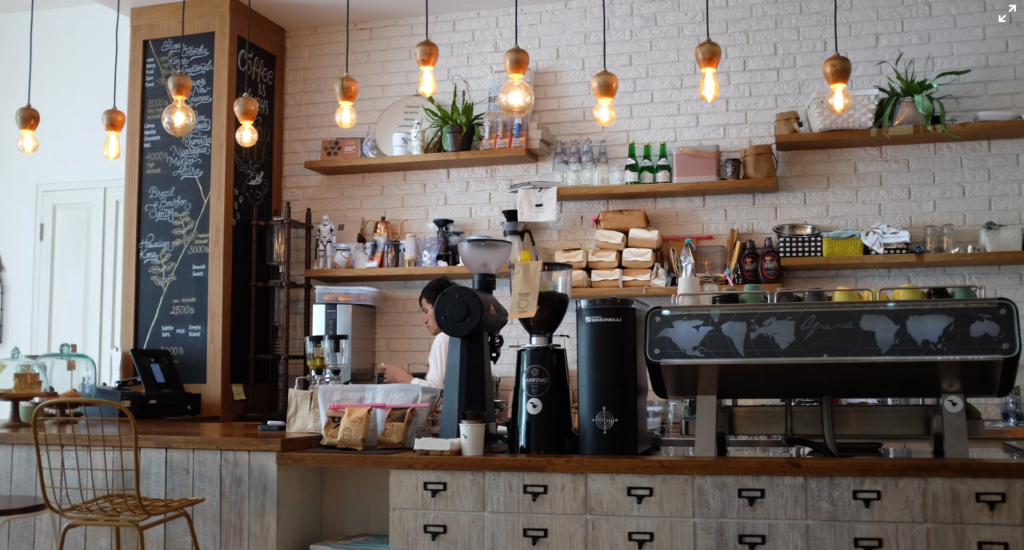
Yes, an independent coffee shop can launch its own K-Cup-compatible pod line. You do not need to own a factory on day one. You can start with private labeling, hire a co-packer to package your house blend, or bring filling and sealing in-house later.
The bigger question is whether customers will buy enough pods to justify the work.
According to the Spring 2026 National Coffee Data Trends report, 66% of American adults drank coffee in the past day, and 85% of past-day coffee drinkers had coffee at home. Still, a large market does not automatically create demand for your box.
What Does “Your Own K-Cup Line” Actually Mean?
People often use “K-Cup,” “coffee pod,” and “coffee capsule” interchangeably. K-Cup is a brand name associated with the Keurig brewing system. A compatible pod usually contains a rigid cup, a filter, ground coffee, and a foil lid.
If you want a closer look at the parts, this guide explains what is inside a K-Cup-compatible pod.
“Your own line” can mean three different things:
- White label: You select an existing coffee and place your branding on it.
- Private label or custom co-packing: A manufacturer packs a coffee made or adjusted for your brand.
- In-house production: Your team fills, flushes, seals, checks, and packs the pods.
Owning the brand does not mean you must manufacture the product.
Will Your Customers Really Buy It?
Before discussing cups, filters, and shiny equipment, test the duller question: who is going to buy this?
Likely customers include regulars who want your house blend at home, gift buyers, offices, hotels, and people who value speed more than brewing ritual.
Yet there is a catch. A pour-over fan may not want that coffee in a plastic pod. Reddit discussions among shop owners and roasters repeatedly raise three objections: stale pre-ground coffee, plastic waste, and weaker flavor. Those concerns are real.
Run a small demand test instead:
- Ask customers at checkout which brewer they own.
- Send a one-question poll to your email list.
- Offer a preorder for a 12-count box.
- Give office clients a sample pack.
- Test one familiar blend, not four clever flavors.
A compliment is not a purchase order. Measure preorders, not polite enthusiasm.
Three Ways to Launch a Coffee Pod Line
| Path | Best for | Upfront commitment | Control | Main risk |
| White or private label | A fast market test | Low to moderate | Low | The coffee may feel less distinctive |
| Custom co-packing | A shop with a proven blend | Moderate; an MOQ often applies | Medium | Inventory and supplier lead time |
| In-house production | Stable repeat volume | Higher | High | Capital, labor, training, and QA |
Start Fast With White or Private Label
A supplier provides the coffee, pods, and packing service. This simple route works for a seasonal gift, a first trial, or a café that does not roast. The tradeoff is differentiation.
Ask whether the minimum order quantity applies to the whole order or to each SKU. Usually it applies per SKU. Three roast options can turn one manageable order into three piles of inventory rather quickly.
Put Your House Blend Through a Co-Packer
A co-packer can grind, dose, flush, seal, and box your coffee. Published programs often begin around 4,800 to 5,000 pods per SKU, though pilot quantities vary. First orders take longer because the coffee, artwork, packaging, and production settings need approval.
This path offers a sensible middle ground. You preserve more of the café’s identity without running a packaging operation behind the pastry case.
Bring Filling and Sealing In-House
In-house production gives you tighter control over schedules, recipes, and unit cost. It also gives you sanitation logs, nitrogen supply, spare parts, and operators to manage. Yep, both sides of the sandwich.
Equipment ranges from tabletop sealers to automated lines. You can compare K-Cup filling machines for different production scales rather than judging machines by speed alone.
A Better Scale-Up Rule
Do not buy equipment because monthly pod sales crossed a number mentioned in a forum.
Calculate:
Annual co-packing premium + avoided setup costs + avoided delays
against:
Equipment payment + labor + nitrogen + utilities + maintenance + rejects + floor space
If orders are predictable and outsourcing has become a bottleneck, ownership may make sense. If demand jumps around, the flexibility of co-packing has real value.
What Goes Into a Good Coffee Pod?
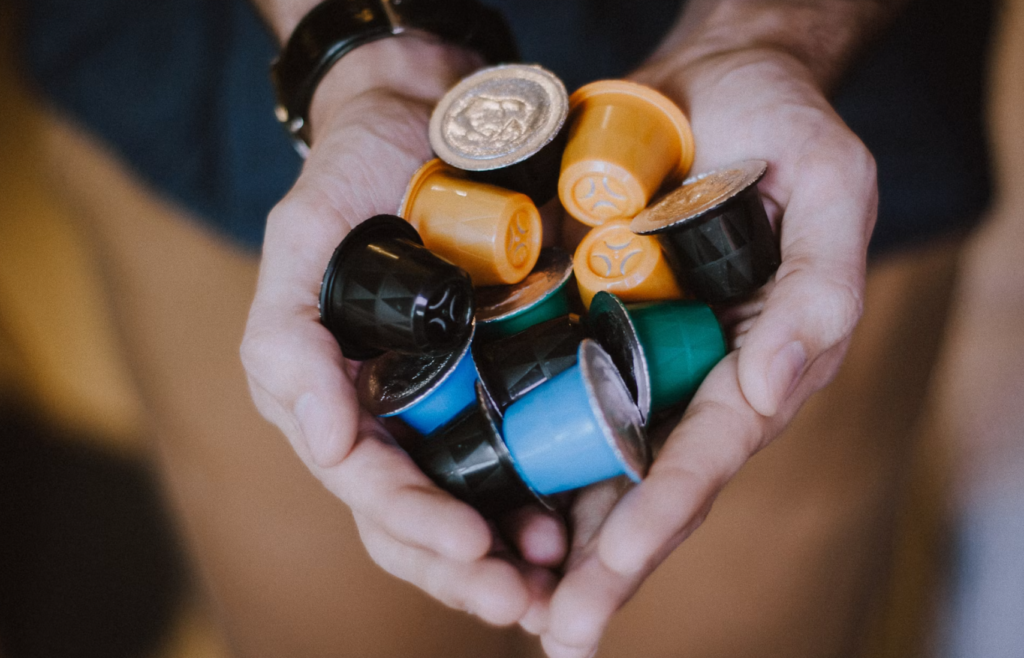
A pod is a connected brewing system. Better beans cannot rescue the wrong grind, a weak filter, or a leaking seal.
Coffee, Grind, and Dose
Roast affects solubility, grind affects water flow, and dose affects strength. A compatible pod may hold roughly 9 to 12 grams, depending on its structure. Test several brewers and serving sizes; a balanced 6-ounce cup can taste thin at 12 ounces.
Cup, Filter, Lid, and Carton
The main material choices include:
- A food-contact plastic cup, commonly polypropylene, with suitable heat and barrier properties
- A paper, nonwoven, or polymer filter with enough wet strength
- A multilayer foil lid with a printable surface and heat-seal layer
- A carton or outer barrier pack for protection, branding, and traceability
The filter controls flow, the lid must seal and puncture reliably, and the cup cannot deform during brewing.
This is why the K-Cup filling and sealing process involves more than scooping coffee into a cup and pressing on foil.
Nitrogen and Oxygen Control
Ground coffee loses aroma quickly because more surface area meets the air. Nitrogen flushing displaces oxygen before sealing. It cannot fix old coffee or bad packaging, but it can slow oxidation.
Think of it like putting good bread into a bag. Removing the air helps, but not if the zipper is half open.
Test residual oxygen, seal integrity, and barrier performance together. Nitrogen purity at the source is not the same as residual oxygen inside the pod. SANEU’s guide to nitrogen packaging for coffee capsules explains the distinction.
Costs, Pricing, and a Simple Break-Even Check
The pod price is not your product cost. Use the landed, sellable cost.
Include:
- Coffee
- Cup and filter
- Printed lid
- Retail carton or pouch
- Artwork and setup
- Filling and sealing
- Testing
- Freight and storage
- Labor
- Expected rejects and samples
- Payment and sales-channel fees
Here is an illustrative pilot. You order 5,000 pods in 12-count boxes. That makes 416 full boxes on paper. After samples, damage, and promotions, perhaps 390 remain for sale.
| Example item | Illustrative amount |
| Finished pod cost | $0.38 each |
| Pods per retail box | 12 |
| Pod cost per box | $4.56 |
| Carton, freight, and handling | $1.44 per box |
| Landed cost | $6.00 per box |
| Retail price | $11.99 per box |
| Gross contribution before channel fees | $5.99 per box |
The useful formulas are:
Contribution per box = selling price − landed cost − channel fees
Break-even boxes = launch-specific fixed costs ÷ contribution per box
If artwork, setup, sampling, and promotion total $1,200, and contribution after fees is $5 per box, you need to sell 240 boxes to recover those costs. Then stress-test freight, wholesale discounts, and monthly sales.
The hidden cost is slow sell-through. Long shelf life only gives sleepy inventory more time to sit there.
For businesses considering production equipment, compare the full coffee packaging machine price ranges with ongoing outsourced costs. The cheapest machine can be expensive if it creates waste, while a fast machine is pointless when sales are slow.
Food Safety, Labels, Trademarks, and Green Claims
This is the slightly boring part that becomes exciting when it goes wrong.
Food Production and Labeling
U.S. responsibilities depend on who manufactures, packs, stores, and sells the product. Retail establishments may qualify for exemptions, while a separate packing facility may have federal registration and preventive-control duties.
The FDA guidance for starting a food business is a useful starting point. Depending on the operation, the relevant topics may include current good manufacturing practices, hazard analysis, sanitation, allergen controls, recordkeeping, and food labeling.
A retail pack may need a statement of identity, net quantity, business details, ingredient or allergen information, and lot coding. Plain coffee may receive specific nutrition-labeling treatment, but flavors, sweeteners, dairy, or marketing claims can change the situation. Review the finished label for the actual formula and channel.
Standards and Supplier Evidence
Ask a supplier about:
- HACCP-based controls or an ISO 22000 food-safety system
- Food-contact documentation for cups, filters, inks, and lids
- Fill-weight tolerances and batch records
- Seal-integrity and residual-oxygen testing
- Shelf-life validation
- Compatibility tests across brewer models
- Traceability and recall procedures
For compostable plastic claims, ASTM D6400 is a key U.S. industrial composting specification. It is not a synonym for “plant based.”
Make Environmental Claims Carefully
Recyclable, biodegradable, and compostable describe different things. Local programs may not accept small pods or mixed components.
The FTC Green Guides summary says recyclable claims should be qualified when appropriate facilities are not available to at least 60% of consumers or communities where the product is sold. Compostable claims also require reliable evidence and may need a clear industrial-composting qualification.
Use Brand Terms Carefully
Use “K-Cup-compatible coffee pods” accurately, subject to legal review. Do not imply approval or sponsorship that does not exist.
An Eight-Step Launch Plan
- Define the buyer and occasion. Home mornings, office coffee, gifts, or hospitality?
- Choose one flagship coffee. Start with the blend customers already recognize.
- Set the brew target. Decide dose, grind, cup size, strength, and acceptable flavor range.
- Compare samples and production models. Review white label, custom co-packing, and in-house options.
- Build a landed-cost model. Include the annoying little costs, because they do add up.
- Approve packaging and claims. Check artwork, codes, label copy, disposal instructions, and trademarks.
- Test the product. Run sensory, seal, oxygen, drop, storage, and multi-brewer checks.
- Launch small and measure. Track weekly sell-through, repeat purchases, complaints, and channel margin.
What to Put in a Supplier RFQ
Give suppliers the same brief so quotes are comparable:
- First-run and expected annual volume
- Number of SKUs
- Who supplies and roasts the coffee
- Target dose, grind, and beverage size
- Cup, filter, lid, and carton preferences
- Nitrogen and residual-oxygen targets
- Required testing and certifications
- Pack count, artwork status, and sales market
- Lead time, reorder time, and storage needs
If you want to test internal production without jumping to a large line, a startup coffee capsule filling system can bridge hand trials and automation. It still needs a proper food-production setup.
Where Can a Coffee Shop Sell Its Pod Line?
Branded pods can work in:
- In-store retail displays
- Online subscriptions
- Holiday and corporate gift boxes
- Local offices and coworking spaces
- Hotels, inns, and vacation rentals
- Restaurants that want a simple decaf option
- Local grocers and specialty retailers
Each channel wants a different pack. A café customer may try six pods, while an office wants bulk cartons. Hotels care about compatibility and easy replenishment.
Related partners may include coffee roasters, co-packers, packaging converters, food-testing labs, third-party logistics providers, hospitality distributors, and office coffee services.
Common Problems and Practical Fixes
| Problem | Likely cause | Practical fix |
| Coffee tastes weak | Dose, grind, or brew-size mismatch | Test the recipe at several serving sizes |
| Grounds enter the cup | Filter damage or poor fit | Validate filter strength and piercing |
| Aroma fades early | Oxygen ingress or weak barrier | Test residual oxygen and seal integrity |
| Pod leaks or will not pierce | Seal or cup-geometry issue | Test several current brewer models |
| Margin disappears | Freight, cartons, and fees were omitted | Calculate landed cost per sellable box |
| Inventory stalls | Too many SKUs or an oversized MOQ | Start with one blend and a sampler |
| Green claim gets challenged | Claim exceeds the evidence | Use certified and properly qualified wording |
Tie complaints to batch records. Hold samples, note the brewer model, and investigate the filter, seal, and piercing pattern.
Should Your Coffee Shop Do It?
Launch a pilot if you have a recognizable blend, measurable interest, enough cash, and a real sales owner. “Everyone will sell it” usually means nobody owns it.
Stay with co-packing while volume is growing but unpredictable, or when your team lacks food-packaging experience.
Consider in-house production when orders are steady and a conservative payback calculation still works after labor, maintenance, waste, and financing.
Wait if the café’s core operation is still unstable or the entire business case is “single-serve coffee is a big market.” That is a market fact, not a customer plan.
Conclusion
A coffee shop can absolutely launch its own K-Cup-compatible line. The safest order is demand first, product second, economics third, compliance fourth, and equipment after those pieces make sense.
Begin with one coffee and one use case. Test whether people pay, then choose the lightest production model that can deliver consistent, well-sealed pods. If sales repeat, scale with actual numbers rather than hope.
FAQs
Can a small coffee shop make its own K-Cups?
Yes. A small shop can use private labeling, hire a co-packer, or fill compatible pods in-house. Private labeling is simplest for testing. In-house production adds control, equipment, sanitation, testing, and labor.
How much does it cost to launch a private-label K-Cup line?
There is no single price. It depends on MOQ, coffee, lids, cartons, setup, freight, and testing. Build a landed cost per sellable box.
What is the minimum order for custom K-Cups?
Many published co-packing programs start near 4,800 or 5,000 pods per SKU, but minimums vary. Stock lids, digital printing, or pilot programs may reduce the commitment. Custom cartons can have a separate MOQ.
Can a co-packer use my coffee shop’s existing blend?
Often, yes. The co-packer may ask for roasted coffee, green coffee, or a flavor target. The blend still needs pod-specific grind, dose, and extraction testing.
How long do sealed coffee pods stay fresh?
Shelf life depends on coffee age, oxygen, moisture, barrier, seal quality, and temperature. Nitrogen helps, but validate the finished product instead of copying a general supplier claim.
Do I need FDA approval to sell branded coffee pods?
FDA does not generally pre-approve ordinary food labels. The facility may still have registration, CGMP, preventive-control, recordkeeping, and labeling duties. Confirm federal, state, and local rules.
Can I put “K-Cup” on my packaging?
K-Cup and Keurig are brand terms. Compatibility wording must be accurate and must not imply approval or sponsorship. Review the copy before a large print run.
Are recyclable and compostable coffee pods the same?
No. Recyclable materials enter an appropriate recycling system. Compostable products break down under specified conditions, sometimes only at an industrial facility.
What equipment is needed for in-house pod production?
At minimum, production needs accurate coffee dosing and reliable lid sealing. Commercial operations may add automatic cup loading, nitrogen flushing, lid placement, coding, checkweighing, inspection, and secondary packaging. Sanitation equipment and quality-testing tools matter too.
When should a coffee shop switch from co-packing to its own machine?
Consider switching when annual demand is stable, the team can operate a food-packaging process, and the full cost of ownership beats outsourcing by a useful margin. Include labor, financing, nitrogen, rejects, maintenance, floor space, and downtime in the calculation.