Coffee Pods, Capsules, and K-Cups — Clearing Up the Confusion
If you have ever stood in a supermarket aisle staring at rows of single-serve coffee products and wondered whether you were looking at pods, capsules, or K-Cups, you are not alone. The terminology is genuinely confusing. And it got that way for a reason.
Nespresso launched the first sealed aluminum coffee capsule in 1986, and for decades "capsule" was the industry term. Then Keurig introduced the K-Cup in 1998, and as the format exploded across North American kitchens and offices, consumers started calling everything a "pod." When Keurig's original K-Cup patents expired in 2012, dozens of roasters jumped in with compatible products. The terminology blurred further.
Technically, the industry still draws a line. A "pod" is a flat, paper-wrapped disc of coffee — think of a round tea bag filled with finely ground espresso. An ESE (Easy Serving Espresso) pod is the classic example. A "capsule" is a rigid, sealed container, typically aluminum or plastic, like what Nespresso and Keurig machines use. In practice, almost everyone uses the words interchangeably, and this article follows that convention. When a distinction matters for compatibility or quality, we make it explicit.
The Dominant Formats — K-Cups and Nespresso
Before diving into each format, it helps to understand one thing: choosing a pod type is really choosing an ecosystem. Your machine determines which capsules you can use, and that decision locks you into a specific range of coffee brands, quality levels, and per-cup costs for years. Keep this in mind as we walk through the three formats that dominate the global market.
K-Cups — The North American Workhorse
If you have used a single-serve coffee machine in the United States, it was almost certainly a Keurig — and the pod inside was a K-Cup. These small plastic cups measure roughly 1.75 inches tall by 2 inches in diameter. They contain between 6.5 and 10 grams of ground coffee sealed under an aluminum foil lid.
The brewing process is straightforward. The Keurig machine pierces both the foil lid and the bottom of the cup, then forces hot water through the coffee at roughly 1–2 bar of pressure. The result is a cup of drip-style coffee: consistent, fast, but not espresso. There is no crema. The body is lighter than what you would get from a pressurized extraction.
K-Cups won the market on convenience, not coffee quality. But the landscape changed significantly after 2012. When Keurig's original patents expired, over 50 brands began producing compatible pods.
The range now stretches from supermarket own-label to specialty roasters packing 10 grams of SCA-graded coffee per pod. Keurig briefly tried to lock the ecosystem back down with its Keurig 2.0 DRM system in 2014. Consumer backlash killed that experiment within a year. Today, K-Cup compatible pods run from $0.35 to $0.85 per cup. The quality ceiling is higher than most people assume, provided you know which brands to look for.
Nespresso Original — The Global Standard for Espresso Lovers
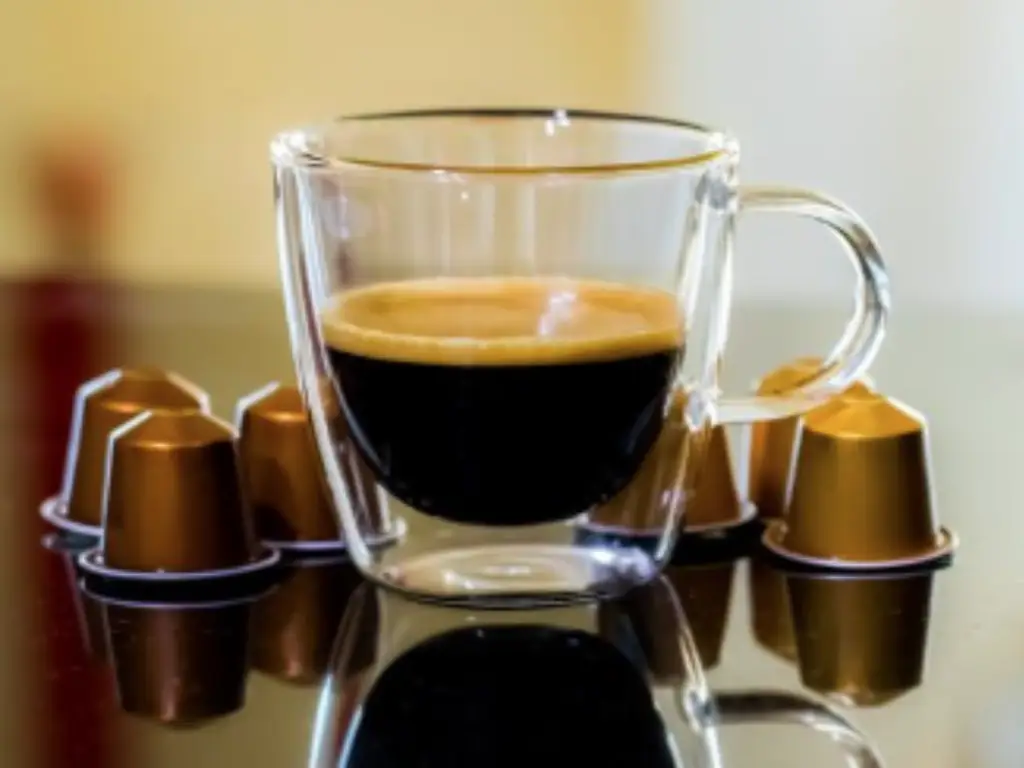
While K-Cups dominate North America, Nespresso Original capsules are the world's best-selling pod format. Over 14 billion capsules were sold in 2020 alone.
These small aluminum capsules hold 5 to 7 grams of coffee and are designed for genuine espresso extraction at 19 bar of pump pressure. (The actual pressure at the capsule bed is closer to 9 bar — a distinction that matters to coffee engineers but not to your morning routine.)
What makes Nespresso Original genuinely different from K-Cups is the open ecosystem. Over 50 roasters produce compatible capsules. The range goes from supermarket brands at £0.17 per pod to single-origin specialty roasters charging £0.70 and printing roast dates on every box. You can drink a washed Ethiopian Yirgacheffe from a London micro-roaster, or an organic Peruvian from a health-tested brand — all through the same machine on your counter. Cup sizes are espresso-focused: ristretto (25ml), espresso (40ml), and lungo (110ml). If you want a large mug of drip coffee, this is not your format. If you want something that tastes closer to what a café serves, it is the best pod system available.
Aluminum capsules also have an interior food-grade lacquer coating. This prevents direct contact between coffee and metal — a detail worth knowing if you have seen concerns about aluminum leaching. The European Food Safety Authority has reviewed aluminum exposure from food contact materials. Their finding: levels from capsule brewing are well within safe limits.
Nespresso Vertuo — The Closed Garden with More Cup Sizes
Vertuo is Nespresso's answer to a problem of its own making. How do you prevent another 2012-style patent-expiration flood of third-party competitors? The answer was a completely new extraction technology and a barcode printed on every capsule rim that tells the machine exactly how to brew.
The barcode controls everything: water temperature, spin speed, volume, and pre-infusion time. Extraction happens through centrifugal force at 7,000 RPM instead of a pressure pump. The result is remarkably consistent coffee across five cup sizes: espresso (40ml), double espresso (80ml), gran lungo (150ml), mug (230ml), and alto (535ml).
The trade-off is that no one but Nespresso can produce Vertuo capsules. The barcode system is patented, with protection expected to hold until at least 2030. If you value variety from independent roasters, this is a frustrating limitation. If you want one machine that handles everything from a quick espresso to a large morning mug with zero thought, Vertuo delivers.
Beyond the Big Two — Specialty and Regional Pod Systems
K-Cups and Nespresso may dominate the conversation, but they are not the whole story. Depending on where you live and what you value — drink variety, sustainability, or affordability — one of these six smaller systems might actually fit you better. Before you commit to any of them, ask yourself three questions: Are capsules easy to buy where I live? Is the per-cup cost sustainable for my consumption? And, the one most people skip: if the brand discontinues this system, what happens to my machine?
| Pod System | Compatible Machine | Dominant Region | Material | Key Distinction |
|---|---|---|---|---|
| Dolce Gusto | Nescafé Dolce Gusto | Europe, Asia | Plastic | Widest drink variety — coffee, tea, hot chocolate, chai, iced drinks; machines start at ~£40 |
| Lavazza A Modo Mio | Lavazza machines | Italy, Europe | Compostable (standard) | Only major system with compostable capsules as the default, not an upsell |
| ESE Pods | Most traditional espresso machines | Europe, specialty | Paper filter | Zero packaging waste; no special machine needed — works with any ESE-compatible portafilter |
| Tassimo T-Discs | Bosch Tassimo | UK, Europe | Plastic | Barcode-controlled brewing; milk drinks without a separate frother |
| Caffitaly / K-Fee | Caffitaly, Aldi Expressi | Australia, Europe | Plastic | Capsules are largely interchangeable between Caffitaly and K-Fee machines |
| Vittoria Espressotoria | Vittoria machines | Australia | Plastic | Strong local brand presence in the Australian market |
What Your Coffee Pod Is Made Of — Materials Decoded
A coffee pod's material is not just packaging. It is a preservation technology. Coffee loses roughly 60% of its volatile aromatic compounds within 15 minutes of grinding. The capsule's job is to hit pause on that clock. Aluminum, plastic, and compostable materials perform this task with dramatically different results, and those differences end up in your cup.
Aluminum Capsules — The Oxygen Barrier Champion
From a pure preservation standpoint, aluminum is the best material available for coffee capsules. Its oxygen transmission rate is below 0.01 cc/m²/day — effectively zero in practical terms. Compare that to single-layer plastics, which typically measure above 1.0 cc/m²/day. The engineering advantage is clear. Aluminum keeps oxygen out. And oxygen is what makes coffee taste stale.
Aluminum is also infinitely recyclable, but only if you actually recycle it.
In the UK, the Podback scheme now provides free collection bags at over 400 retailers and is targeting 50% kerbside coverage by the end of 2026. Nespresso boutiques also accept used capsules directly. An aluminum pod in landfill, however, takes centuries to degrade. The material's environmental story depends entirely on what you do with it after brewing.
Health concerns about aluminum leaching are understandable, but the evidence is reassuring. The interior of every quality aluminum capsule is coated with a food-grade epoxy or polyester lacquer that prevents metal-to-coffee contact. A 2020 study published in PMC measured aluminum levels in capsule-brewed coffee and found concentrations comparable to traditionally brewed coffee. The capsule material did not meaningfully increase aluminum in the cup.
Plastic Pods — Cost-Effective but Complicated
Plastic capsules hold 53.3% of the global pod market, according to market.us data. But "plastic" is not one thing. It is a family of materials with very different properties. Most K-Cups use polypropylene (PP #5), which is technically recyclable but requires disassembly: peel off the aluminum lid, dump the coffee grounds, and only then can the cup enter a recycling stream. In practice, most consumers skip these steps.
Multi-layer structures like PP/EVOH (ethylene vinyl alcohol) improve the oxygen barrier significantly, from over 1.0 cc/m²/day for pure PP down to 0.2–1.0 cc/m²/day. But they create a recycling dead end because the layers cannot be separated economically. This is the central tension of plastic pods: better preservation means worse recyclability.
BPA is a less significant concern than it was a decade ago. Most major brands have switched to BPA-free formulations, but cheaper unbranded pods sold on marketplace platforms still occasionally use materials that have not been independently tested for migration under brewing conditions (90–95°C water at pressure). If a pod does not specify the plastic type, that silence is worth treating as a red flag.
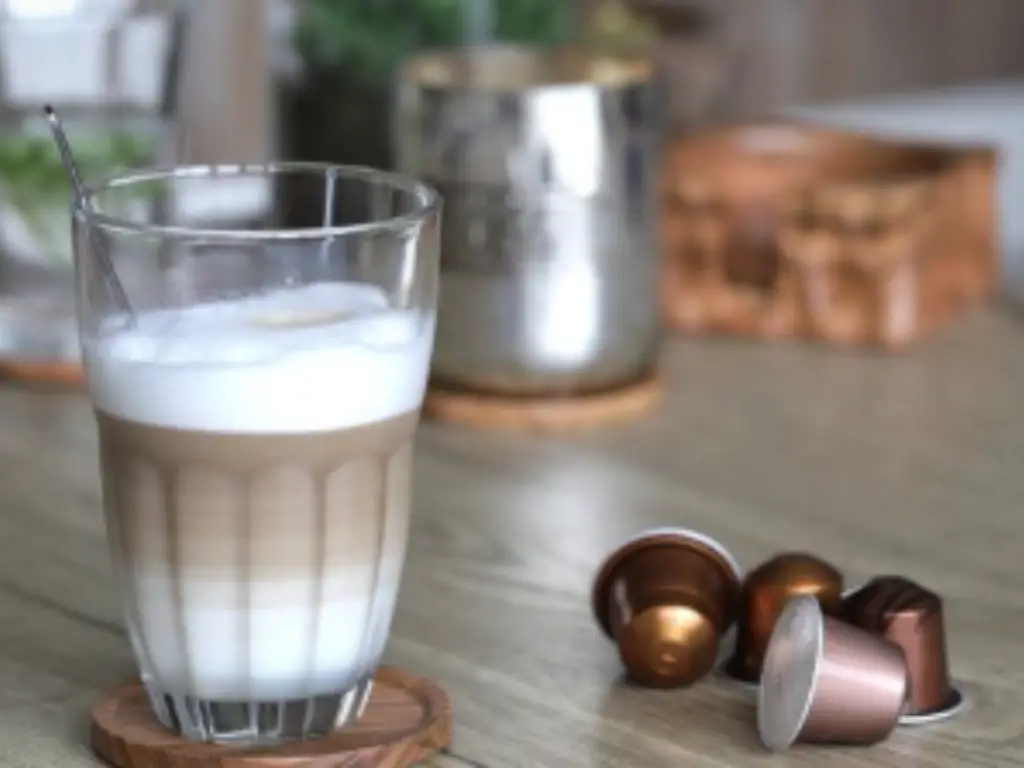
Compostable and Bio-Based Pods — Promise vs. Reality
Compostable coffee pods are the fastest-growing segment in pod packaging, driven by genuine consumer demand for sustainability. The materials are plant-derived: PLA (polylactic acid from corn starch), PHA (microbial synthesis), sugarcane fiber, and wood pulp. The marketing around them is compelling. The engineering is more complicated.
The fundamental limitation is oxygen barrier performance. PLA's oxygen transmission rate is roughly 100 times worse than aluminum's.
Coffee inside a compostable pod stales faster — measurably so. Research shows lower antioxidant and polyphenol levels in coffee brewed from compostable pods compared to the same coffee packed in aluminum. The flavor profile is consistently flatter. This is not a defect in the coffee. It is the material.
Then there is the disposal problem. WRAP data shows that less than 1% of UK plastic packaging is compostable. Among that tiny fraction, only a portion actually reaches industrial composting facilities that maintain the required 55–60°C conditions. If your local waste system does not collect food waste for industrial composting, a "compostable" pod in your general bin will not compost. It will behave like plastic in a landfill.
None of this means compostable pods are dishonest. The technology is improving rapidly. Newer PLA/PHA blends offer meaningfully better barrier properties than first-generation materials. For consumers whose local infrastructure supports industrial composting, they are a legitimate sustainability choice. But the word "compostable" has no legal protection in most markets. Look for certification logos: "OK compost INDUSTRIAL" or "OK compost HOME" with the seedling mark. Without those, you are trusting marketing, not science.
Inside the Factory — How Different Pod Types Are Produced
Understanding how coffee pods are made changes how you evaluate them. Once you know what nitrogen flushing actually does, or why a sealing failure means an entire production batch gets scrapped, the difference between a well-made pod and a cheap one stops being mysterious. It becomes mechanical.
Filling and Sealing — Where Precision Meets Freshness
Modern coffee pod production lines are automated to a degree that surprises most people outside the industry. A four-lane rotary filling line runs at over 200 capsules per minute. That is roughly 30 million capsules per year from a single machine.
The filling station uses a servo-motor-driven vertical auger that doses ground coffee into each empty capsule with a deviation of ±0.2 grams or less. For a Nespresso-compatible capsule containing 5.5 grams of coffee, the actual fill weight lands between 5.3 and 5.7 grams, every single time.
Sealing is where things get unforgiving. The foil lid must bond to the capsule rim with precise temperature (typically 180–220°C, depending on material), pressure, and dwell time. Too cold or too fast, and the seal is incomplete. Oxygen seeps in, and the entire batch is compromised. Too hot, and the plastic rim distorts. Every production run includes destructive testing: sample capsules are submerged in a methylene blue dye solution under pressure. Any dye that penetrates the seal means a process adjustment before the line resumes.
Different pod formats require different tooling. This is worth understanding if you are evaluating quality across brands. Switching a production line from K-Cup to Nespresso format means physically changing the molds, the heat-sealing head, and the filling nozzle. It is not a software setting. It is hardware. The precision of that tooling, and how well it is maintained, directly determines the consistency of every capsule that leaves the factory.
Nitrogen Flushing — The Invisible Quality Driver
If you have ever opened a box of coffee pods and thought "these taste flat," the culprit was almost certainly not the coffee itself. It was insufficient nitrogen flushing during production.
Coffee begins oxidizing the moment it is ground. Nitrogen is an inert gas. It does not react with coffee compounds. By flooding each capsule with nitrogen during the brief window between filling and sealing, manufacturers push oxygen out and create a protective atmosphere inside the pod. Quality-focused producers target residual oxygen below 3%. Top-tier lines achieve nitrogen purity of over 99.9%.
The difference in shelf life is dramatic: a properly nitrogen-flushed aluminum capsule can taste fresh 12–18 months after production. A poorly flushed one starts tasting hollow within weeks, regardless of the shell material.
The nitrogen is delivered through multiple injection ports positioned along the filling-to-sealing path. Rotary systems, where capsules move through stations on a turning carousel, provide more consistent nitrogen coverage than linear systems. Each capsule simply spends more time in the nitrogen environment before the lid goes on.
This is also why compostable pods face a double disadvantage. Their material lets oxygen in faster, and the nitrogen flushed in at the factory escapes more quickly. The result is a shorter practical shelf life even when the production process is identical. If you have ever wondered why the same roaster's aluminum pod tastes noticeably brighter than their compostable version, now you know. It is physics, not branding.
Quality Control — From Lab to Shipping Container
Coffee pods are a food product, and the quality control standards reflect that. A complete QC program for a serious pod manufacturer covers three stages.
Incoming inspection tests every batch of empty capsules and foil lids for dimensional accuracy and surface defects before they ever touch coffee. A capsule that is 0.3mm out of round will jam the sealing station.
In-process control runs continuously during production. Every filled capsule passes over an in-line weighing checkpoint. If the weight deviates beyond tolerance, a pneumatic arm flicks it off the line before it reaches sealing. Seal temperature is monitored in real time by the PLC controller. If values drift outside the programmed window, the line shuts down automatically.
Finished product testing is where the real quality story gets told. Random samples from every production batch go through seal integrity testing (the dye penetration method, per ASTM F1929), residual oxygen analysis (confirming nitrogen flush effectiveness), and actual brew testing. The capsule is brewed in the target machine, and the resulting coffee is evaluated for crema quality, extraction yield, and taste. For capsules aiming at the specialty market, the target extraction falls within the SCA Gold Cup range of 18–22%.
Industry certifications provide an additional layer of accountability: CE marking for EU safety compliance, RoHS for hazardous substance restriction, SCA standards for specialty coffee alignment, and FDA compliance for food-contact materials in the US market.
For coffee brands and roasters choosing which pod format to bring to market, the quality of the finished capsule is inseparable from the quality of the production line that made it. The machine's filling precision, its nitrogen system's coverage, and its sealing integrity directly determine whether the customer opens a box and tastes the coffee you roasted — or the oxidation that happened along the way. Saneu builds these exact machines. Based in Hong Kong and Guangzhou, the company makes capsule filling lines that run K-Cup, Nespresso, Dolce Gusto, and Lavazza formats on one platform. Their rotary nitrogen injection hits 99.9% N₂ purity, and filling accuracy holds to ±0.2g using Siemens and Schneider servo components throughout. Equipment ships to over 30 countries, and the company provides free packaging solution design for brands still weighing their production options.
How to Choose the Right Pod Type for Your Needs
After everything we have covered — the formats, the materials, the manufacturing — the question that started this article remains. Which pod type is right for you? The answer depends on what you prioritize. The framework below turns that into a decision you can make in three steps.
Step 1: Define your coffee style. Do you drink short, intense espresso-style shots? Nespresso Original is the strongest choice. It is built for espresso extraction and has the widest selection of specialty-grade compatible capsules. Do you prefer larger drip-style cups, the kind you sip through a morning meeting? K-Cup compatible machines dominate that space. Want both in one machine? Nespresso Vertuo covers the full range, at the cost of a closed ecosystem. If you want tea and hot chocolate alongside your coffee, Dolce Gusto or Tassimo might suit you better than any coffee-first system.
Step 2: Check your ecosystem. If you already own a machine, your decision is already made. Buy compatible pods. If you are buying new, the most important variable is how much variety you want. Nespresso Original offers over 50 compatible brands, from supermarket staples to single-origin specialty roasters. K-Cup offers the most machine options and the lowest per-cup floor. Vertuo offers the most consistent experience but only Nespresso-made capsules.
Step 3: Choose your values. If freshness and flavor are everything, aluminum capsules from roasters who print roast dates are the clear winner. The oxygen barrier physics are unambiguous. If budget is the priority, plastic K-Cups bought in bulk bring the per-cup cost well below $0.50. If sustainability matters most, look past the word "compostable" on the box. Check for the seedling certification logo. Check whether your local waste system actually processes compostable packaging. A certified pod in a city with industrial food waste collection is a real sustainability win. The same pod in a general-waste bin changes nothing.
No single pod type wins on every dimension. The aluminum capsule that preserves flavor best might cost more than you want to spend. The compostable pod that aligns with your values might taste flatter than the aluminum version from the same roaster. That is material physics, not your imagination. The best pod is the one whose trade-offs you understand and accept. And now you understand them.
References
- GM Insights. "Coffee Pods Market Size & Share, Statistics Report 2025-2034." 2025. https://www.gminsights.com/industry-analysis/coffee-pods-market
- market.us. "Coffee Pods And Capsules Market Size, Share | CAGR of 6.5%." 2024. https://market.us/report/coffee-pods-and-capsules-market/
- WRAP. "Considerations for Compostable Plastic Packaging." 2025. https://www.wrap.ngo/resources/guide/considerations-compostable-plastic-packaging
- Home Grounds. "An Expert Explains Coffee Pod Types." 2025. https://www.homegrounds.co/types-of-coffee-pods/
- Balance Journal. "Coffee Pods: The Complete Guide." 2026. https://balancejournal.co/food-drink/coffee-pods-complete-guide
- Saneu. "Coffee Capsule Filling Machines." https://www.saneu.com
- Saneu. "Contact Us — Free Packaging Solution Consultation." https://www.saneu.com/contact-us/