A coffee roaster calls to reorder empty capsules. Nothing unusual there. Then, almost as an afterthought, she says, “We are spending half the day filling these things. There has to be a faster way.”
That little complaint may be the start of a filling-machine project. Or it may just be a rough Tuesday.
Empty cup resellers sit in a useful spot. They hear about new SKUs, late orders, seal problems, labor shortages, and private-label launches before most equipment salespeople do. Still, the job is not to pitch a machine every time a customer orders more cups. It is to notice a real production need, ask a few sensible questions, and make a clean introduction when the timing is right.

Done well, the customer gets a clearer route to production, the manufacturer receives a lead it can evaluate, and the reseller may keep supplying materials as output grows.
Read the Demand Behind Your Empty Cup Orders
An order history can show that something is changing. It cannot tell you why.
Suppose a customer used to buy 20,000 empty K-Cups every two months and now wants 20,000 every month. It is tempting to say demand has doubled. Maybe it has. But the customer may be building safety stock, replacing another supplier, preparing for a seasonal promotion, or reselling some cups to another roaster.
Think of cup orders like footprints. They show that somebody passed through. They do not tell you where the person was going.
The best signals come in clusters. A bigger reorder matters more when it appears beside overtime, delayed shipments, new retail accounts, or complaints about manual filling. One remark is interesting. Several related changes deserve a conversation.
| Customer signal | What it might mean | What to ask next |
| More frequent cup orders | Higher consumption, lower stock buffers, or a supplier change | “Are you using more cups, or changing how you buy them?” |
| Requests for printed lids and cartons | A private-label launch or a move into retail | “Is the launch already tested and scheduled?” |
| Complaints about hand filling | A labor bottleneck, poor workflow, or growing volume | “Which step is eating up the most time?” |
| Repeated seal failures | A material mismatch, worn equipment, or an unstable process | “Can we review the cup, lid, settings, and current sealer?” |
| Questions about lead time at higher volumes | A planned expansion or a large possible order | “Is that volume contracted, forecast, or still being discussed?” |
Those questions stay neutral. Customers talk more openly when they do not feel pushed toward a capital purchase.
It also helps to separate cups purchased from cups consumed. A simple inventory check is enough for an early discussion:
Opening stock + cups received – closing stock – returns or transfers = estimated cups used
It is still not saleable output because rejects may be included, but it is firmer than the last purchase order alone.

Not Every Cup Buyer Is a Filling-Machine Prospect
There are three useful buckets. They keep the reseller from sending weak leads and, just as importantly, keep customers from buying equipment too early.
Ready for a machinery conversation. The customer has repeat demand, a clear capsule format, a known production problem, someone responsible for the project, and a realistic implementation window. The budget may not be final, but the business case is real enough to investigate.
Needs a pilot first. The customer has a new product idea but little evidence that buyers want it. Perhaps a coffee shop wants its first branded capsule range. Perhaps a roaster has one promising hotel account. Small-batch production or a co-packer can validate the product before the customer commits to a line.
Needs better supply or process support. The customer already owns suitable equipment. Its real issue may be late cup deliveries, inconsistent lids, poor storage, a maintenance fault, or an operator problem. Selling another filler will not fix those things.
This distinction appears in the real market. For example, a co-packer that also supplies filling lines offers equipment to customers bringing production in-house. The route can change as volume, control, and operating capability change.
Customer type matters. An OEM factory may already understand food production and maintenance. A roaster may know the product but have limited packaging experience. A coffee shop may have loyal buyers yet no space or staff for manufacturing. A reseller selling to another distributor may not reach the final producer at all.
So, yes, demand matters. Operational readiness matters just as much.
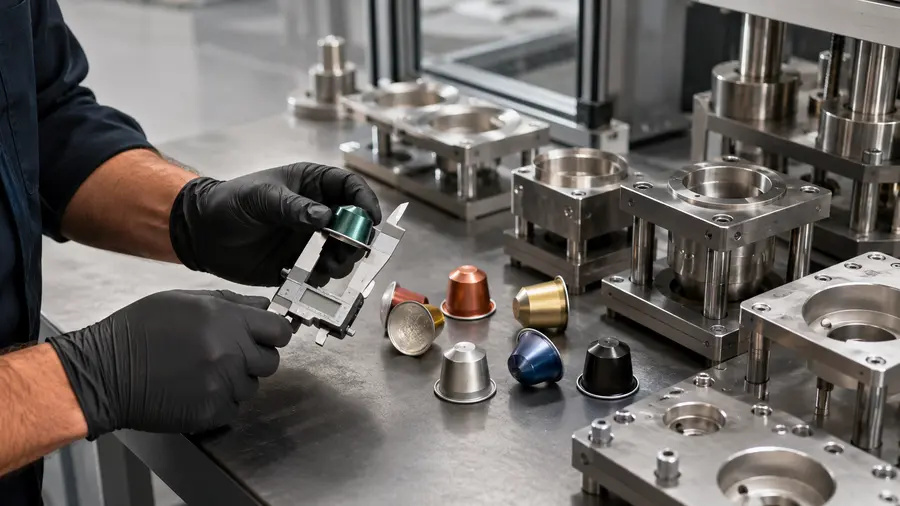
Build a Coffee Capsule Filling Machine Brief in One Call
Machine manufacturers need more than a name and an email. “Customer wants a Nespresso machine” is not a qualified lead. It is barely a sentence.
You do not need to become an engineer, though. One focused call can produce a useful brief.
Ask about the operation, not just the budget
Start with the customer’s role. Are they the producer, the brand owner, a contract packer, or another reseller? Who will operate the line, and who signs off on the investment?
Then cover the basics:
- The exact brewing system and capsule style.
- Current monthly saleable output and the target for the next 12 to 24 months.
- Number of SKUs, typical batch size, and expected changeover frequency.
- Current method: hand filling, tabletop sealing, co-packing, or an existing automatic line.
- The main bottleneck: labor, consistency, capacity, lead time, cost, or control.
- Available floor space, operators, electricity, compressed air, and nitrogen supply.
- Desired installation timing and the reason behind that date.
- A budget range, if the customer is comfortable sharing one.
For a first-time equipment buyer, SANEU’s guide to planning a first machine purchase can help frame the factory, product, and support questions before a formal quotation.
Do not force every question into five minutes. It should feel like a production conversation, not airport security. Missing details can follow in a short form.
Finish with one real next step
A good call ends with a small, specific commitment. For example:
“If you send one box of your current cups, lids, and coffee, I can arrange a technical review with the machine team next week. Would that help?”
The customer then knows what will happen, the manufacturer knows what to assess, and the reseller stays involved.
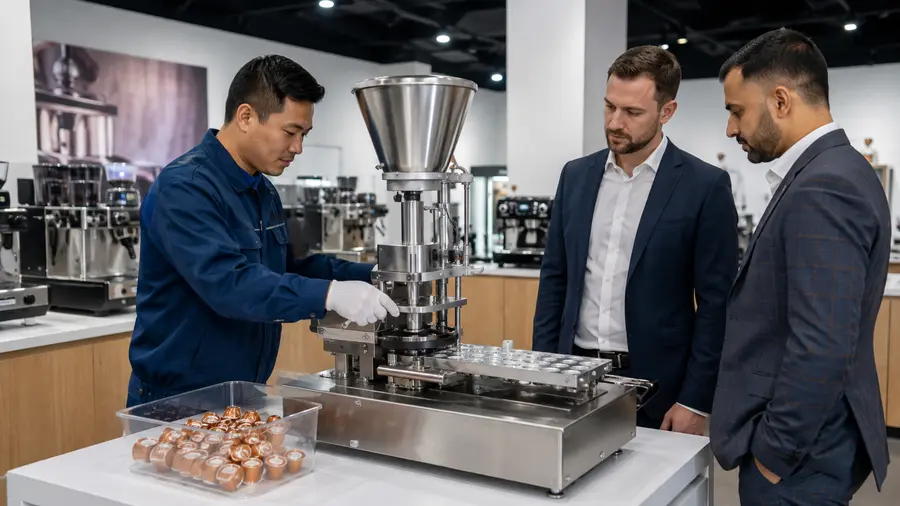
Check the Cup, Filter, and Lid Before Discussing Machine Speed
Two capsules can look almost identical on a desk and behave very differently at production speed. One may separate cleanly from a stack. The other may cling to the cup below it. One lid may seal inside a comfortable temperature window. Another may wrinkle or peel when the line speeds up.
The material conversation includes the cup body, barrier structure, filter, and foil. K-Cup-style products may use PP cups and integrated or separate filters. Nespresso-compatible products may use aluminum or plastic bodies with matching lids. Compostable formats add certification, storage, and disposal questions.
The reseller does not have to solve all this. The reseller does need to stop “compatible” from becoming a vague promise.
Similar-looking capsules are not automatically interchangeable
Ask for physical samples from the intended batch. A drawing cannot show how cups denest, how a rim behaves under heat, or whether a filter shifts. Grind, density, static, oil level, and dose can change filling behavior too.
Before requesting a machine configuration, help the customer define the empty capsule specification. Include the cup, filter, foil, coffee, intended fill weight, and brewer system. A colorful photo and the phrase “standard capsule” are not enough. There are too many standards hiding inside that word.
The same caution applies to K-Cup and Nespresso-compatible products. They are related single-serve applications, not interchangeable tooling. Even within a broad system, the actual cup geometry and seal combination must be checked.
Send evidence with the sample pack
A useful sample pack includes:
- Empty cups from the intended production batch.
- Filters, where these are separate components.
- The exact lidding material.
- The coffee or other product to be filled.
- Target dose, acceptable tolerance, and desired pack presentation.
- Available material declarations and traceability information.
For US projects, the FDA food-contact material guidance explains why substances, manufacturer, intended use, and conditions of use matter. That is more precise than calling an entire line “FDA approved.”
For EU sales, start with the European Commission’s overview of food-contact material requirements. Obligations depend on material and market; one declaration should not be stretched across every lid, use, or country.
Test dose consistency, seals, rejects, appearance, brewing, and secondary packaging. Shelf life needs a separate validated study. One nitrogen reading does not magically become a two-year freshness claim. Ah, if only packaging were that easy.
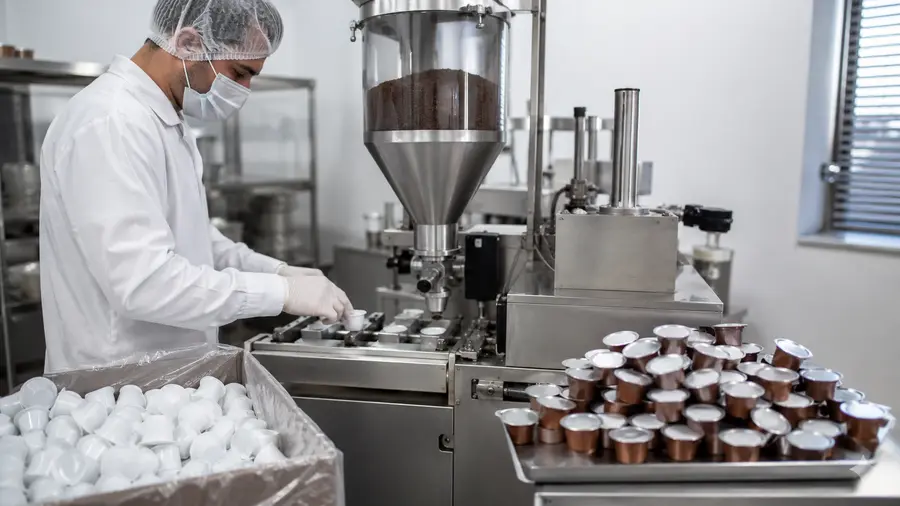
Match K-Cup and Nespresso-Compatible Leads to the Right Setup
Once the sample and demand are clear, speed begins to mean something. Before that, it is mostly a shiny number.
Start with required saleable output. Imagine a customer targets 30,000 acceptable capsules per month. It schedules 10 production days, with six net operating hours per day:
30,000 ÷ (10 × 6) = 500 saleable capsules per net production hour
This is not a machine recommendation. Allow for confirmed growth, changeovers, cleaning, stops, and rejects. Buying far beyond a believable forecast can leave an expensive machine waiting for work.
Published speeds help with screening. SANEU lists the SK-2 at a rated 6,000 K-Cups per hour among its K-Cup filling and sealing options. That does not guarantee 6,000 saleable units with every material, operator, or layout.
For espresso-style capsule projects, the customer should review the format-specific tooling and handling offered by Nespresso-compatible filling equipment. Again, the useful question is not simply “How fast is it?” It is “Can this tested setup make our product reliably, with changeovers and support we can manage?”
Quote the working setup, not only the filler
A filling and sealing machine may need upstream and downstream support. Depending on the project, that can include a grinder, coffee feeding, compressed air, a nitrogen source, checkweighing, coding, inspection, conveyors, cartoning, and spare tooling.
The customer also needs people. Someone must operate the line, clean product-contact parts, investigate rejects, schedule maintenance, and keep material batches traceable. A K cup packaging machine does not arrive with an invisible production department folded inside it.
This is where resellers can be genuinely helpful. They already understand supply lead times, cup consumption, and which materials the customer prefers. That knowledge helps the manufacturer quote a working production setup instead of a lonely machine in the middle of an imaginary factory.

Agree on Customer Ownership Before Making the Introduction
A referral can go awkwardly when everyone assumes the commercial rules are obvious. Usually, they are not.
Before sharing customer details, get permission. Explain which manufacturer will receive the information and why. Then agree with the equipment partner on how the opportunity will be recorded and handled.
| Decision | Agree before the handoff |
| Customer permission | What information may be shared, with whom, and for which project |
| Lead registration | How existing, duplicate, or previously contacted opportunities are handled |
| Commercial role | Who prepares the quote, signs the contract, invoices, and receives any agreed payment |
| Service ownership | Who handles installation, training, spare parts, and warranty questions |
| Consumables relationship | How future cup and lid supply will work, subject to the customer’s choice |
| Communication | Who attends technical calls and who sends the next update |
There is no single partnership model. A referral partner may introduce an opportunity, an agent may stay through negotiation, and a reseller may buy and resell equipment with wider responsibilities.
The label matters less than the written division of work.
Before promising anything, confirm payment triggers, taxes, territory, customer registration, installation, training, and warranty. Another company’s reseller terms do not set yours.
Service wording also needs care. SANEU currently publishes different warranty durations on different pages, so a reseller should confirm the project’s technical support arrangements and warranty terms in writing before discussing them with a customer. A clear correction early is far less painful than a confident promise that turns out to be wrong.
Customer protection is not secrecy. It is a process where everyone knows who is involved and what happens next.
Keep the Referral Moving After the First Email
The first introduction is not the finish line. It is closer to passing a tray through a doorway. Somebody still has to take it.
Use a simple six-step flow:
- Confirm the production need and customer permission.
- Send the brief and name the agreed next step.
- Ask the manufacturer to confirm acceptance and assign an owner.
- Track samples, tests, and missing technical information.
- Record the proposed setup, quotation, and customer decision.
- Note the outcome and the next reasonable follow-up date.
Track qualified needs, accepted leads, sample tests, configuration-based quotes, and projects won. A price sent after receiving only a name is not a qualified quote.
Do not invent a conversion benchmark. A reseller with ten carefully chosen OEM accounts may produce more viable projects than one with a thousand loosely related contacts.
If the customer pauses, record why and choose a sensible follow-up date. Continue serving its empty cup needs without turning every reorder into another pitch.

Conclusion
Empty cup resellers do not need to become machine engineers to create valuable filling-machine leads. They need to notice changing demand, ask practical production questions, check material fit, and make an introduction with a clear next step.
The best lead is not the customer who ordered the most cups last week. It is the customer whose demand, bottleneck, product, and timing have been understood well enough for a real technical conversation.
If you want to add equipment referrals or sales to your consumables business, you can discuss a dealer partnership with SANEU. Bring the target capsule, expected output, current production method, and main bottleneck. That is a much better starting point than “My customer wants a fast machine.”
FAQs
Can an empty cup reseller refer machine buyers without becoming a full equipment dealer?
Potentially, yes. A referral role may be narrower than a reseller role, but the machine supplier must agree to it. Define who qualifies the lead, quotes, contracts, supports the customer, and receives any payment before making introductions.
Does a larger empty cup order mean a customer needs a filling machine?
No. It may reflect growth, safety stock, seasonality, waste, or a change of supplier. Ask about actual consumption, saleable output, production method, and the reason for the larger order before treating it as an equipment signal.
What information makes a filling-machine lead useful to a manufacturer?
Provide the exact capsule and lid, product sample, target dose, current and future output, SKU count, production bottleneck, utilities, factory space, project owner, budget range, and expected timing. Samples are usually more helpful than a general format name.
When should a customer use a co-packer instead of buying equipment?
Co-packing can make sense when demand is unproven, production is seasonal, the team lacks factory capability, or capital is better used elsewhere. Ownership becomes more attractive when repeat demand, control needs, and operating resources support the investment.
Can the same filling machine handle K-Cup and Nespresso-compatible capsules?
Some equipment platforms can be configured or changed over for multiple formats, but this is not automatic. Cup geometry, denesting, dose, filter, sealing material, tooling, and control settings must be reviewed and tested for each product.
Do customers need to send cups, lids, filters, and coffee for testing?
They should. The machine has to handle the complete product combination, not an abstract capsule category. Testing the actual materials helps reveal feeding, filling, sealing, appearance, and brewing issues before the final configuration is agreed.
Who should handle installation, training, and after-sales support?
That depends on the partnership and the destination. The manufacturer, local reseller, or both may take part. Put installation scope, travel, training, response channels, spare parts, warranty, and ongoing maintenance responsibilities in writing.
How can a reseller protect an existing customer relationship during a referral?
Obtain customer permission, register the opportunity, document who introduced it, and agree on communication and commercial roles beforehand. Stay useful during samples and follow-up. No process guarantees loyalty, but clarity reduces misunderstandings and duplicate approaches.
How are machine-referral fees or dealer margins agreed?
They are commercial terms between the parties, not universal industry rates. Clarify the calculation basis, payment event, currency, taxes, cancellations, repeat orders, and whether the reseller has obligations after the sale. Get the agreement in writing.
Can a reseller keep supplying empty cups after the customer buys a machine?
Often, yes, if the cups remain compatible, commercially suitable, and chosen by the customer. Confirm samples and supply terms during machine testing. Equipment ownership can increase material demand, but it does not create an automatic or exclusive supply right.