
Introduction
Picture a chaotic Monday morning. You are rushing to get ready for the office, desperately searching through a disorganized, overflowing pile of colorful coffee pods on your countertop. You are looking for a specific dark roast to kickstart your day, but you keep grabbing decaffeinated options by mistake. This daily routine not only wastes your precious time but also creates a significant amount of visual clutter that makes the entire kitchen feel stressful and untidy. Finding a proper home for your single-serve coffee, while exploring effective K-Cup storage ideas, is a genuine challenge for countless consumers looking to reclaim their morning peace.
However, this guide serves a much greater purpose than merely helping consumers organize a messy countertop. It acts as a critical end-user environment report for all coffee roasters and commercial coffee brands. When you begin to understand the severe physical and thermal challenges your capsules endure once they reach the consumer’s hands, a profound realization occurs. You will quickly see exactly why the packaging engineering at the source is the ultimate deciding factor for your product’s shelf life, and why all downstream storage efforts are completely reliant on the integrity of your factory seal.
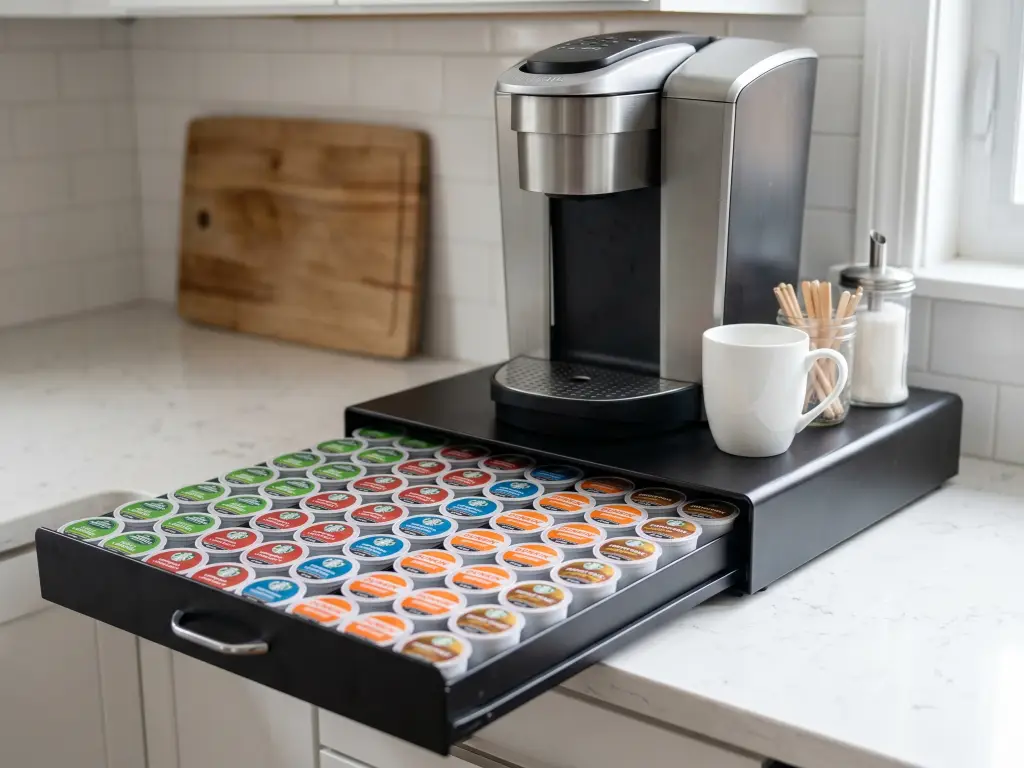
Out in the Open vs. Hidden Away: Planning Your Space First
The first principle of effective organization is auditing your spatial assets before you even consider purchasing a solution for K-Cup storage. Many people make the mistake of blindly buying a trendy acrylic box only to realize it creates more chaos. We can divide your kitchen or breakroom into three golden storage zones based on your available space and personal habits.
The countertop visual zone is strictly for those who possess ample surface area and actively wish to feature their coffee station as a decorative home element. If your counters are already fighting a losing battle against microwaves, air fryers, and toasters, you must look toward the hidden cabinet zone. This vertical approach is a sanctuary for minimalists who prefer a pristine environment. Finally, the in-drawer flat zone is designed for users who happen to have a shallow, unused drawer directly below their brewer, offering the ultimate seamless and dust-free layout.
To make an immediate decision, perform a simple five-second self-diagnosis right now. If the thought of wiping accumulated kitchen dust and cooking grease off a display stand every week frustrates you, you should completely abandon the countertop visual zone and default entirely to hidden or drawer-based solutions.
The Most Popular K-Cup Organizers on the Market
Once you have defined your spatial boundaries, it is time to evaluate the physical options for K-Cup pod storage. To make an informed decision, we must objectively deconstruct the four most common physical organizers available today from a structural and practical perspective.
Under-Brewer Storage Drawers
Utilizing a classic architectural strategy of building upwards, a K-Cup storage drawer allows you to place your coffee machine directly on top of the storage unit. The core advantage here is a zero additional footprint, making it highly space-efficient. The critical flaw to avoid, however, is the weight-bearing sagging risk. Cheaply manufactured wire mesh tops will physically deform under the weight of a machine equipped with a full water reservoir. This sagging causes the sliding drawer underneath to jam entirely. It is highly recommended to purchase models featuring reinforced steel plates or thick tempered glass tops.
Spinning Countertop Carousels
Functioning much like a Ferris wheel for your coffee, rotating carousels offer exceptional visual display properties and an interactive experience that makes finding a specific flavor incredibly fast. The downside is their inherent space waste rate. A cylindrical structure placed in a square kitchen corner will inevitably generate unusable dead zones around it. Additionally, you must evaluate the weighted base stability. A carousel with a light base is prone to tipping over when one side is emptied before the other.
Wall-Mounted and Over-the-Door Racks
For those seeking the ultimate method to free up countertop real estate, wall-mounted racks squeeze utility out of vertical spaces like the inside of pantry doors or the side of a refrigerator. The major vulnerability of this method is the adhesive peel strength. While drilling provides permanence, it damages the surface. Conversely, utilizing damage-free adhesive strips near a coffee machine where hot steam regularly rises can soften the adhesive over time, causing the entire rack to eventually detach.
Baskets and Bulk Bins
Tossing pods into a decorative basket is by far the most effortless storage method. Unfortunately, it carries a severe micro-puncture risk that most consumers ignore. We strongly warn against using cheap wire baskets with rough, unfinished metal edges. When capsules are dropped into these containers, the sharp wires can easily create microscopic scratches and punctures on the delicate aluminum foil lids. Once this happens, the protective internal gas escapes, and the coffee oxidizes rapidly. If you choose this method, only use baskets with soft fabric linings or smooth woven materials.
Analyzing Storage Needs by Daily Consumption Rate
Moving beyond basic aesthetics, a truly professional storage setup must align with your actual daily consumption rate. Categorizing your needs by how quickly your inventory turns over provides a much more accurate framework for selecting the perfect system. This logical approach prevents the common mistake of over-buying capacity for a low-traffic area or under-equipping a high-demand commercial zone.
Low-Volume Storage (1 to 3 Pods Per Day)
For single users or infrequent drinkers, a single box of coffee may sit in an organizer for over a month. Because the inventory remains static for extended periods, your highest priorities must be dust prevention and oxidation defense. Keeping your pods exposed on a countertop to collect airborne grease is highly detrimental. We strongly advise utilizing closed drawer inserts or hiding the capsules inside a dark pantry cabinet. In these low-use scenarios, the goal is to maintain a high Visual Purity index. Since the brewing station is used sparingly, the storage should act as an extension of the machine rather than a separate countertop feature. Opt for hermetically sealed drawers that provide a stable micro-climate, ensuring the first pod of the month tastes as fresh as the last.
Mid-Volume Storage (4 to 10 Pods Per Day)
Mid-volume environments typically involve multiple people, such as a family or a small creative studio, leading to a wide variety of beverage preferences. The greatest friction point here is the inability to find what you want. Consequently, the inventory visibility index takes absolute precedence. Deep baskets must be avoided as they require endless digging. Rotating carousels or multi-tiered transparent drawers are perfect for this scenario, allowing users to categorize pods by roast level or flavor profile. To further reduce decision fatigue for guests or team members, we suggest an organization strategy based on Caffeine Categorization. Arrange your pods by roast intensity or decaf status from top to bottom. This systematic layout speeds up the morning rush and allows the host to identify which popular flavors are running low with just a quick glance.
High-Volume Commercial Storage (50+ Pods Per Day)
When outfitting corporate breakrooms, hotel lobbies, or commercial waiting areas, facility managers face an entirely different set of challenges. Commercial countertop real estate is incredibly expensive, making the capacity-to-footprint ratio the most vital metric. Let us examine the data to understand why standard home solutions fail in commercial settings.
| Storage Solution Concept | Estimated Footprint | Standard Capacity | Space Conversion Rating | Core Commercial Advantage / Flaw |
|---|---|---|---|---|
| Flat Drawer Inserts | 0.15 sq meters | 40 Pods | Extremely Low | Highly wasteful of lateral commercial space |
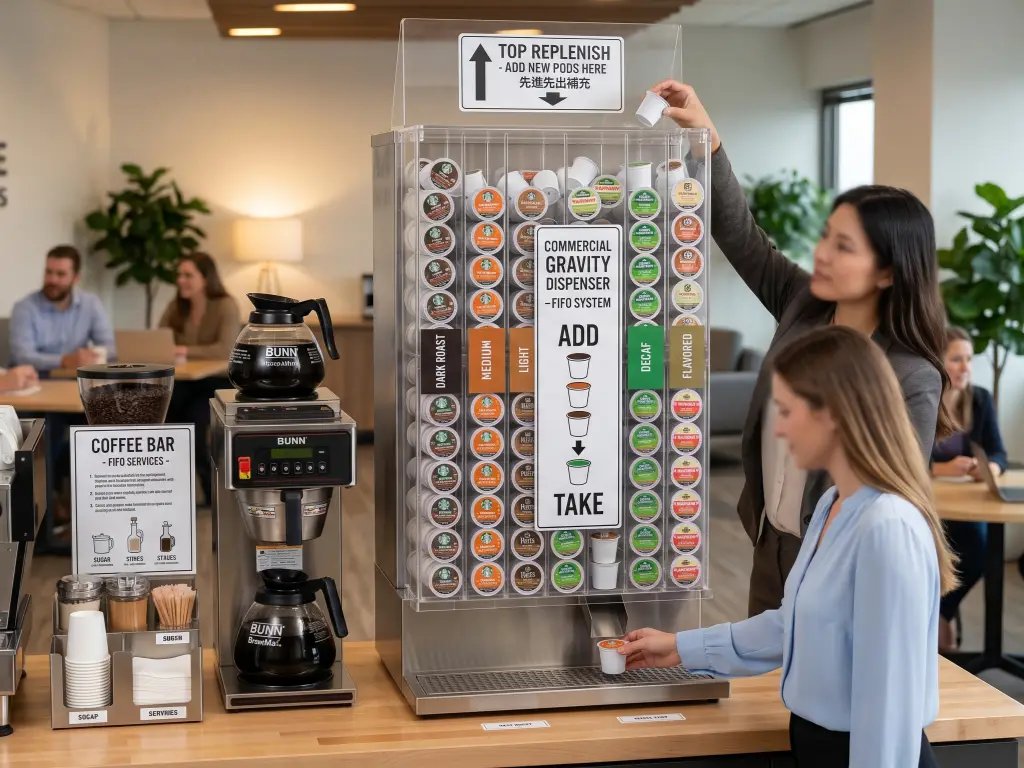
| Commercial Gravity Dispenser | 0.05 sq meters | 120+ Pods | Exceptionally High | Strictly enforces the FIFO turnover method |
The data clearly demonstrates that gravity dispensers are the superior choice. More importantly, they operate on a First-In, First-Out mechanism. If an office uses a massive open basket instead of a gravity dispenser, employees will simply pour new inventory on top. The capsules resting at the very bottom will never be consumed until they eventually expire, generating a hidden financial loss for the enterprise. For high-volume procurement, you must also consider Sanitary Durability. In public areas, storage units with touchless or easy-clean surfaces are mandatory to meet modern hygiene standards. A gravity dispenser not only protects the inventory from multi-user contact but also streamlines the refill process, allowing staff to restock large quantities in seconds rather than individually placing pods into narrow slots.
Do Coffee Pods Actually Expire? (The Science of Freshness)
To fully grasp the importance of storage, we must address a frequent consumer question regarding expiration. From a microbiological standpoint, the dry grounds inside a plastic cup will not grow mold. However, from a sensory perspective, the flavor profile can degrade rapidly into a sour, muddy liquid. Think of the capsule as a microscopic vault. Its ability to preserve freshness relies entirely on a nitrogen-flushed internal environment and an EVOH high-barrier plastic layer that blocks oxygen permeation.
For Coffee Roasters & Brands: True Freshness Originates at the Factory
Regardless of how meticulously a consumer optimizes their home storage environment, all preservation efforts are entirely futile if the capsule was compromised during manufacturing. For coffee brands and co-packing facilities, poor sealing technology is not just about a few negative consumer reviews. When minor sealing defects shorten the shelf life in retail channels, it triggers massive return-to-vendor costs. Furthermore, weak seals that cannot withstand atmospheric pressure changes during logistics lead to entire boxes of inventory being written off as scrap. These invisible failures are the true black holes devouring your corporate profit margins.
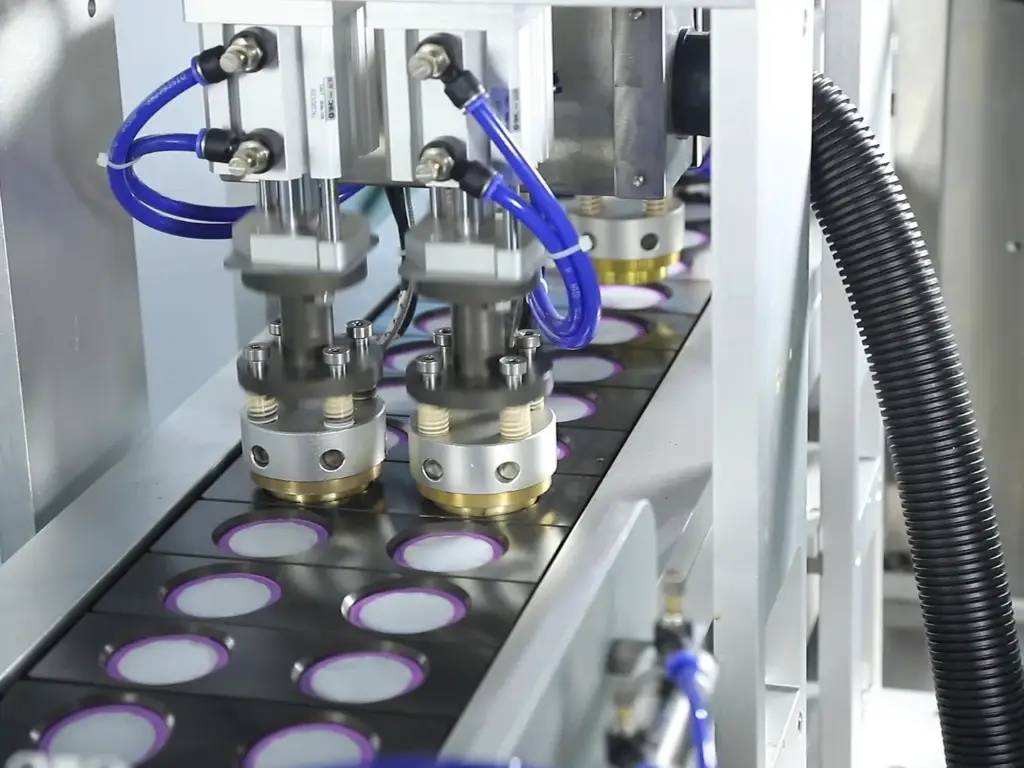
This is exactly where Saneu Coffee Pod Packaging and Sealing Machines redefine industry standards. By engineering equipment where all contact surfaces utilize 304 stainless steel and aerospace-grade aluminum, we eliminate the contamination risks associated with cheap electroplating.
While international legacy brands generally settle for a 99.5% nitrogen flush, Saneu pushes the limits. Equipped with German Oxybaby testing technology for quality control, our machines compress residual oxygen to the absolute minimum, achieving a staggering 99.9% flush rate to lock your flavor profile permanently at the point of origin.
Driven by premium Schneider and Siemens servo systems, our auger fillers guarantee a filling accuracy with a margin of error of less than 0.1 grams. This ensures every single cup delivers the exact extraction your roasters intended.
Benefiting from robust in-house supply chain advantages, Saneu delivers this technology at a thirty percent lower equipment cost than competitors. Our fully compostable-compatible matrix ranges from entry-level 35 pods-per-minute machines to high-speed 12,000 pods-per-hour automated lines.
If you are a coffee enterprise seeking highly reliable OEM, ODM, or co-packing machinery, do not let inefficient equipment destroy your carefully sourced beans.
Get a Free 24-Hour Quote & Sample Testing
Backed by a 2-Year Warranty & Lifetime Support
Worst Places to Keep Your Coffee Pods (Physics of Degradation)
Returning to the physical storage environment, we must utilize packaging engineering principles to debunk several dangerous myths perpetuated by lifestyle blogs. Storing your coffee in the wrong location can rapidly accelerate its physical degradation. Avoid these three fatal zones at all costs.
The Refrigerator Myth
It is widely but incorrectly believed that internal condensation inside the fridge ruins coffee pods. The true physical risk is actually thermal stress. The continuous, drastic temperature shifts experienced when moving pods in and out of a cold refrigerator cause the polymeric plastic cup and the aluminum foil lid to expand and contract at different rates. This thermal cycling generates stress along the sealing ring, inevitably creating micro-leaks. These leaks permanently destroy the oxygen-free nitrogen environment established at the factory.
The Sunlight Trap
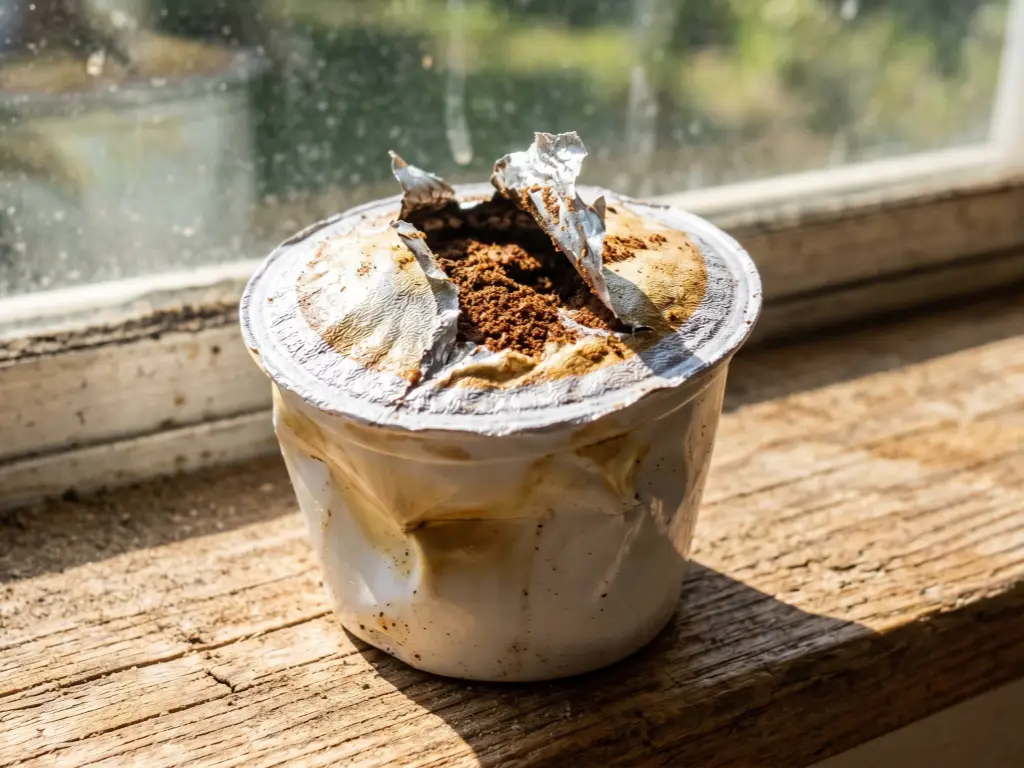
Many assume that direct ultraviolet light destroys the coffee through the plastic cup. Because most cups are opaque, the actual fatal mechanism is thermal degradation. Direct sunlight creates a localized greenhouse effect that rapidly spikes the internal temperature of the capsule. This intense heat accelerates the coffee beans’ natural release of carbon dioxide, eventually ballooning and bursting the foil seal. Simultaneously, the heat exponentially speeds up the oxidation reaction between any residual oxygen and the delicate coffee lipids, resulting in a rancid taste.
Above the Oven or Dishwasher
Placing an organizer directly above a major heating appliance exposes the capsules to violent thermal fluctuations. The continuous bursts of intense heat and steam degrade the molecular stability of the EVOH high-barrier layer inside the plastic shell. Over time, this compromises the cup’s ability to act as an effective shield against external oxygen.
A Quick Checklist Before You Buy
Before you finalize your decision and integrate new K-Cup storage containers into your space, use this precise checklist to ensure a flawless fit. It serves as a practical measuring tool for consumers and a final reminder of quality standards for commercial buyers.
First, always measure your vertical clearance. This is the most common point of failure. If you are purchasing an under-brewer drawer, use a measuring tape to calculate the vertical distance from your countertop to the bottom of your upper cabinets. Subtract the total height of the storage drawer from that number. You must confirm that the remaining vertical space allows you to fully open the top water reservoir hatch of your coffee machine without hitting the cabinet above.
Second, align the container with your turnover rate. Review your actual daily consumption. If you buy massive bulk boxes from wholesale clubs, a tiny decorative stand will leave you with overflow cardboard boxes littering your pantry. Choose a capacity ceiling that matches your purchasing habits.
Finally, always check packaging integrity. Before transferring newly purchased capsules into any hard container, lightly press down on the aluminum foil lid. It should feel taut and display a slight resistance due to the internal nitrogen pressure. If it depresses easily, the airtight seal has failed.
Conclusion
Ultimately, mastering K-Cup storage is not just about aesthetics; it is a precise science involving spatial geometry, inventory turnover, and packaging engineering. Whether you choose a simple drawer for your home kitchen or a high-capacity gravity dispenser for a busy breakroom, the right setup protects your precious coffee from degradation. However, even the most advanced storage solutions cannot save poorly sealed pods. For coffee roasters and brands aiming for long-term success, true freshness begins on the production line. By investing in elite sealing technology like Saneu’s nitrogen-flushed packaging machines, you lock in peak flavor before the pod ever reaches the consumer. Great storage is the final step, but flawless manufacturing is the foundation.