
A roaster can spend weeks tuning a blend, then lose its bright aroma in a tiny cup of trapped air. A bit annoying, right? Ground coffee has a huge exposed surface. Once oxygen sits beside it, oxidative staling starts doing its quiet work.
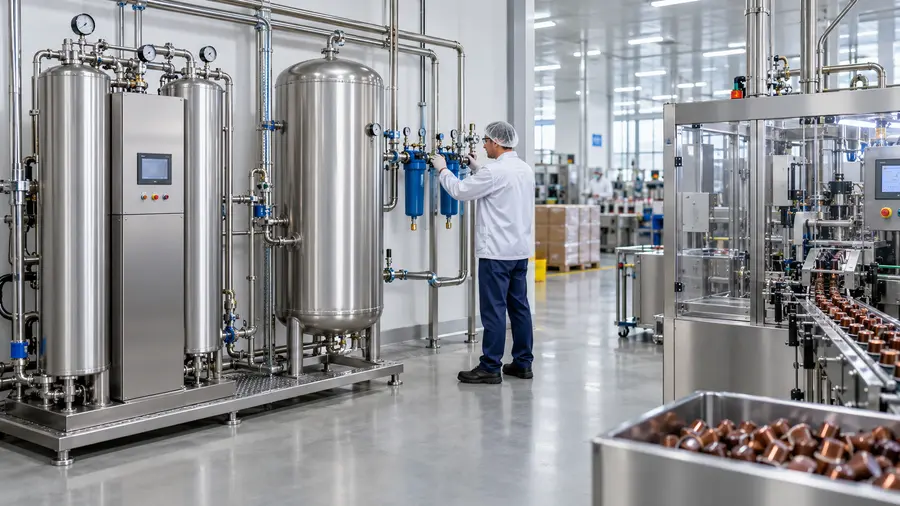
Nitrogen flushing reduces that exposure by replacing much of the air inside an open capsule before sealing. The real process is not quite so tidy. Nitrogen purity, gas flow, cup shape, coffee dose, line speed, sealing delay, and packaging barrier all influence the oxygen left behind.
That final amount is called residual oxygen or headspace oxygen. It is the number a finished-pack test sees. For roasters, co-packers, private-label producers, and packaging engineers, it is much more useful than simply knowing that nitrogen was switched on.
Oxygen Has More Than One Place to Hide
An empty capsule starts with normal air inside it. That air contains about 21% oxygen. Then ground coffee arrives. The coffee pushes out some air, but it also brings air with it. Small pockets remain between particles, around the cup wall, and above the coffee bed.
Fine grounds make the problem sharper. Grinding breaks the bean into thousands of small pieces and exposes more oils and aroma compounds. Oxygen can then react with those compounds. Over time, lively fruit notes fade, oils move toward rancidity, and the cup begins to taste flat or papery.
This is why roasters use nitrogen flushing for coffee capsules. It slows chemical quality loss. It does not rescue old coffee or turn a weak package into a strong barrier.
Roasted ground coffee is a low-moisture product, so nitrogen is mainly protecting flavor and aroma here. Hygienic filling, moisture control, good manufacturing practices, and sound packaging still have their own jobs.
How a Nitrogen Flush Drives Oxygen Down
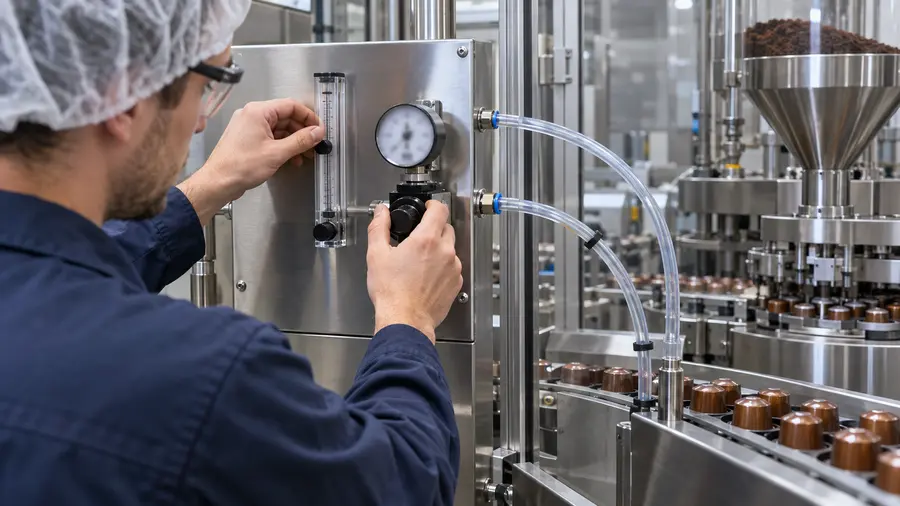
Nitrogen flushing is a form of modified atmosphere packaging. Instead of closing the capsule with ordinary air inside, the line creates a nitrogen-rich zone around the open cup. Air escapes while nitrogen enters. The lid then traps that changed atmosphere.
One small correction matters. Nitrogen does not work because it is “heavier than oxygen and sinks.” In fact, an N₂ molecule is lighter than an O₂ molecule. On a fast packaging line, gas movement is governed mainly by nozzle flow, mixing, turbulence, cup geometry, and the route available for air to leave.
Think of rinsing syrup from a narrow glass. One splash of water helps, but pockets remain. Several controlled rinses work better. Gas flushing behaves in a similar way: each useful exchange dilutes the oxygen that was there before.
The Empty Capsule Is Purged
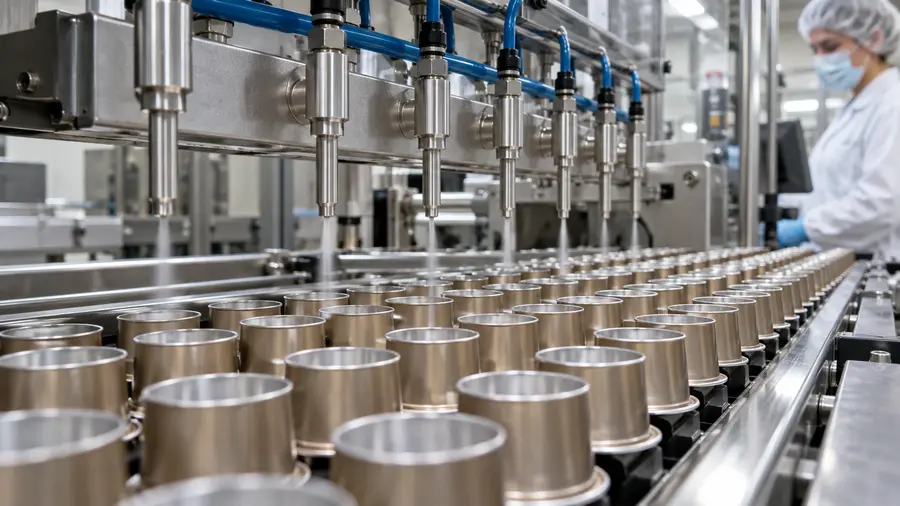
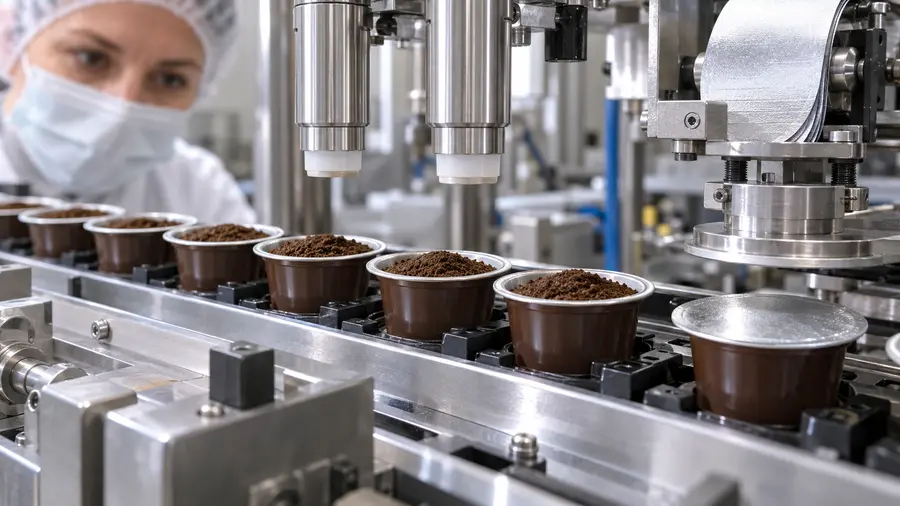
A nozzle, ring outlet, or enclosed gas hood delivers nitrogen to the empty cup. The incoming stream should reach the cup without whipping surrounding air back into it. Meanwhile, displaced air needs a clear way out.
Nozzle position is a fussy little detail. Too high, and the gas may spread before it reaches the capsule. Too low or too forceful, and the jet can create turbulence. Multi-lane machines also need balanced flow, or one lane may quietly perform worse than the rest.
Coffee Is Dosed Into the Protected Zone
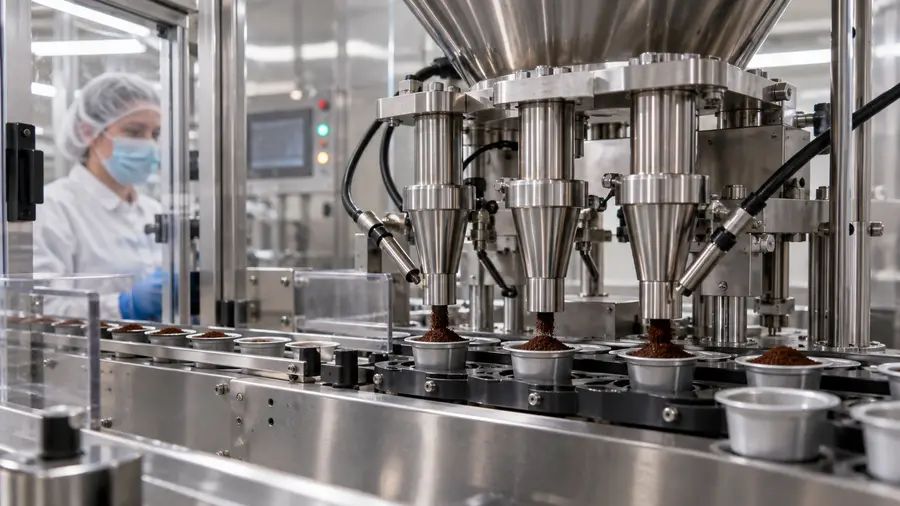
The filler drops a measured dose into the purged capsule. Coffee displaces some gas, yet falling powder disturbs the atmosphere and can trap air between particles.
Grind size, bulk density, static, fill height, and dosing speed all change this behavior. A fluffy light-roast grind does not settle exactly like a dense dark-roast blend. That is why a setting proven with one coffee may need adjustment after a product change.
The Headspace Gets a Final Sweep
After dosing, a second nitrogen stream can sweep the area above the coffee. Some machines maintain a continuous nitrogen-rich hood from filling to sealing. Others use a focused purge close to the lid station.
This final step targets gas disturbed during filling. It does not necessarily remove every pocket buried in the coffee bed, but it can sharply lower the oxygen surrounding the product and in the remaining headspace.
The Lid Closes Before Air Returns
The capsule must move from final purge to sealing quickly. An open cup behaves like an open window. The longer it waits, the more oxygen can mix back in.
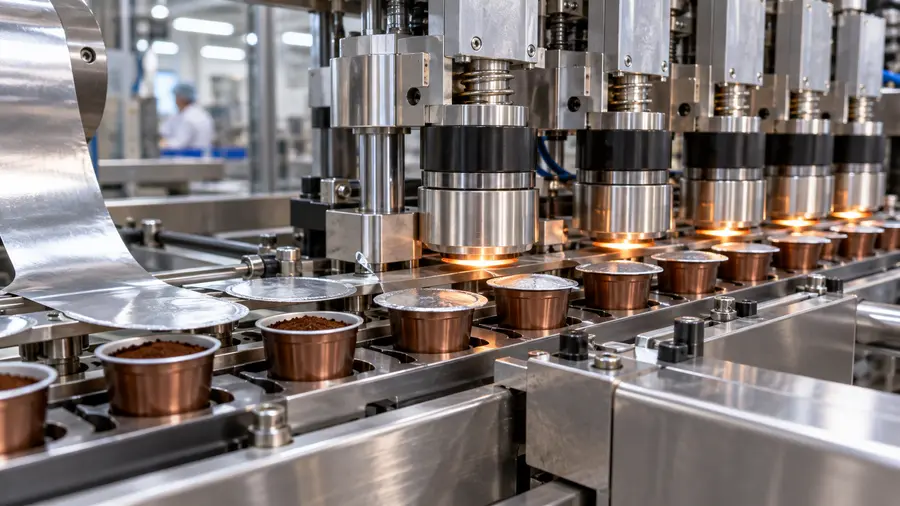
The sealer then bonds the lid to the cup rim under controlled temperature, pressure, and dwell time. Good oxygen control across capsule packaging therefore depends on two linked actions: create a low-oxygen atmosphere, then hold it there.
Why the Result Is Never “Zero Oxygen”
Even very pure nitrogen does not make a perfect vacuum. Gas mixing, trapped pockets, machine motion, ambient air, and the coffee itself affect the reading.
This is also why nitrogen purity and the atmosphere inside a capsule are different measurements. A supply containing 99.9% nitrogen only describes incoming gas. It does not prove that a finished capsule contains 0.1% oxygen.
Many capsule projects use an initial residual-oxygen target below 1–2% during development. Still, no single percentage guarantees a particular shelf life. The target must be tied to the real coffee, package, sensory result, and storage test.
Three Flushing Setups and Their Trade-Offs
The best method depends on output, capsule geometry, target oxygen level, and the amount of process complexity the plant can support.
| Method | How it lowers oxygen | Good fit | Main trade-off |
| Direct nozzle purge | Sweeps the open cup or headspace shortly before sealing | Small and medium lines, straightforward formats | Sensitive to nozzle position, timing, and drafts |
| Continuous hood or tunnel | Maintains a nitrogen-rich zone across several stations | Faster or multi-lane filling lines | Can waste gas if coverage and enclosure are poorly controlled |
| Vacuum plus nitrogen replacement | Removes part of the air, then introduces nitrogen | Tighter targets and premium shelf-life programs | Adds equipment, controls, and cycle complexity |
Vacuum-assisted replacement is not the same as closing a product under vacuum. The capsule still receives nitrogen before sealing. This reduces the air that must be diluted, though performance remains machine- and package-specific.
For pilot production, a compact nitrogen sealing machine for coffee capsules may be enough to prove a concept. A growing co-packer usually needs continuous control across dosing and sealing, plus lane-by-lane verification.
Why Identical Nitrogen Can Give Different Oxygen Readings
When a test fails, the first reaction is often, “Use more gas.” Sometimes that works. Sometimes it makes the flow turbulent and pulls more room air into the cup. More is not automatically better.
| Variable group | Examples | How it changes the result |
| Gas supply | Purity, pressure stability, flow capacity, tubing restrictions | Sets the quality and consistency of nitrogen reaching the machine |
| Gas delivery | Nozzle height, angle, outlet shape, purge duration, hood design | Controls where nitrogen travels and how cleanly air escapes |
| Coffee | Dose, grind, density, static, moisture, settling behavior | Changes trapped air and headspace volume |
| Machine | Speed, index motion, lane balance, fill-to-seal distance | Changes exposure time and repeatability |
| Environment | Cross-drafts, extraction fans, doors, compressed-air leaks | Can disturb the protective atmosphere |
Line speed deserves attention. A faster index leaves less purge time and makes powder movement rougher. If oxygen rises only with speed, exchange time may be the real limit.
The same logic applies to multi-lane lines. An average reading can hide one weak lane. Test each lane separately before changing a global setting.
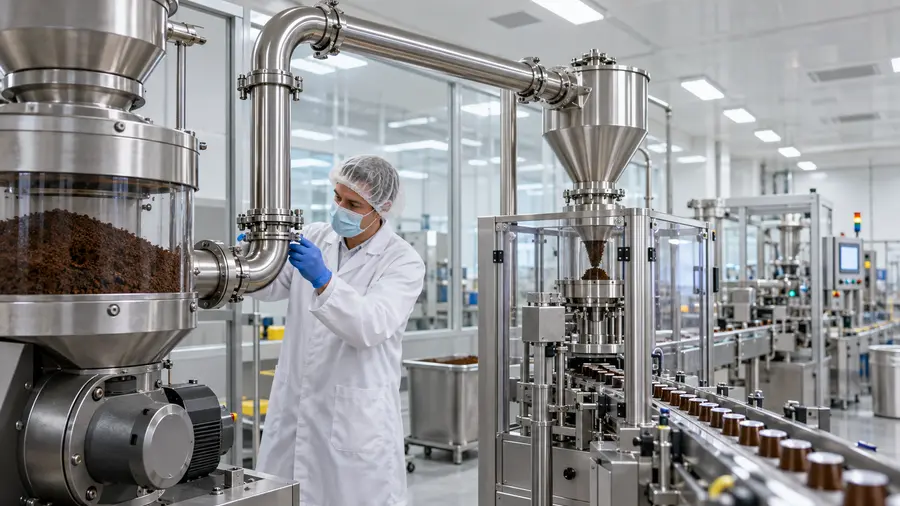
The Capsule and Lid Must Keep Oxygen Out
A low reading five minutes after production is encouraging. It is not a shelf-life result.
Oxygen may later enter through the cup wall, lid, microscopic pinholes, or an imperfect seal. Barrier performance depends on material structure, thickness, forming quality, storage temperature, and test conditions. If you are weighing aluminum and plastic capsule material choices, look beyond appearance and price. Ask for relevant oxygen-transmission data and finished-pack trials.
Aluminum generally provides a strong light and gas barrier when intact. Plastic capsules often rely on multilayer or coated structures. Compostable cups can work too, but their oxygen and moisture barriers vary. “Compostable” describes end of life, not aroma protection.
The lid and sealing layer matter just as much. Coffee dust on the rim can create a narrow leak path. Too little heat may leave a weak bond. Too much heat can distort the cup or damage the seal layer. Pressure and dwell time must suit the actual cup-and-lid combination.
A 2024 peer-reviewed study of coffee pods, capsules, oxygen, and multilayer packaging monitored headspace oxygen and quality indicators for 180 days. Its results are a useful reminder that oxygen changes during storage and that barrier structure and temperature matter. In other words, clearing the room is only half the job. You still have to lock the door.
How to Prove the Flush Worked
Four numbers are often mixed together in sales conversations. They answer different questions.
| Metric | What it tells you | What it cannot prove alone |
| Nitrogen supply purity | Quality of gas entering the machine | Oxygen inside every sealed capsule |
| Residual or headspace oxygen | Oxygen present when the package is tested | Long-term barrier performance |
| Seal-integrity result | Whether the package shows a leak or weak closure | Flavor retention for the full claimed life |
| Material OTR | Oxygen passage through a material under stated conditions | Quality of formed cups and production seals |
Sample the Process, Not Just the Best Capsule
A sensible plan covers startup, steady production, every lane, stoppages, and changes in coffee, lid, cup, speed, or gas source. Record the time between sealing and testing so readings remain comparable.
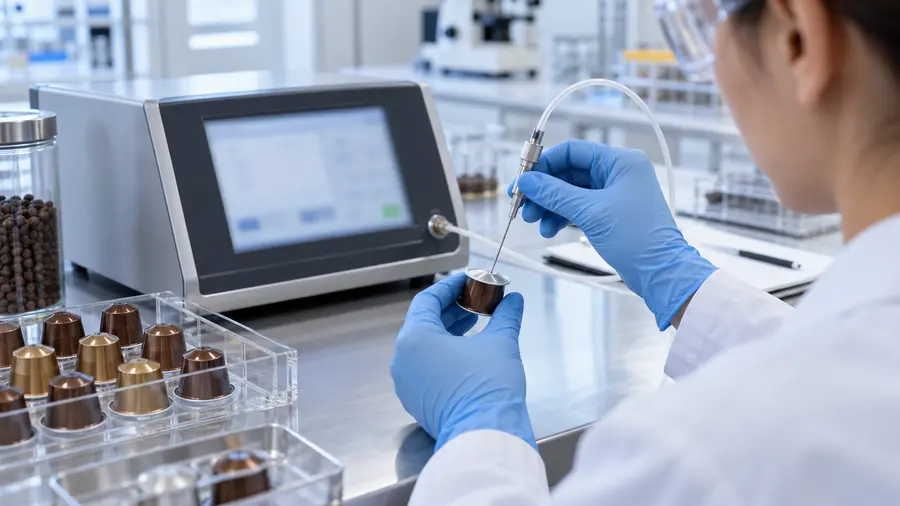
Needle-based headspace analyzers withdraw a small gas sample through a sealing patch. They are common and practical, but the test destroys or punctures the pack. Optical systems use a sensor spot read through the package. ASTM F2714-08(2021) describes a fluorescent-decay method for measuring oxygen in a closed-package headspace without opening it. The method has specific package and sensor requirements, so it is a useful reference—not a rule that every capsule plant must use.
Test some packs soon after sealing and others during storage. The first group checks flushing; the second reveals ingress, leakage, and barrier limits. Pair both with sensory evaluation. Customers drink coffee, not charts.
Standards and Safety Still Matter
For the United States, 21 CFR § 184.1540 identifies nitrogen as GRAS for specified food uses under current good manufacturing practice and requires purity suitable for its intended use. Other markets have their own gas, food-contact, labeling, and packaging requirements.
GMP and HACCP help control sanitation, traceability, maintenance, and hazards. They do not create one universal residual-oxygen limit.
There is also an occupational point that should not be shrugged off. Nitrogen is safe in the package, but a leak in an enclosed room can displace breathable oxygen. Ventilation, gas-system maintenance, risk assessment, and suitable room monitoring belong in the installation plan.
Troubleshooting High Residual Oxygen Without Guessing
Change one variable at a time and keep the sampling method fixed. Otherwise, the team ends up chasing noise.
| Observed pattern | Likely area to inspect | First controlled check |
| Every capsule reads high | Gas purity, total flow, timing, or analyzer calibration | Confirm incoming gas and test a known reference |
| One lane reads high | Nozzle alignment, restricted tubing, or lane-specific sealing | Inspect and compare that lane with a stable lane |
| Oxygen rises with speed | Purge exposure is too short | Test stepped speeds while holding other settings |
| Startup is poor, then improves | The nitrogen zone has not stabilized | Add a documented pre-purge routine |
| Initial oxygen is low but rises later | Cup/lid barrier, pinhole, seal channel, or storage heat | Pair aged oxygen readings with integrity tests |
| More flow makes the result worse | Turbulence is drawing in ambient air | Reduce flow in small steps and watch the trend |
Do not celebrate one unusually low capsule. Look for a stable range across lanes and across a full run. Boring consistency is the good stuff here.
Turn the Oxygen Target Into a Machine Requirement
Before comparing integrated coffee capsule filling machines, write down what the line must prove. Include capsule format, coffee dose, planned speed, lane count, gas source, target residual oxygen, packaging materials, sampling method, and expected shelf life.
Then ask the supplier to run your coffee, cup, and lid. A factory test using an easy-flowing powder and a different capsule proves very little about your product. Record gas consumption as well as oxygen performance; a low reading bought with wasteful flow becomes expensive at scale.
A practical acceptance test should cover startup, steady operation, each lane, short stops, restarts, and the highest agreed speed. For a long-life product, keep samples for aged oxygen, seal, and sensory checks. This makes choosing K-Cup and Nespresso nitrogen-flushing equipment much less like buying from a brochure.
Conclusion
Nitrogen flushing lowers oxygen through controlled replacement: purge the cup, protect the dosing zone, sweep the headspace, and seal before room air returns. Gas purity matters, but it is only one piece. Flow, coffee behavior, line speed, capsule material, lid quality, and verification decide whether the result holds.
One low reading looks nice on a test sheet. A repeatable low range across every lane—and throughout storage—is what protects the coffee brand.
Frequently Asked Questions
What is nitrogen flushing in coffee capsule packaging?
It is a packaging process that introduces food-grade nitrogen around the coffee before sealing. The nitrogen replaces or dilutes ordinary air, lowering the oxygen left in the capsule.
How does nitrogen remove oxygen from a coffee capsule?
It does not absorb oxygen. A controlled gas stream pushes and mixes air out through the open top. Repeated purging lowers oxygen concentration, and sealing traps the nitrogen-rich atmosphere.
What residual oxygen level should a coffee capsule have?
Many projects work toward below 1–2% soon after sealing, but this is an engineering target, not a universal legal limit. The right level depends on the coffee, barrier, storage, and validated shelf life.
Is 99.9% nitrogen purity the same as 0.1% residual oxygen?
No. Purity describes the incoming gas. Residual oxygen measures the finished package. Air trapped in coffee, poor flow, sealing delay, and leaks can make the capsule reading much higher.
How long do nitrogen-flushed coffee capsules stay fresh?
There is no honest one-size number. Commercial shelf life can range across many months, but it must be confirmed with the real coffee, capsule, lid, storage temperature, oxygen trend, and sensory tests.
Is nitrogen-flushed coffee safe to drink?
Food-grade nitrogen is widely used for food packaging and does not add flavor. Plants must still follow applicable purity and GMP requirements. Bulk nitrogen also needs workplace ventilation and gas-safety controls.
Does nitrogen flushing stop coffee degassing?
No. Freshly roasted coffee can continue releasing carbon dioxide. Nitrogen flushing mainly reduces oxygen exposure. Roast rest time, dose behavior, package pressure, and sealing plans still need evaluation.
Does flushing work with aluminum, plastic, and compostable capsules?
Yes, but initial flushing is only part of the story. Each cup and lid structure has different barrier and sealing behavior, so finished-pack oxygen and shelf-life tests are needed.
Why does oxygen rise after a capsule has been sealed?
Oxygen may pass through the material or enter through a pinhole, contaminated rim, or weak seal. Temperature can speed the change. Compare aged oxygen results with seal-integrity testing to find the cause.
Do small roasters need vacuum-assisted nitrogen flushing?
Not always. A well-controlled direct purge may meet the target at lower speeds. Vacuum-assisted systems become more attractive when the product needs tighter oxygen control and the extra complexity is justified by testing.