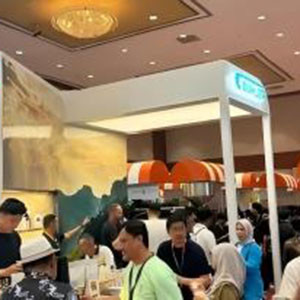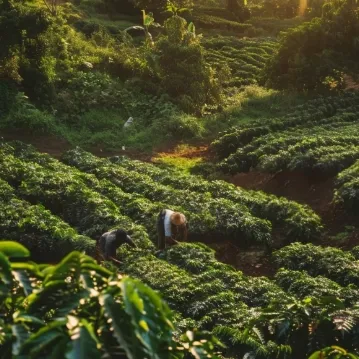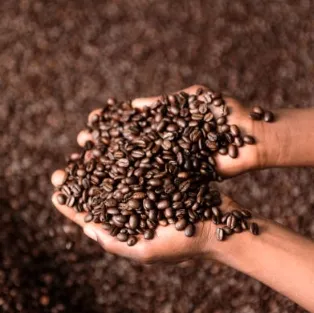
A coffee can shine on a cupping table and still taste flat in a capsule. That is the awkward bit many new brands discover too late.
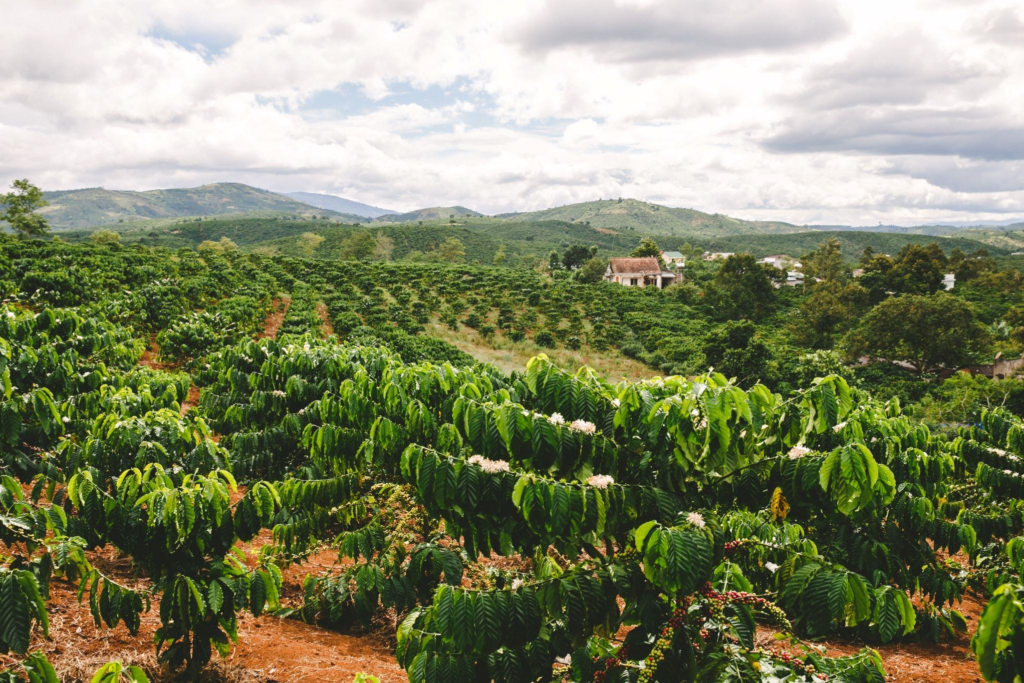
The capsule is a tiny extraction chamber. It gives you a fixed amount of coffee, a short contact time, and a brewer you cannot fully control. A delicate highland lot may smell wonderful as a pour-over, then almost disappear in a 40 ml espresso. A well-developed Robusta, meanwhile, may produce the body and crema that customers remember.
So, turning a Southeast Asian origin into a branded capsule is not mainly a packaging exercise. It is product development. Start with the market and drinking occasion. Pick one origin promise that you can prove. Then engineer the roast, grind, dose, capsule, lid, and seal around that promise. Test the complete product before printing a heroic story on the box.
That approach works for a Vietnamese exporter moving beyond green beans, an Indonesian roaster creating an Aceh range, or a café group putting its signature coffee into a single-serve format. The details differ. The decision path is much the same.
Start with the Market, Not the Map
Define the destination market, target drinker, sales channel, brewer system, and cup occasion before choosing a coffee or capsule. A beautiful origin with no clear use case is still just an interesting sample.
“We want to sell Vietnamese coffee capsules in Europe” sounds like a plan. It is not quite a product brief yet.
Which European country? Online subscription, specialty retail, offices, or hotels? Will customers drink a short black coffee or add milk? Which brewers do they own? What price feels normal in that channel? The answers change the product.
A bold fine-Robusta capsule may suit milk drinks, busy offices, and drinkers who want intensity. A sweet Thai Arabica could work as a discovery espresso for specialty buyers. A rare Philippine Liberica may make more sense as a limited edition than as the everyday volume SKU.
Write a one-page brief before contacting a capsule supplier. Include:
- the target customer and country;
- the sales channel and retail price range;
- the brewing system and intended cup size;
- the desired taste in ordinary language;
- the origin facts and claims you can document;
- the expected first order and monthly volume;
- the target launch date;
- any buyer-required certification or packaging preference.
Here is a simple example: “A medium-priced espresso capsule for young professionals in Singapore, built around traceable Vietnamese fine Robusta, strong enough for iced milk coffee, sold online in boxes of ten.” Now the team can make decisions. “Premium Asian coffee” leaves everyone guessing.
Turn Origin Evidence into a Promise People Can Taste
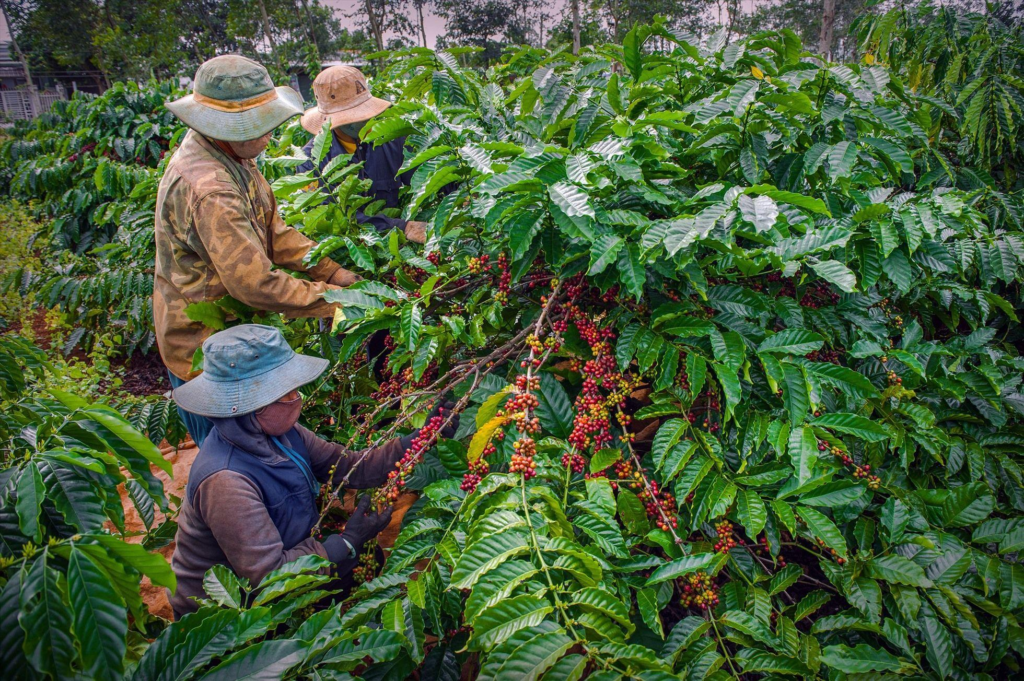
A useful origin story links verifiable facts about place, people, variety, and processing to a recognizable cup. Country flags and jungle artwork cannot do that job on their own.
Start by deciding what “origin” means for this product. Is it a country, a region such as Aceh Gayo, a producer group, a farm, or a blend of several Southeast Asian origins? Be precise. A country-level blend is not worse than a microlot, but it tells a different story and requires different traceability.
Then separate three things that often get mixed together:
- What the coffee is: variety or species, process, elevation, harvest, and lot structure.
- What it tastes like: aroma, flavor, acidity, sweetness, texture, aftertaste, and intensity.
- Why the buyer cares: a bold milk drink, an easy everyday espresso, a new origin to explore, or a closer connection to producers.
The Specialty Coffee Association’s Coffee Value Assessment is useful here. It considers physical, descriptive, affective, and extrinsic information rather than forcing the whole story into one score. That matters for Southeast Asian coffees. Wet-hulling, fine Robusta, Liberica, local processing knowledge, and traceability can create value in different ways.
Use those facts with care. “Grown by smallholders” does not automatically prove that a product improves farmer income. “Natural” describes a process; it does not mean organic. A certification logo needs valid scope and permission. If a producer name or portrait appears on the box, agree on how it may be used.
The table below is a product-development starting point, not a rulebook. Actual flavor depends on the lot, roast, crop, and extraction.
| Origin example | Possible capsule strength | Watch-out | Potential role |
| Vietnam fine Robusta | Body, crema, cacao-like depth, intensity | Excessive roast can reduce everything to bitterness | Everyday espresso or milk-drink anchor |
| Indonesia wet-hulled Arabica | Texture, spice, woody depth | Poor development can taste muddy or dry | Premium regional signature |
| Thailand highland Arabica | Sweetness and approachable fruit | Secure repeatable supply before promising a core SKU | Discovery capsule |
| Philippines Liberica | Distinctive aroma and a strong cultural story | Flavor can be polarizing and supply limited | Halo product or limited release |
| Laos or Timor-Leste | Traceability and a less familiar origin | Awareness and lot consistency may need more work | Story-led premium capsule |
Design the Coffee for a Capsule, Not a Cupping Bowl
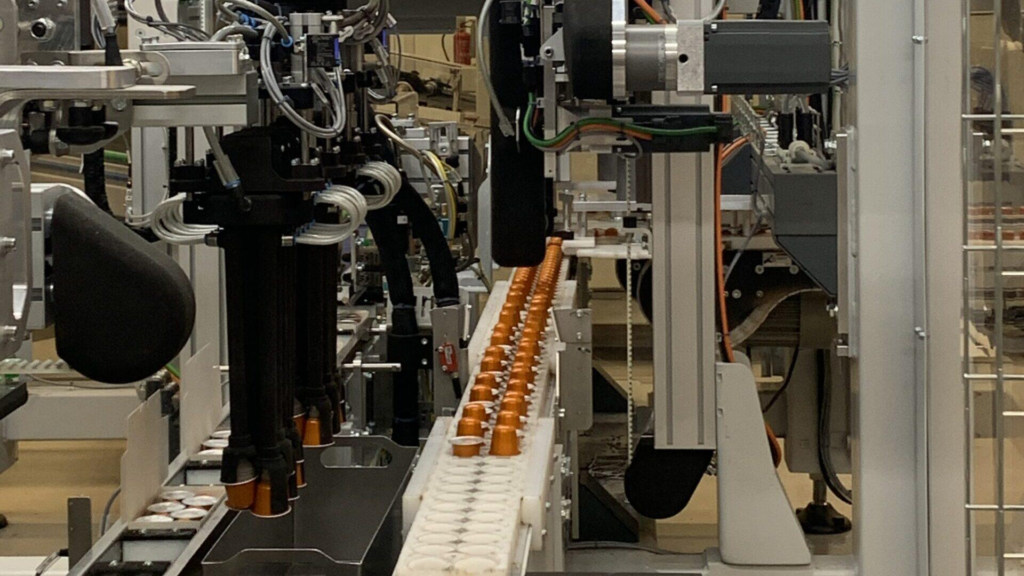
Develop roast, grind, dose, and extraction together in the target capsule and brewer. Do not take a recipe for bagged coffee, grind it finer, and assume the job is finished.
A capsule gives coffee very little room to hide. A slight change in particle distribution or fill weight can alter flow, strength, and bitterness. Begin with the beverage. A short espresso needs aroma, intensity, and texture. A lungo must stay balanced through a longer extraction. In milk, the flavor needs enough structure to remain present.
Test several roast and grind combinations in the actual capsule. Cup the brewed capsules blind, not just the roasted beans. Record dose, beverage mass or volume, flow time, sensory result, and obvious failures such as channeling or weak crema. The goal is not the darkest roast or the finest grind. It is a stable extraction that expresses the intended character.
Create a written specification with:
- approved green lots and substitution rules;
- roast color and development window;
- roast-to-fill resting window;
- grind distribution, not only an average particle size;
- target dose and allowable variation;
- brewing system, cup size, and test machine models;
- sensory acceptance language;
- rules for adjusting the blend when crops change.
This protects the brand when a favorite lot runs out. Customers expect the red box to taste like the red box. Agricultural products change, so repeatability comes from managed ranges.
Choose the Capsule System Before the Artwork
Capsule systems are not interchangeable. Choose one around the installed brewer base, beverage style, channel, dose needs, and intellectual-property review in the destination market.
Nespresso Original-compatible capsules commonly serve espresso and lungo occasions. K-Cup-compatible formats are strongly associated with the US market and larger cups. Dolce Gusto-style systems support a different machine base and beverage architecture. Other closed or regional systems may matter in a particular retail or hospitality channel.
Do not infer demand from global brand fame. Ask distributors for brewer penetration, current shelf sets, price points, and customer complaints. A format that dominates one country may be niche in the next.
Compatibility means more than matching outside dimensions. The brewer must pierce the capsule correctly, while the flange, lid, filter, body, and coffee bed work together. Test several commonly used machine models, including older ones where relevant. Describe third-party compatibility clearly and obtain market-specific trademark advice.
If the plan centers on espresso-style retail products, review the available Nespresso-compatible capsule filling options only after the product brief is clear. Equipment should follow the format decision, not quietly make it for you.
| Decision factor | Espresso-style compatible capsule | K-Cup-compatible pod | Why it matters |
| Typical beverage | Espresso or lungo | Larger brewed coffee | Changes roast, dose, grind, and sensory target |
| Common channel fit | Home espresso, premium retail, hospitality | US home, office, grocery | Determines reachable machine owners |
| Product space | Compact dose | More room for coffee and filter structure | Affects extraction design |
| Main validation task | Piercing, seal, flow, short-cup balance | Filter behavior, flow, larger-cup strength | Avoids weak cups and compatibility complaints |
Match Materials to Freshness and Disposal Reality
Choose the body and lid as one barrier-and-sealing system. Balance protection, machinability, cost, food-contact evidence, brand position, and the disposal infrastructure where the product is sold.
Ground coffee loses aroma when oxygen, moisture, heat, and time get involved, so material is functional. Aluminium can offer strong barrier performance and a premium cue. Polypropylene may offer cost and line-handling advantages. Compostable systems can support a credible proposition when certification, brewing, shelf protection, and local waste routes line up. That last part is the catch. A compostable item does not magically find a suitable facility.
Use a material specification covering the capsule body, filter where present, sealing lid, lacquer or coating, ink, and adhesive. Ask for the documents relevant to the intended food, temperature, storage, and destination market. Then run the exact material combination on the intended line.
For a practical commercial comparison, see how aluminium and plastic capsule materials affect freshness, cost, and positioning. Treat general comparisons as a shortlist, though. Your coffee and seal trials make the final decision.
| Material route | Likely strength | Operational question | Claim risk |
| Aluminium | Strong barrier and premium cue | Does the lid seal reliably without deformation? | “Recyclable” needs a realistic collection route |
| PP-based plastic | Cost and manufacturing flexibility | Is the complete structure suitable for the intended heat and food contact? | Resin type alone does not prove local recyclability |
| Compostable structure | Clear niche positioning | Can it maintain barrier and brewing performance through shelf life? | State certification and disposal conditions precisely |
Decide Where the Value-Adding Work Happens
Use a qualified co-packer when demand is uncertain or technical capability is missing. Consider in-house filling when recurring volume, control, flexibility, and margin can support the staff, utilities, QC, maintenance, and working capital.
Producing at origin can keep roasting, product knowledge, employment, and more commercial activity closer to the coffee. It can also shorten the feedback loop between sourcing and product development. But “made at origin” is not automatically cheaper or better. Finished goods may have higher freight volume, and the factory still has to meet destination-market and buyer requirements.
A co-packer can make the first launch simpler. It already has a line, trained operators, and perhaps established packaging suppliers. Ask who owns the recipe, whether similar profiles can be sold to another brand, how change requests work, what the true MOQ is, and who carries obsolete printed packaging.
An owned line offers scheduling control and protects process knowledge. It also brings responsibility for utilities, operators, maintenance, spare parts, sanitation, testing, and downtime. Machine price is only one line in the business case.
Before investing, use a structured guide to choose a coffee capsule filling machine and insist on trials with your coffee, capsule, and lid.
| Factor | Co-packer / OEM | In-house filling |
| Initial capital | Lower | Higher |
| Launch speed | Often faster if a suitable slot exists | Depends on delivery, installation, training, and validation |
| Process control | Shared and contract-dependent | Direct, but requires internal expertise |
| MOQ | Set by supplier and packaging economics | Constrained by changeover and component MOQs |
| Unit economics | Includes supplier margin | Can improve at steady utilization, not at idle capacity |
| Technical burden | Mainly supplier management and incoming QA | Operations, maintenance, food safety, and full QC |
Protect Flavor with Filling, Sealing, and Oxygen Control
Nitrogen flushing helps slow oxidation, but it cannot repair old coffee, a poor barrier, or an incomplete seal. Measure the sealed result instead of relying on the nitrogen generator’s specification.
Control begins with dose. Too little can produce a weak cup; too much may interfere with sealing or flow. Check fill-weight distribution during a run, not only a small convenient sample.
Next comes the headspace. Nitrogen can displace oxygen before sealing, while vacuum-assisted approaches may reduce it further in suitable systems. What matters commercially is residual oxygen in sealed capsules over time. Sampling location, test method, material permeability, seal integrity, and storage conditions all influence the reading.
Validate the sealing window too. Temperature, pressure, and dwell time interact with speed and material. Inspect peel behavior, wrinkles, flange contamination, and leaks. Retain production samples for real-time shelf-life work. Accelerated studies can flag risks, but they should not become a made-up expiry date.
This explanation of how manufacturers control nitrogen and residual oxygen in capsule packaging provides useful background. For your product, agree written acceptance criteria with the machine or co-packing partner.
A supplier acceptance test should run the intended coffee and final components. Record stable speed, stoppages, waste, fill variation, sealed residual oxygen, seal results, and brewed-cup performance. Run capsules in several target brewers. Keep samples. Well, it is less glamorous than choosing box colors, but it prevents expensive surprises.
Build Proof Before Printing Claims on the Box
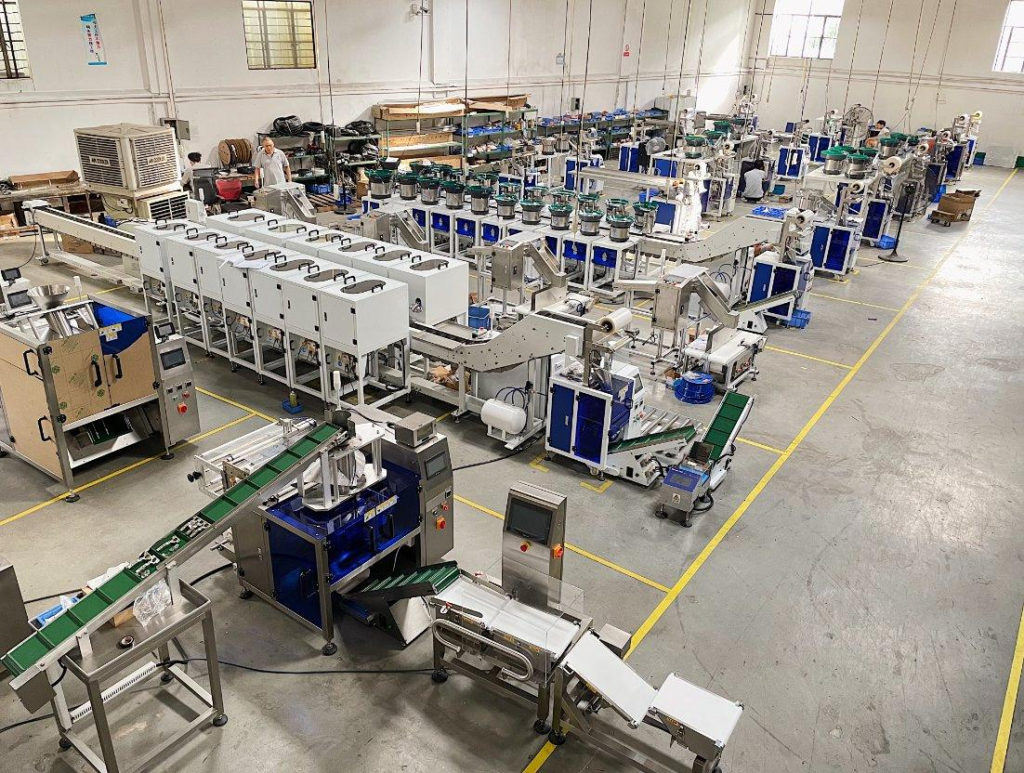
Support every origin, certification, compatibility, freshness, and environmental claim with traceable records, test evidence, a valid certificate, or a contract. Review requirements for each destination rather than copying a label from another market.
Before artwork approval, compile contracts and lot records, supplier declarations, food-contact documents, certification scope, required migration evidence, compatibility results, shelf-life protocol, translations, and approvals.
For EU sales, the European Commission’s food-contact-material guidance explains the general framework, including Regulation (EC) No 1935/2004 and good manufacturing practice under Regulation (EC) No 2023/2006. Rules may also exist for particular materials, and national requirements can matter.
For US sales, the FDA explains that packaging components such as adhesives and colorants can be food-contact substances and that authorization depends on the substance and intended use. Its food packaging and food-contact overview is a sensible starting point.
These sources are not a substitute for a regulatory review of the finished product. Capsule coffee involves the coffee, primary packaging, processing facility, retail label, destination, and sometimes importer requirements. Ask the buyer what certification it requires, too. A supermarket and a small online shop may set very different supplier conditions.
Launch Three Clear Roles, Not Twelve Interesting Coffees
A narrow first range reduces packaging inventory, changeovers, forecasting errors, and buyer confusion. Give each SKU a distinct job, then expand with sell-through and repeat-purchase evidence.
A useful opening portfolio can have three roles:
- Core: an approachable, repeatable capsule with the strongest volume economics.
- Signature: a more specific origin with a clear sensory and brand story.
- Discovery: a rotating or limited product that creates attention without promising permanent supply.
A hypothetical range might use Vietnamese fine Robusta as a cacao-led espresso for milk, Aceh or Toraja Arabica as the signature, and a rotating Thailand, Philippines, Laos, or Timor-Leste capsule for discovery. Consumer tasting and supply evidence should decide the real lineup.
Make the roles visible on the pack. Use distinct flavor language, intensity, cup recommendation, and color. Keep the master brand and information hierarchy consistent. If volumes are uncertain, investigate flexible labels, sleeves, or cartons before buying a small mountain of fully printed components. When testing cup-and-lid combinations, qualified empty coffee pod supply options can support pilot planning without forcing the brand story to follow a single material too early.
Pilot the Whole Business, Not Only the Coffee
A useful pilot tests sensory quality, factory repeatability, pack clarity, compatibility, shelf stability, landed margin, sell-through, and repeat purchase. Passing one tasting session is not enough.
Move from bench trials to the actual filling line, stability samples, and a limited commercial batch. Give target users the intended brewer and preparation. Someone adding milk may judge the product very differently from a development team drinking it black.
Model the full landed cost: coffee, roast loss, capsule parts, nitrogen, labor, line time, waste, carton, freight, duty, channel margins, returns, and working capital. A cheap empty capsule does not guarantee a profitable product.
Before the launch, define what causes the team to proceed, adjust, or stop. The numbers below should be product-specific rather than copied from an industry article.
| Measure | Question it answers | Owner | Decision use |
| Brew acceptance | Does the promised flavor survive the target preparation? | Product/QC | Adjust roast, grind, dose, or claim |
| Fill and seal variation | Can the line repeat the product? | Production | Correct setup or supplier issue |
| Compatibility complaints | Does it work across the declared machine set? | Customer service/QC | Narrow claim or fix construction |
| Sell-through | Is the channel moving the first batch? | Sales | Reorder, promote, or reduce range |
| Repeat purchase | Does trial become habit? | Marketing/e-commerce | Validate product-market fit |
| Contribution margin | Does growth create cash rather than consume it? | Finance | Reprice, redesign, or stop |
A Roadmap from Origin Lot to Branded Capsule
Sequence saves money. Validate the market, coffee, format, and material before locking expensive artwork or ordering months of components.
Use this order as a working roadmap:
- Select the market, customer, channel, and drinking occasion.
- Document origin, supply volume, seasonality, and chain of custody.
- Define the sensory promise and portfolio role.
- Choose one priority brewing system.
- Develop roast, grind, dose, and extraction in that system.
- Qualify the capsule body, lid, filter, barrier, and seal together.
- Compare co-packing with in-house production using realistic volume.
- Build the compliance and claim-evidence file.
- Run a line trial, compatibility tests, and shelf-life program.
- Launch a narrow range, review market data, and scale carefully.
Design grows alongside the product, but should not lead technical decisions. The brand promise is stronger when the cup can prove it.
Conclusion: Make the Capsule Carry the Origin, Not Cover It Up
The strongest Southeast Asian capsule brand combines a traceable origin, a flavor people can recognize, a format that works reliably, packaging that protects it, and production that repeats it month after month.
Origin is a real advantage. Vietnam, Indonesia, Thailand, the Philippines, Laos, and Timor-Leste offer different coffees, processing knowledge, and cultural contexts. Yet origin alone is not the finished proposition.
Start with the person holding the cup. Translate evidence into one clear promise. Engineer that promise for the actual brewing system. Then validate the materials, filling process, claims, and economics before going wide.
The first step is refreshingly small: write the one-page product brief. The next is physical—run the intended coffee in the intended capsule. If those two pieces agree, the story on the box has something solid underneath it.
Frequently Asked Questions
1. Which Southeast Asian coffee origins work best in capsules?
There is no universal winner. Vietnamese Robusta can offer body and intensity, while Indonesian Arabica may bring texture and spice. Thai, Philippine, Lao, and Timorese coffees can support discovery products. Choose by target drink and validated extraction, not country reputation alone.
2. Can Vietnamese Robusta be sold as a premium capsule?
Yes. Fine Robusta with traceable sourcing, careful processing, a controlled roast, and clean extraction can support a premium position. Do not hide it behind vague “strong coffee” language. Explain its sensory role and prove consistency.
3. Does single-origin coffee always taste better in a capsule?
No. A single origin may tell a focused story, but a blend can deliver better balance, crema, supply stability, or cost control. The better choice is the one that fulfills the product brief honestly.
4. How much coffee goes into a Nespresso-compatible capsule?
The dose depends on the capsule construction, coffee density, grind, lid, and desired extraction. Many products use a relatively small dose, but copying a competitor’s number is risky. Establish the dose through trials in the selected capsule and brewer.
5. Should I choose Nespresso-compatible capsules or K-Cup-compatible pods?
Choose according to the target market’s machines and drinking habits. Espresso-compatible formats suit short beverages, while K-Cup-compatible products serve a larger-cup occasion and are especially relevant in the US. Validate channel demand before investing.
6. Can one roast and grind work across different capsule systems?
Usually not without adjustment. Dose space, water flow, pressure, filter design, and cup size differ. Treat each system as a separate product-development project, even if the green coffee story stays the same.
7. Is aluminium, plastic, or compostable material best?
Each can be appropriate. Compare barrier, seal performance, food-contact documentation, cost, line behavior, brand position, and local disposal routes. “Sustainable” is not a material name; it is a claim that needs conditions and evidence.
8. How does nitrogen flushing keep capsule coffee fresh?
Nitrogen displaces oxygen in the package headspace, helping slow oxidation. Results still depend on coffee freshness, residual oxygen after sealing, material barrier, and seal integrity. Measure sealed capsules rather than assuming the gas specification equals product performance.
9. What residual oxygen level should a coffee capsule target?
Set a validated target with the packaging and equipment partners based on the coffee, material, process, and intended shelf life. Use a defined test method and monitor the result over time. A single universal number can be misleading.
10. How long should branded coffee capsules last?
Only a shelf-life study can support the declared period. Evaluate sensory change, oxygen, seal integrity, and physical performance under intended storage and distribution conditions. Do not choose an expiry date simply because another brand uses it.
11. Should an origin producer use a co-packer or buy a filling machine?
Co-packing is often sensible for market validation and limited internal capability. An owned line becomes more attractive with stable demand, a trained team, sufficient utilization, and a need for control or flexibility. Compare total economics, not machine price against co-packer unit price.
12. What is a realistic MOQ for a private-label capsule launch?
It varies with the manufacturer, capsule type, printed components, customization, and number of SKUs. Ask suppliers to separate the filling MOQ from the packaging-component MOQ. The carton or lid order can be the real constraint.
13. What tests are needed before selling coffee capsules?
Typical checks include fill-weight variation, seal integrity, residual oxygen, extraction and sensory performance, compatibility across declared brewers, and shelf-life work. Food-contact and label compliance also need review for the destination market.
14. How can a brand prove origin and sustainability claims?
Keep purchase contracts, lot records, chain-of-custody information, valid certificates, supplier declarations, and written claim approvals. Use precise language. A broad feel-good claim is harder to defend than a specific, documented fact.
15. How many SKUs should an origin-led capsule range launch with?
For many new programs, two or three clear roles are easier to produce and understand than a large collection. Start with a core product, a signature origin, and perhaps a discovery SKU. Expand only when demand and operations justify it.