
If you have ever stood in the coffee aisle staring at a wall of colorful K-Cup boxes wondering what the difference actually is, you are not alone. There are over 400 varieties from more than 60 brands circulating in the Keurig ecosystem, and the word "pod" gets thrown around to mean at least three different things. This guide unpacks every meaningful way to categorize Keurig pods — by physical format, by what is inside them, by who makes them, by how they are built, by their environmental footprint, and finally by how they get made in the first place.
What Exactly Is a Keurig Pod? — Definitions & Compatibility
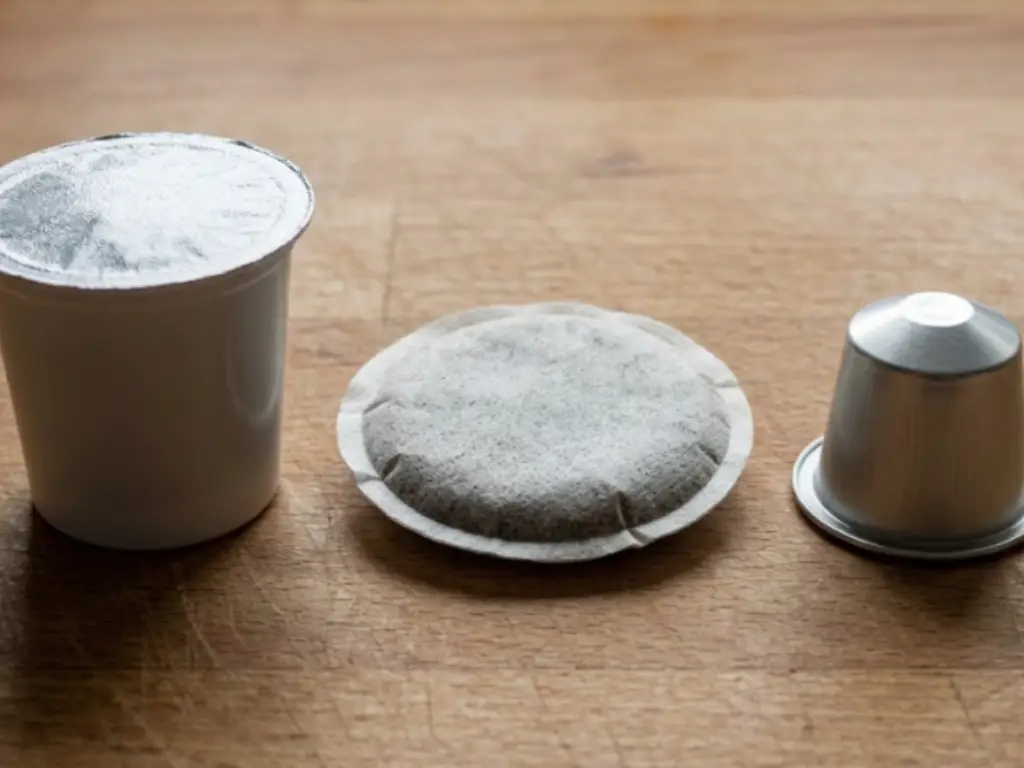
Before sorting pods into types, you need a clear answer to a question most articles skip: is a K-Cup the same thing as a coffee pod? The short answer is no — and the confusion is not your fault. The industry has spent two decades using these terms interchangeably while talking about physically different products.
Understanding any coffee capsule comes down to three variables: physical construction (what it is made of), brewing mechanism (how water moves through it), and machine compatibility (which brewer it fits). The four formats below differ on at least two of these three axes.
The K-Cup Pod — The Industry Standard
A K-Cup is a sealed, single-serve capsule consisting of a plastic cup body, an aluminum foil lid, an internal paper filter, and ground coffee — all nitrogen-flushed to lock in freshness. It measures roughly 1.75 inches tall by 2 inches in diameter. During brewing, a Keurig machine pierces the foil lid with a spray nozzle and punctures the bottom of the cup with a discharge needle, then forces hot water — typically at 192°F (89°C) — through the grounds under pressure.
K-Cup is a registered trademark of Keurig Dr Pepper. The original patent (US5325765), filed by Keurig founders John Sylvan and Peter Dragone, expired in September 2012 — which is why the market is now flooded with third-party compatible capsules. Only Keurig-manufactured pods can legally use the K-Cup name, but "K-Cup compatible" has become the de facto category descriptor.
Soft Coffee Pods — The Original Single-Serve
Before K-Cups existed, there were soft pods: round, flat filter-paper pouches filled with ground coffee, resembling a tea bag. The standard diameter is 60–62mm. Popularized by the Philips-Douwe Egberts joint venture Senseo in 2001, soft pods brew by permeation — hot water passes through the filter paper, not through a punctured plastic shell.
The key thing to know: soft pods do not work in Keurig machines. They require a dedicated pod brewer or a dual-system machine. Their market share has shrunk dramatically since K-Cups took over, but they remain available online and in European markets.
Coffee Capsules — Nespresso, Dolce Gusto & Beyond
When people say "coffee capsule," they are usually picturing the aluminum or plastic pods used in Nespresso, Dolce Gusto, or Lavazza machines. These are fundamentally different from K-Cups in how they brew: Nespresso Original machines use 19 bars of pressure for true espresso extraction, while Keurig brewers use low-pressure drip-style brewing. Nespresso Vertuo takes yet another approach, spinning the capsule at roughly 7,000 RPM to centrifuge hot water through the grounds.
These capsules are physically incompatible with Keurig machines. Trying to force one in will either jam your brewer or produce nothing. Think of it like fuel types — a diesel nozzle will not fit into a gasoline tank, and even if it could, the engine would not run.
Compatibility at a Glance
| Capsule Type | Compatible With | Does NOT Work With |
|---|---|---|
| K-Cup (standard) | All Keurig brewers; most Keurig-compatible machines | Soft-pod brewers; Nespresso; Dolce Gusto |
| Soft Coffee Pod (60–62mm) | Dedicated pod brewers; select dual systems | Keurig; Nespresso; Dolce Gusto |
| Nespresso Original | Nespresso Original machines | Keurig; soft-pod brewers |
| Nespresso Vertuo | Nespresso Vertuo machines only | Everything else |
| Dolce Gusto | Nescafé Dolce Gusto machines | Everything else |
| E.S.E. (44mm) | Espresso machines with E.S.E. adapter | Keurig; soft-pod brewers |
If you own a Keurig, your universe is the K-Cup family — standard, Carafe, Mug, Vue, and reusable variants. Everything below assumes you are in that universe.
Pod Format Types — Standard, Carafe, Mug, Vue & Reusable
Keurig did not stop at one pod size. Over the years, the company has released multiple pod formats to cover different drinking occasions — from a single quick cup to a full carafe for the family breakfast table. Which formats your machine supports depends on your specific Keurig model.
To cut through the options: your format choice boils down to two questions — how big is your usual cup, and are you willing to fill your own coffee? If you drink one 8–10oz mug at a time, standard K-Cups have you covered. If you fill a 16oz travel mug every morning, K-Mug pods earn their price premium. If you want zero plastic waste, reusable pods are the only path — but they trade away the push-button convenience K-Cups were built around.
Standard K-Cup Pods — The Everyday Workhorse
Standard K-Cups account for roughly 90% of the Keurig pod market. Each pod contains between 6.5 and 12 grams of ground coffee — a range far wider than most consumers realize — and is designed to brew 6, 8, 10, or 12 ounces depending on your machine setting. The 6oz setting generally delivers the best flavor concentration because it uses the full pod's coffee load with less water dilution. At 12oz, the same amount of coffee is stretched thin — drinkable, but noticeably weaker.
Beyond coffee, the standard K-Cup format also houses tea, hot chocolate, apple cider, and even soup (Campbell's briefly sold Fresh-Brewed Soup K-Cups in 2015). Keurig's official catalog spans more than 400 beverage varieties from over 60 partner and owned brands.
K-Carafe Pods — Brewing for a Crowd
Released with the Keurig 2.0 system, the K-Carafe pod is essentially an XL K-Cup. It brews 18 to 30 ounces — enough for two to five cups — into a shared carafe rather than a single mug. The pod itself is physically larger than a standard K-Cup and uses the same #5 polypropylene body. K-Carafe pods only work with Keurig 2.0 and later models; older brewers lack the carafe dock and the recognition hardware.
K-Mug Pods — For Travel Mug Drinkers
Launched in 2015, the K-Mug pod is purpose-built for the person who fills a 14 or 16-ounce travel mug every morning. Compared to a standard K-Cup, a K-Mug pod packs roughly 30–50% more coffee (typically 12–15g) to maintain flavor strength at larger water volumes. It brews 12, 14, or 16 ounces and is also made from #5 recyclable polypropylene. Compatible with Keurig 2.0 and later brewers.
Vue Pods — The Discontinued Experiment
The Keurig Vue system launched in February 2012 — seven months before the original K-Cup patent expired — as a premium alternative with customizable brew strength, temperature, and cup size controlled by an RFID tag embedded in each Vue pod. It was technically more advanced than standard K-Cups. It was also discontinued in 2014. Vue pods still circulate in clearance channels and secondhand markets, so if you see them: they will not work in any current Keurig brewer, and you should not buy them.
Reusable Pods — My K-Cup, Stainless Steel & DIY Options
If you want to use your own coffee in a Keurig, reusable pods are the answer. The official Keurig My K-Cup is a plastic refillable filter basket; third-party manufacturers also offer stainless steel versions that tend to hold heat more consistently during extraction. Usage is straightforward: fill with medium-fine ground coffee to roughly two-thirds of the basket (about 10–12g), do not tamp, snap the lid on, and brew as usual.
A brief moment of drama: when Keurig 2.0 launched in 2014, it initially refused to accept My K-Cup pods — part of the same DRM lockout that blocked unlicensed third-party capsules. Consumer backlash was so fierce that Keurig reversed course in May 2015 and restored compatibility. The reusable pod has been safe ever since.
Roast Types & Flavor Categories — What Is Inside the Pod
Formats tell you what shape the pod is. Roast tells you what it actually tastes like. This is the dimension most consumers navigate by — they reach for "Breakfast Blend" or "French Roast" based on a general sense of light versus dark. But K-Cup roast labeling is less standardized than whole-bean coffee, and a "medium roast" from one brand can taste darker than a "dark roast" from another.
Think of it this way: roast level sets the flavor baseline; flavor additions or decaf processing modify it from there. Light roasts let you taste the bean and the farm. Dark roasts let you taste the fire. Flavored pods add a third layer entirely — more about aroma than taste.
Light Roast — Bright, Fruity & Origin-Forward
Light roast K-Cups are roasted to an internal bean temperature of roughly 356°F–401°F, stopping at or just after the first crack. The result is higher acidity, brighter fruit notes, and more caffeine per scoop (about 5–10% more than dark roast by volume, since roasting degrades caffeine). Popular examples include Green Mountain Breakfast Blend, Starbucks Blonde Roast, and Caribou Daybreak. A common complaint about light roast K-Cups is under-extraction — the Keurig's quick brew cycle sometimes does not give light roasts enough contact time. Using the 6oz setting helps compensate.
Medium Roast — The Balanced Middle Ground
Medium roast dominates the K-Cup bestseller list. Roasted to 410°F–428°F, between first and second crack, these pods aim for balance: enough body to taste like "real coffee," enough acidity to avoid flatness. The Original Donut Shop, Green Mountain Nantucket Blend, and McCafé Premium Roast all live in this zone. Medium roast is the safe choice — which is exactly why it sells the most. It offends nobody, but coffee enthusiasts sometimes find it lacks distinction.
Dark Roast — Bold, Smoky & Full-Bodied
Dark roast K-Cups reach 437°F–482°F, well into second crack territory. The bean's natural sugars caramelize and then carbonize, producing deep bittersweet and smoky notes. Starbucks French Roast, Peet's Major Dickason's Blend, and San Francisco Bay French Roast are classic examples. One caveat specific to the K-Cup format: some brands use dark roasting to mask low-grade beans. A good dark roast should taste like dark chocolate — complex bitterness with a sweet finish. A bad one tastes like burnt toast. If your dark roast K-Cup leaves an ash-like aftertaste, the problem is probably the green coffee quality, not the roast level.
"A good dark roast should taste like dark chocolate — complex bitterness with a sweet finish. A bad one tastes like burnt toast."
— This article
Flavored Pods — Vanilla, Hazelnut, Caramel & Beyond
Flavored K-Cups are one of the format's unique strengths — Nespresso has almost nothing in this category. Flavoring oils are applied to roasted beans at roughly 2–3% of bean weight, creating that aromatic hit of French vanilla or hazelnut the moment the brewer starts. The catch: flavored coffee smells sweeter than it tastes. There is no sugar in the pod — the sweetness is entirely olfactory. Dunkin' and Green Mountain dominate the flavored K-Cup market, with seasonal rotations like pumpkin spice and peppermint mocha driving spikes in demand.
Decaf K-Cups — How Decaffeination Works
Decaf does not mean caffeine-free. The FDA requires at least 97% caffeine removal for the "decaffeinated" label, but the specific process matters — and most K-Cup boxes do not tell you which one was used.
There are three main decaffeination methods. The Swiss Water Process uses only water and proprietary carbon filters to remove 99.9% of caffeine without any chemical solvents — it is the gold standard and the label you want to see if chemical exposure concerns you. The CO₂ method uses pressurized liquid carbon dioxide to selectively dissolve caffeine molecules. The solvent-based method uses methylene chloride or ethyl acetate — both FDA-approved as safe at residual levels — but remains the option consumers are most wary of. If a K-Cup box says "decaf" with no process specified, assume the solvent method was used.
Water and carbon filters, no chemical solvents
99.9% caffeine removalPressurized liquid carbon dioxide extraction
97-99% caffeine removalMethylene chloride or ethyl acetate
97%+ caffeine removalSingle-Origin & Specialty K-Cups — The Third Wave Arrives
For years, specialty coffee ignored K-Cups. That has changed. Intelligentsia, La Colombe, Philz, BLK & Bold, and other third-wave roasters now offer K-Cup compatible pods — and they are typically built to a higher standard than mass-market equivalents. Fill weights are higher (10–12g vs. the industry average of 6.5–9g), the pods themselves are more likely to use recyclable or compostable materials, and the coffee inside is graded and roasted with the same rigor as their whole-bean offerings. If you care about coffee quality but are unwilling to give up Keurig convenience, the specialty tier is where you should be shopping.
Brand Landscape — Official, Partner, Third-Party & Craft
Not all K-Cup-compatible pods come from the same type of company. Understanding the brand hierarchy helps you calibrate your expectations on quality, price, and compatibility reliability.
| Brand Tier | Representative Names | What to Expect | Price Range | Compatibility |
|---|---|---|---|---|
| Official Keurig Brands | Green Mountain, The Original Donut Shop, Tully's, McCafé, Van Houtte | Owned by Keurig Dr Pepper. Most consistent quality control, broadest variety. | $$ | Guaranteed 100% |
| Licensed Partners | Starbucks, Dunkin', Peet's, Folgers, Tim Hortons, Lavazza, Illy | Official K-Cup trademark license. Quality mirrors the brand's whole-bean reputation. | $$–$$$ | Guaranteed 100% |
| Third-Party Compatible | SF Bay OneCUP, Lucky Goat, Mississippi Mud, DI ORO, Amazon Happy Belly | Wide quality range — from craft-roaster excellence to budget filler. Check fill weight. | $–$$ | Most compatible; occasional fit issues |
| Store Brands | Great Value (Walmart), Kirkland (Costco), Good & Gather (Target) | Maximum value per pod. Quality is adequate but unremarkable. | $ | Generally compatible |
One historical footnote worth knowing: in 2014, Keurig launched its 2.0 brewer with DRM technology that scanned pod lids and refused to brew unlicensed capsules. The move triggered multiple antitrust lawsuits, widespread consumer anger, and a cottage industry of "Freedom Clip" hacks to bypass the lockout. Keurig ultimately settled the class-action litigation for $31 million in 2020 and abandoned the lockout approach. Today, virtually all third-party compatible pods work in current Keurig brewers — but if you are using an older 2.0 machine from that era, it is worth double-checking compatibility notes on the box.
If you're using an older Keurig 2.0 machine (2014–2015 era), double-check the compatibility notes on third-party pod boxes. Current-generation brewers accept virtually all compatible capsules.
Pod Construction & Build Quality — Why Some Pods Taste Better
Here is a dimension almost no article about "types of Keurig pods" covers, and it is arguably the most important: two pods labeled "Medium Roast" can taste completely different because of how the pod itself is built, not because of the coffee inside it.
The physical construction of a K-Cup — the materials, the fill weight, the seal quality, the nitrogen flush — directly determines how fresh the coffee stays, how evenly it extracts, and whether the pod actually works without leaking or jamming your machine. This is the engineering layer beneath the marketing labels.
Fill precision. A 0.5g swing on a 9g target = a 5.5% taste difference you can actually notice.
| Construction Element | Budget Tier | Standard Tier | Specialty Tier | Why It Matters |
|---|---|---|---|---|
| Coffee Fill Weight | 6.5–8g | 9–10g | 10–12g+ | Every extra gram yields roughly 12–15% more soluble compounds. At 6.5g with a 10oz brew setting, you are essentially drinking brown water. |
| Cup Body Material | Mixed/#7 plastic (older stock) | #5 polypropylene | #5 PP or plant-based mesh | #5 PP has better oxygen barrier properties than #7; plant-based mesh (like SF Bay OneCUP) eliminates plastic taste entirely. |
| Filter Type | Basic paper pulp | Multi-layer composite filter | Plant-based mesh or precision filter | Filter pore size determines how much coffee oil passes through. Too fine = thin body. Too coarse = sediment. |
| Seal Quality | Basic heat seal | Nitrogen flush + heat seal | Nitrogen flush + pressure seal + leak testing | A poor seal lets oxygen in. Coffee begins oxidizing immediately — within weeks, not months. |
| Nitrogen Flush Purity | Often none (vacuum only) | Residual O₂ ~3% | Residual O₂ ≤1% (99%+ N₂) | The difference between 1% and 3% residual oxygen can mean 6 extra months of fresh-tasting coffee. |
| Grind Consistency | One-size-fits-all burr setting | Adjusted per roast level | Calibrated per specific blend or origin | Inconsistent grind = simultaneous over-extraction (bitter) and under-extraction (sour) in the same cup. |
| Fill Precision | ±0.5g tolerance | ±0.2g tolerance | ±0.1g tolerance | Inconsistent fill = inconsistent cup. A 0.5g swing on a 9g target is a 5.5% variance — noticeable cup to cup. |
A quick field test: pick up a box of K-Cups, squeeze one gently between your fingers. If the pod feels half-empty and the foil lid gives easily under thumb pressure, the fill weight is low and the seal is likely substandard. If the pod feels firm and the foil is drum-tight, someone invested in the manufacturing.
The Eco Spectrum — Plastic → Recyclable → Compostable → Reusable
K-Cup waste is not a niche concern. The 2015 #KillTheKCup campaign — sparked by a viral short film — reported that K-Cups sold in 2014 alone would circle the Earth 10.5 times if laid end to end. The environmental critique is legitimate. But the options for reducing that footprint have expanded significantly since then, and there is no single "correct" answer — only trade-offs between convenience, cost, and environmental impact.
| Approach | Example Products | Material | Disposal Method | Convenience | The Honest Catch |
|---|---|---|---|---|---|
| Recyclable Plastic | Most current mainstream K-Cups | #5 polypropylene | Peel foil → dump grounds → rinse → place in #5 recycling bin | ⭐⭐ | ~3–8% of polypropylene actually gets recycled in the US. Most ends up in landfills regardless of the recycling symbol. |
| Commercially Compostable | SF Bay OneCUP, select specialty brands | Plant-based mesh + paper ring | Must go to a commercial composting facility; will not degrade in backyard compost | ⭐⭐⭐ | Commercial composting infrastructure is extremely limited. If your municipality does not offer it, this pod goes to landfill too. |
| Biodegradable | Emerging niche brands | PLA / plant-fiber composites | Requires industrial composting conditions (specific temperature, humidity, microbial environment) | ⭐⭐ | "Biodegradable" is not a magic word. Most biodegradable plastics need 50°C+ and active microbial management — conditions not found in a landfill or the ocean. |
| Reusable Pods | Keurig My K-Cup, stainless steel refillables | Plastic or 304 stainless steel | Wash and reuse (1–5 year lifespan) | ⭐ | The only option with near-zero ongoing waste. But it eliminates the core value proposition of K-Cups — push-button convenience. |
There is no perfect eco option — only the right trade-off for your lifestyle. Match your choice to what your local waste system actually processes.
Bottom line: if you want the lowest-waste option and are willing to trade convenience, go reusable. If you want the guilt-reduced convenience option, choose commercially compostable pods — but verify that your local waste system actually has a commercial composting stream. If neither is practical, at minimum buy pods in bulk to reduce packaging-per-cup and check whether your municipality accepts #5 plastic.
How K-Cups Are Made — From Roastery to Your Cup
Every K-Cup on a store shelf traveled through the same seven-step manufacturing pipeline. Understanding that pipeline does two things: it gives you a deeper appreciation for why construction quality matters, and — if you happen to be in the coffee business — it shows you exactly what it takes to produce your own branded pods.
Step 1: Green Coffee Selection. It starts with raw green coffee beans, graded by origin, variety, and SCA cup score. The quality floor here determines the quality ceiling of the final pod — no amount of roasting or packaging craftsmanship can rescue low-grade green coffee.
Step 2: Roasting. Beans are roasted in large batches to the target profile. After roasting, they rest for 24–72 hours to degas — skipping this step traps CO₂ in the pod and can cause the foil lid to bulge or burst.
Step 3: Grinding. The rested beans are ground to a particle size calibrated for the Keurig extraction cycle — roughly 28–32 seconds of water contact. Specialty manufacturers adjust the grind setting per blend rather than using a universal setting, because different bean densities and roast levels extract at different rates.
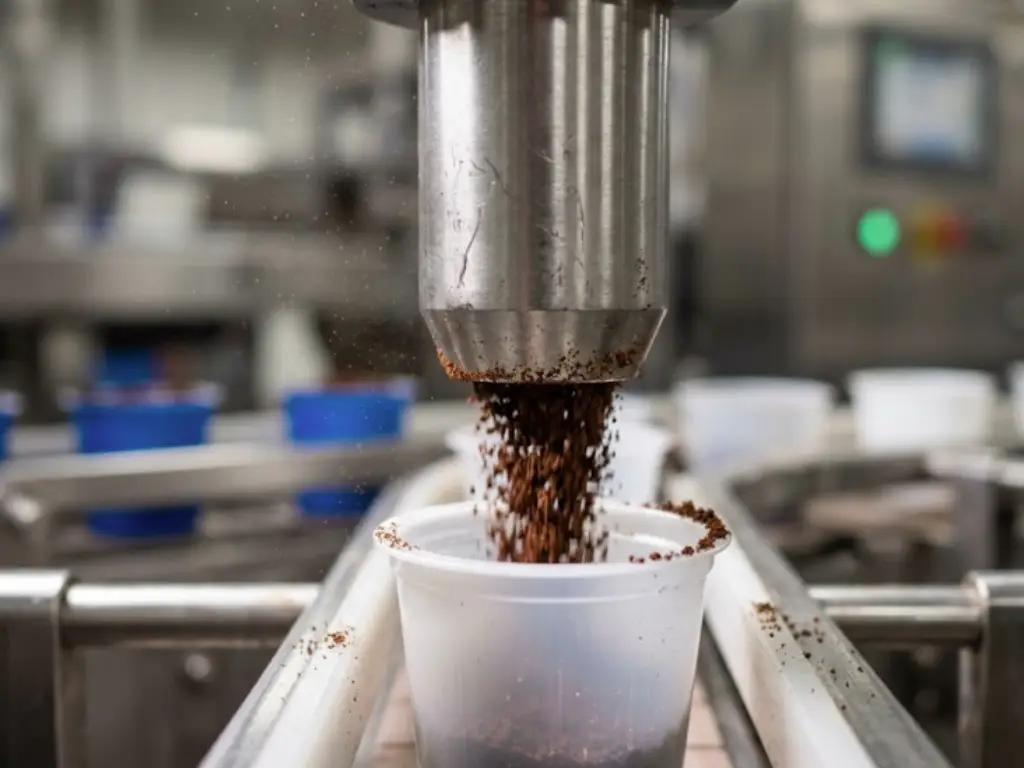
Step 4: Filling & Dosing. Ground coffee is dispensed into each empty K-Cup body. This is where manufacturing precision becomes directly tasteable: industrial-grade filling equipment using servo-driven augers from suppliers like Schneider Electric or Siemens achieves fill accuracy of ±0.1g. Budget filling lines can vary by ±0.5g — and a half-gram difference on a 9g target is a noticeable shift in cup strength.
Step 5: Nitrogen Flushing. Before the foil lid is applied, the headspace inside the pod is flushed with nitrogen gas to displace oxygen. Atmospheric air is roughly 21% oxygen; the goal is to drive residual oxygen below 1%, achieving 99%+ nitrogen content inside the sealed pod. High-end capsule filling machines use German-made oxygen analyzers (such as Oxybady) to verify every batch. This step, more than any other, determines shelf life: a pod with 1% residual oxygen stays fresh for 12–18 months; a pod with 3%+ residual oxygen begins tasting stale within 6 months.
Measured via German-made Oxybady analyzer
Step 6: Sealing & Inspection. The aluminum foil lid is heat-sealed under pressure, then each pod passes through a leak-detection checkpoint. A pinhole leak invisible to the human eye is enough to ruin that pod's contents within weeks.
Step 7: Packaging & Distribution. Finished pods are counted, boxed, case-packed, and shipped to distribution centers, retail shelves, and your doorstep.
For coffee roasters and brands considering launching their own K-Cup compatible product line, the equipment at steps 4 through 6 is the make-or-break investment. Machines that deliver ±0.1g fill accuracy, 99.9% nitrogen flush purity, and aerospace-grade aluminum tooling on contact surfaces are what separate a pod that tastes like the coffee you actually roasted from one that does not. Companies like SANEU — a coffee capsule filling machine manufacturer with 12 years of experience, over 100 coffee business clients, and equipment costs roughly 30% below comparable Siemens/Schneider-configured alternatives — specialize in exactly this manufacturing segment. If you are exploring in-house pod production, you can get a free equipment consultation to understand what your specific volume and format requirements would demand.
Your Coffee Capsule Production Line Starts Here
SANEU has equipped over 100 coffee businesses with filling and sealing machines that deliver ±0.1g accuracy and 99.9% nitrogen flush — at roughly 30% below comparable Siemens/Schneider-configured alternatives. Tell us about your production goals and get a free equipment consultation within 24 hours.
Get a Free Equipment ConsultationReferences
- Keurig. “Keurig Customer Service: K-Cup, K-Carafe, K-Mug and Vue Pod Support.” https://news.bloomberglaw.com/litigation/keurig-settles-consumers-k-cup-antitrust-claims-for-31-million
- The Recycling Partnership. "Polypropylene Recycling Annual Report 2024." 2024. https://recyclingpartnership.org/wp-content/uploads/dlm_uploads/2024/10/PolyPro_AnnualReport_10.30.24.pdf
- Sweet Maria's Coffee Library. "Understanding Swiss Water Process Decaf." 2020. https://library.sweetmarias.com/understanding-swiss-water-process-decaf/
- Hamblin, James. "A Brewing Problem." The Atlantic. 2015. https://www.theatlantic.com/technology/archive/2015/03/the-abominable-k-cup-coffee-pod-environment/386501/

 English
  Spanish
  Arabic
  Russian