OEM coffee manufacturing is how many coffee products reach the shelf without the brand owning a roaster, capsule filler, or packing line. The brand brings the market idea. A manufacturing partner turns it into a repeatable product.
That sounds simple, but there are quite a few moving parts. Beans must match the flavor brief. Packaging has to fit the brewing system. Seals need to survive shipping. Labels must follow the rules of the destination market. And, well, the numbers still have to make sense.
This guide explains the whole arrangement in practical terms, including where OEM ends, where private label begins, and what to check before signing a production agreement.
What Does OEM Mean in the Coffee Industry?
OEM stands for original equipment manufacturer. In coffee, however, people use the term a little loosely. It usually describes a factory that makes coffee products for another company’s brand and specifications.
For example, a café group may develop a medium-dark espresso profile and ask an OEM partner to roast it, grind it, fill it into Nespresso-compatible capsules, seal it, and pack it in branded cartons. The finished box carries the café group’s name, not the factory’s consumer brand.
The brand normally controls the commercial idea: target drinker, flavor direction, price point, package design, sales channels, and launch plan. The manufacturer controls the repeatable production work: sourcing, roasting, grinding, filling, sealing, inspection, coding, and sometimes warehousing.
It is a bit like hiring a good restaurant kitchen to prepare your recipe at scale. You still decide what the dish should be. The kitchen makes sure plate number 20,000 tastes close to plate number one.
OEM arrangements can cover whole-bean coffee, ground coffee, drip bags, soft pods, K-Cup-compatible pods, and several coffee capsule formats. The exact scope depends on the factory. Some do everything under one roof. Others buy roasted coffee or outsource carton printing.
OEM, Private Label, Contract Manufacturing, and Co-Packing
These terms overlap, so buyers sometimes use them as if they mean the same thing. They are not quite the same.
| Model | Who defines the product? | Typical customization | Best fit |
| OEM manufacturing | Brand and manufacturer work from an agreed specification | High: blend, roast, grind, dose, format, packaging | Brands that want a differentiated product without owning a factory |
| Private label | Manufacturer usually offers an existing product | Low to medium: label, carton, perhaps roast or blend choice | Fast launches and lower development effort |
| Contract manufacturing | Client supplies a detailed formula or process specification | High, often with tighter ownership and control terms | Established brands with tested recipes and forecast volume |
| Co-packing | Client may supply the coffee, capsules, or both | Mostly filling, sealing, coding, and packing | Roasters that already make the coffee but lack packaging equipment |
The useful question is not, “Which label does this supplier use?” Ask what the supplier will actually do. Will it source green beans? Who owns the blend? Who buys the empty capsules? Who approves substitute materials? That operating scope matters more than the sales term.
SANEU’s overview of common coffee capsule business models provides a broader comparison for brands deciding between outsourcing and owning production equipment.
How OEM Coffee Manufacturing Works, Step by Step
Most projects follow the same basic route, although a simple private-label order may skip part of the development work.
1. The brand creates a product brief
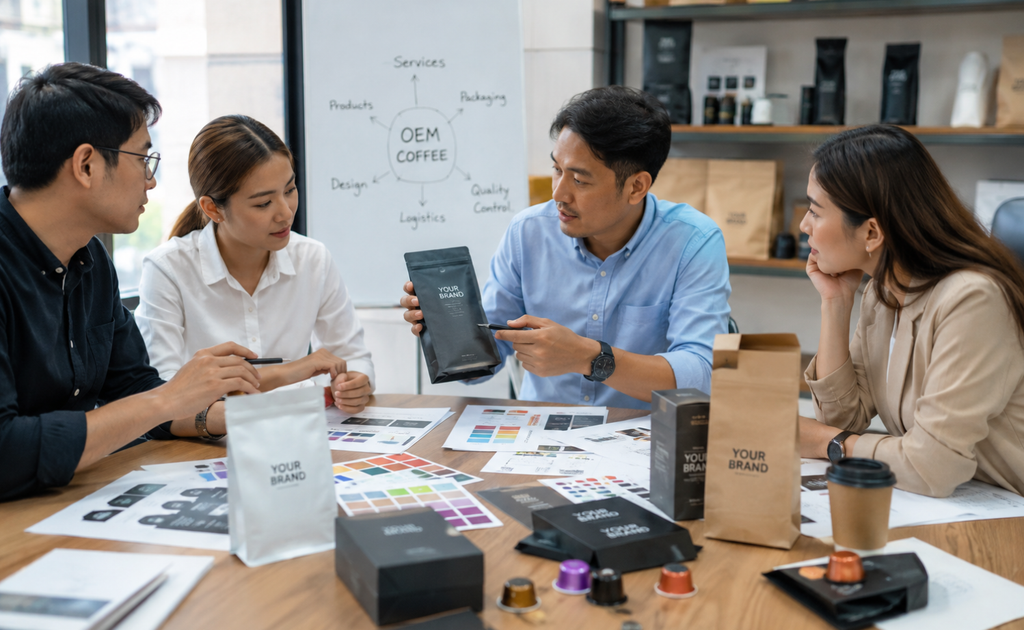
The brief is the job sheet for the project. It should state the target consumer, brew system, cup size, flavor direction, desired origin or certification, pack count, target market, expected annual volume, and target landed cost.
“Premium coffee capsule” is not enough. A better brief says something like: a balanced 40 ml espresso, medium roast, low bitterness, aluminum-compatible format, ten capsules per carton, and a first-year forecast of 500,000 units. The forecast is not a promise, but it lets the manufacturer quote the right process.
2. Both sides define responsibilities
Next comes the make-or-buy map. The parties agree who supplies beans, flavoring, empty capsules, lids, cartons, artwork, barcodes, and shipping cases. They also define ownership of recipes, print files, tooling, and rejected stock.
Get these details into writing. A surprisingly large number of “quality problems” are really responsibility problems wearing a lab coat.
3. The manufacturer sources, roasts, and prepares the coffee
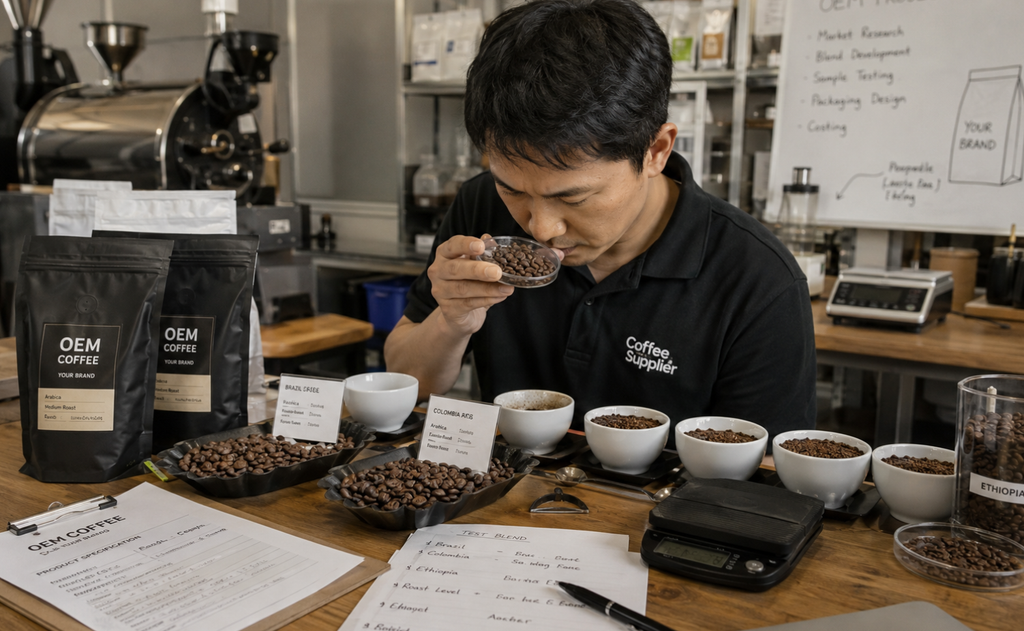
Coffee may come from the manufacturer’s approved supply chain or from beans nominated by the brand. Samples are roasted and cupped against the flavor brief. Once approved, the factory records the roast curve, blend ratio, grind range, and handling limits as the working specification.

Roast and grind have to suit the final package. Espresso capsules generally need a controlled fine grind, while K-Cup-compatible products use a different particle distribution and dose. A tasty café grind can behave badly on a fast filling line. It may bridge in the hopper, create dust, or give uneven extraction.
4. Samples and packaging are tested together
The manufacturer produces pilot samples using the intended coffee, capsule, lid, and seal settings. The brand evaluates taste, aroma, crema, brew time, appearance, and machine compatibility.
This is where material choices become very real. Capsule geometry affects the brewer. Barrier layers affect shelf life. Lid construction affects piercing and sealing. Even a tiny rim variation can create a leak later. The guide to K-Cup packaging materials shows how cup, filter, and lid choices work as one package rather than three unrelated parts.
5. The brand approves a “golden sample”
After adjustments, both sides approve a reference sample and written product specification. This becomes the benchmark for commercial batches. It should include measurable limits, not only tasting notes such as “smooth” or “strong.”
Useful fields include coffee dose, net weight tolerance, grind range, seal temperature window, residual oxygen target, leak-test method, sensory score, date coding, and acceptable visual defects.
6. Commercial production begins
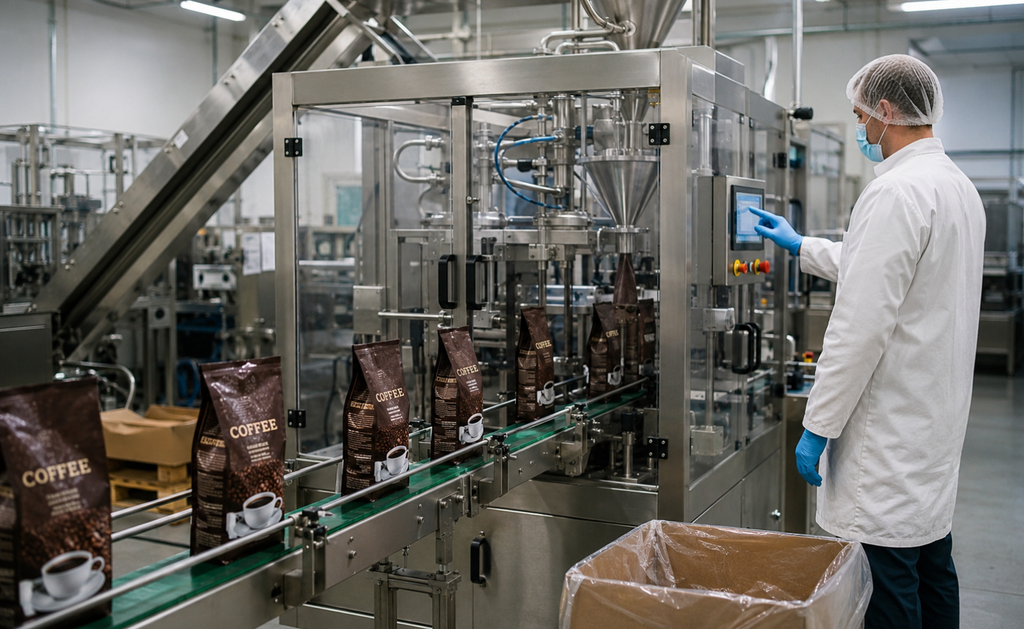
During a capsule run, equipment denests or feeds empty containers, doses coffee, cleans the sealing rim, places the lid, flushes the headspace when required, heat-seals the package, and discharges finished units. Coding, checkweighing, vision inspection, cartoning, and case packing may follow.
For a fuller walk-through, see the guide to coffee capsule filling and sealing machines. If oxygen-sensitive coffee is involved, nitrogen packaging for coffee capsules also deserves attention. Nitrogen is not magic fairy dust. It works only when the gas flow, exposure time, package barrier, and seal are controlled together.
7. The lot is released, packed, and shipped
Quality staff review production records and test results before release. Finished cartons are placed in shipping cases, palletized, and stored under suitable conditions. The paperwork may include batch records, certificates of analysis, traceability codes, and export documents.
Lead time normally starts after artwork, materials, payment terms, and the production slot are confirmed—not on the day someone first asks for a quote. Printed packaging often drives the calendar.
Products and Materials an OEM Coffee Partner May Handle
An OEM supplier is rarely good at every format. A factory built around whole beans has different skills and risks from one filling high-barrier capsules.
| Product | Main inputs and materials | Important production issue |
| Whole bean coffee | Roasted beans, valve bag, laminate film, label | Roast consistency, degassing, valve performance |
| Ground coffee | Ground coffee, high-barrier pouch or can | Grind uniformity, oxygen and moisture control |
| K-Cup-compatible pods | Ground coffee, plastic cup, filter, foil lid | Filter placement, dose accuracy, rim cleaning, seal integrity |
| Nespresso-compatible capsules | Ground coffee, aluminum or plastic capsule, foil lid | Capsule geometry, compaction, sealing, brewer compatibility |
| Compostable capsules | Bio-based capsule and lid structures | Heat sensitivity, barrier performance, storage conditions |
| Drip bags and soft pods | Ground coffee, filter material, outer barrier pouch | Filter sealing, hanging performance, freshness |
Aluminum can provide strong oxygen and light protection. Plastic offers design flexibility and can run well when its barrier structure is properly specified. Compostable formats answer a real market need, but “compostable” is not one universal claim. The material, certification scheme, disposal setting, and local labeling rules must line up.
The best choice comes from the consumer, brewer, shelf-life target, distribution climate, and local waste system. Choosing only by unit price is like buying shoes from the number on the box and ignoring whether they fit.
Food Safety, Quality Standards, and Documents
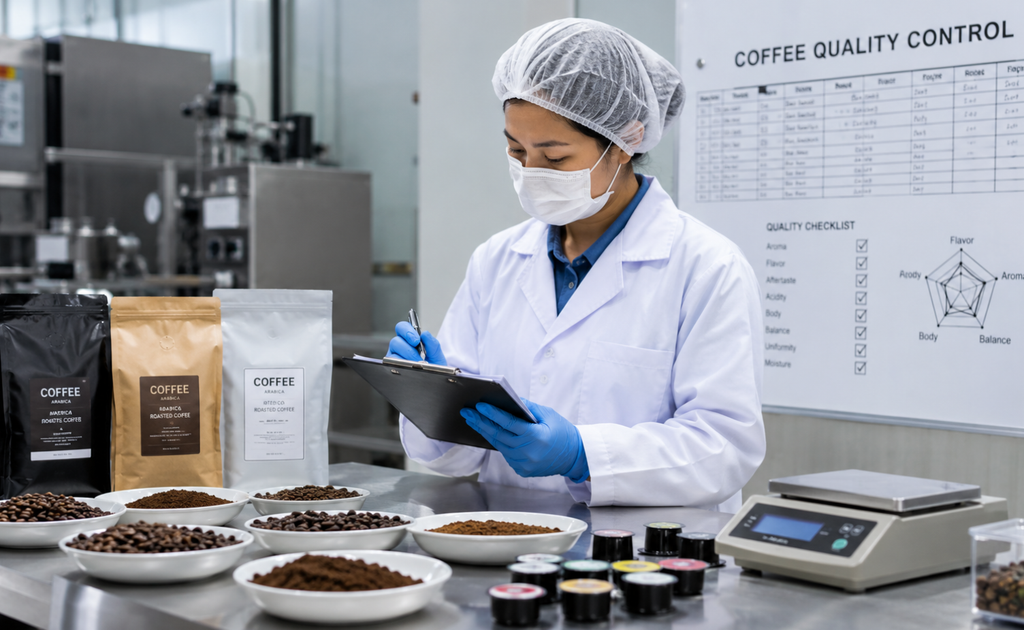
A capable OEM manufacturer should run a documented food-safety system. The exact legal and certification requirements depend on the product and sales market, but several controls show up again and again:
- approved suppliers and incoming material checks;
- allergen control when flavored products share equipment;
- sanitation and pest-control programs;
- roast, grind, dose, seal, and coding records;
- traceability from raw material lot to finished case;
- calibration, preventive maintenance, and staff training;
- hold-and-release procedures and a written recall plan.
ISO 22000 sets requirements for a food-safety management system and can be used across the food chain. Certification may help a supplier demonstrate its system, but it is not a substitute for product-specific checks. The FDA’s guidance for starting a food business is a sensible entry point for products sold in the United States. Internationally, the Codex Alimentarius publications provide widely used food hygiene and HACCP references.
Ask for evidence that matches the claim: current certificates, audit scope, test methods, sample batch records, and corrective-action examples. Do not accept “FDA approved factory” as a vague quality badge. Registration, regulatory compliance, inspection, and product approval are different ideas.
MOQ, Cost, and Lead Time: What Changes the Quote?
There is no honest universal price or minimum order quantity for OEM coffee. A quote changes with the coffee, format, materials, packaging, testing, and run size.
The cost stack usually includes:
- green or roasted coffee;
- roasting, grinding, and blending;
- capsule, filter, lid, pouch, carton, and shipping case;
- filling, sealing, inspection, and secondary packing;
- artwork plates, cylinders, molds, or change parts;
- samples, laboratory work, certifications, storage, and freight.
MOQ often comes from the least flexible item. The filling machine may run 20,000 capsules comfortably, while a custom-printed lid supplier wants a much larger print order. A brand can sometimes lower launch risk by using stock capsules, digitally printed labels, or a common carton size. Unit cost may rise, but cash tied up in dead packaging falls. For a new product, that trade can be pretty healthy.
Lead time grows when a project needs custom materials, multiple sample rounds, new tooling, regulatory review, or imported components. Ask for two timelines: development time and repeat-order production time. Mixing them together makes planning fuzzy.
Who Uses OEM Coffee Manufacturing?
The model serves more than startup coffee brands. Specialty roasters use it to enter capsule retail without interrupting their roasting floor. Supermarkets commission store-brand products. Hotels and offices buy portion-controlled formats. Café chains use it to put a familiar blend into take-home packs. Importers use regional manufacturing to shorten freight routes. Subscription businesses use it to broaden a box without building another plant.
It is also relevant to green-coffee exporters that want to sell a finished consumer product rather than only a commodity input. The opportunity is real, although the jump into packaging, compliance, distribution, and after-sales work is much bigger than changing the label on a sack.
Common OEM Coffee Problems and Practical Fixes
OEM trouble tends to appear at the handoff points: brief to recipe, coffee to package, artwork to regulation, or forecast to production plan.
| Problem | Likely cause | Practical response |
| Coffee tastes different between lots | Bean variation, loose roast limits, poor reference sample | Set sensory and measurable specifications; retain approved samples |
| Capsules leak | Coffee on the rim, mismatched lid, unstable sealing window | Validate the material pair, rim cleaning, temperature, pressure, and dwell time |
| Aroma fades early | High oxygen, weak barrier, seal damage | Measure residual oxygen, review nitrogen process, run shelf-life and leak tests |
| Fill weights drift | Coffee density changes, poor hopper flow, worn dosing parts | Track bulk density, adjust agitation and dosing, maintain the filler |
| Cartons cannot be used in the target market | Artwork review happened too late | Approve regulatory copy before printing and keep version control |
| Delivery slips | Long-lead printed materials or unrealistic forecasts | Hold safety stock of agreed items and use rolling forecasts |
| Brand cannot move suppliers | Formula, tooling, or artwork ownership is unclear | Put ownership, file access, and exit terms in the contract |
A factory should be able to explain its response without hand-waving. For equipment-side causes, SANEU’s guide on choosing a coffee capsule filling machine describes the controls that influence dosing, sealing, nitrogen flushing, and format changeovers.
How to Choose an OEM Coffee Manufacturer
Start with capability, not the prettiest sample box. Send the same structured brief to each candidate and compare answers on the same basis.
Ask these questions:
- Which coffee and capsule formats do you run every week?
- What is produced in-house, and what is subcontracted?
- What are the MOQ and material MOQ for my exact package?
- How do you approve a recipe and control later changes?
- Which food-safety certifications cover the proposed site and process?
- How do you test dose, seal integrity, residual oxygen, and brewer compatibility?
- Can you trace a finished carton back to coffee and packaging lots?
- Who owns the formula, artwork, tooling, and unused printed stock?
- What happens when a batch misses specification?
- Can I run a paid pilot before a large commercial order?
Then visit the factory or arrange a live production audit. Watch changeovers and cleaning, not only the showroom. Talk to quality staff. Check whether records look like working documents or props created for visitors. A sensible supplier will also ask you difficult questions. That is a good sign, honestly.
When Should a Brand Consider In-House Production?
OEM is useful when demand is uncertain, the product is new, or management wants to keep capital focused on sales. In-house production becomes more attractive when volume is stable, outsourcing margins are painful, lead times block growth, or process control has become strategically important.
The decision is not purely “outsourcing fee versus machine price.” Include operators, utilities, factory space, compressed air, nitrogen, maintenance, quality staff, packaging inventory, downtime, and working capital. Brands exploring that route can review coffee capsule filling machines and the practical first-time buyer guide before building a business case. SANEU supplies packaging equipment; it is not presented here as an OEM coffee producer.
Conclusion
OEM coffee manufacturing lets a brand launch or expand a product range without building the full factory behind it. The manufacturer turns an agreed product brief into repeatable coffee, packaging, records, and finished goods. The strongest projects make every handoff clear: who supplies what, what “good” means, how it is tested, and who owns the result.
Begin with a specific brief, validate the coffee and package together, and treat the pilot run as a real test—not a ceremony before the big order. That bit of discipline saves a lot of awkward phone calls later.
Frequently Asked Questions
What does OEM mean in coffee?
It usually means a manufacturer produces coffee or coffee products to another company’s agreed specifications and sells them under that company’s brand. The work may include sourcing, roasting, grinding, capsule filling, packing, and quality control.
Is OEM coffee the same as private-label coffee?
Not exactly. Private label often starts with a manufacturer’s existing product and adds a buyer’s branding. OEM usually allows more control over the blend, roast, dose, format, materials, and quality specification. Suppliers may use the terms differently, so confirm the actual scope.
What is the difference between OEM coffee and contract roasting?
Contract roasting mainly covers roasting beans for a client. OEM coffee manufacturing may go much further, including product development, grinding, capsule or pod production, retail packaging, testing, and logistics.
Can I supply my own beans or coffee recipe?
Often, yes. Some manufacturers accept client-supplied beans, an existing blend, or a roast profile. Others require ingredients from approved suppliers. Agree on recipe ownership, incoming inspection, loss allowances, and substitution rules before production.
What coffee products can an OEM make?
Common products include whole beans, ground coffee, instant coffee, drip bags, soft pods, K-Cup-compatible pods, and Nespresso-compatible capsules. Capabilities vary by site, so verify that the proposed format is a routine commercial process there.
What is a typical MOQ for OEM coffee?
There is no single typical MOQ. It can be driven by the production line, minimum coffee batch, printed lids, cartons, or custom capsule order. Ask for the production MOQ and each packaging-material MOQ separately.
How much does OEM coffee manufacturing cost?
Cost depends on coffee grade, roast and grind work, capsule format, barrier materials, print method, pack count, testing, order volume, and freight. A useful quotation separates one-time development costs from recurring unit costs.
How long does an OEM coffee project take?
A stock-format private-label order may move relatively fast. A custom product can take much longer because it needs sourcing, sampling, artwork approval, material production, testing, and a factory slot. Request separate schedules for development and repeat orders.
What certifications should an OEM coffee manufacturer have?
Requirements depend on the target market and buyer. Look for a documented food-safety system, applicable registrations, traceability, HACCP-based controls, and current certification evidence where required. Always check the certificate’s site, scope, and expiry date.
How can a coffee brand protect its formula and packaging?
Use confidentiality, intellectual-property, tooling, artwork, substitution, and exit clauses in the agreement. Keep dated specifications and approved samples. The contract should explain what happens to unused branded materials and production files if the relationship ends.