At some point, a growing coffee roaster looks at another co-packing invoice and thinks, “Should we just make these pods ourselves?”
Fair question. Your co-packer has minimums. Lead times get longer right when a new wholesale order lands. A recipe change may take weeks of emails and samples. Then you watch a K-Cup filling machine running smoothly in a video, and the answer seems obvious.
Well, not so fast.
Bringing K-Cup-compatible production in-house means taking ownership of a small food-packaging operation. You need cups, filters, lids, cartons, compressed air, perhaps nitrogen, trained people, sanitation procedures and quality checks. You also need a plan for the Tuesday morning when one tiny seal problem stops the whole line.
The move makes sense when four things are true: demand is repeatable, the fully loaded economics work, tighter control creates real value, and your team is ready to run the operation. A big sales month alone is not enough.
Start With Demand, Not the K-Cup Filling Machine
Consider in-house production only after your pod volume has become predictable across normal and slow months.
Single-serve coffee is not a small niche. In 2025, the National Coffee Association reported that 42% of American adults owned a single-cup brewer. That creates plenty of room for local roasters, private-label programs and office coffee suppliers.
Still, a large market does not guarantee that your line will stay busy. Keurig Dr Pepper’s latest annual filing also shows a mature category where pod volume can move down as well as up. Its US Coffee segment remains large, but the company reported lower K-Cup pod volume. That is a useful reality check.
Look at at least 12 months of orders. Separate recurring business from promotions, launch orders and one enthusiastic distributor. Then ask:
- How many saleable pods do we ship in a normal month?
- What share comes from customers with repeat purchase histories?
- How seasonal is demand?
- What signed or highly probable volume will arrive in the next year?
- Can the line remain useful if one large customer disappears?
A machine should solve an existing bottleneck. It should not be an expensive way to hope for demand.
What Does Bringing K-Cup Production In-House Mean?
Roasting coffee in-house is not the same as producing finished pods in-house.
A co-packer may receive your roasted coffee, grind it to specification, fill filtered cups, seal lids, code packages and ship finished cases. Once you internalize that work, your team owns every step.
There are three common models:
| Model | Who roasts? | Who fills and packs? | Best fit |
| Co-packed brand | Your roastery or partner | Co-packer | Market testing and low operational risk |
| Hybrid | Your roastery | Co-packer, with some packing done internally | Growing brands that want coffee control |
| Fully in-house | Your roastery | Your own production team | Stable volume and a capable facility |
Private label is slightly different. The finished product carries a customer’s brand. That can improve machine utilization, but it also adds artwork approvals, multiple SKUs, customer audits and tighter delivery promises.
Six Signs Your Roastery May Be Ready
Readiness is a combination of stable volume, commercial pressure, product-control needs, cash, facility capability and clear ownership.
1. Volume is repeatable
Your trailing 12-month sales show a dependable base, not one lucky retail order. Forecasts are backed by purchase history, contracts or credible customer plans.
2. Co-packing is restricting growth
The real problem may be more than price. High minimum order quantities tie up cash. Long lead times cause stockouts. Slow changeovers delay seasonal blends. Freight moves coffee to the packer and finished goods back again. If these frictions repeatedly cost sales, control has a measurable value.
For context, a public Peacemaker Coffee co-pack price sheet shows how per-pod charges can vary with order quantity. It is only one supplier example, not a market average, but it demonstrates why your own quotes matter.
3. Product control matters
An internal line allows faster adjustments to grind size, fill weight and recipe. It can support shorter runs for hotels, offices, retailers or subscription customers. That flexibility may be worth more than a few cents saved per pod.
4. The business can absorb the learning curve
The first month will not look like the sales video. Operators learn. Film tracking drifts. Some pods fail seal tests. Budget for scrap, training and slower early output without squeezing payroll or green-coffee purchases.
5. The facility is suitable
Confirm clean production space, sensible product flow, electrical capacity, compressed air, ventilation, dry material storage and pest-control coverage. If nitrogen flushing is required, include safe cylinder or generator placement.
6. One person owns the result
“Everyone will help” usually means nobody is accountable. Name a production owner responsible for schedule, sanitation, preventive maintenance, quality records and material availability.
Calculate the Real K-Cup Production Cost
Compare saleable pods with saleable pods. Do not compare a co-packer’s invoice with coffee and cup costs alone.
Build the co-packed cost first:
Co-packed cost per saleable pod = packing charge + materials not included + inbound freight + outbound freight + storage + inspection + expected losses
Then build the in-house variable cost:
In-house variable cost per saleable pod = coffee + cup/filter + lid + carton/case + direct labor + utilities/gas + waste + routine maintenance
Annual fixed costs may include equipment payments, depreciation, facility upgrades, insurance, quality systems, training and the portion of a supervisor’s time devoted to the line.
The basic break-even formula is:
Annual break-even volume = annual fixed in-house cost ÷ (co-packed cost per pod − in-house variable cost per pod)
Imagine a roaster pays $0.44 per saleable co-packed pod. Its estimated internal variable cost is $0.28, leaving $0.16 of potential savings. If annual fixed cost is $120,000:
$120,000 ÷ $0.16 = 750,000 saleable pods per year
That is 62,500 per month before adding a safety margin. If realistic annual demand is only 500,000 pods, the machine does not win on cost yet. It may still win because of lead time or product flexibility, but say that plainly. Do not make the spreadsheet wear a fake mustache.
Run a downside case too. Reduce forecast volume, increase labor, add scrap and assume some downtime. If the investment works only in the happiest forecast, it does not really work.
Co-Packing vs In-House Production
| Decision factor | Co-packer | In-house line |
| Upfront capital | Low | Medium to high |
| Cost at low volume | Usually stronger | Often weak |
| Cost at stable scale | Can remain high | May improve |
| Lead-time control | Limited | Greater |
| Small SKU runs | Depends on MOQ | More flexible |
| Staffing burden | Low | High |
| Maintenance risk | External | Yours |
| Quality control | Shared | Direct |
| Capacity during peaks | Contract-dependent | Equipment-dependent |
Co-packing is often the smart first stage. It validates the format while someone else carries equipment and operating risk. In-house production becomes attractive when outsourcing stops being a helpful bridge and starts acting like a toll booth.
Get the Pod Materials and Coffee Recipe Right
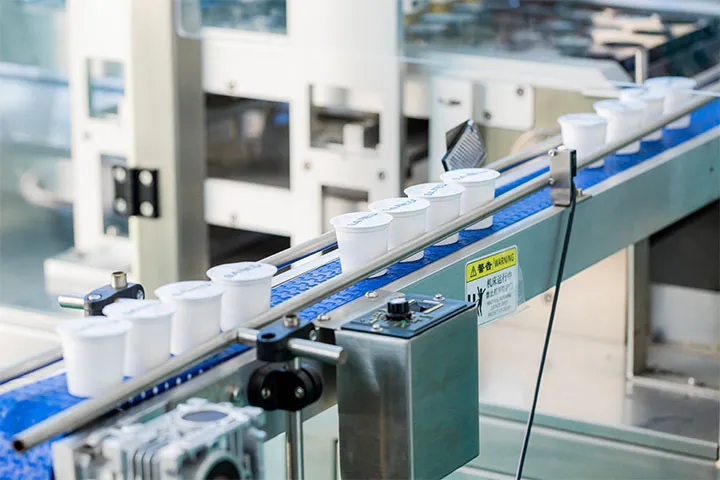
Validate the complete pod system before choosing production speed.
A K-Cup-compatible pod is a small brewing system. Cup geometry, filter, coffee dose, grind distribution and lid seal all affect the drink. Treating the cup as “just packaging” is like treating a portafilter basket as decoration.
Coffee and empty filtered cups
The coffee must flow consistently through the filler and extract well in target brewers. Too many fines can slow brewing. A grind that works in a bag may behave badly in a pod.
Test empty filtered K-Cup options with your actual coffee. Confirm cup dimensions, filter construction, oxygen-barrier needs, machine compatibility and supplier lead times. Avoid building the business around a component that is difficult to reorder.
Lids, cartons and cases
Lid stock must match the cup and sealing method. Printed lids require artwork control and purchasing minimums. Secondary packaging needs accurate counts, lot codes and barcodes. Retail cartons may also need nutrition, certification or customer-specific content.
Choose Equipment for Real Output, Not Brochure Speed
Base capacity on saleable output after changeovers, cleaning and downtime.
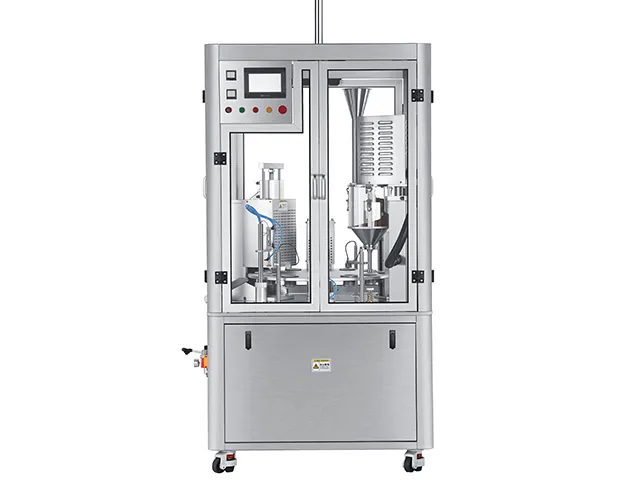
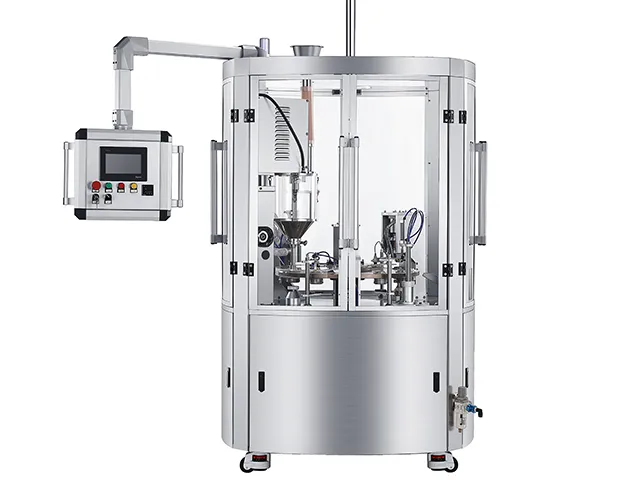
A small roaster may start with a compact single-lane coffee packaging machine. It lowers capital exposure and suits pilot or short-run work. A growing wholesale program may need a compact automatic K-Cup production system. Higher sustained volume can justify a larger K-Cup filling and sealing machine.
Before requesting a quote, calculate:
Required hourly output = monthly demand ÷ available production hours ÷ target utilization
Do not plan at 100% utilization. Operators take breaks. Products change. Equipment needs cleaning and service. A line advertised at 60 pods per minute may produce much less saleable output across a mixed-SKU day.
Use a detailed K-Cup filling machine buying guide to compare dosing accuracy, sealing control, nitrogen capability, reject handling, changeover time, spare parts and after-sales support—not speed alone.
Quality Control Becomes Your Job
If you cannot measure fill weight, seal integrity, brew performance and traceability, you are not ready to run the line.
Build checks into normal production:
- Record pod weight at defined intervals.
- Inspect lids for wrinkles, contamination and weak seals.
- Perform leak or burst tests suitable for the package.
- Brew samples in representative Keurig-compatible brewers.
- Check flow time, cup volume, aroma and sensory consistency.
- Assign lot codes to coffee, cups, lids and finished cases.
- Retain samples and document corrective actions.
Nitrogen flushing can help reduce oxygen in the package, but nitrogen is not fairy dust. A poor seal still leaks. Shelf-life validation should use the real coffee, cup, lid and storage conditions.
US Regulations and Claims to Plan For
A machine does not make a facility compliant. Build food-safety and labeling work into the project schedule.
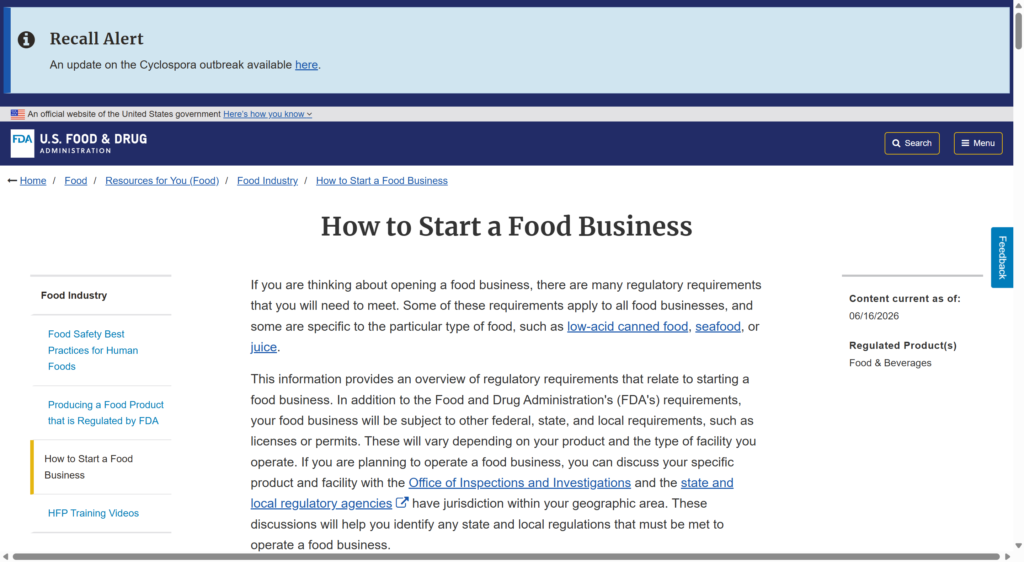
Start with the FDA’s guidance on opening and operating a food business. Depending on the operation and exemptions, requirements may include food-facility registration and compliance with 21 CFR Part 117, which covers current good manufacturing practices and preventive controls.
Review the FDA’s Food Labeling Guide before approving printed cartons. If the product carries an organic claim, confirm certification and handling requirements with the USDA National Organic Program.
Be careful with recyclable, compostable or environmentally friendly claims. The FTC Green Guides explain how environmental claims should be qualified. This is not theoretical: the SEC charged Keurig over statements concerning K-Cup recyclability, as described in its 2024 enforcement release.
Wholesale customers may also request third-party audits or schemes such as SQF or BRCGS. Those are commercial requirements rather than automatic rules for every roaster, but they can determine whether a retailer says yes.
A Lower-Risk Transition Plan
Quick answer: Move one product at a time and keep the co-packer as backup during stabilization.
- Validate demand through co-packing.
- Build a fully loaded cost model and downside case.
- Send the real coffee, cups and lids for machine trials.
- Confirm utilities, layout, food-safety procedures and staffing.
- Install the line while the co-packer still supplies normal orders.
- Transfer one stable SKU and measure waste, speed and seal quality.
- Add products gradually after the process holds.
Keeping the co-packer for peaks, special formats or emergency production may be cheaper than buying excess capacity that sits idle most of the year.
When Should You Wait?
Stay outsourced if demand is new, forecasts depend on one unconfirmed customer, cash is tight, the facility is unsuitable or nobody can own daily production. Also wait if the only argument is “the machine looks affordable.”
Machine price is one line in the model. Materials, people, space, validation, working capital and downtime are the rest of the iceberg.
FAQs About In-House K-Cup Production
1. How many K-Cups should a roaster sell before buying a machine?
There is no universal number. Use your fixed cost, savings per saleable pod and realistic annual volume to calculate break-even.
2. Is in-house production always cheaper than co-packing?
No. It can be cheaper at steady utilization, but low volume, waste, labor and downtime can erase the expected savings.
3. Can a small coffee roaster make its own K-Cups?
Yes. Compact or assisted equipment can support short runs, provided the roaster has suitable space, quality controls and trained staff.
4. How much does a commercial K-Cup machine cost?
Pricing varies widely with output, automation, nitrogen flushing, coding and downstream packing. Compare the total installed project, not only the machine.
5. Does the line need nitrogen?
Not every product does, but nitrogen flushing can support lower residual oxygen and longer freshness. Validate it with real shelf-life testing.
6. What materials are required?
Roasted ground coffee, filtered cups, compatible lid stock, cartons, cases, labels or codes, and sometimes nitrogen.
7. How much space is needed?
It depends on the line, but include material storage, clean product flow, finished goods, utilities, operator access and maintenance clearance.
8. Do I need FDA approval?
FDA does not pre-approve ordinary coffee pods as a product. Your facility and operation may still face registration, CGMP, preventive-control and labeling requirements.
9. Can an internal line make organic pods?
Yes, if ingredients, handling, records and certification meet USDA organic requirements and commingling is controlled.
10. What is the biggest operational risk?
Overestimating saleable output. Brochure speed means little if changeovers, poor seals or missing materials keep stopping production.
11. Should we keep our co-packer?
Usually, yes, at least during installation and ramp-up. The partner can also cover seasonal peaks or emergency orders.
12. How long does the transition take?
Allow time for trials, production, shipping, installation, training and validation. A planned transition usually takes months, not days.
13. Can one machine produce several pod formats?
Some equipment can, but format changes may require tooling and longer changeovers. Confirm compatibility before ordering.
14. What should be tested before purchase?
Your actual coffee, grind, dose, cup, filter and lid. Review fill accuracy, seal quality, brew performance, oxygen level and sustained output.
15. What is the clearest sign that it is time?
Stable demand plus a conservative break-even case. If greater control also removes a real sales or lead-time problem, the case becomes much stronger.
So, When Is the Right Time?
A US coffee roaster should bring K-Cup production in-house when the operation can keep the line usefully busy, the numbers work under conservative assumptions, and control over quality or lead time creates real commercial value.
If those conditions are not in place, keep co-packing. Test the market, improve the forecast and protect cash.
If they are in place, move deliberately. Trial the real product. Build quality and compliance systems before launch. Train more than one operator. Keep a backup supply route.
The best time to buy a K-Cup packaging machine is not when outsourcing becomes annoying. It is when owning the process makes the whole business stronger.