A regional retailer calls your roastery with a promising request. They want three coffees in K-Cup-compatible pods, custom lids and shelf-ready cartons. The launch is six weeks away. Oh, and they do not want a truckload of every blend.
That is private-label coffee in a nutshell. The opportunity looks big, but it arrives wearing a tight deadline and carrying several small SKUs.
A K-Cup packaging machine can help a US roaster handle that work. It can shorten sampling, make smaller batches practical and put quality decisions closer to the coffee. Yet the machine itself does not create demand. It supports growth when sales, materials, production and quality are built around it.
The distinction matters. Otherwise, a shiny new production line becomes an expensive coat rack.
Private-Label Growth Is Really a Flexibility Problem
Private label means producing coffee that carries a customer’s brand. The recipe may be custom or adapted from the manufacturer’s range. White label usually offers less customization: a fairly standard product receives a different brand identity. Co-packing describes who performs the production, not whose name appears on the box.
These models overlap. A roaster might supply coffee to a co-packer for one retailer while manufacturing another customer’s pods internally.
| Model | Customization | Production control | Best fit |
| White label | Low to moderate | Mostly supplier-controlled | Fast, simple brand launches |
| Private label | Moderate to high | Shared or manufacturer-controlled | Custom retail and foodservice programs |
| Co-packed private label | Moderate to high | External production | Market testing and low capital exposure |
| In-house private label | High | Direct | Repeat demand and multi-customer growth |
The US single-serve market gives these programs a large installed audience. In 2025, the National Coffee Association reported that 42% of American adults owned a single-cup brewer. Keurig Dr Pepper’s 2025 annual filing also names partner and private-label brands within its K-Cup pod portfolio, showing that private-label production is part of the established category, not some odd little side project.
Still, customers do not all want the same thing. A hotel needs dependable replenishment. A coffee shop wants its house blend in pods. A retailer wants custom artwork and a launch date. An office supplier may need several coffees but plain case packaging.
The production challenge is therefore flexibility: make the right product, in a useful quantity, at the promised time.
A K-Cup Packaging Machine Shortens the Route From Sample to Sale
With an external co-packer, a small recipe change can require emails, sample shipments, scheduling and another wait. An internal K-Cup filling and sealing machine brings the feedback loop into the roastery.
The team can grind a test batch, adjust the dose, fill sample pods and brew them the same day. A salesperson can take a realistic sample to a buyer instead of describing what the future product might taste like. That is a much easier meeting.
Faster product trials
Private-label buyers often compare blends, roast levels, doses and packaging. Short internal trials let the producer answer practical questions:
- Does this coffee flow consistently through the dosing system?
- Does the intended dose fit without contaminating the cup flange?
- How does it taste at 6-, 8- and 10-ounce brewer settings?
- Does the printed lid seal cleanly?
- Will the cup and filter work across representative brewers?
The goal is not endless customization. It is learning quickly enough to define a repeatable product.
Shorter replenishment cycles
After launch, speed still matters. Internal production removes the external co-packer’s queue from the schedule. The roaster can group similar jobs into a production campaign and respond faster when one private-label customer sells through early.
Materials still have lead times, of course. Owning a machine will not make a custom carton appear by Tuesday. Smart producers keep common cups and lid structures in stock, then delay customer-specific decoration where possible.
More Private-Label SKUs Without Drowning in Inventory
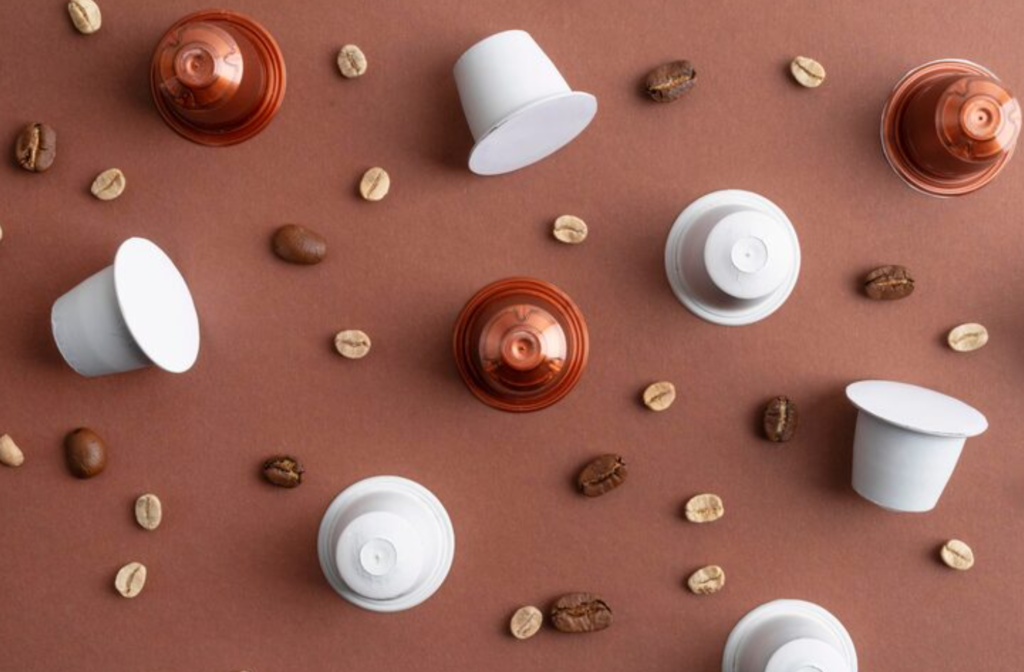
Every new account looks simple on a sales sheet. In production, it becomes a coffee lot, grind setting, dose, lid, carton, barcode, specification and forecast.
Ten customers with three products each can turn into 30 SKUs. That is where a machine either creates flexibility or creates a small paperwork monster.
Standardization is the fix. Use a qualified common cup wherever the product brief allows. Keep a limited family of lid structures. Separate true product differences from cosmetic ones. Then schedule related coffees and materials together.
Imagine a roaster serving:
- A local café with a dark house blend
- A hotel group with a medium roast
- An office supplier with regular and decaf options
The café may need branded lids and retail boxes. The hotel may use generic outer cases. The office supplier may accept plain lids inside branded dispensers. All three can share the same qualified cup platform, even though the finished offers look different.
Changeover time becomes just as important as maximum speed. A machine advertised at 60 pods per minute cannot help much if four short jobs consume half the day in cleaning, adjustment and material changes.
Track saleable output per shift, not brochure output per minute.
K-Cup Packaging Materials Shape What You Can Sell
A pod is a small brewing system. Cup, filter, coffee and lid must work together. The SANEU guide to K-Cup packaging materials explains why barrier properties, heat resistance and filter performance affect both shelf life and line efficiency.
| Component | Its job | Private-label decision |
| Cup body | Holds the product and supports brewing | Barrier, heat resistance, recyclability and machine fit |
| Filter | Controls flow and retains grounds | Material, porosity, wet strength and attachment |
| Lid | Creates the top barrier and seal | Print, heat-seal layer and compatibility |
| Ground coffee | Delivers flavor and controls flow | Roast, grind distribution and dose |
| Carton/case | Protects and identifies finished pods | Branding, count, barcode and customer requirements |
Cups and filters
Many K-Cup-compatible cups use polypropylene, sometimes with an EVOH barrier layer. Compostable structures are also available, but they may behave differently during feeding and sealing.
Test empty filtered K-Cup options with the actual machine and product. Check cup dimensions, flange flatness, de-nesting, filter consistency and brew compatibility. “Looks about right” is not a material specification.
Lid stock and seal compatibility
Pre-cut foil lids and rollstock need the correct heat-seal layer for the cup. Temperature, pressure and dwell time form the sealing window. Coffee on the flange can create tiny channels that let oxygen enter.
The detailed K-Cup filling and sealing process shows why cup feeding, dosing, nitrogen flushing and sealing should be validated as one connected process.
Coffee dose, grind and brewing results
A grind developed for bagged coffee may not flow or brew properly in a pod. Too many fines can slow the beverage. A low dose may taste thin at larger settings.
Private-label approval should cover fill-weight tolerance, flow time, sensory target and brewer range. Otherwise, the customer approves a flavor description while production tries to guess the actual product.
Quality Control Turns the Machine Into a Repeat-Order Engine
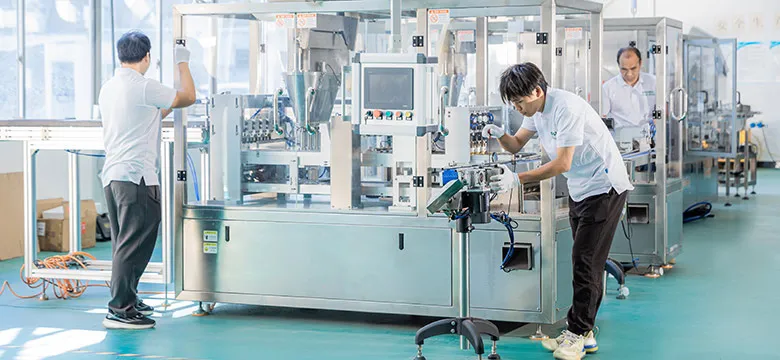
The first sample wins attention. The tenth production batch wins the account.
An internal line gives direct control, but only if the team measures what matters:
- Verify coffee identity and release status before filling.
- Record pod weight at defined intervals.
- Inspect the sealing surface and lid position.
- Test seal integrity using an appropriate method.
- Measure residual oxygen when shelf-life performance depends on it.
- Brew samples in representative K-Cup-compatible machines.
- Connect coffee, cup, lid and finished cases through lot records.
- Retain samples and document corrective action.
Nitrogen flushing can reduce oxygen around the ground coffee. It does not repair a weak seal. Shelf-life validation must use the final cup, lid, coffee and storage conditions.
Private-label customers care about this because their brand is on the package. A leaking pod does not make the consumer blame the hidden equipment supplier. It makes them blame the name printed on top.
Where the Economics of Private-Label Production Improve
A machine can reduce conversion cost at sufficient volume, but private-label growth adds a second benefit: several customers can share the same capacity.
Calculate the cost of a saleable pod:
Cost per saleable pod = total coffee, materials, labor, utilities, maintenance and waste ÷ pods that pass quality checks
Then add annual fixed costs such as equipment payments, facility allocation, insurance, training, quality systems and salaried supervision.
Do not build ROI from rated speed alone. Estimate realistic output after cleaning, changeovers, sampling, operator breaks and minor stops.
| Growth stage | Likely production model | Why |
| Market test | Co-packer or assisted equipment | Protects cash while demand is uncertain |
| Repeat local accounts | Compact internal line or hybrid model | Adds flexibility without huge capacity |
| Stable regional volume | Automatic filling and sealing line | Improves throughput and unit economics |
| Large multi-customer factory | Higher-output automated line | Supports utilization and labor efficiency |
A compact platform such as the SR-11 coffee capsule filling machine may suit short-run and growing operations. Higher, steady demand may justify equipment from a broader K-Cup filling-machine range.
Here is the slightly awkward truth: more private-label customers do not automatically improve profit. Tiny orders, unique materials and endless changeovers can consume the margin. Price complexity instead of pretending it is free.
Private-Label Applications Beyond One Coffee Brand
K-Cup-compatible production can serve several industries:
- Independent coffee shops: House coffee for customers to brew at home
- Regional roasters: Retail, wholesale and subscription extensions
- Grocery and specialty retailers: Store-brand single-serve assortments
- Office coffee services: Reliable case formats and regular replenishment
- Hotels: In-room or breakfast-service coffee programs
- Corporate gifting: Branded short runs for events and employee gifts
- Fundraising groups: Custom products connected to schools or nonprofits
- Restaurants: A convenient branded take-home format
Compatible equipment may also handle tea, cocoa or other dry products when the dosing system, food-safety plan and pod design are appropriate. Do not assume one setup works for every powder. Flow behavior, allergens, cleaning and brewing performance can change the job completely.
This variety is valuable because demand patterns differ. Retail might peak around promotions. Hospitality may be steady. Corporate gifts may surge before holidays. A balanced customer portfolio can improve utilization without relying on one giant account.
US Food Safety, Labeling and Customer Standards
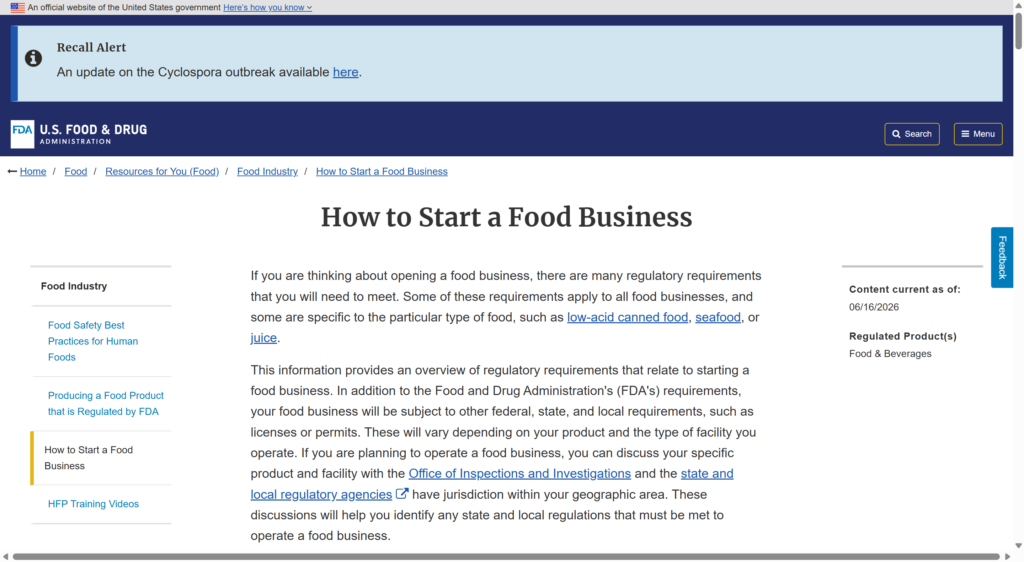
Bringing packaging in-house means operating a food facility, not merely installing a machine.
The FDA’s guide to starting a food business explains that facilities manufacturing, processing, packing or holding food for US consumption generally must register unless an exemption applies. State and local requirements may also apply.
Covered facilities may need to follow CGMP and preventive-control requirements. FDA’s Preventive Controls for Human Food overview addresses training, hazard analysis, sanitation, monitoring and records.
If the finished product carries an organic claim, review certification and handling with the USDA National Organic Program. Kosher status and schemes such as SQF or BRCGS may be requested by customers even when they are not automatic requirements for every roastery.
Environmental claims need evidence too. The FTC Green Guides explain how recyclable and compostable claims should be qualified. A cup material can be technically recyclable while real local access remains limited. The label needs to deal with the real world, not only the resin code.
Work with qualified regulatory and food-safety professionals for the actual facility and claims. A blog can point to the door; it should not pretend to be your compliance attorney.
Common Private-Label Growth Problems—and Practical Fixes
| Growth problem | Likely cause | Practical response |
| Too many small orders | Uncontrolled SKU growth | Standardize common components and batch similar jobs |
| Weak seals | Cup, lid or process mismatch | Validate material, heat, pressure and dwell time together |
| Machine sits idle | Optimistic forecast | Keep co-packing or use a staged hybrid model |
| Long changeovers | Poor product grouping | Schedule related coffees and packaging together |
| Retail launch delay | Printed material lead time | Use pilot packaging and approve artwork earlier |
| Inconsistent taste | Dose or grind variation | Add routine weight and brew checks |
| Missing components | Weak purchasing plan | Set reorder points around supplier lead time |
Many of these problems are ordinary. That is good news. Ordinary problems respond to boring systems: specifications, schedules, checks and named responsibility.
What to Check Before Buying a K-Cup Packaging Machine
Start with the private-label program, then size the equipment. Ask:
- What sustained output can the machine achieve with our coffee and materials?
- What fill tolerance is guaranteed, and how is it tested?
- Can it handle our cup and lid formats?
- How is nitrogen introduced and residual oxygen verified?
- How long do normal product changeovers take?
- Which areas can operators access for cleaning?
- What utilities and floor space are required?
- Which wear parts should be stocked?
- What happens during factory acceptance testing?
- Who handles installation, training and technical support?
A useful coffee packaging machine supplier guide should help compare service, documentation, components and acceptance criteria—not only price.
Send actual coffee, cups and lids for trials. A video of generic powder moving through a machine proves that gravity still works. It does not prove your product will run well.
A Practical Growth Path: Co-Pack First, Bring Stable SKUs In-House
The safest route is usually staged:
- Use a co-packer to test product-market fit.
- Track repeat sales by customer and SKU.
- Calculate fully loaded internal cost at conservative utilization.
- Move one stable, simple product onto the internal line.
- Keep the co-packer for peaks, unusual materials or backup.
- Add private-label customers that fit the qualified platform.
- Increase automation only after real demand uses the available capacity.
This hybrid approach keeps the external bridge open while the internal process learns to walk. A little inelegant, maybe, but very practical.
Conclusion: The Machine Supports Growth, but the Operating Model Creates It
A K-Cup packaging machine can help a US private-label producer launch products faster, handle smaller runs, control quality and spread capacity across several customers. Those are meaningful growth advantages.
But the machine is only leverage. Demand, materials, people, specifications and customer service provide the force behind it.
If orders are still uncertain, co-packing may protect cash and management attention. If stable SKUs, repeat customers and operating capability are already in place, internal production can remove bottlenecks and open new accounts. Many roasters will find the hybrid model fits best for a while.
Choose the setup that makes the customer promise easier to keep. That is what turns packaging equipment into private-label growth.
FAQs About K-Cup Machines and Private-Label Coffee
1. What is private-label K-Cup manufacturing?
It is the production of K-Cup-compatible pods sold under a customer’s brand. The coffee, recipe and packaging may be standard, customized or customer-supplied.
2. How does a K-Cup packaging machine work?
Depending on automation, it feeds cups, doses ground coffee, flushes nitrogen, applies lids, heat-seals them and discharges finished pods.
3. Can a small coffee roaster make private-label K-Cups?
Yes. Compact or assisted equipment can support pilots and short runs if the roaster has suitable space, trained staff and quality procedures.
4. How much does a commercial K-Cup filling machine cost?
Price varies with speed, automation, lanes, nitrogen, coding and inspection. Compare the complete installed project rather than the base machine alone.
5. What volume is needed for in-house production?
There is no universal threshold. Use annual fixed cost, internal variable cost and current co-pack cost to calculate break-even against repeatable demand.
6. Is private-label K-Cup production profitable?
It can be when pricing covers coffee, materials, labor, changeovers, waste and customer-management work. High sales volume with poor SKU discipline can still lose money.
7. What materials are needed?
Ground coffee, filtered cups, compatible lid stock, cartons or cases, coding materials and often nitrogen are required.
8. Does a filling machine need nitrogen?
Many commercial pod programs use nitrogen flushing to reduce oxygen exposure. The configuration should follow the product’s validated shelf-life target.
9. How many K-Cups can a machine produce per hour?
Output varies by model. Base planning on sustained saleable output after changeovers and downtime, not only advertised maximum speed.
10. Can one machine produce several coffee blends?
Yes. Each blend may require a different grind, dose or cleaning procedure, so changeover time and scheduling matter.
11. Can the machine pack tea or cocoa?
Some machines can with suitable dosing and pod configurations. Validate flow, cleaning, allergens and brewing before commercial production.
12. What FDA requirements apply?
Facility registration, CGMP, preventive controls, labeling and records may apply depending on the operation and available exemptions.
13. Can an in-house line make USDA Organic pods?
Yes, when certification, approved materials, segregation, sanitation and records meet applicable USDA organic requirements.
14. Is co-packing better than buying a machine?
Co-packing often fits uncertain or low volume. Ownership becomes stronger when repeat demand, control needs and conservative economics justify fixed costs.
15. What should be tested before ordering equipment?
Test the real coffee, cup, filter and lid. Verify sustained speed, fill accuracy, seal integrity, residual oxygen, reject rate and brew performance.