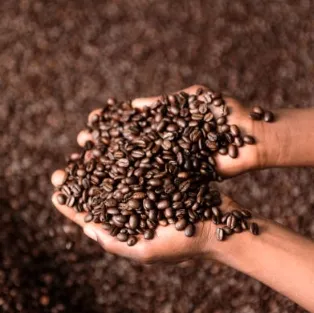
A bag of green coffee can cross an ocean with very little fuss. Months later, part of that same coffee may sit on a supermarket shelf in neat, branded capsules. By then, it has been roasted, ground, portioned, protected from oxygen, packed, marketed, and distributed. Each step adds work. It also adds value.
So, can African coffee exporters keep more of that value by producing capsules closer to origin?
Yes, they can. But there is a catch—and it is a fairly big one. A capsule machine does not turn green beans into a profitable export business by itself. The project needs a real buyer, a suitable capsule system, repeatable coffee quality, compliant materials, dependable utilities, good packaging, and enough orders to keep the line busy.
That may sound less exciting than “buy a machine and move up the value chain.” Still, it is the useful answer. Let’s look at where capsule production creates value, where the money can leak away, and how an African producer can test the idea without betting the whole farm on it.
Why African Coffee Often Leaves Before Most Value Is Added
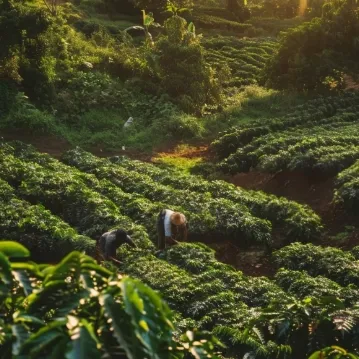
Africa grows some of the world’s most distinctive coffees. Ethiopia is famous for floral and fruit-forward Arabicas. Uganda is a major Robusta producer with a growing specialty segment. Kenya, Rwanda, Tanzania, and other origins have built strong reputations with roasters and importers.
Yet much of this coffee still leaves the continent as green beans. Roasting, grinding, packaging, branding, and retail distribution often take place in consuming markets.
CABI’s analysis of Africa’s coffee value chain says coffee provides income for more than 12 million African households. It also cites a 2014 KPMG estimate: Africa produced and exported coffee worth about US$6 billion, while finished products made from that coffee were sold for roughly US$100 billion abroad. The figures are dated and the comparison is broad, so they should not be treated as today’s margin calculation. Still, they show the shape of the problem rather well.
The largest gains often happen after the farm gate:
- sorting and quality improvement;
- roasting and blend development;
- grinding and portioning;
- packaging and shelf-life protection;
- certification and compliance;
- brand ownership;
- sales, distribution, and retail placement.
Exporting a finished capsule can keep more of those activities at origin. But “more value at origin” is not automatically the same as “more money for farmers.” The extra margin may go to the roaster, processor, investor, distributor, or retailer. If farmer income is part of the objective, the ownership model, sourcing contracts, and price structure must make that happen deliberately.
| Export format | Work completed at origin | Shelf-life and logistics | Brand control | Potential value retained locally |
| Green beans | Low | Flexible bulk handling | Low | Lowest |
| Roasted whole beans | Medium | More sensitive to time and oxygen | Medium | Medium |
| Ground coffee | Medium to high | Aroma protection becomes critical | Medium to high | Medium to high |
| Coffee capsules | High | Strict barrier, seal, and compatibility needs | Potentially high | High when demand and utilisation are real |
Where a Coffee Capsule Actually Adds Value
A capsule is a small object, but commercially it is a complete serving system. The buyer is not paying only for five or ten grams of coffee. They are paying for convenience, predictable extraction, low mess, portion control, and a product that works in a machine they already own.
That changes the value proposition.
When capsules are produced locally, an African coffee business can retain work that would otherwise happen overseas:
- Roast development: Matching roast colour and flavour to the brewing system.
- Precision grinding: Producing a particle distribution that creates the right flow and extraction.
- Dosing: Filling each capsule to a controlled weight.
- Atmosphere control: Reducing oxygen before the lid is sealed.
- Packaging: Protecting the capsule through warehousing and a long export journey.
- Branding: Selling a named origin and a finished experience, not an anonymous input.
- Quality assurance: Checking weight, oxygen, seal integrity, extraction, and sensory consistency.
These steps create technical jobs as well as factory jobs. A working capsule operation needs roasters, machine operators, food-safety staff, maintenance technicians, quality-control teams, packaging designers, buyers, and export salespeople.
There is also a branding benefit. A supermarket customer can remember “Ethiopian Sidama espresso capsules” more easily than the name of a green-coffee trading grade. The origin becomes visible at the moment of consumption. That is powerful, especially for specialty and traceable coffee.
Still, the final retail price can be misleading. A box may look expensive per kilogram of coffee, but it carries costs that a sack of green beans does not: capsule bodies, filters, lids, cartons, nitrogen, rejected units, freight, distributor margin, retailer margin, marketing, and customer support. More revenue is possible. More profit needs to be proved.
Which African Coffee Businesses Are Best Placed to Produce Capsules?
Not every exporter should become a capsule manufacturer. Some businesses are much closer to being ready than others.
Strong candidates
An established roaster with repeatable blends and a confirmed private-label buyer is in a good position. So is an exporter that already supplies roasted coffee to hotels, airlines, offices, or regional retailers. These companies understand finished-product customers and probably have at least part of the quality system in place.
Other promising models include:
- a cooperative working with an experienced operating partner;
- a regional co-packer serving several African coffee brands;
- an exporter adding a small finished-goods division;
- a hospitality supplier with predictable monthly consumption;
- a private-label manufacturer with buyers in Europe, North America, the Middle East, or within Africa.
The current policy direction is supportive in several markets. In 2026, the International Finance Corporation advertised a feasibility study for export-oriented value-added coffee products in Ethiopia, explicitly including coffee capsules alongside roasted coffee, instant coffee, concentrates, and extracts. That IFC feasibility-study scope is not proof that every capsule project will work. It is evidence that serious institutions are examining the opportunity.
Weak candidates
A business should slow down if it has no destination buyer, no stable roast profile, or no one responsible for food safety. The same goes for a grant-funded project built around equipment first and customers later. Shiny machinery can become very expensive furniture.
Low production volume is another warning. A machine rated at 100 capsules per minute sounds productive. If it runs for only a few hours each month, fixed costs are spread across very few saleable capsules.
Country and market fit
There is no single “best African country” for capsule production. Ethiopia and Uganda have large coffee sectors. Kenya, Rwanda, and Tanzania bring recognised specialty origins. South Africa, Egypt, Morocco, Algeria, and Nigeria may offer consumption, hospitality, logistics, or distribution opportunities even where local coffee farming is limited.
The right location depends on a practical mix: coffee supply, electricity, nitrogen, technical skills, port access, material imports, food regulation, finance, and nearby customers. Coffee may grow in one country, be processed in another, and sell across a regional network. Under the African Continental Free Trade Area, that regional model deserves a proper look.
Choose the Capsule System Before You Choose the Machine
This sounds obvious, but it gets missed. A producer buys filling equipment, then tries to find a market for whatever capsule the mould happens to accept. The sequence should run the other way.
Start with the destination market. Which brewers do customers own? What capsule materials do retailers accept? How much coffee is expected in each serving? Then choose the capsule, lid, filter, coffee profile, filling process, and secondary packaging.
Nespresso-compatible capsules
Nespresso-compatible formats are common in espresso-oriented markets. They can suit premium African Arabicas, blends, and origin-led retail lines. Depending on the exact system, compatible capsules may be aluminium, polypropylene, or compostable material.
Compatibility needs real testing. A capsule may look correct yet brew poorly because of its dimensions, rim, lid, internal geometry, or coffee bed. Commercial wording matters too. “Nespresso-compatible” describes compatibility; it should not suggest that an independent product is manufactured or endorsed by Nespresso.
K-Cup-compatible pods
K-Cup-compatible products are especially relevant to the United States and Canada. They usually hold a larger dose and include a filter. That means the production process must manage the cup, filter, coffee dose, lid, and seal as one system.
An African exporter targeting North America should validate brewer compatibility, filter performance, extraction, packaging claims, and buyer specifications before committing to production tooling.
Dolce Gusto-compatible and other systems
Dolce Gusto-compatible capsules are larger and can support coffee, cocoa, milk powder, and mixed beverages. Other regional systems may also be commercially important. The most popular format globally is not necessarily the right format for a particular buyer.
A useful overview of single-serve coffee formats can help compare capsules with drip bags, stick packs, sachets, and other portioned products. Sometimes a capsule is the right answer. Sometimes a lower-cost format reaches the same customer with less technical risk.
| System | Typical position | Common materials | Production consideration | Best-fit exporter |
| Nespresso-compatible | Espresso and premium retail | Aluminium, PP, compostable | Tight dimensional and barrier control | Specialty roaster or premium private label |
| K-Cup-compatible | North American single-serve | PP cup, filter, foil lid | Filter handling and larger coffee dose | Exporter with a US or Canadian buyer |
| Dolce Gusto-compatible | Coffee and mixed beverages | Multilayer plastic | Larger capsule and varied ingredients | Beverage producer or regional private label |
Capsule Materials: Cost, Freshness, and Export Positioning
Capsule material is not a last-minute design choice. It affects shelf life, sealing temperature, machine setup, brand position, waste claims, and landed cost.
Aluminium
Aluminium offers a strong barrier against oxygen, moisture, and light. It also has the premium look associated with many espresso capsule systems. Where collection and separation programmes work, aluminium can be recycled repeatedly.
The drawbacks are higher material cost, forming requirements, and the need for reliable recycling infrastructure. “Recyclable” describes a material property. It does not prove that a capsule will actually be collected and recycled in the destination market.
Polypropylene and barrier plastics
Food-grade polypropylene can offer a lower-cost route for high-volume products. Some capsules use additional barrier structures, such as an EVOH layer, to limit oxygen transmission.
Plastic brings its own questions. Is the complete pack accepted by local recycling systems? Can the coffee, lid, filter, and body be separated? Does the supplier have migration-test data and a declaration of compliance for the intended market? A broad “food grade” statement is not enough.
Compostable capsules
Compostable formats can support a sustainability-led brand, especially where buyers actively request them. But the label needs precision. Industrial compostability is not the same as home compostability, and either claim should be backed by suitable certification, such as the relevant EN 13432 or ISO 17088 route where applicable.
These materials can also be more sensitive to heat, humidity, storage time, and sealing conditions. Long container journeys through hot climates deserve proper ageing trials. Some compostable capsules need additional barrier packaging to achieve a useful shelf life. That extra wrapper can make the sustainability story a bit awkward.
A 2024 peer-reviewed comparison of aluminium, polypropylene, and compostable capsule materials found that environmental outcomes depend strongly on material recovery and disposal scenarios. In plain terms, no material wins everywhere. Local waste systems matter.
| Material | Barrier performance | Relative cost | End-of-life story | Main production risk |
| Aluminium | High | High | Strong recycling potential where collection exists | Forming and sealing control |
| Polypropylene or barrier plastic | Medium to high | Lower | Depends on design and local acceptance | Migration, barrier, and mixed-material claims |
| Compostable biopolymer | Variable | Higher | Depends on certification and composting infrastructure | Heat sensitivity, shelf life, and seal consistency |
For exporters, secondary packaging matters as much as the capsule body. Cartons, overwraps, pallet protection, warehouse humidity, and container heat all influence the coffee that reaches the customer. This broader guide to coffee packaging material options covers the barrier problem beyond capsules alone.
What an Export-Ready Capsule Line Needs
An export capsule line starts before the filling machine.
Coffee preparation comes first
The green coffee must be consistent enough to produce a repeatable roast. Roasted coffee then needs an appropriate resting or degassing period. Grind size must suit the capsule geometry and brewing pressure. Humidity and particle distribution affect dosing, flow, extraction, and seal cleanliness.
Coffee that behaves perfectly in a retail bag may not behave perfectly in a capsule. The system needs its own trials.
Filling, flushing, and sealing
A typical automated line feeds empty capsules, doses ground coffee, places a lid or feeds roll film, seals the capsule, and discharges the finished unit. Depending on the product, it may also tamp the coffee, clean the capsule rim, flush with nitrogen, apply a second seal, inspect the lid, or reject faulty packs.
Coffee capsule filling and sealing equipment should be selected around the capsule sample, target dose, required output, floor space, nitrogen specification, inspection needs, and operator skill—not just the highest speed printed on a brochure.
For a closer look at sequence and scale, this guide explains how industrial coffee capsule production scales from preparation through inspection.
Oxygen control matters during long export journeys
Roasted coffee reacts with oxygen. Aroma fades and stale flavours develop. A good barrier capsule helps, but oxygen already trapped in the coffee bed or headspace still matters.
Nitrogen flushing replaces part of that oxygen with an inert gas before sealing. The result depends on flushing design, gas purity, dwell time, coffee structure, seal quality, and the time between filling and closure. A marketing number alone is not enough. Producers should measure residual oxygen after packing and during shelf-life trials.
The practical goal is to control residual oxygen in coffee capsules, then confirm that the whole package maintains quality under realistic storage conditions.
Quality-control points
An export-ready operation should check:
- fill weight and dosing variation;
- roast colour and grind distribution;
- residual oxygen;
- seal strength and leak integrity;
- lid position and capsule deformation;
- brewer compatibility;
- extraction time and beverage weight;
- sensory consistency;
- date, batch, and traceability codes;
- carton count and pallet condition.
Utilities and factory reality
The line also needs stable electricity, compressed air, food-grade nitrogen, controlled storage, cleaning procedures, spare parts, and trained maintenance staff. Buying machinery without checking those basics is a little like buying a truck before checking whether there is a road.
In some locations, voltage stability or replacement-part lead time may matter more than adding another ten capsules per minute. This is not glamorous stuff, but it keeps orders moving.
Standards and Export Rules Cannot Be Added at the End
Compliance should shape material selection, factory design, supplier documents, and traceability from the pilot stage.
Food safety and food-contact materials
Coffee capsules, lids, inks, adhesives, and internal filters touch food or protect it. For the European Union, the general framework includes Regulation (EC) No 1935/2004. Manufacturing also needs to follow Good Manufacturing Practice under Regulation (EC) No 2023/2006, with additional rules for specific materials such as plastics.
The European Commission’s food-contact materials guidance explains that materials must not release unsafe substances or unacceptably change the food’s composition, taste, or smell. Compliance documentation and traceability are part of the job.
An exporter may also use HACCP, ISO 22000, FSSC 22000, BRCGS Packaging Materials, or buyer-specific audits. These schemes are not interchangeable, and there is no single universal “coffee capsule certificate.” The required system depends on the factory’s role and the buyer’s market.
Coffee specifications and records
The producer needs documented specifications for green coffee, roast, grind, dose, moisture, packaging, storage, and transport. ISO’s coffee committee covers terminology, sampling, tests, product specifications, packaging, storage, and transportation across the coffee chain. That standards context is useful, but a factory still needs product-specific validation.
Packaging waste and environmental claims
The EU Packaging and Packaging Waste Regulation treats non-permeable single-serve beverage units used in a machine as packaging. Regulation (EU) 2025/40 introduces requirements around substances, recyclability, compostability in defined cases, labelling, and packaging minimisation over its implementation timeline.
Claims such as recyclable, home compostable, or industrially compostable must match evidence and local disposal routes. A green leaf on a carton is not a waste-management system.
EUDR and origin traceability
Coffee is one of the commodities covered by the EU Deforestation Regulation. As of August 2026, the European Commission says the regulation will apply from 30 December 2026 for large and medium operators, and for micro and small operators already covered by the EU Timber Regulation. It will apply from 30 June 2027 for other micro and small operators. The Commission has also updated parts of the derived-product scope.
The European Commission’s July 2026 EUDR update should be checked again before export. Duties depend on the product’s customs classification, the operator’s role, company size, and the rules in force when the goods enter the market. This article is not legal advice.
In practice, capsule production does not erase the origin-data obligation. It makes traceability more important because green coffee lots are transformed and blended before becoming finished retail units.
The Economics: Where Capsule Projects Usually Win or Lose
Capsules can command a much higher selling price per kilogram of coffee. That is attractive, naturally. But comparing capsule retail value with the green-bean export price is like comparing the price of wheat with the price of a restaurant meal. A lot happens in between.
Count the complete cost
A feasibility model should include:
- green coffee and quality premiums;
- roasting loss;
- capsule body, filter, lid, ink, carton, and overwrap;
- nitrogen and compressed air;
- labour and technical supervision;
- testing and certification;
- electricity and climate control;
- cleaning and maintenance;
- reject rate and line stoppages;
- spare parts and imported components;
- financing and working capital;
- freight, insurance, duties, distributor margin, and retailer margin;
- sales, samples, and customer acquisition.
For equipment budgeting, it helps to understand what coffee packaging equipment actually costs before asking for a final configuration. Brochure price is only one line in the model.
Capacity utilisation beats headline speed
Suppose a line can produce 60 capsules per minute. That does not mean it will ship 28,800 good capsules in an eight-hour shift. Changeovers, cleaning, coffee refills, film adjustments, inspection, minor faults, and rejected packs reduce saleable output.
Then comes the bigger question: are there enough orders to run the shift in the first place?
A compact line operating every week can be more sensible than a high-speed line running two days each month. The right capacity is based on confirmed demand, realistic efficiency, product range, and planned growth.
Three entry models
| Entry model | Initial investment | Operational control | Margin potential | Best use |
| Use a co-packer | Low | Lower | Medium | Test format, price, and repeat demand |
| Install a compact in-house line | Medium | High | Medium to high | Proven regional or export demand |
| Build a high-speed integrated line | High | Highest | High at strong utilisation | Multiple brands, formats, or contracted volume |
There are hybrids too. A business may roast in Ethiopia or Uganda, send the coffee to a regional capsule co-packer, and keep ownership of the brand and customer. Another may produce private-label capsules for several roasters. This guide can help teams compare private-label and in-house capsule models before choosing where to invest.
A Lower-Risk Route From Green Beans to Finished Capsules
The safest route is staged. It is slower than buying the biggest available line on day one, but usually cheaper than learning every lesson at full scale.
Phase 1: Validate the buyer and format
Choose a destination market and speak with actual distributors, retailers, hospitality buyers, or private-label customers. Confirm brewer ecosystem, capsule material, coffee dose, pack size, target landed cost, expected volume, shelf life, and compliance documents.
A signed trial order is worth more than a thick market report full of “potential.”
Phase 2: Pilot under real conditions
Use a co-packer, laboratory line, or low-volume setup to test several roast and grind combinations. Measure extraction, sensory quality, residual oxygen, and seal integrity. Then ship test cartons through the same hot, humid, and slow logistics route the commercial product will face.
This stage often finds plain little problems: a lid scuffs in transit, a carton softens, a capsule brews well in one machine but not another. Better to find them now.
Phase 3: Choose the operating model
Compare continued co-packing with a regional shared facility or an in-house line. Include staff, utilities, maintenance, rejection, certification, and working capital—not only equipment price.
For modest confirmed volume, a compact startup capsule machine may offer more control without forcing the business into high fixed costs too early.
Phase 4: Scale after repeat orders
Once orders repeat, add automation where it removes a measured bottleneck. That may mean faster dosing, automatic checkweighing, vision inspection, cartoning, case packing, or a second capsule format.
Scaling is not about making the factory look bigger. It is about making reliable, saleable product with less waste and less drama.
Wider Benefits—and the Limits—of Capsule Production
When it works, local capsule production can support more than export revenue. It can build technical skills, create manufacturing jobs, deepen supplier networks, strengthen origin brands, and encourage regional packaging and logistics services.
The UNIDO ACT Coffee Programme frames value addition alongside compliance, research, climate resilience, and social inclusion. That combination matters. A capsule factory fed by declining farms, poor traceability, or unfair buying practices is not a strong value chain. It is just a later processing step.
There are limits as well. Many capsule bodies, films, machine parts, and control components may still be imported. Electricity interruptions can damage efficiency. Foreign-exchange shortages can delay materials or spares. Packaging waste may create public criticism. Retailers and distributors can still capture a large share of the final margin.
Farmer benefit depends on structure. Cooperatives may own part of the operation. Roasters may sign premium or long-term supply agreements. Brands may invest in productivity and traceability. None of that happens automatically because the coffee ends up in a capsule.
Conclusion
Capsule production can add more value to African coffee exports. It keeps roasting, grinding, precision filling, preservation, packaging, branding, and quality control closer to origin. It can also turn a coffee’s place and story into a finished product customers recognise.
But the capsule is not a magic shell around extra profit.
The opportunity works when a business starts with the buyer, chooses the right brewing system, proves its coffee and packaging, complies with destination rules, and runs the line often enough to cover the real cost. It struggles when the project starts with equipment and hopes demand will arrive later.
For many African exporters, the sensible path is a pilot, then co-packing or a compact line, followed by larger investment after repeat orders. Well, it is not the fastest story to tell at a conference. It is the kind that has a better chance of still operating five years later.
Frequently Asked Questions
1. Is coffee capsule production profitable in Africa?
It can be, especially for a roaster or exporter with confirmed buyers, stable coffee quality, and enough volume to use the equipment regularly. Profit depends on the full landed cost, not the selling price alone. Capsule bodies, lids, cartons, nitrogen, labour, rejects, certification, freight, distribution, and working capital all count. A feasibility model should use trial orders and realistic line efficiency rather than the machine’s maximum advertised speed.
2. How much investment is needed to start a coffee capsule production line?
There is no single figure. A business can begin with co-packing and spend mainly on product development, materials, tests, and branding. A compact automatic line adds machinery, air, nitrogen, utilities, installation, and quality-control equipment. A high-speed integrated plant can require much more for cartoning, inspection, climate control, and factory infrastructure. Ask for a configuration based on capsule type, dose, output, and inspection requirements—not a generic machine price.
3. Should an African exporter use a co-packer before buying a machine?
Often, yes. Co-packing lets the exporter test format, flavour, shelf life, price, and repeat demand with less capital. It also reveals buyer requirements that are easy to miss on paper. The trade-off is lower operational control and a margin paid to the co-packer. Once demand becomes predictable, an in-house line may improve flexibility, confidentiality, and unit economics.
4. Which format is best for export: Nespresso-compatible, K-Cup-compatible, or Dolce Gusto-compatible?
The best format is the one used by the target customer’s brewer. Nespresso-compatible capsules suit many espresso and premium retail markets. K-Cup-compatible pods are more relevant in the United States and Canada. Dolce Gusto-compatible capsules can support coffee and mixed beverages. Confirm market demand, material rules, compatibility, dose, and landed price before selecting moulds or equipment.
5. Can African-made coffee capsules meet EU food-safety requirements?
Yes. The factory and supply chain must meet the same applicable requirements as other exporters. That includes suitable food-contact materials, Good Manufacturing Practice, traceability, migration documentation where relevant, controlled production, and buyer-required food-safety systems. Compliance needs to cover the capsule, lid, filter, ink, adhesive, and other components—not just the coffee.
6. Do coffee capsules fall under the EU Deforestation Regulation?
Coffee is an EUDR commodity, but obligations for a finished capsule product depend on the current product scope, customs classification, operator role, and company size. The EU updated its scope and implementation tools in 2026, so exporters should confirm the latest official guidance before shipping. Keep origin and lot traceability intact through roasting, blending, filling, and packing.
7. Are aluminium, plastic, or compostable capsules better for African coffee brands?
It depends on the market. Aluminium offers strong barriers and premium positioning. Polypropylene can reduce unit cost and suit larger volumes. Compostable materials may support a sustainability claim but require certification, compatible waste infrastructure, and careful shelf-life testing. Compare total cost, seal performance, barrier needs, buyer preference, and real end-of-life conditions instead of choosing from the material name alone.
8. How does nitrogen flushing extend coffee capsule shelf life?
Nitrogen flushing reduces the oxygen around the ground coffee before sealing. Less oxygen generally means slower aroma loss and oxidation. Results depend on the flushing method, gas purity, coffee structure, seal quality, and capsule barrier. Producers should measure residual oxygen and run shelf-life trials. Simply connecting a nitrogen cylinder does not guarantee a particular shelf life.
9. What production capacity should a startup coffee brand choose?
Choose capacity from confirmed monthly demand, realistic operating hours, changeovers, cleaning, and expected efficiency. A smaller line that runs regularly may have better economics than a faster line sitting idle. Leave some room for growth, but do not pay for several years of unused capacity. Pilot orders and a simple three-year demand scenario are a good starting point.
10. Will capsule production automatically increase income for coffee farmers?
No. Capsule production creates more value-chain activities locally, but the extra margin can remain with processors, investors, brands, or retailers. Farmers benefit when the business model includes premium sourcing, long-term contracts, cooperative ownership, profit sharing, productivity investment, or another clear mechanism. The packaging format alone does not decide how value is distributed.