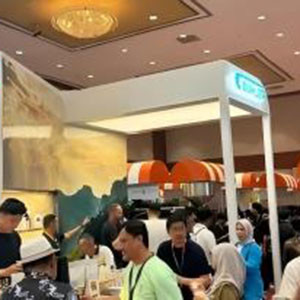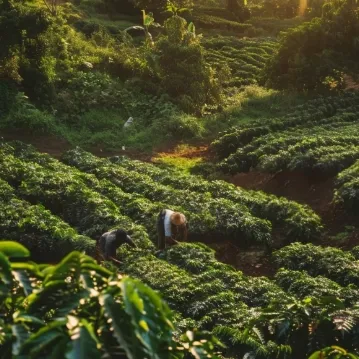
Three factories can send a buyer three similar quotations: coffee, capsule, printed box, unit price. Yet one gets approved while the others sit in an inbox. Usually, the winning factory has made the project easier and safer to approve. It defines the target machine, development process, compatibility tests, and MOQ logic.
That is what makes a strong Nespresso-compatible offer. It is not simply a long color chart or a fast filling machine. It is a connected product and service system—coffee, capsule, lid, extraction, packaging, compliance, production, and proof. Quite a lot for one little capsule, yes.

Start With the Buyer’s Job, Not the Capsule Catalog
An OEM factory may serve specialty roasters, retailers, hotel suppliers, importers, office-coffee distributors, and new brands. They do not buy for the same reason. A startup may want a low-complexity test. A specialty roaster values cup quality. A retailer may emphasize supply continuity, price, audit readiness, and shelf impact.
So begin at the shelf and work backward:
- Who will drink the product?
- Where will it be sold or served?
- What cup experience and price position are expected?
- Which machine system, capsule, and retail pack support that goal?
- Can the factory repeat it at the required volume?
Offering every possible option before answering those questions is a little like handing a restaurant customer the whole pantry instead of a menu. It looks flexible, but it creates work.
Establish whether the buyer needs OEM, private label, or contract packing. These OEM, private-label, and co-packing models overlap, so the written scope matters more than the sales label.
Define What “Nespresso-Compatible” Means in Your Offer
“Compatible with Nespresso machines” is too broad for a technical specification.
Nespresso Original and Vertuo are separate product lines. Their capsules and brewing systems are not interchangeable. Vertuo also reads a code on the capsule rim and adjusts brewing parameters. The official Nespresso system FAQ explains this distinction. Nespresso Professional is another ecosystem and should not be mixed casually with the home-use Original format.
A factory offer should state:
- the exact target system;
- the intended machine models or test group;
- capsule body, base, and lid construction;
- target beverage, such as espresso or lungo;
- coffee dose range and approved recipe;
- destination countries and sales channels;
- known exclusions or limitations.
The broader guide to different coffee pod systems is useful when a buyer is still choosing between platforms.
Compatibility is not just a dimensional drawing. The capsule must enter, puncture, manage water flow, produce the intended drink, and eject normally. The coffee bed affects that behavior.
Nespresso is a third-party trademark. Use clear “compatible with” wording and a non-affiliation statement. Packaging, advertising, and freedom-to-operate questions should receive market-specific legal review. A technical fit test is not a trademark license.
Build Three Offer Levels Instead of One Messy Custom Menu
Unlimited choice turns every inquiry into a new engineering project. Quotes slow down, small orders become hard to schedule, and printed materials fill the warehouse. A cleaner approach uses a few validated offer levels.
| Offer level | What stays standardized | What the buyer can change | Best fit |
| Launch platform | Proven capsule system, validated coffees, stock components, standard packs | Artwork, selected blend, limited colors | Market tests, hospitality, smaller brands |
| Custom range | Approved technical platform and QC method | Exclusive blend, roast direction, capsule appearance, carton format | Growing brands and retailers |
| Strategic program | Core validation and change-control system | Multi-SKU portfolio, regional documents, special claims, reserved capacity | Large importers, retailers, and established brands |
This is controlled flexibility. The launch level is not “cheap”; it uses proven combinations. The custom level earns its extra development time. A strategic program may include forecasts, stock rules, audit support, and service reviews.
Avoid a universal MOQ for each level. The real minimum may come from coffee, colored capsules, printed lids, cartons, the filling run, or logistics.
Engineer the Coffee, Capsule, and Lid as One Brewing System
A coffee that tastes lovely from a café espresso machine may behave badly inside a small capsule. There is less room for error, and the water has only a short path through the coffee bed.
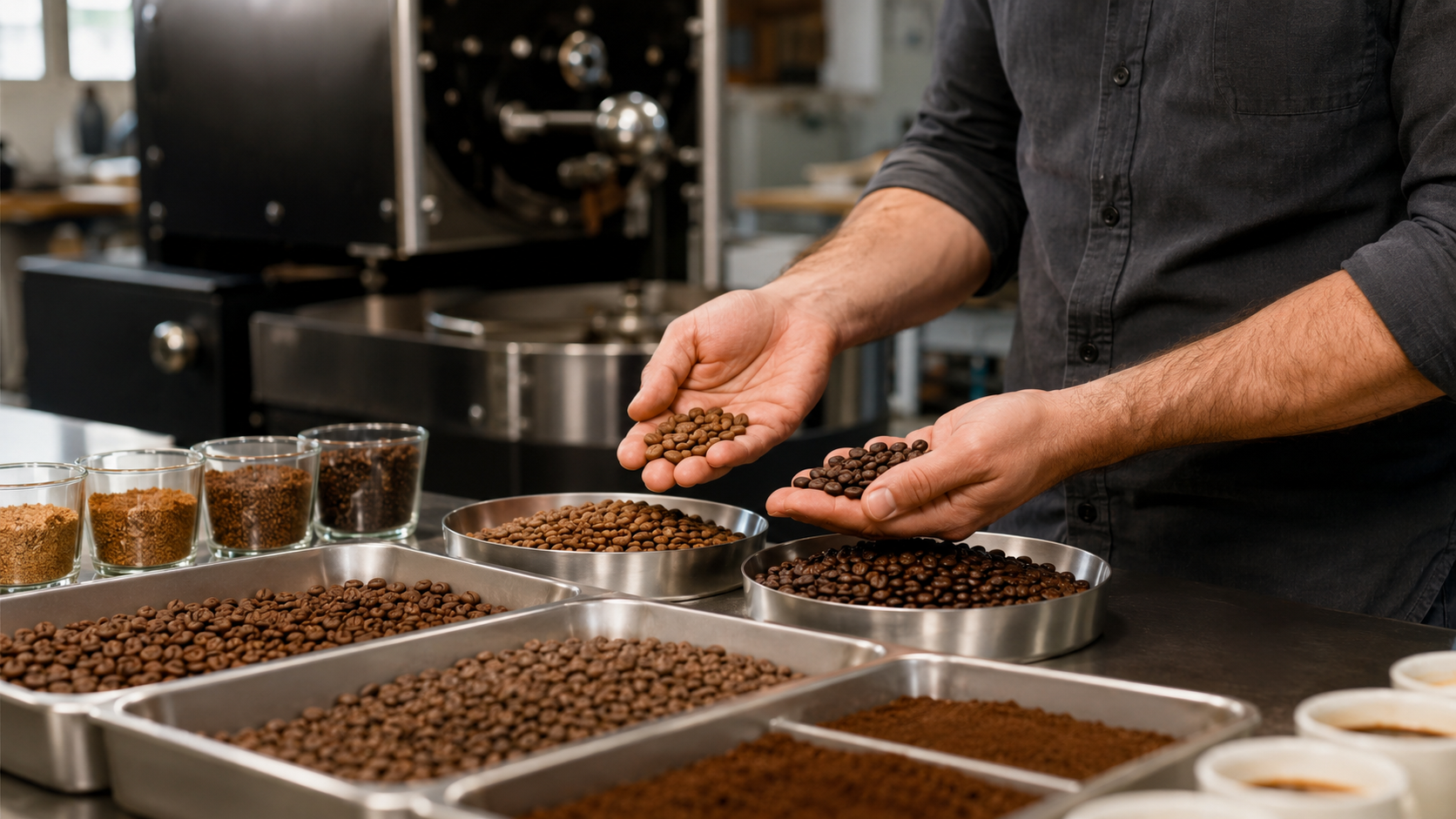
Develop the product in the target capsule and brewer. Start with the desired drink: short espresso, longer lungo, milk-based cup, decaf, or flavored coffee. Then test roast profile, grind distribution, dose, bed density, flow time, beverage output, crema, and sensory result together.

The coffee bed is both ingredient and flow control. Grind too fine or pack too tightly, and the brew may crawl. Grind too coarse or underfill, and it may taste thin. A darker roast does not automatically make a stronger cup. Well, coffee is awkward like that.
Capsule construction must support the recipe. Aluminum can provide a strong barrier and premium appearance. Plastic or PP systems may offer cost and manufacturing advantages, depending on their structure. Compostable designs can support a specific environmental position, but they need their own sealing, barrier, storage, and disposal validation.
The guide to what Nespresso pods are made of explains the body, coating, lid, and other layers. Also review how aluminum and plastic capsule packaging can affect freshness, cost, and positioning.
Do not use “biobased,” “recyclable,” “industrially compostable,” and “home compostable” interchangeably. Each claim needs evidence for the exact component and destination market.
Turn Compatibility Testing Into a Sales Asset
Buyers worry about slow flow, puncture failures, leaks, deformation, and grounds in the cup. Consumer anecdotes do not establish defect rates, but they show what buyers fear.
Create a written validation matrix for the machines agreed with the customer. Include current and older models where commercially relevant. Run repeated brews, not one good capsule selected from a tray.
| Observed risk | What to check | Evidence for the buyer |
| Slow or blocked flow | Grind distribution, dose, tamp, lid opening, beverage output | Repeated brew records and sensory results |
| Leakage or grounds in the cup | Flange cleanliness, seal integrity, puncture behavior | Leak-test and visual-defect records |
| Capsule sticks or deforms | Geometry, rigidity, sealing heat, ejection | Machine-by-machine test matrix |
| Weak or inconsistent drink | Fill variation, flow time, beverage mass, coffee consistency | Batch QC summary and approved cup specification |
Test production-run capsules, not only hand-filled samples. Line speed, coffee dust, sealing heat, and component variation reveal problems a laboratory sample may hide. Keep an approved golden sample and retained production samples. Define acceptable drink output, flow, appearance, and sensory range. Material or process changes may require revalidation.
A concise report should state what was tested and what was not. “Validated on the agreed Original machine set” is more credible than “works perfectly everywhere.”
Protect Freshness With Measured Sealing and Oxygen Control
Nitrogen flushing is valuable, but the purity shown on a nitrogen generator is not the residual oxygen inside a sealed capsule.

The sealed result depends on coffee age, gas delivery, headspace, line speed, barrier, rim cleanliness, lid position, and sealing settings. Temperature, pressure, and dwell time work together. Too little energy can leave a leak; too much may distort the capsule.
Useful controls include fill weight, residual oxygen at an agreed measurement time, seal integrity, lid alignment, capsule deformation, coding, and sensory checks. Retain samples for real-time shelf-life work. Accelerated testing may help identify risk, but it should not create a made-up expiry date.
This overview of industrial coffee capsule production connects preparation, filling, sealing, and inspection. The guide to residual oxygen in coffee capsules goes deeper into freshness control.
Add Customization Without Letting SKUs Eat the Factory
Customers notice the blend name, capsule color, printed lid, carton design, pack count, and language. Those are valuable choices. Yet not every visible change requires a new technical platform.
Separate commercial customization from engineering changes.
Commercial options may use an approved capsule and lid with different artwork or coffees. A new material, lid laminate, dose, flavored formula, allergen status, or machine scope needs technical review.
Create a modular system:
- a small set of validated capsule-and-lid combinations;
- a controlled color palette;
- standard carton footprints and counts;
- artwork templates with fixed legal zones;
- approved coffee platforms that can be tuned within limits;
- a formal exception process for unusual requests.
One extra lid color looks harmless in a presentation. In the factory, it can mean another print minimum, storage location, line-clearance check, approval round, and box of obsolete stock.
Flavored and functional products need separate work on cleaning, cross-contact, powder behavior, extraction, labeling, and shelf life.
Make MOQ, Samples, Lead Time, and Scale-Up Easy to Understand
An unexplained MOQ feels arbitrary. Show which item sets it: coffee preparation, line setup, capsule color, printed foil, cartons, flavor cleanup, or logistics. Stock capsules and digitally labeled cartons may reduce launch complexity while keeping the coffee distinctive.
Use a visible development path:
- brief and feasibility review;
- coffee and component samples;
- pilot run on production equipment;
- technical, sensory, and artwork approval;
- commercial production;
- repeat-order review and controlled improvement.
State what the quotation includes: coffee, capsule, lid, retail box, master case, development, testing, storage, freight, and documentation. If something is excluded, say so. Buyers compare quotes badly when one includes printed packaging and another quietly does not.
For customers considering production later, this guide explains when a Nespresso-compatible filling machine makes sense for a roaster.
Match the Offer to the Buyer’s Channel and Application
A strong program changes emphasis by channel.
- Specialty coffee brands need a believable origin story, clear sensory targets, and capsule-specific development. A smaller, deliberate range may beat ten similar dark roasts.
- Retail private labels often value stable supply, price tiers, shelf appearance, audit readiness, and efficient carton dimensions.
- Hotels and offices need dependable brewing, clear identification, decaf options, practical case packs, and easy replenishment.
- Importers and distributors care about multilingual artwork, destination documents, pallet use, forecast accuracy, and lead-time stability.
- Tea, soluble, and functional products need their own formulation, cleaning, cross-contact, residue, and extraction validation.
Do not assume a coffee platform proves another beverage. Tea grade, soluble-powder flow, foaming ingredients, and functional compounds change dosing and brewing. The question is not “Can the auger move it?” but “Can the factory make a safe, stable drink people reorder?”
Standards and Claims Should Support the Offer, Not Decorate It
Certification logos are not a compliance program. Food safety, legal compliance, retailer certification, product quality, and environmental claims are different. ISO 22000:2018 specifies food-safety management-system requirements. ISO does not certify factories; independent bodies do. Check the site, scope, validity, and covered activities.

An OEM program may need HACCP-based controls, supplier approval, traceability, allergen management, complaint handling, recall readiness, and controlled changes. FSSC 22000, BRCGS, SQF, organic, Halal, or Kosher certification may matter. None should be claimed unless its scope covers the product.
Capsule bodies, coatings, adhesives, lids, inks, and machine surfaces can involve food-contact requirements. In the EU, food-contact materials fall under a general framework and material-specific rules. The European Commission’s food-contact materials guidance is a sensible official starting point. U.S. projects should review the FDA framework and the authorization status for the intended material and conditions of use.
Ask for declarations and relevant tests. A generic “food grade” sentence is not enough; product, temperature, contact type, supplier, and destination all matter.
Give Buyers a Proof Pack They Can Forward Internally
The buyer is rarely one person. Quality, legal, procurement, and management also need evidence.
Build a compact approval pack containing:
- finished-product and component specifications;
- approved artwork and golden sample;
- coffee, extraction, and compatibility criteria;
- current food-safety certificates with scope;
- food-contact declarations and relevant reports;
- QC plan, traceability, shelf-life protocol, and complaint process;
- commercial scope, MOQ drivers, lead time, and forecast assumptions;
- change-control and reapproval rules.
This shortens scattered email chains and makes approval easier. A factory that helps the buyer build the internal case already offers more than filling capacity.
Common Weak Offers and Better Fixes
| Weak offer | Why buyers hesitate | Better move |
| “Compatible with all machines” | The scope and evidence are unclear | Name the tested system and machine set |
| A giant option catalog | Price, lead time, and feasibility become fuzzy | Use validated platforms and controlled upgrades |
| Nitrogen percentage without sealed-pack data | It does not prove oxygen control | Define the measurement point and method |
| Certification logos only | Scope and validity cannot be assessed | Supply current documents and explain applicability |
| One unexplained MOQ | The buyer cannot redesign the order | Show which component or production step sets it |
| Printed artwork before technical approval | Branded stock may become unusable | Approve coffee and capsule performance first |
A Practical 90-Day Offer-Upgrade Roadmap
During the first 30 days, audit the current range. Map formats, materials, tests, claims, complaints, changeovers, unused stock, sample delays, and lost quotations.
During days 31–60, standardize the offer levels, validated component combinations, test methods, document owners, sample workflow, and quotation scope. Remove options that look good in a catalog but rarely sell profitably.
During days 61–90, run pilots, assemble the proof pack, train sales staff, and update the website. Ask real buyers whether the new structure answers their approval questions.
Ninety days is a planning frame, not a shelf-life promise. If equipment is the limit, define capsule, output, dosing, gas control, inspection, and changeovers before reviewing Nespresso-compatible filling machines. The sample should drive the equipment discussion.
Conclusion
A stronger Nespresso-compatible offer does not need the most colors, the longest beverage list, or the loudest capacity claim. It needs a clearly defined system, coffee developed for that system, stable materials, repeatable production, honest commercial terms, and evidence a buyer can use.
Start with one or two validated platforms. Make sampling and approval simple. Explain what sets the MOQ. Then prove compatibility, freshness, and compliance within a clear scope. That may sound less exciting than adding another shiny capsule color, but it is the stuff that wins repeat orders.
Frequently Asked Questions
What does Nespresso-compatible mean for an OEM coffee capsule?
It means the capsule is designed to function in a specified Nespresso machine system without being made or endorsed by Nespresso. The factory should name the exact system and tested machine set rather than make an unlimited compatibility claim.
Are Original and Vertuo capsules interchangeable?
No. Original and Vertuo use different capsule designs and brewing methods. A factory producing Original-compatible capsules should not market them as Vertuo-compatible. Nespresso Professional should also be specified separately.
Which capsule material is best for an OEM range?
There is no universal winner. Aluminum, plastic, and compostable constructions have different barrier, rigidity, sealing, cost, appearance, and claim requirements. Choose against the product position, target market, filling process, and validated shelf life.
How should a factory test compatible capsule performance?
Agree on a target machine matrix, then record repeated brewing behavior, beverage output, flow time, puncture, leakage, ejection, capsule condition, and sensory results. Test commercial-run capsules as well as development samples.
Why do some compatible capsules leak or brew too slowly?
Possible causes include incorrect geometry, a contaminated flange, weak sealing, unsuitable lid behavior, excessive dose, overly fine grind, dense tamping, or inconsistent coffee particles. The capsule and coffee must be diagnosed as one system.
How does grind size affect a compatible capsule?
Grind distribution changes resistance to water flow and extraction. Coffee that is too fine may brew slowly or block flow. Coffee that is too coarse may produce a weak cup. Dose, roast, tamp, and lid behavior also influence the result.
What sets the MOQ for private-label compatible capsules?
The MOQ may be set by the roast batch, filling run, custom-colored capsule, printed lid, carton order, cleaning requirement, or logistics plan. A stock component or simpler launch pack can sometimes lower project complexity.
How can an OEM factory avoid creating too many SKUs?
Use validated capsule-and-lid platforms, a controlled color range, standard carton footprints, artwork templates, and clear customization levels. Treat changes to materials, formulation, allergens, or compatibility scope as formal engineering changes.
Which quality and compliance documents should a buyer request?
Typical documents include specifications, certificate scope, food-contact declarations, traceability information, compatibility evidence, QC criteria, shelf-life protocol, artwork approval, and change-control terms. The exact package depends on the product and destination market.
Can the same line fill tea, soluble drinks, or functional powders?
Sometimes, with suitable dosing and change parts. However, machine capability alone is not enough. Powder flow, cleaning, cross-contact, extraction, labeling, seal performance, sensory quality, and shelf life must be validated for each product.