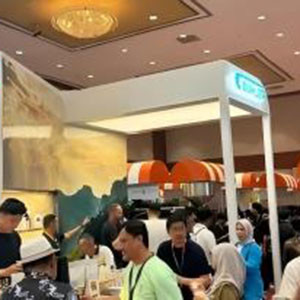
A customer may buy a beautiful bag from your roastery on Saturday. On Monday, that same person wants coffee before the laptop wakes up. They press a button. That little moment is the opportunity.
South American roasters already have coffee with a place, producer, and memorable flavor. A capsule can carry that value into homes, hotels, offices, and export markets. But premium coffee in a shiny shell is not automatically a premium product. A capsule is a tiny brewing system, not a small coffee bag.
This guide focuses on capsules made for the Nespresso Original system. Original, Vertuo, and Professional are different formats. “Nespresso-compatible” describes machine compatibility; it does not imply that an independent brand is made, approved, or endorsed by Nespresso.
South America Already Has Coffee Worth Remembering
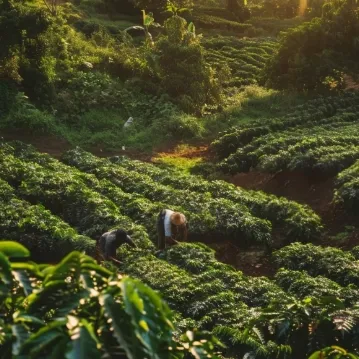
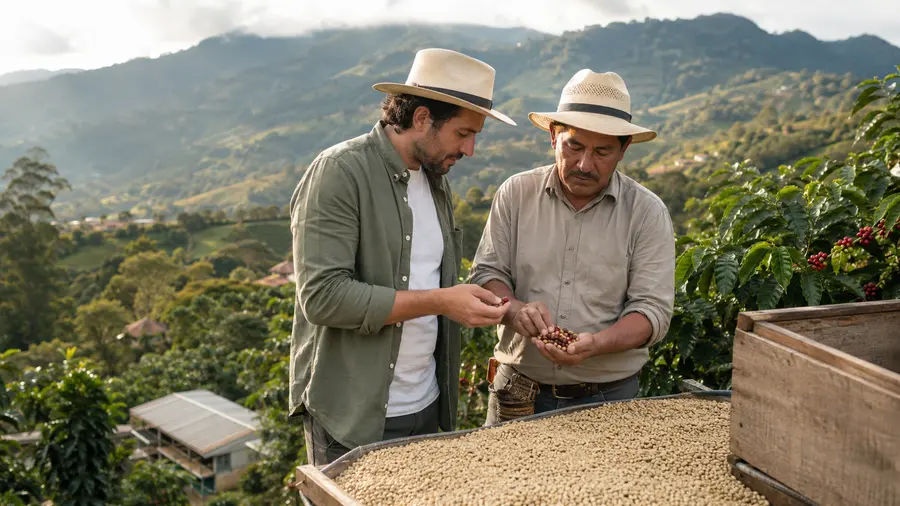
South America is not one neat flavor on a map. Brazil offers scale, specialty lots, Canephora, and useful espresso-blend components. Colombia has strong origin recognition and varied regional profiles. Peru brings high-altitude Arabica and growing specialty credibility. Smaller origins such as Ecuador and Bolivia can use scarcity when the supply plan is honest.
This is more than a nice brand story. It is commercial leverage.
The International Coffee Organization’s June 2026 Coffee Market Report recorded South American exports of all forms of coffee at 4.29 million 60-kilogram bags in May 2026, up 4.3% year on year. That figure shows the region’s weight in coffee. It does not prove that every roaster should launch capsules. Demand still has to be earned.
The useful question is whether a roaster can keep more value near origin by selling a finished product instead of competing only on roasted coffee. A capsule line can extend an existing brand into:
- direct-to-consumer bundles and subscriptions;
- gourmet supermarkets and specialty shops;
- hotel rooms and serviced apartments;
- office coffee programs;
- tourism and gift retail;
- private-label work and export distribution.
The opportunity is real. Still, the order of decisions matters. Start with the customer, not the capsule color chart.
Decide What “Premium” Means Before Picking a Capsule Color
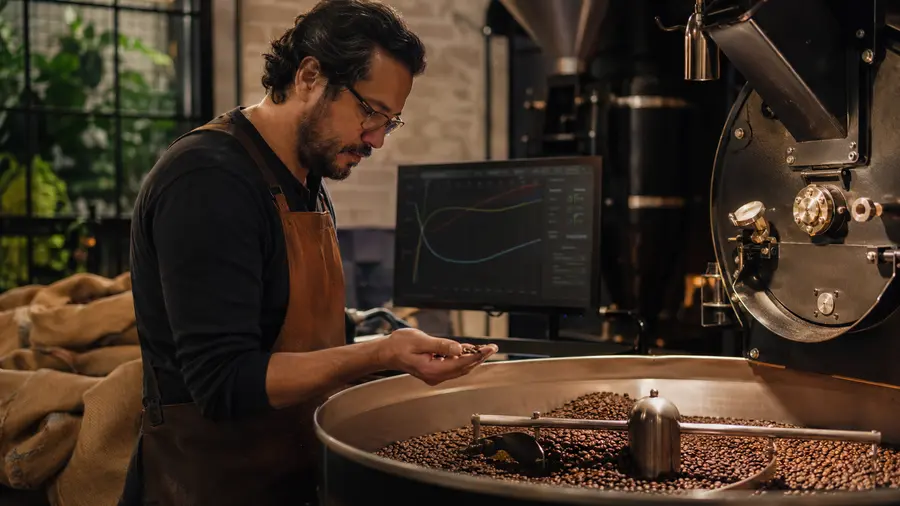
“Premium” is slippery. To a coffee buyer, it may mean a named farm. To a hotel manager, it means consistent coffee without complaints. To a busy consumer, it may mean, “This tastes far better than the office pods.” These are different product briefs.
Pick one buyer and one drinking moment
Choose the first customer and the job the capsule must do: a short espresso, a breakfast milk drink, a hotel-room lungo, or an origin-led gift.
A floral washed coffee may shine as a short black but disappear under milk. A deeper Brazilian blend could work better. One capsule for every drink is like one shoe for hiking and dancing. Possible, perhaps. Convincing, not really.
Write a one-sentence promise:
A traceable Huila coffee that gives home users a sweet, lively espresso in under a minute.
That sentence beats “luxury coffee experience.” It names the origin, drink, and reason to care.
Keep the opening range small
Two or three SKUs are usually enough to learn. A sensible range might include:
- an approachable house espresso with chocolate and caramel notes;
- one origin-led hero capsule with a clearer regional identity;
- a decaf or darker, milk-friendly option if customers already ask for it.
Six origins look impressive in a presentation. In a storeroom, they look like printed lids and trapped cash. Premium brands edit.
Build the Coffee Around the Capsule Brewing System
First, lock the system. Original-compatible capsules are not interchangeable with Vertuo, K-Cup, Dolce Gusto, or Professional formats. The machine, capsule, lid, coffee bed, and water path work together.
Then develop the coffee inside the actual commercial capsule.
A great cupping coffee still needs capsule development
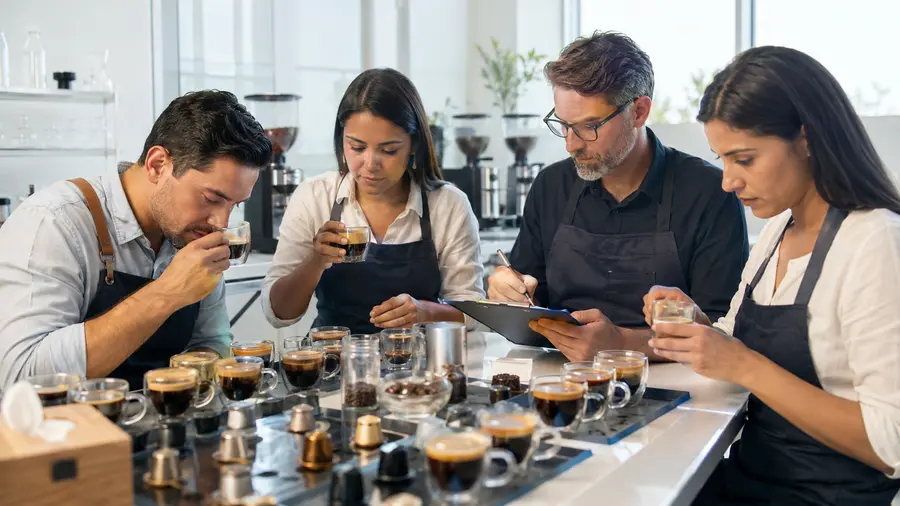
A coffee that sings on the cupping table can go quiet in a capsule. The dose is small and extraction fast. Putting a racehorse in a narrow hallway does not make it faster; the coffee must suit the path.
Roast profile matters, but darker is not automatically better. A light roast may taste sharp; an aggressive dark roast can bury origin character. Find the point where sweetness, strength, acidity, and texture survive the intended drink.
Grinding is just as important. Particle-size distribution affects resistance, flow, fines, and balance. Dose changes them again. Development is a loop: roast, grind, fill, seal, brew, taste, measure, adjust. A little fussy, yes. That is where repeatability comes from.
| Coffee variable | What it changes in the cup | What to test |
| Roast development | Solubility, sweetness, acidity, roast character | Short espresso and intended longer or milk drink |
| Grind distribution | Flow, extraction balance, sediment, strength | Extraction time, beverage mass, sensory result |
| Fill weight | Strength, headspace, flow resistance | Average, variation, underfills, overfills |
| Coffee-bed consistency | Channeling and cup-to-cup repeatability | Multiple capsules across the run |
| Time after grinding | Aroma loss and oxidation risk | Production delay limits and retained samples |
Set a release specification, not only tasting notes
Define the approved dose and tolerance, beverage mass, extraction window, sensory reference, defect limit, and brewer panel. Record failures such as watery cups, stalling, leakage, grounds, or poor ejection. One favorite machine cannot prove broad compatibility.
Choose a Capsule Material That Supports the Promise
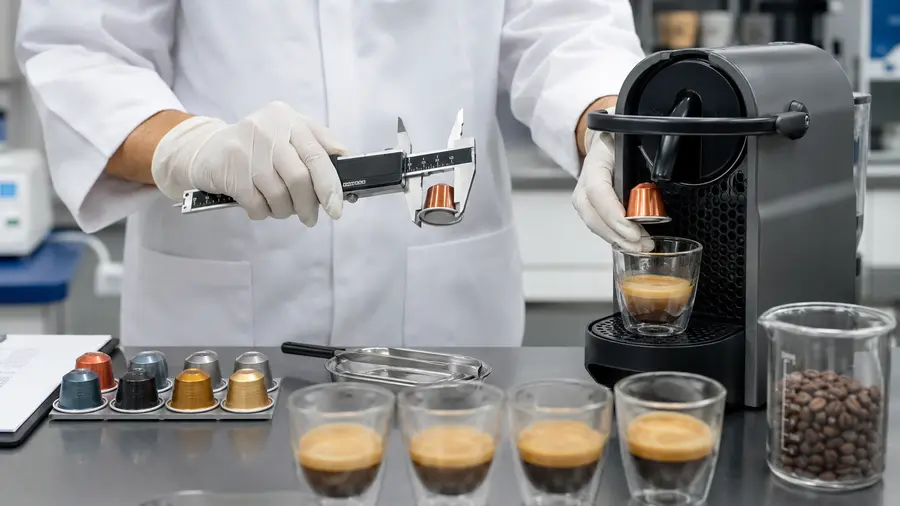
Material affects barrier, sealing, appearance, disposal, cost, filling, and brewing. So, no, this is not merely sustainability versus price.
| Material | Best fit | Main strength | Watch-out |
| Aluminum | Premium retail and longer distribution chains | Strong barrier potential and a familiar premium feel | Cost, dents, sealing setup, and the real recycling route |
| PP or plastic structure | Cost-aware programs with a validated barrier system | Economical and operationally familiar | Barrier performance varies; consumer perception may be weaker |
| Certified compostable structure | Brands with a credible disposal story | Clear environmental differentiation | Shelf life, sealing window, certification scope, and local compost access |
Aluminum often fits premium positioning because a well-designed structure can provide a strong barrier. Yet “recyclable” describes material potential; it does not mean a local waste system accepts used capsules.
Compostable capsules work when certification, storage, and disposal instructions are clear. Home and industrial composting are not interchangeable. If the target city has no suitable route, a green leaf is doing rather too much work.
PP may suit cost-sensitive programs with a validated secondary barrier. Whatever the material, test shelf life for the actual structure. Ask for samples, drawings, food-contact documents, lid guidance, and compatibility evidence. SANEU’s customizable Nespresso-compatible empty capsules show the aluminum, PP, compostable, ring, filter, and lid choices that must work as one system.
Outsource First, Build In-House, or Use a Hybrid Model?
Private label, OEM, contract manufacturing, and co-packing are used loosely. Define who owns the coffee, recipe, packaging, tests, rejected stock, and inventory.
If roles are fuzzy, compare the differences between OEM, private label, and co-packing, then price like with like.
| Model | Control | Initial cash need | Typical risk | Sensible use case |
| Private label | Lower to medium | Lower | Product may be less distinctive | Testing a channel or audience quickly |
| Co-packing | Medium to high | Medium | MOQ, scheduling, and partner dependence | Keeping your coffee identity without owning a line |
| In-house filling | High | Higher | Underused equipment and operational complexity | Proven repeat demand across stable SKUs |
| Hybrid | High where it matters | Staged | More supplier coordination | Bringing core volume inside while outsourcing peaks or special formats |
Private label is the shortest route to a market test
The manufacturer starts with a proven platform. Development is faster, but choice and exclusivity may be limited. Ask what is yours: recipe, territory, artwork, or only the label?
Co-packing protects more of the roaster’s coffee identity
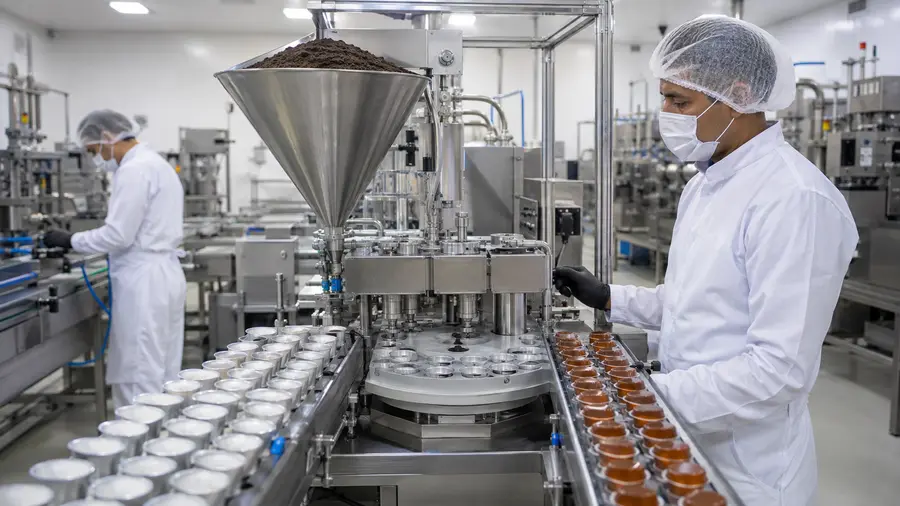
A co-packer may receive your roasted coffee, then grind, fill, flush, seal, code, and pack it—or handle only part of that list. Put responsibilities in writing. This can keep sourcing and roasting near origin while avoiding an early equipment purchase. Watch scheduling, minimum runs, transport, and responsibility for failed trials.
In-house filling makes sense after repeat demand appears
Owning production can improve control. It also brings operators, utilities, gas, cleaning, QC, spares, changeovers, packing, and maintenance inside.
Before shopping by speed, review when a capsule filling machine makes sense for a roaster. Brochure output is not saleable output; stops, refills, checks, changes, and rejects all matter.
Once volume is credible, compare Nespresso capsule filling machines against the actual capsule, lid, dose, and pack flow. Then build a realistic filling-machine business case using demand, labor, materials, scrap, working capital, and downtime.
A hybrid path is often sensible: co-pack the launch, bring stable core products in-house later, and retain a partner for overflow.
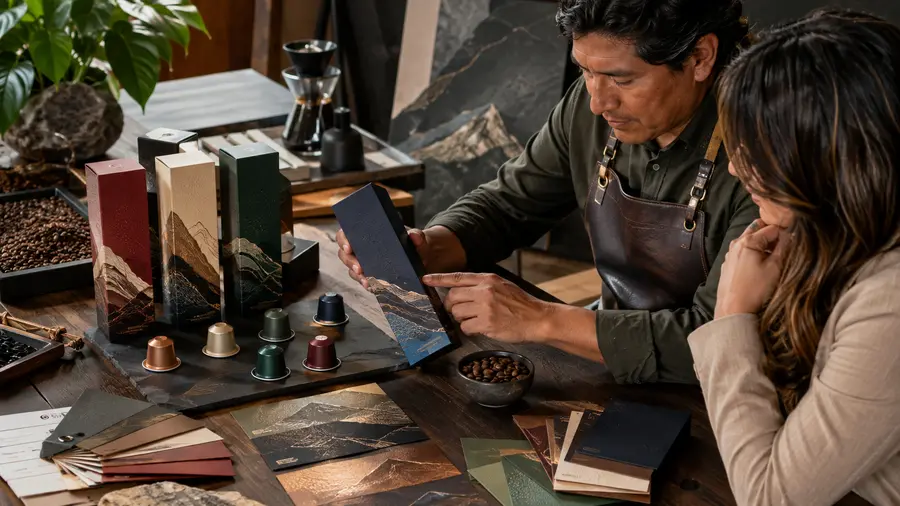
Turn Origin Into a Brand Customers Can Repeat in One Sentence
A mountain outline, a flag, and the words “100% premium Arabica” do not make an origin strategy. Lots of boxes say roughly that.
Choose details customers understand and the business can repeat. Region, producer relationship, process, or variety can support the story. Then connect them to the cup. “Washed Caturra from Huila” informs; “red fruit and panela in a lively short espresso” helps buyers imagine the drink.
Traceability needs supply planning. A microlot may disappear before the second run. Fine for a seasonal edition, not for a hotel contract. Build the core SKU around a reproducible profile and save scarce lots for limited releases.
For example, a Colombian roaster could launch two products rather than six. The first is a dependable chocolate-and-caramel espresso for offices, hotels, and subscriptions. The second is a regional capsule from Huila or Nariño with brighter fruit and a higher price. Customers immediately understand the choice. Production has only two coffee specifications to control. Not glamorous spreadsheet work, perhaps, but healthy.
Give each SKU a clear role and color. Keep the architecture consistent across Spanish, Portuguese, and export packs. Translate meaning, not only words.
Quality Control Is Where the Premium Claim Lives or Dies
Use the Specialty Coffee Association’s published standards as shared sensory language. Its Coffee Value Assessment supports consistent description and evaluation, but it does not replace finished-capsule tests.
| Release gate | Evidence to record | Stop-ship example | Typical risk | Sensible use case |
| Coffee and grind | Roast record, grind distribution, sensory reference | Coffee falls outside the approved profile | Product may be less distinctive | Testing a channel or audience quickly |
| Filling | Average weight, variation, visual checks | Repeated underfills or coffee on the flange | MOQ, scheduling, and partner dependence | Keeping your coffee identity without owning a line |
| Sealing | Temperature/time settings, peel or leak result | Channels, wrinkles, weak seals, lid misalignment | Underused equipment and operational complexity | Proven repeat demand across stable SKUs |
| Compatibility | Brewer models, flow, beverage mass, ejection | Stalling, leakage, grounds in cup, poor ejection | More supplier coordination | Bringing core volume inside while outsourcing peaks or special formats |
| Freshness | Residual oxygen where specified, retained samples | Oxygen or sensory result outside the agreed limit | ||
| Traceability | Coffee lot, packaging lot, time, line, operator | Finished units cannot be traced to inputs |
Test the finished commercial run
Hand-filled samples do not prove a line can hold weight, keep flanges clean, and seal at speed. Approve units made with commercial inputs and settings. Brew retained units at shelf-life checkpoints. A date should come from evidence, not optimism.
Treat standards and certificates as working systems
GMP and HACCP help control hazards. Some retailers or export programs may request ISO 22000 or FSSC 22000. These are not universally interchangeable legal requirements. Confirm what the facility, customer, and destination require.
Obtain food-contact documents for the capsule, coating, filter, ink, adhesive, and lid. Check destination rules before printing.
The European Commission’s labeling and packaging guidance points exporters toward EU food information and food-contact obligations. Other markets have their own rules. One export box is not automatically a world box.
State the intended system and add a clear non-affiliation notice. Avoid logos or trade dress that suggest the machine brand made the product. Legal review is cheaper than reprinting cartons.

Launch Small Enough to Learn, but Large Enough to Be Real
A useful pilot is not twenty hand-filled capsules for friends. It uses commercial coffee, components, equipment, artwork, and packing, and it reaches paying customers.
Choose one or two channels:
- DTC and subscriptions give fast feedback and storytelling control, though acquisition can be costly.
- Specialty retail adds discovery and shelf credibility. The pack must explain itself in seconds.
- Hotels and offices can create steady volume. Reliability usually matters more than a long farm biography.
- Tourism and gifts suit strong origin stories and attractive small packs. Reorder patterns may be seasonal.
- Export distributors offer reach but take margin and demand clear documents and terms.
Track paid and repeat orders, complaints per thousand capsules, failures by machine model, returns, margin, and slow inventory. Likes are pleasant. Reorders pay for production.
Set the scale gate before launch. For example, wait until core SKUs show repeat demand, a named pipeline supports growth, and conservative costs beat outsourcing.
When that evidence arrives, explore complete coffee capsule filling and sealing solutions around the real product specification—not around a hopeful market forecast.
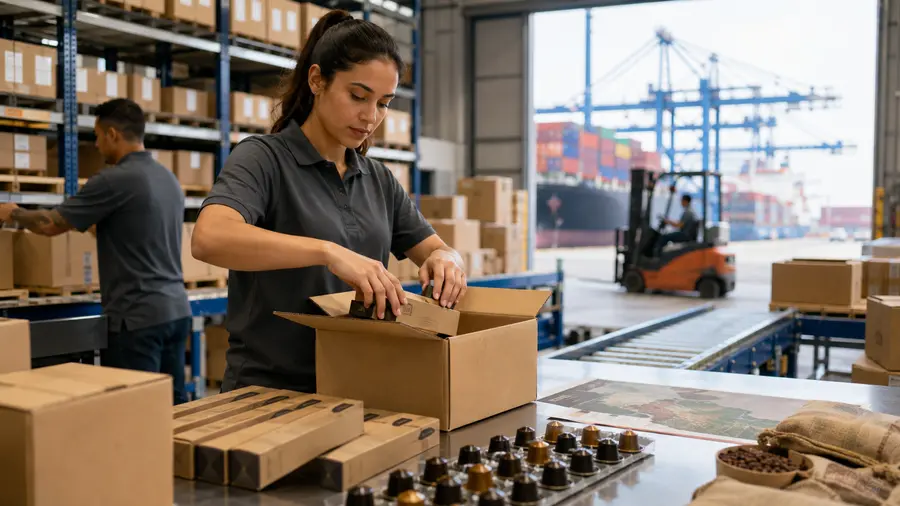
Five Expensive Mistakes South American Capsule Brands Can Avoid
- Assuming good beans guarantee a good capsule. The roast, grind, dose, shell, lid, and machine must work together.
- Printing too much too soon. Validate extraction, compatibility, shelf life, and the pack copy before buying months of decorated components.
- Treating sustainability as a color. A green capsule is not proof. Match claims with certification, collection or composting access, and clear disposal instructions.
- Buying speed before proving demand. An idle fast machine is still idle. Model saleable output, changeovers, labor, QC, maintenance, and working capital.
- Borrowing another brand’s identity. Describe compatibility accurately, build your own visual language, and let the origin story do the heavy lifting.
A Practical 90-Day Validation Plan
| Period | Work | Decision gate |
| Days 1–30 | Define buyer, occasion, system, SKU roles, coffee brief, target price, and production options | Is the proposition clear enough to sample? |
| Days 31–60 | Run roast/grind trials, choose capsule and lid, test a brewer panel, draft artwork, and collect documents | Does the finished capsule meet the release specification? |
| Days 61–90 | Produce a commercial pilot, sell through selected channels, and track complaints, margin, and reorders | Is there evidence for a repeat order or scale investment? |
Do not rush because a retailer sounds excited—or spend nine months polishing an unsold box. Each gate should remove one expensive uncertainty.
Conclusion
South American roasters do not need to imitate a European luxury story. They have their own advantages: origin, sourcing relationships, fresh roasting, regional knowledge, and the ability to connect a real place with a repeatable cup.
The winning order is fairly simple, even if the work is not: choose the buyer, define the promise, engineer the finished capsule, select the production model, prove quality, and scale after reorders appear. Do that well and a capsule becomes more than another package format. It becomes a practical way to keep more value in the brand—and closer to the coffee’s origin.
Frequently Asked Questions
Can a South American roaster legally sell Nespresso-compatible capsules?
Generally, yes, subject to local food, packaging, labeling, and trademark law. Describe compatibility accurately, avoid implying endorsement, and review market-specific packaging before printing.
Are Nespresso Original-compatible capsules the same as Vertuo capsules?
No. Original and Vertuo use different capsules and brewing methods; Professional is another format. Name the intended system in the product brief and on the pack.
Can a roaster use its own blend in private-label capsules?
It depends on the supplier. A co-packer or OEM may accept your coffee or develop a recipe. Specify formula ownership, grinding responsibility, and any product or territory exclusivity.
Which feels more premium: aluminum or compostable capsules?
Aluminum offers familiar premium cues and strong barrier potential. Certified compostable capsules may appeal more to eco-focused buyers. Choose what protects the coffee, runs reliably, and supports an honest disposal story.
How fine should coffee be ground for compatible capsules?
There is no universal setting. It depends on coffee, roast, dose, capsule, lid, and target drink. Use controlled filling and brewing trials, then monitor particle distribution.
How can capsule brands keep coffee fresh during export?
Limit the time from grinding to sealing, manage oxygen, and validate the capsule, secondary pack, and seals. Confirm shelf life with retained finished units under realistic storage conditions.
What is a realistic MOQ for a private-label launch?
There is no standard MOQ. Coffee, capsule color, printed lids, cartons, setup, and supplier create separate minimums. Request a component breakdown; a simple pilot pack may cost less to start.
Should a small roaster use a co-packer or buy a filling machine?
Co-packing lowers early capital risk. In-house filling becomes attractive when repeat volume, staffing, space, utilities, QC, and conservative economics support it. A hybrid model can bridge both stages.
What food-safety and packaging documents should a supplier provide?
Ask for food-contact declarations, material specifications, traceability, relevant certificates or tests, storage conditions, quality-system evidence, and claim support. Confirm the list with the customer and local adviser.
How many capsule varieties should a new brand launch?
Usually two or three distinct choices are easier to explain, stock, and improve. Give each SKU a job; add another only when requests and reorder data reveal a real gap.