
تبدو الدول الأوروبية قريبة جدًّا من بعضها البعض على الخريطة. إذا نقلت منصة نقالة من بلجيكا إلى فرنسا، فقد تكون المسافة أقصر من مسافة أحد المسارات الداخلية في الولايات المتحدة. الأمر سهل، أليس كذلك؟
حسنًا، الخريطة هي الجزء السهل.
قد تتغير عادات تناول القهوة، وأنظمة الآلات، ومستويات أسعار التجزئة، واللغات، وجمع النفايات، وتوقعات العملاء عند كل حدود. فقد تكون كبسولة الألومنيوم المتوافقة مع نظام «نيسبرسو»، التي تبدو خيارًا طبيعيًّا في إحدى قنوات البيع بالتجزئة الفاخرة، باهظة الثمن بالنسبة لمتجر بيع بأسعار مخفضة في مكان آخر. وقد تكون الكبسولة القابلة للتحلل مناسبة لسوق يتم فيه جمع النفايات العضوية بشكل منظم، لكنها قد تربك المستهلكين في الأماكن التي تكاد لا توجد فيها مثل هذه الخدمة.
الحل لا يكمن في تصنيع كل شيء لجميع العملاء. فهذا يؤدي إلى خزانة مليئة بقوالب التصنيع وعلب كرتون مطبوعة لا تجد من يشتريها. أما النهج الأكثر ذكاءً فهو «محفظة المنصات»: عدد قليل من أنظمة القهوة والتغليف القابلة للتكرار، والتي يتم تكييفها فقط عندما يكون هناك سبب وجيه يبرر ذلك في سوق معين أو قناة توزيع معينة.
إليك كيفية صنع واحدة.
أوروبا منطقة، وليست سوقًا واحدًا لكبسولات القهوة

ابدأ بالتخلي عن عبارة “المستهلك الأوروبي” للحظة. فهي تخفي أكثر مما توضح.
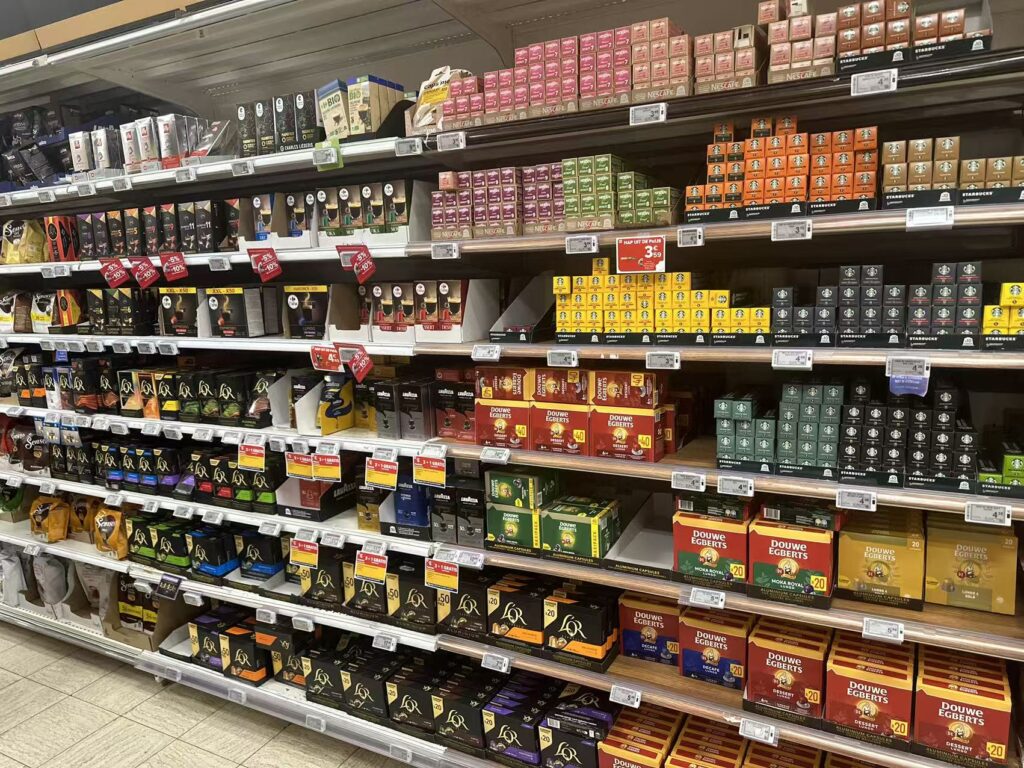
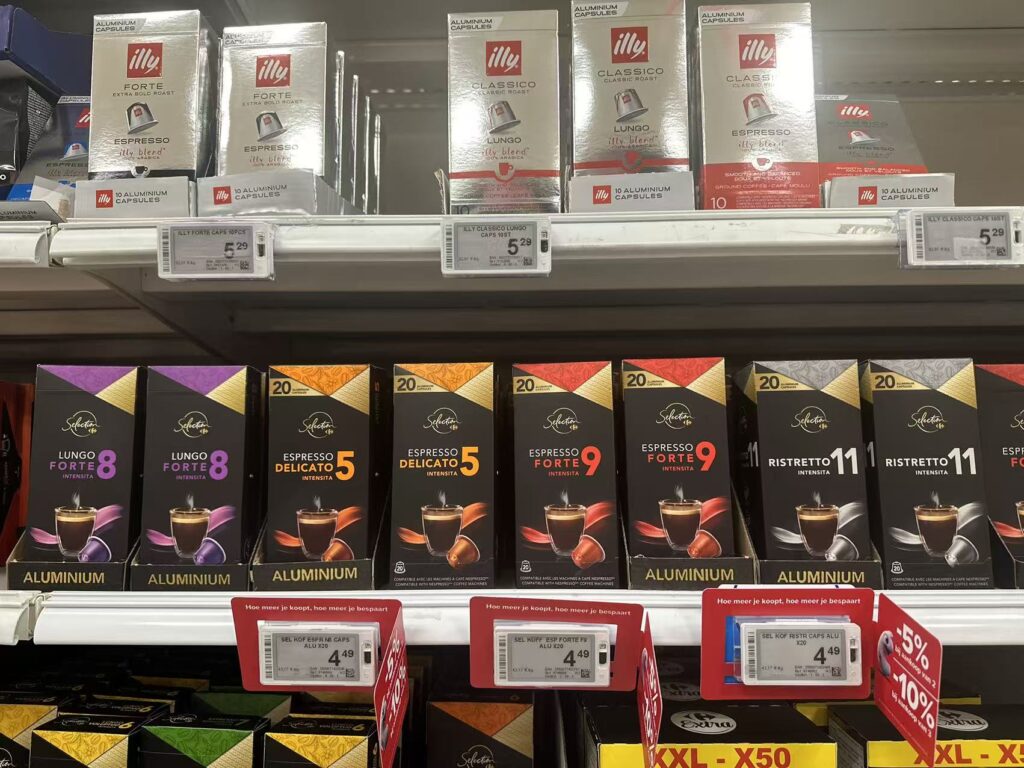
تتمتع إيطاليا بثقافة عميقة في مجال الإسبريسو، كما توجد بها عدة أنظمة كبسولات راسخة. أما فرنسا وإسبانيا وألمانيا ودول البنلوكس والمملكة المتحدة، فلكل منها هياكل بيع بالتجزئة ومستويات أسعار وأحجام آلات مختلفة. يهتم المشترون في قطاع الضيافة بموثوقية الخدمة وكفاءة التعبئة. أما المشترون في قطاع البقالة، فيهتمون بتصميم الرفوف والعروض الترويجية. يمكن لعلامة تجارية تعمل بنظام الاشتراك أن تشرح مادة جديدة عبر الإنترنت؛ أما كبسولة السوبرماركت، فربما لا يتاح لها سوى ثانيتين لإيصال فكرتها.
كما أن أوروبا لا تقتصر على إطار تنظيمي واحد. فقواعد الاتحاد الأوروبي تشمل الاتحاد، في حين أن المملكة المتحدة وسويسرا لديهما أطر تنظيمية خاصة بهما. وتشارك النرويج في جزء كبير من السوق الموحدة من خلال المنطقة الاقتصادية الأوروبية (EEA)، لكنها لا تزال بحاجة إلى إجراءات تحقق خاصة بكل بلد. وتُشكل اللغات وترتيبات المسؤولية الموسعة للمنتجين طبقة أخرى من التعقيد.
إذن، الوحدة الأولى في المحفظة ليست “أوروبا”. بل هي:
البلد أو مجموعة البلدان × القناة × نظام التخمير × فئة السعر
قد يبدو هذا أمرًا صعبًا، لكنه يمنع وقوع خطأ مكلف: وهو الافتراض بأن شكل الكبسولة الذي يحظى بشعبية لدى موزع معين سينتشر تلقائيًّا في جميع أنحاء القارة.
قم بإنشاء مصفوفة تضم السوق والشكل والقناة قبل اختيار المنتجات
قم بإنشاء مصفوفة من صفحة واحدة لكل دولة ذات أولوية. احرص على أن تكون ذات طابع تجاري، لا أكاديمي.
| حقل القرار | ما الذي يجب توثيقه | لماذا هذا مهم؟ |
| العملاء المستهدفون | محلات البقالة، أو شركات البيع المباشر للمستهلك (DTC)، أو المكاتب، أو الفنادق، أو المقاهي، أو الموزعون | تغييرات في حجم العبوة ومستوى الخدمة والسعر |
| نظام التخمير | التنسيقات المثبتة وفقًا لأدلة تجار التجزئة والمستهلكين | يحدد الشكل الهندسي للكبسولة والأدوات اللازمة |
| فئة السعر | القيمة، الفئة العادية أو الفئة الفاخرة | أدلة حول القهوة والمواد والديكور |
| الحجم المتوقع | السعر الأساسي، والسعر الأدنى، والسعر الأعلى حسب رمز المنتج (SKU) | يمنع الإفراط في استخدام الأدوات والمواد المطبوعة |
| مسار النفايات | إعادة التدوير، أو النفايات المتبقية، أو الوصول إلى النفايات العضوية | تشكيل استراتيجيات التواصل بشأن المواد والتخلص منها |
| متطلبات الملصقات | اللغة، والتفاصيل القانونية، والمطالبات المحلية | يحدد إصدارات الأعمال الفنية |
| مسار الإنتاج | داخل الشركة، أو من خلال شركة تعبئة خارجية، أو نموذج هجين | تحديد مهلة التسليم، والحد الأدنى لكمية الطلب، والمراقبة |
لا تعتمد على التقارير العامة عن السوق وحدها. اسأل تجار التجزئة عن الأنظمة التي تحقق مبيعات فعليّة في فئتهم. راجع رفوف المنافسين. تحقق من قوائم أكثر المنتجات مبيعًا في التجارة الإلكترونية. قم بإجراء مقابلات مع موزعي آلات القهوة المكتبية. انتبه إلى العروض الترويجية للآلات، لأن وضع آلة تحضير قهوة رخيصة اليوم يمكن أن يخلق طلبًا على الكبسولات لسنوات.
صنف كل افتراض حسب درجة الدليل: مؤكد، محتمل، أو استكشافي. ولا ينبغي أن تبرر سوى الطلبات المؤكدة استخدام أدوات مخصصة.
اختر أشكال الكبسولات الأساسية، ثم أضف الأشكال الاختيارية
نظرة عامة من SANEU على أنظمة كبسولات القهوة المختلفة تُعد هذه الخريطة نقطة انطلاق مفيدة. وفي الواقع العملي، ينبغي على المنتج الذي يعمل في أسواق متعددة أن يفصل بين المنصات الأساسية والفرص الانتقائية.
متوافق مع نظام «نسبرسو أوريجينال» باعتباره نظامًا أساسيًّا مشتركًا
يحظى النموذج المتوافق مع "The Original" بقبول واسع في قطاعي البيع بالتجزئة والتجارة الإلكترونية الأوروبيين. وهو يدعم إعداد قهوة الإسبريسو واللونغو، والتزيين الفاخر، فضلاً عن نظام إمداد واسع النطاق من الجهات الخارجية.
وهذا لا يعني أن كل كبسولة تكون متوافقة تلقائيًّا. فمن الضروري أن تعمل الخصائص الهندسية، وشكل الحافة، وسلوك الكبسولة عند الثقب، ومقاومة الغطاء، وعملية الاستخراج بشكل سليم مع مجموعة ممثلة من الآلات. فقد تتعطل كبسولة تعمل بشكل جيد في آلة تحضير القهوة المكتبية القديمة في طراز منزلي أحدث. فهي تبدو رائعة في المختبر، لكنها تثير الانتقادات في التقييمات.
متوافق مع نظام «دولتشي غوستو» لتجربة شرب مختلفة
تُقدم الكبسولات المتوافقة مع نظام «دولتشي غوستو» مشروبات أكبر حجمًا ومشروبات على غرار الحليب بالإضافة إلى القهوة. ويمكن أن تتناسب مع مجموعات منتجات البقالة والمشروبات العائلية والمشروبات المتنوعة. وتؤدي الكبسولة الأكبر حجمًا إلى تغيير الجرعة وتكلفة المواد وحجم الكرتون ومعدات خط الإنتاج.
ينبغي على أي منتج يدخل هذا النظام أن يتعامل معه باعتباره منصة منتجات مستقلة، وليس نسخة أكبر من كبسولات الإسبريسو. SANEU’s مجموعة آلات تعبئة «دولتشي غوستو» يوضح كيف أن هذا الشكل يتطلب إعدادات خاصة به فيما يتعلق بالتغذية والتعبئة والختم.
ESE، والكبسولات اللينة، والأنظمة الإقليمية
يمكن أن تكون كبسولات الورق من نوع ESE، والكبسولات اللينة على غرار Senseo، وأقراص T-Discs من Tassimo، وأنظمة Lavazza، وغيرها من الأشكال ذات أهمية تجارية. ولا ينبغي إدراجها في محفظة المنتجات إلا عندما تدعمها بيانات العملاء.
بعض الحالات تكون أكثر انفتاحًا على الإنتاج المتوافق من غيرها. وقد تنطوي بعض الحالات على مسائل تتعلق بالترخيص أو الملكية الفكرية أو الوصول التقني. احرص على أن يقوم مستشار قانوني بمراجعة الإشارات إلى العلامات التجارية وحقوق التنسيق قبل الموافقة على التصميمات الفنية أو أدوات التصنيع. عبارة “الجميع يبيع واحدة” ليست رأيًا قانونيًا.
الحفاظ على تنسيقات التصدير خارج النطاق الأوروبي الأساسي
قد تكون المنتجات المتوافقة مع نظام K-Cup ذات أهمية بالنسبة للتصدير إلى أمريكا الشمالية أو للأسواق المتخصصة في المكاتب الأوروبية، لكن لا ينبغي أن تؤدي إلى توسيع نطاق المنتجات التي تركز على السوق الأوروبية بشكل غير ملحوظ. يجب التعامل مع منصات التصدير كحالة تجارية منفصلة، مع مراعاة الطلب والامتثال واللوجستيات الخاصة بها.
بناء بنية كبسولية وفقًا لمبدأ «جيد - أفضل - الأفضل»
لا تحتاج المحفظة التي تستهدف أسواقًا متعددة إلى نوع فريد من القهوة لكل بلد. ابدأ بمجموعة أساسية صغيرة من النكهات الحسية وقم بتكييفها بعناية.
على سبيل المثال:
| المستوى | عرض القهوة | الاتجاه المحتمل للتغليف | وظيفة تجارية |
| جيد | مزيج إسبريسو موثوق به | هيكل مؤهل وفعال من حيث التكلفة | سعر الدخول وحجم التداول |
| أفضل | منشأ محدد أو مزيج معتمد | حاجز قوي مع طباعة محسّنة | التمايز السائد |
| الأفضل | دفعة متخصصة أو محدودة أو قابلة للتتبع | ألومنيوم عالي الجودة أو خيار ذو حاجز عالي معتمد | الهامش وتأثير الهالة المحيطة بالعلامة التجارية |
يمكن لهذه المنصات الثلاث المخصصة للقهوة أن تدعم عدة لغات للملصقات وعدداً مختلفاً من العبوات. وهذا أسهل بكثير من إنشاء 18 وصفة فقط لأن ستة فرق مبيعات طلبت جميعها شيئاً “حصرياً”.”
اسمح بوجود اختلافات محلية حقيقية عندما يكون لها مبررها. فقد يكون الملف الشخصي الأغمق مناسبًا لقناة ما، بينما قد تناسب قناة أخرى جرعة موجهة نحو «لونغو». وقد يكون القهوة منزوعة الكافيين أمرًا ضروريًا في قطاع الضيافة. لكن يجب أن يكون لكل استثناء مسؤول مسؤول عنه، وتوقعات، وقاعدة للخروج.
هناك اختبار بسيط يمكن اللجوء إليه: إذا لم يتمكن المستهلك من ملاحظة الفرق، ولم يقبل بائع التجزئة دفع تكلفة هذا المنتج، فمن المرجح أن يكون هذا الرمز الخاص بالمنتج (SKU) مجرد زخرفة داخلية.
مواءمة مواد الكبسولات مع مدة الصلاحية وأنظمة التخلص من النفايات وPPWR
أصبحت استراتيجية المواد الآن قرارًا يتعلق بمحفظة المنتجات، وليست مجرد مهمة شراء يتم الاضطلاع بها في مرحلة متأخرة. وتختلف الهياكل المصنوعة من الألومنيوم والبلاستيك والمواد القابلة للتحلل من حيث خصائص الحاجز، والتشكيل، والختم، والتكلفة، ومسار إعادة التدوير، والقيمة التي يوليها المستهلك لها. وقد أجرت شركة SANEU مقارنة بين عبوات كبسولات من الألومنيوم والبلاستيك يشرح المفاضلات الأساسية.
| مسار المواد | القوة | احذر | الدور المحتمل |
| الألومنيوم | حاجز ممتاز ضد الأكسجين والضوء؛ ملمس فاخر | التكلفة، وطريقة التشكيل، ومسار التحصيل | مجموعات المنتجات الفاخرة وذات مدة الصلاحية الأطول |
| بلاستيك/بلاستيك عالي الحاجز | تصميم مرن وإنتاج راسخ | يختلف الهيكل وإمكانية إعادة التدوير محليًّا | البرامج ذات القيمة أو البرامج السائدة |
| قابل للتحلل كسماد صناعيًا | يمكن السفر مع بقايا القهوة في الأماكن التي تسمح بها الأنظمة | الحواجز، والشهادات، والوصول إلى المجموعات | أسواق مختارة صديقة للنفايات الحيوية |
| Fibre/paper-led | Strong natural visual language | Seal, barrier and machine performance need proof | Controlled pilots and short channels |
The EU Packaging and Packaging Waste Regulation, Regulation (EU) 2025/40, entered into force in February 2025 and generally applies from 12 August 2026. It brings packaging design, recyclability, labelling, minimisation and producer responsibility into a more harmonised framework.
Coffee capsules deserve special attention. The legal treatment differs between permeable units that soften after use and non-permeable machine capsules. Under the official PPWR text, Member States may require certain non-metal, non-permeable beverage capsules to be compostable when suitable collection and treatment conditions exist.
That wording is exactly why one material claim should not be copied blindly across Europe. Build a country disposal matrix. Verify certification, collection access, sorting guidance and required consumer wording. Also review national EPR registration, reporting and fees with local specialists.
Do not market “eco-friendly” as a foggy feel-good promise. Say what the capsule is made from, under which conditions it can be recovered, and what the consumer should do.
Adapt Coffee Dose, Grind and Extraction by Capsule Format
A coffee recipe is not portable software. Move it into a different capsule and the extraction physics change.
Capsule volume, filter or base design, lid behaviour, water pressure and brewer programme affect flow. So do grind distribution, dose, roast development and degassing. The producer needs a format-specific product brief covering:
- Target fill weight and tolerance
- Grind distribution, not just an average setting
- Brew buttons and beverage volume
- Flow time and cup yield
- Sensory reference
- Seal integrity and residual oxygen
- Shelf-life target
- Compatible brewer test panel
Test several machines bought from the target market. Older and newer brewer generations may behave differently. Record puncture, leakage, flow and sensory results. Consumer Reddit threads repeatedly complain about third-party capsules that fail to pierce or brew consistently; the anecdotes are messy, but the risk is real.
Nitrogen flushing can help lower residual oxygen. It cannot repair a weak seal or a poor barrier. Shelf-life work must use the final coffee, capsule, lid and distribution conditions.
Localise Labels Without Multiplying Finished-Goods Inventory
The EU’s food-information language rules require mandatory information in a language easily understood in the Member State where the food is sold. Countries may require one or more official EU languages within their territory.
That makes artwork architecture important. Common options include:
- A regional multilingual carton for several countries.
- A common capsule lid with market-specific cartons.
- A shared base carton plus compliant country label.
- Country-dedicated artwork for high-volume programmes.
The first option reduces inventory but can turn the back panel into a tiny newspaper. The fourth gives a clean shelf pack but creates more printed-stock risk. Choose based on volume, available label area and retailer requirements.
Maintain one controlled data source for product name, ingredients where required, allergens, net quantity, durability date, storage, operator details, origin statements and disposal directions. Translation should follow approved source text. Do not let six local agencies quietly invent six slightly different products.
For prepacked foods, the Commission’s mandatory food information guidance is a sound starting point. Country counsel should confirm the final pack, including voluntary intensity scales, certification marks and environmental claims.
Design Capsule Equipment for Controlled Flexibility
A multi-market portfolio does not necessarily need one machine that does absolutely everything. Universal machines sound lovely until every Monday begins with a long rebuild.
Consider three layouts:
| Equipment model | الخيار الأنسب | Main trade-off |
| Dedicated line per major format | High, stable volume | More capital and floor space |
| Changeover-capable platform | Moderate volume across related formats | Tooling discipline and downtime |
| Hybrid in-house/co-pack network | New or uneven demand | More planning and external coordination |
A multi-format coffee capsule filling platform can support several projects through format tooling, but the business case must include changeover labour, validation, cleaning and spare parts. A producer with dominant Original-compatible demand and a small Dolce Gusto opportunity may be better with one dedicated core line and a co-packer for the secondary format.
Measure capacity in saleable capsules per scheduled hour. Include changeovers, sanitation, sampling, minor stops and rejects. Brochure speed is a ceiling, not a forecast.
Before buying equipment, send the intended coffees, capsules and lids for trials. Use a written acceptance protocol covering sustained speed, fill tolerance, lid placement, seal integrity, residual oxygen and reject handling. The practical coffee capsule machine selection guide can help frame supplier questions.
Map European Rules and Customer Standards Early

Compliance belongs at the front of portfolio planning because it can change materials, suppliers, labels and data systems.
المواد التي تتلامس مع الأغذية
The European Commission states that food-contact materials placed on the EU market must comply with Regulation (EC) No 1935/2004 and be manufactured under applicable GMP rules. Its food-contact materials overview also points to material-specific and national legislation.
Collect declarations of compliance, migration evidence where applicable, specifications and change notifications for capsule bodies, coatings, filters and lids. A supplier changing a colourant or seal layer can change the compliance file and the production result.
PPWR and national producer responsibility
PPWR is more harmonised than the old directive, but producer responsibility still needs market-by-market execution. Identify who is the legal producer, which registrations are required, what packaging data must be reported and who pays the fees.
EUDR and coffee traceability
Coffee falls within the EU Deforestation Regulation. In July 2026, the Commission confirmed that implementation would begin at the end of December 2026 and published updated support measures. The Commission’s EUDR update is a current official reference.
Portfolio teams should connect coffee-lot traceability with finished capsule lots. Repackaging the same blend in three formats must not break the evidence chain.
Customer standards
Retailers and private-label buyers may require IFS, BRCGS, ISO 22000, organic certification, Fairtrade or other schemes. These are not interchangeable. Map them by account before allocating production.
Roll Out the Portfolio in Waves
Do not launch five formats in eight countries because the spreadsheet allows coloured cells.
Use a three-wave plan:
Wave 1: Prove the core
Launch one high-confidence format in one or two markets. Use a small sensory architecture and limited pack counts. Validate compatibility, returns, repeat sales and forecast accuracy.
Wave 2: Extend the platform
Add adjacent countries or channels that can use the same capsule, material and coffee base. Localise the outer pack only where necessary. This is where the portfolio begins to gain leverage.
Wave 3: Add a new system selectively
Introduce Dolce Gusto-compatible, soft pod or another platform only after demand supports tooling and operational complexity. Keep co-packing available for pilots, peaks or specialist materials.
Review every SKU quarterly. Measure sales, contribution margin, service level, waste, changeover burden and printed-material exposure. Give weak SKUs a repair plan or an exit date. Portfolio pruning sounds harsh, but dead cartons are harsher.
Conclusion: Build a Platform, Not a Pile of Capsules
A successful European capsule portfolio begins with market evidence, not an equipment catalogue. Country, channel, brewer system and price tier define the commercial job. Coffee, material, label and production route then support it.
Keep the core small. Standardise what consumers cannot see. Localise what customers and regulators genuinely require. Validate every format with the final coffee and packaging. And treat PPWR, food-contact evidence, labels, EPR and EUDR as design inputs rather than launch-week paperwork.
Europe’s complexity is manageable when the portfolio has a platform underneath it. Without one, every new market becomes a new little factory. That gets tiring fast.
FAQs About European Coffee Capsule Portfolio Planning
1. Which coffee capsule format is most popular in Europe?
There is no single answer across all countries and channels. Nespresso Original-compatible capsules are widely visible, while Dolce Gusto, ESE, soft pods and regional systems can be important in selected markets.
2. Should a producer launch the same capsule range in every European country?
Usually not. Reuse the same product platforms where possible, but adapt format, pack count, language, price tier and disposal information to verified local needs.
3. What is a multi-market capsule portfolio?
It is a planned range of capsule formats, coffees, materials and packs designed to serve several national markets while sharing enough components and processes to remain efficient.
4. Are Nespresso-compatible capsules legal to sell in Europe?
Compatible products are widely sold, but producers should obtain legal advice on patents, trademarks, comparative references and artwork for the specific format and markets.
5. Can one filling machine produce several capsule formats?
Some platforms can change formats with dedicated tooling. The producer must verify changeover time, filling range, sealing configuration, validation work and realistic output.
6. Are coffee capsules considered packaging under PPWR?
PPWR expressly addresses both permeable beverage units and non-permeable machine capsules. Their compostability treatment differs, so the exact design and target Member State matter.
7. Must coffee capsules be compostable in the EU?
Not all capsules face one blanket rule. Certain permeable units have compostability requirements, while Member States may require some non-metal, non-permeable capsules to be compostable where suitable systems exist.
8. Is aluminium or plastic better for coffee capsules?
Aluminium offers excellent barrier performance and premium positioning. Plastic can offer cost and decoration flexibility. The better choice depends on shelf life, recovery route, equipment and market price.
9. What standards apply to compostable coffee capsules?
Certification commonly references recognised industrial or home-compostability standards, but the applicable PPWR rules, harmonised standards and national collection conditions should be verified for each launch.
10. How many coffees should a new capsule range include?
Start with a small sensory backbone, often a value or core espresso, a differentiated premium option and decaf where demand supports it. Add variants only after sales evidence appears.
11. Do coffee capsule labels need different languages?
Mandatory food information must be easily understood in the market where the food is sold, and Member States may specify official languages. Multilingual packs can serve several countries when legibility is maintained.
12. How should capsule compatibility be tested?
Use several brewer models from the target market. Check loading, puncture, leakage, flow time, beverage volume, extraction and consumer handling over repeated brews.
13. How does EUDR affect capsule producers?
Coffee is an in-scope commodity. Businesses should map their role and connect required coffee due-diligence and traceability data to roasted and finished capsule lots.
14. Is co-packing useful for a multi-market portfolio?
Yes. It can test a secondary format, cover peaks or provide a certified material route without buying dedicated equipment before demand is proven.
15. What is the biggest portfolio-planning mistake?
Adding formats and printed SKUs faster than demand can support them. The result is idle tooling, long changeovers, obsolete packaging and cash trapped in inventory.

 English
 Spanish
 Arabic
 Russian