
Picture a capsule line that passes oxygen checks during a slow demonstration. The seals look good. The coffee smells great. Then production speeds up, and the oxygen readings climb.
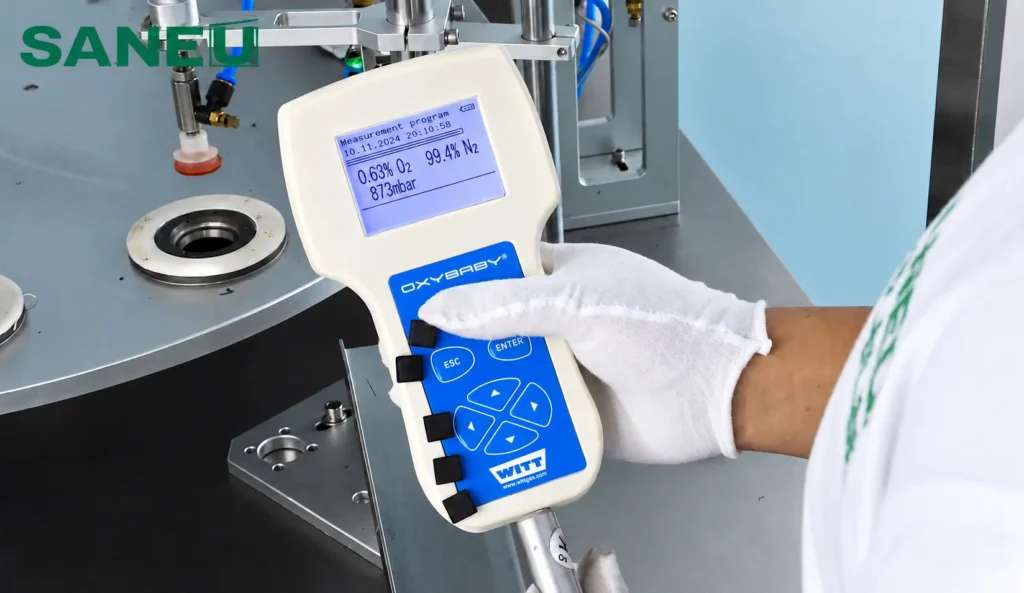
What changed? Often, the machine has less time to replace air. Or air finds its way back in between filling and sealing.
Multi-stage nitrogen flushing tackles both problems. It reduces oxygen at several points and protects the coffee until the capsule closes. That matters for roasters, private-label brands, and contract packers producing at industrial speeds.
Still, stage count is not the goal. A well-designed continuous nitrogen enclosure may work without several separate flushing stations. The real question is whether the line consistently meets its finished-capsule oxygen specification at the required output.
High Speed Changes the Oxygen-Control Problem
More Capsules per Minute Does Not Tell You the Flush Time
Capsules per minute is an output figure. It does not tell you how long nitrogen reaches each capsule.
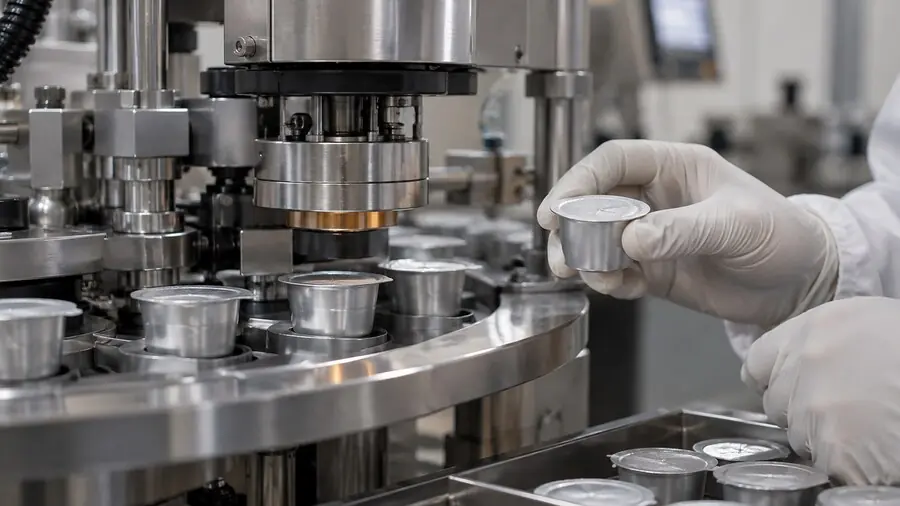
Take a hypothetical indexing machine with four lanes running at 50 cycles per minute. Its nominal output is 200 capsules per minute. Each indexing cycle lasts 1.2 seconds, but movement and other operations leave less time for a stationary gas pulse.
A capsule passes through multiple stations, so 1.2 seconds is not its entire journey. A protected tunnel may also provide exposure across several cycles. You need the actual gas-on timing and residence time, not just the headline speed.
Adding lanes can raise output without shortening the cycle. Running the same lanes faster is a different change. When evaluating four-lane capsule filling equipment, ask how the oxygen-control system operates at the proposed cycle rate.
Coffee and Machine Movement Bring Air Back In
An empty capsule contains air. Ground coffee can carry more air between its particles. Dosing moves both into the filling zone.
Then the open capsule travels toward the lid. Transfers, nearby air currents, and lid handling can expose it to room air again. Dust extraction may affect the local atmosphere, too.
Flushing once can be like wiping a café counter before someone slices a croissant over it. The first wipe worked. Fresh crumbs arrived afterward.
Nitrogen protection needs to follow those entry points. Otherwise, the line removes oxygen at one station and traps newly introduced air at the next.
What Multi-Stage Nitrogen Flushing Actually Does
Nitrogen flushing replaces or dilutes the air around the coffee. It does not chemically destroy oxygen, sterilize the product, or reverse oxidation that has already happened.
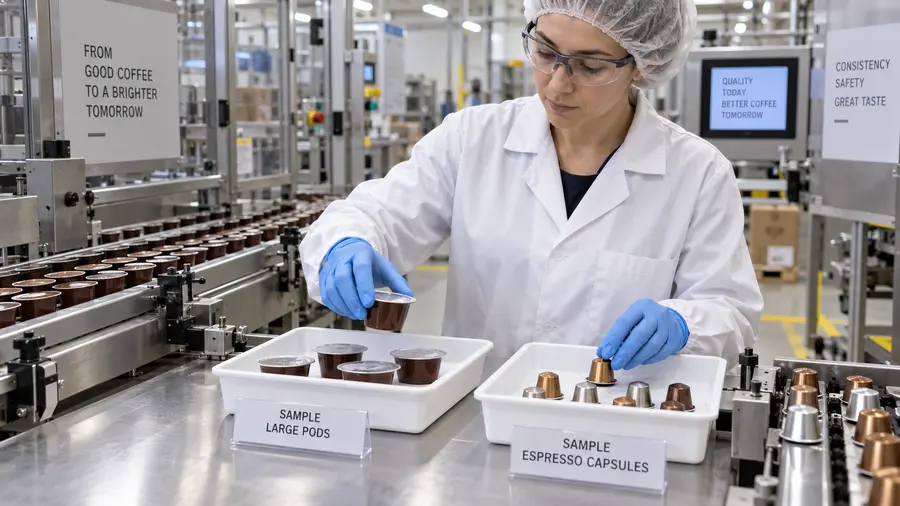
Within coffee capsule filling and sealing systems, staged protection can serve four functions. These may use separate stations, overlapping gas zones, or one enclosure.
Before Filling: Purge the Empty Capsule
An initial purge reduces the air already inside the cup. Nozzle position and an escape route for displaced gas matter. Blowing nitrogen across the opening is not necessarily the same as exchanging the atmosphere deeper inside.
This step reduces the starting oxygen load. It does not protect against air introduced by the coffee afterward.
During Dosing: Protect the Coffee and Fill Zone
A nitrogen-rich dosing zone limits contact with room air while the auger delivers ground coffee. Depending on the design, protection may extend to the hopper, filling tube, or surrounding enclosure.
The arrangement needs to suit the powder. Excessive local gas velocity can move fines, disturb dosing, or dirty the rim. A useful setting must support both oxygen control and consistent fill weight.
After Filling: Flush the Headspace
Once dosing is complete, another flush addresses the gas above and around the coffee bed. This headspace treatment should complement, rather than substitute for, protected filling.
Air between coffee particles can be harder to exchange than freely exposed headspace gas. Grind size, dose, packing density, and capsule geometry therefore belong in the trial.
Through Lid Placement and Sealing: Keep Room Air Out
The last job is protection. A shielded transfer, gas curtain, or nitrogen enclosure can reduce re-entry before the lid forms a seal.
Think of it as carrying a full drink through a busy café. Filling the cup neatly is one task. Getting it to the table without a spill is another.
| Functional stage | Air source addressed | Engineering purpose | Check during validation |
|---|---|---|---|
| Empty-cup purge | Air inside the incoming capsule | Reduce the initial oxygen load | Effective exchange across cup positions |
| Protected dosing | Air accompanying coffee and entering the fill zone | Limit new oxygen exposure | Oxygen performance alongside dose accuracy |
| Post-fill flushing | Remaining gas around the filled coffee bed | Lower residual oxygen before closure | Finished-pack readings at defined timing |
| Protected lid placement and sealing | Room air entering after the flush | Preserve the reduced-oxygen atmosphere | Results through transfers and restarts |
A second heat-sealing operation is not automatically a second nitrogen stage. Ask what each gas zone does, not how many stations appear on the drawing.
Why One Strong Flush Can Be the Wrong Fix
When oxygen rises, increasing flow seems obvious. Sometimes it helps. Sometimes it mostly sends more nitrogen into the room.
A poorly positioned jet may miss part of the capsule. An exposed jet may draw surrounding air into the gas stream. A shared manifold may feed one lane better than another. More total flow does not automatically fix those patterns.
There is useful evidence for this distinction. In a coffee-capsule gas-distribution study by Spanu and Vignali, redesigning a nitrogen distribution plate changed simulated mean oxygen residual at capsule centers from 2.70% to 0.66%. The revised simulation kept total nitrogen flow constant.
Those modeled percentages were reported by mass. They are not directly interchangeable with routine headspace volume-percent readings. Experimental capsules were empty, with dosing and the tunnel excluded from the sealing-station tests.
The lesson is narrower, but valuable: distribution matters. The study does not prove that adding flushing stages alone guarantees a particular result with filled capsules.
Check powder extraction alongside gas delivery. Suction near an open cup can alter the protective atmosphere. The answer is not simply to disable dust control. Coordinate extraction, shielding, and nitrogen supply so cleanliness and oxygen control work together.
Before adding another station, identify the weak point. If oxygen re-enters during transfer, protecting that transfer may accomplish more than strengthening the earlier pulse.
Capsule Materials and Seals Still Decide What Happens Next
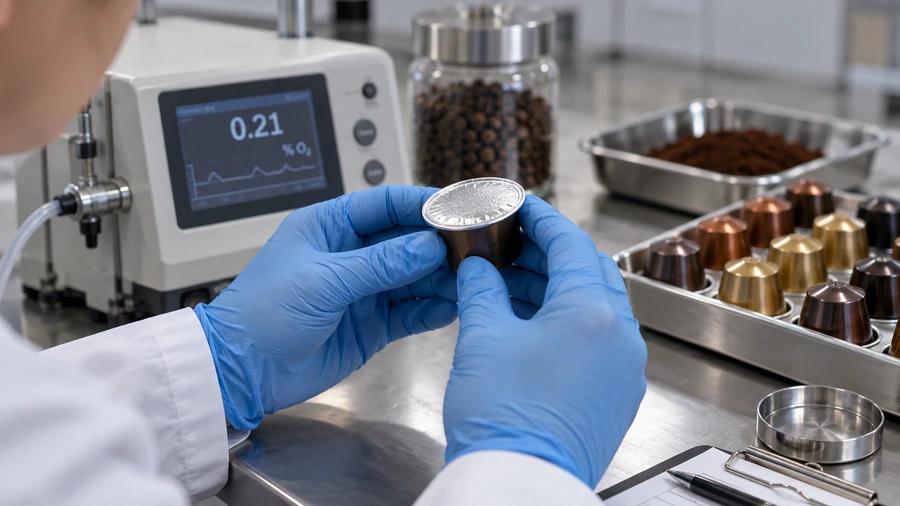
A low reading immediately after sealing tells you about the starting condition. It does not establish how the capsule will behave for months on a shelf.
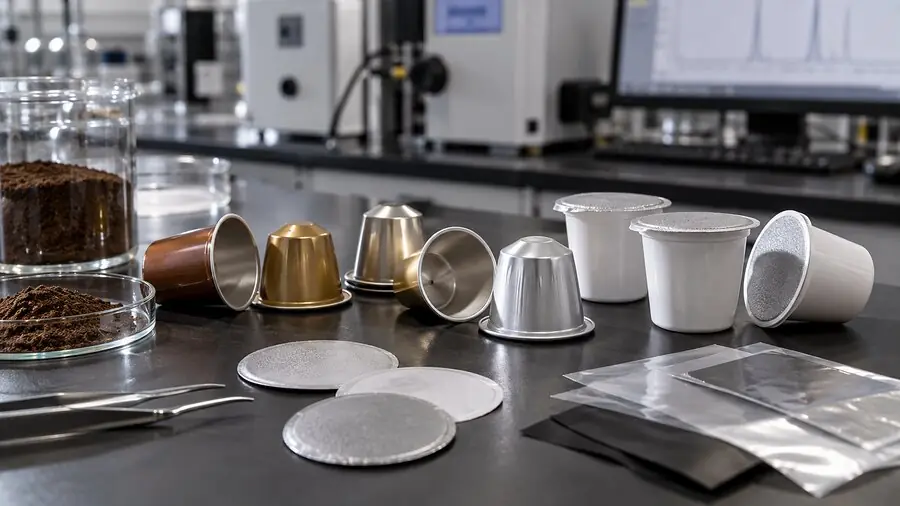
Aluminum cups, multilayer barrier polymers, and compostable structures have different packaging characteristics. Their lids and sealing coatings matter just as much as the cup walls.
For each combination, evaluate barrier performance, lid compatibility, and the sealing process. Do not assume that “compostable” or “aluminum” alone settles the oxygen question.
Coffee dust on the rim can interfere with the seal. Incorrect heat, pressure, or contact time can create another weak point. Nitrogen cannot repair either problem.
Separate two investigations: oxygen left after packaging, and oxygen entering later through materials or leaks. Shelf-life testing should also consider storage conditions and sensory quality. Low oxygen supports freshness; it is not a fixed expiration-date formula.
Even compact nitrogen-assisted capsule sealing equipment needs suitable cups, clean rims, and compatible lids. Its results cannot simply be transferred to an industrial line running much faster.
Tune the Line Around Oxygen-Qualified Output
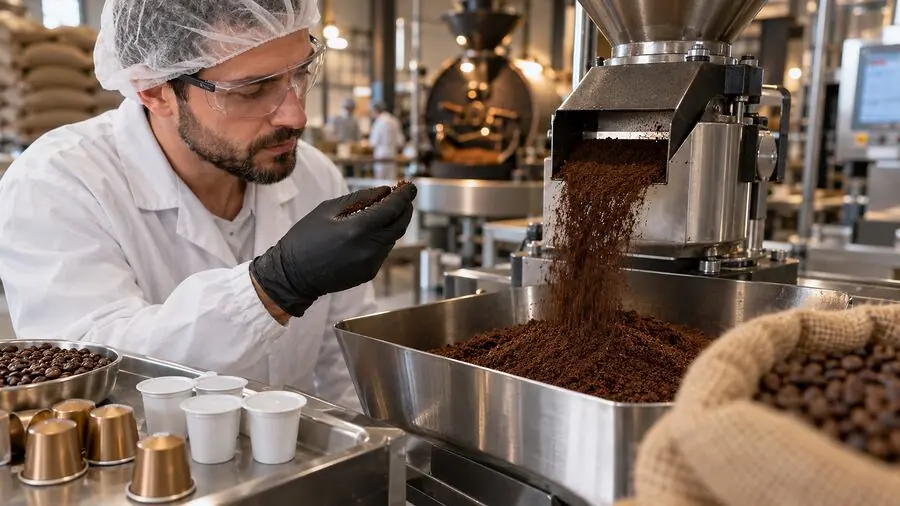
The output that matters is saleable capsules meeting the agreed specifications. A machine ejecting more cups while producing more oxygen failures has not necessarily improved useful capacity.
Balance Each Lane, Not Just the Main Gas Supply
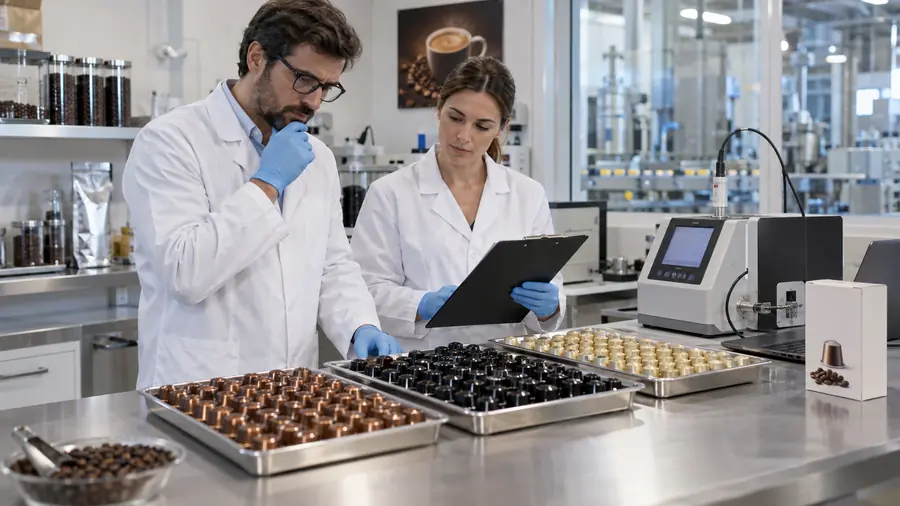
Record oxygen results by lane or tooling position. An average can hide a consistently weak lane.
Check the supply under operating demand. Purity, flow availability, and pressure stability should be assessed where relevant to the machine, not only at the nitrogen generator display.
Then inspect branch lines, valves, nozzles, and shielding. A partially blocked nozzle or uneven distribution can explain a position-specific problem. A line-wide problem may point toward timing, supply, or exposure shared by every lane.
Match Gas Timing to the Production Recipe
Treat gas timing as part of the recipe alongside dose, speed, and sealing settings.
Increasing cycle frequency can shorten exposure if gas timing follows the machine cycle. Changing the capsule or coffee can also change the required exchange conditions. Recipes should therefore be validated, not copied unchanged between formats.
SANEU’s SN-1 nitrogen-enabled production specifications distinguish output with flushing enabled from output with it disabled. This compact single-head model is not a high-speed benchmark. It illustrates an important purchasing question: which operating mode does the quoted capacity describe?
Keep Nitrogen Consumption in the Same Test Record
Record gas use alongside qualified output. Specify the measurement units and reference conditions so consumption figures are comparable.
Include normal production, startup purging, and pauses. A recipe that passes only with unusually high gas use may carry a different operating cost than the quote suggests.
Change one parameter at a time where practical. Otherwise, an improved reading gives little guidance about which adjustment helped.
Prove the Result at the Speed You Plan to Sell
A factory acceptance test should use representative coffee, capsules, and lidding material. Empty-cup tests can help investigate gas distribution, but they do not replace filled-product acceptance.
Define the residual oxygen limit and when it is measured. “Below 1%” without a method, sampling time, and acceptance rule leaves too much room for disagreement.
For small capsules, analyzer sample demand matters. Excessive withdrawal or a poor puncture can admit room air and distort the result. Use a validated sampling procedure and instrument checks suitable for the package.
SANEU’s guide to measuring residual oxygen in K-Cups and Nespresso-compatible capsules explains the practical sampling issues in more detail.
Another method is covered by ASTM F2714-08(2021), oxygen headspace analysis using fluorescent decay. It requires internal sensing components and a suitable optical path. It is not a blanket procedure for needle-and-pump testing of ordinary aluminum capsules.
| Acceptance item | What to record | Shortcut to avoid |
|---|---|---|
| Production condition | Format, coffee, dose, cycle rate, lanes, and nitrogen settings | Testing only an easy recipe at low speed |
| Finished-pack oxygen | Method, timing, individual readings, and agreed limit | Reporting nitrogen supply purity instead |
| Position consistency | Results identified by lane or tooling position | Showing only a pooled average |
| Transitions | Startup, stop/restart, and stabilization behavior | Sampling only steady operation |
| Packaging quality | Fill accuracy, rim cleanliness, seal checks, and rejects | Accepting low oxygen despite poor seals |
| Gas and useful output | Consumption, conforming output, and test duration | Quoting maximum mechanical speed alone |
Agree on sample counts and pass criteria before the trial. Retain individual results and settings. Repeat relevant checks after installation during site acceptance testing, because utilities and airflow can differ from the factory.
Food-Use Nitrogen and Safe Operation Are Separate Requirements
For U.S. food use, 21 CFR 184.1540 addresses nitrogen purity and current good manufacturing practice. Obtain suitable gas documentation and check the requirements of the destination market.
That rule does not require three flushing stages or establish a universal coffee-capsule oxygen limit. Likewise, machinery certification does not prove a shelf-life claim.
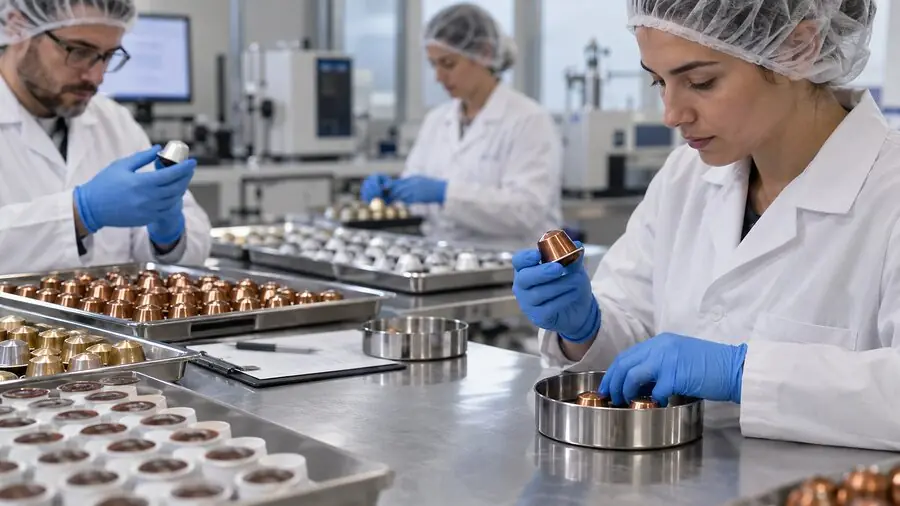
Food-contact suitability, cleaning access, and hygienic design still need attention. So does workplace safety. Nitrogen can displace oxygen in an occupied area, especially where gas accumulates. Have qualified personnel assess ventilation, exposure risks, and appropriate monitoring.
The objective is a protective atmosphere inside the process—not an oxygen-deficient atmosphere around the operators.
Conclusion
High-speed capsule production makes oxygen control a timing and distribution problem. Multi-stage nitrogen flushing can help by reducing the initial air load, protecting dosing, treating the filled capsule, and preventing re-entry before sealing.
But more stations are not the prize. Consistent finished-pack results at the required output are.
When discussing a line with SANEU, bring your coffee, capsule, lid, target output, and oxygen specification. Ask for a representative trial that records lane-level results and gas consumption. That gives you a stronger basis for choosing equipment than a nitrogen percentage on its own.
FAQs
Why does residual oxygen rise when a capsule line speeds up?
The available gas-exchange time may shrink, while dosing and transfers can introduce air. Supply or distribution problems may also become visible under higher demand. Compare readings by lane at different speeds to investigate the cause rather than assuming flow is the only issue.
How many nitrogen flushing stages does a high-speed machine need?
There is no universal count. The required arrangement depends on exposure points, residence time, coffee, capsule geometry, and the oxygen target. Several protected zones may help, but a continuous enclosure can combine their functions. Accept the measured performance, not the stage count.
Where should nitrogen be introduced on a coffee capsule line?
Possible locations include empty-cup preparation, protected dosing, post-fill headspace treatment, and lid placement or sealing. Select locations around the actual air-entry paths. Gas delivery also needs an effective escape route for displaced air and must not compromise dosing or rim cleanliness.
Can one nitrogen flushing station achieve less than 1% oxygen?
It can be possible with suitable geometry, gas delivery, exposure time, and protection before closure. The result must be demonstrated with filled capsules at the intended speed. Adding stations is one design approach, not the only route to a low finished-pack oxygen reading.
Is 99.9% nitrogen the same as 0.1% oxygen in the capsule?
No. Supply purity and finished-pack oxygen describe different measurements. Air may remain after flushing or enter later. Coffee also releases carbon dioxide, so gas composition cannot be inferred from one nitrogen claim. Measure oxygen in the sealed product using a defined procedure.
Does higher nitrogen flow always improve oxygen removal?
No. More flow may help, but nozzle placement, distribution, timing, and shielding can be more important. Excessive local velocity may disturb powder or entrain surrounding air. Evaluate oxygen readings together with fill accuracy, seal cleanliness, and gas consumption when changing the setting.
Can staged flushing work with both K-Cup-style and Nespresso-compatible capsules?
Yes, the approach can be applied to both. Their geometry, dose, filters, materials, and headspace differ, however. Each format needs appropriate tooling and a validated gas recipe. Performance demonstrated on one capsule should not be assumed for another without representative testing.
How should residual oxygen be tested on a multi-lane line?
Use a suitable analyzer and validated sampling method. Identify each sample by lane or tooling position, and define the time after sealing. Include steady production and relevant transitions. Review individual readings and their spread, not just the average across the whole machine.
Can nitrogen flushing compensate for a poor capsule seal?
No. It can lower oxygen before closure, but a defective seal may let air enter afterward. Check rim contamination, lid compatibility, sealing settings, and package integrity separately. A low initial oxygen reading does not prove that the capsule will remain protected during storage.
What should a buyer request during a factory acceptance test?
Request representative materials, nitrogen-enabled output, lane-level oxygen results, defined sampling timing, seal and fill checks, and gas consumption. Include stop/restart conditions and agree on acceptance criteria beforehand. Keep the data and recipes so relevant checks can be repeated after installation.