Yes, a coffee shop can generally sell capsules under its own brand without owning a factory. A private-label manufacturer or co-packer can make the product while the café owns the customer-facing brand.
There are conditions. The box must identify the compatible system without pretending the product comes from Nespresso. The finished capsule needs proper testing, and local food, packaging, tax, and trademark rules apply.

This guide is about selling packaged capsules for customers to brew at home. It is not about using a capsule machine to prepare drinks behind the café counter.
Putting a café logo on a box is the easy part. Making the house coffee taste recognizable inside a tiny capsule? That is the fiddly part. Let’s work through it.
A Café Has an Unfair Advantage—and One Big Blind Spot
An independent café starts with something a new online capsule brand would love to have: real customers. People already know the shop, its staff, and its coffee. They can taste a sample at the counter, ask a barista a question, and return the box if something goes wrong.
The café also has useful launch channels close at hand: checkout, loyalty emails, receipt QR codes, local delivery, subscriptions, office accounts, and gift boxes.
That can reduce launch cost and produce fast feedback. A barista may hear in one morning that a lungo tastes thin, a carton is confusing, or many regulars own Vertuo machines.
And there is the blind spot. Loving the café does not mean owning the right brewer. Nor does it mean paying for capsules every month. A capsule line can become a useful at-home extension, or a handsome souvenir that never earns a reorder.
The first job is not choosing gold or black capsules. It is finding out who will actually use them.
Test the Audience Before Choosing Capsule Color
Ask customers three simple questions:
- Do you use a capsule machine at home or work?
- Is it Nespresso Original, Vertuo, Professional, or another system?
- Would you buy the café’s espresso as capsules, and at what pack size and price?
Use a short receipt survey, an email, or a question at checkout. Keep it neutral. “Wouldn’t you love our amazing capsules?” produces friendly noise, not evidence.
Then make the test harder. Offer production-representative samples. Build a waitlist. Take refundable reservations or a small number of paid preorders. Money separates genuine intent from a polite “sounds great.”
| Signal | What it proves | What it does not prove |
| Survey response | Machine ownership and stated interest | Willingness to pay |
| Sample acceptance | Cup profile and format appeal | Repeat demand |
| Paid preorder | Real buying intent | Long-term product habit |
| Second purchase | The habit may be forming | Demand at factory scale |
Set the pass mark before launching. Track qualified interest, paid orders, acceptable retail price, compatibility complaints, and likely reorder timing. Social likes are pleasant. They should not decide how many printed cartons enter the storeroom.
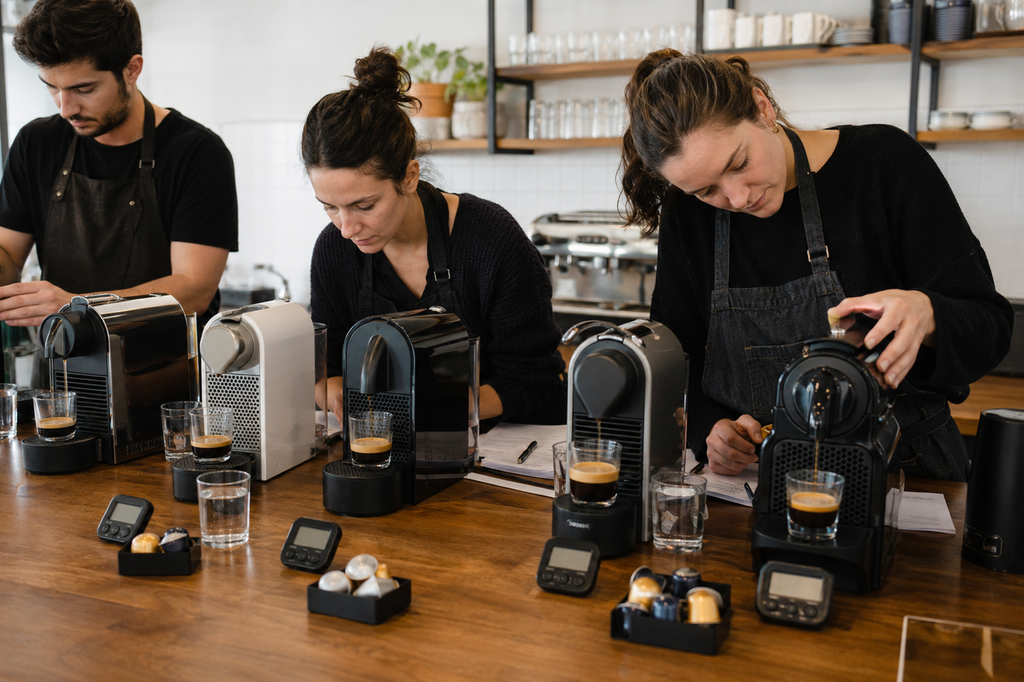
Choose How the Capsules Get Made
Most coffee shops should outsource their first commercial run. They can keep control of the brand and product brief without taking on equipment, maintenance, production staff, and factory quality systems.
The terms vary between suppliers, so read the signed scope rather than trusting the label. SANEU’s overview of coffee capsule business models provides the wider context.
| Model | Best café use | Main trade-off |
| White label | Fast, low-complexity market test | Limited uniqueness |
| Private label | Custom blend, material, or pack without a factory | Development time and component MOQs |
| Co-packing | Keep the café’s own coffee or approved formula | Scheduling, freight, and partner dependence |
| In-house filling | Proven repeat volume and a capable production team | Capital, quality work, labor, and idle capacity |
With white label, the supplier usually has an existing coffee and capsule specification. The café adds its branding with limited product changes. It is a simple demand test.
Private label normally allows more control over the coffee, capsule, lid, and carton. Co-packing often means the café supplies roasted coffee or an approved formula while the partner owns the production line. Yet one supplier’s “private label” may be another supplier’s “co-manufacturing.” Define who buys and owns the coffee, capsule bodies, lids, artwork, test results, leftover packaging, and finished stock.

The practical differences between OEM, private label, and co-packing responsibilities are more important than the fashionable term on a proposal.
Specify Nespresso Original, Not a Vague “Nespresso Machine”
The proposed product should identify the exact system it fits. Nespresso’s own FAQ explains that Original and Vertuo are separate systems with different capsule designs. Original-compatible capsules do not work in Vertuo machines. Professional is another scope again.
For most independent third-party projects, “Nespresso Original-compatible” is the relevant starting point. Put that scope on the product page, outer carton, staff notes, and wholesale sheet. If the product was tested only on a defined group of Original machines, keep the claim within that evidence.
Physical fit is not enough. A capsule also has to puncture, seal, control water flow, extract, and eject correctly. Test older and newer machines in the intended market. Record leakage, deformation, slow flow, grounds in the cup, and failures to eject.
Nespresso is a third-party trademark. Lead with the café’s name, coffee, and story. Use the Nespresso name only as needed to explain compatibility, and include an appropriate non-affiliation statement. Do not copy Nespresso logos, product names, typography, color systems, or presentation in a way that suggests source, license, or endorsement. Local trademark advice may be needed before artwork approval.
The House Espresso May Need a Capsule Makeover
A café espresso recipe might use 18 grams of coffee, a commercial grinder, and a barista who adjusts the shot throughout the day. An Original-compatible capsule holds far less coffee and gives the customer only a button or two. Same beans, very different kitchen.

That means the house blend cannot simply be ground finer and poured into a capsule. The product developer may need to adjust:
- roast development;
- particle-size distribution;
- dose and coffee density;
- target flow and beverage output;
- espresso versus lungo performance;
- taste in black and milk-based drinks.
The goal is a recognizable at-home version, not always an exact copy. A known house espresso may become the first SKU. Add a milk-friendly option or decaf only when demand supports it.
Keep the first range small. One well-developed coffee usually teaches more than four rushed flavors. If origin is central to the brand, SANEU’s guide to turning a coffee origin into a capsule product shows how story and extraction need to meet.
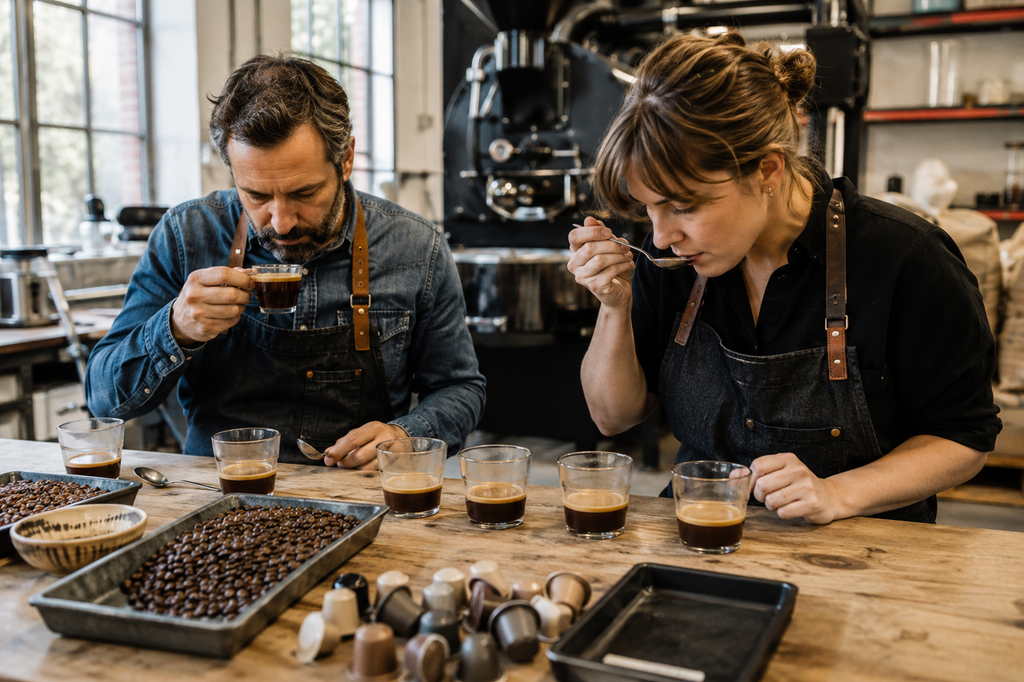
Approve production-line samples, not only hand-filled prototypes. Test beverage weight, extraction time, flow, crema, aroma, flavor, capsule puncture, ejection, deformation, fill-weight variation, seal integrity, and residual oxygen. Retain an approved “golden sample” and a written product specification. Without those, “make it like the sample” becomes a surprisingly expensive sentence.
Choose Capsule Material for the Market, Not the Mood Board
The capsule body, lid, coating, and barrier structure protect the coffee and influence production. They also shape the environmental story customers will hear.
| Material route | Possible strength | Question before approval |
| Aluminum | Strong barrier and familiar premium appearance | Is the complete capsule accepted by a local collection route? |
| PP/plastic | Cost and mechanical flexibility | What barrier and sorting evidence supports the claim? |
| Certified compostable | Useful distinction where a suitable system exists | Is it industrial or home compostable, and where can customers use that route? |
Aluminum can offer a strong barrier, but the coating, lid, collection system, and instructions still matter. PP structures may offer cost and handling benefits, while multiple layers can complicate sorting.
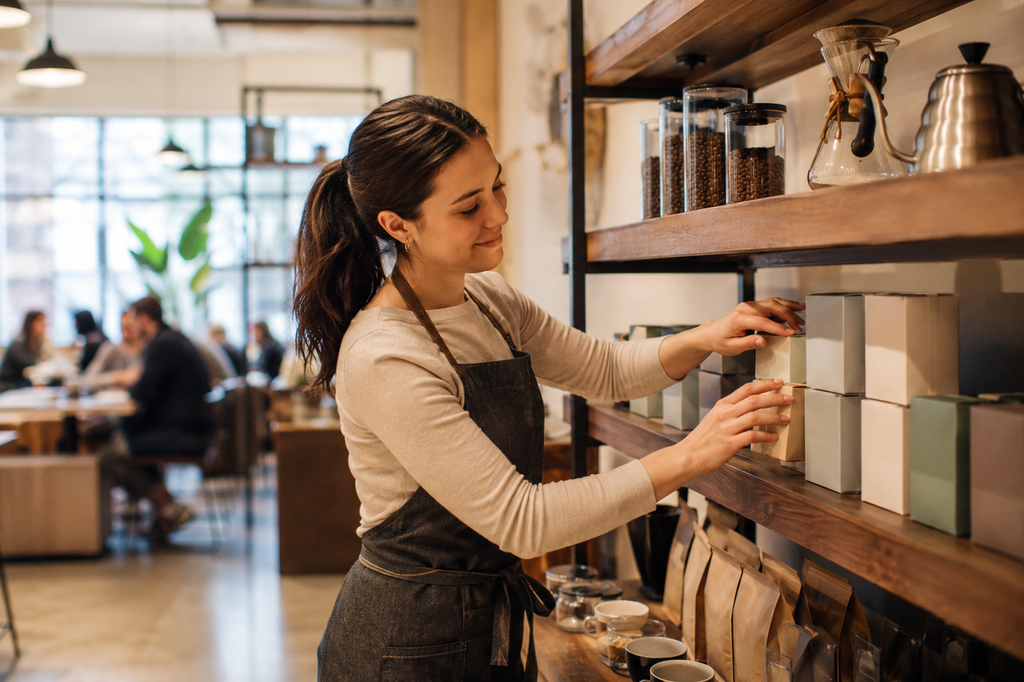
Compostable capsules need more than a leaf icon. Check whether certification covers the whole capsule, including lid and inks. Confirm whether the claim is for industrial or home composting, the required conditions, storage limits, and whether customers can access the correct waste stream.
The right choice depends on extraction, barrier, sealing, price, supplier evidence, local infrastructure, and brand position. Compare empty Nespresso-compatible capsule options after those requirements are clear. If lids and other formats are also in scope, the broader custom empty coffee pod range can support the sourcing brief.
Make the MOQ and Margin Work at Café Scale
A supplier may quote one MOQ, while the project contains five. Coffee roasting, filling, capsule color, printed lids, cartons, and cases can each have a different minimum. The least flexible item often controls the cash commitment.
Start with a low-complexity pilot where possible:
- one capsule platform;
- one or two coffees;
- a standard capsule color;
- simple lid artwork;
- generic or short-run outer packaging that meets local rules;
- no giant flavor family waiting in the wings.
Calculate the landed cost through the café door, then the cost of selling it.
| Economics layer | Commonly missed item |
| Product | Samples, tests, rejects, and coffee giveaway |
| Printed components | Lid and carton minimums, plates, and obsolete artwork |
| Landed cost | Freight, brokerage, tax/duty treatment, and storage |
| Selling cost | Card or marketplace fees, shipping, samples, and promotions |
| Working capital | Deposits and inventory held before customer payment |
Work backward from a realistic retail price. Subtract taxes, payment fees, fulfillment, discounts, waste, and any wholesale or marketplace margin. What remains must cover the landed product and contribute.
Do not demand the same margin percentage as a counter drink. A retail box has different labor, packaging, and reorder behavior. Compare cash contribution and inventory speed.
Ask who owns unused printed lids and cartons if the product changes. Put reorder lead time beside weekly sell-through. A profitable box that stays out of stock for eight weeks is not doing much work.
Before requesting quotations, prepare the information an OEM or ODM capsule supplier needs: target system, material, coffee, dose, volume, artwork, pack format, market, tests, and delivery location.
Build a Product File Before Printing the Carton
The café may outsource production, but it cannot outsource every responsibility. Define the brand owner, manufacturer, co-packer, importer or distributor where relevant, and the business legally responsible for the food information in the sales market.
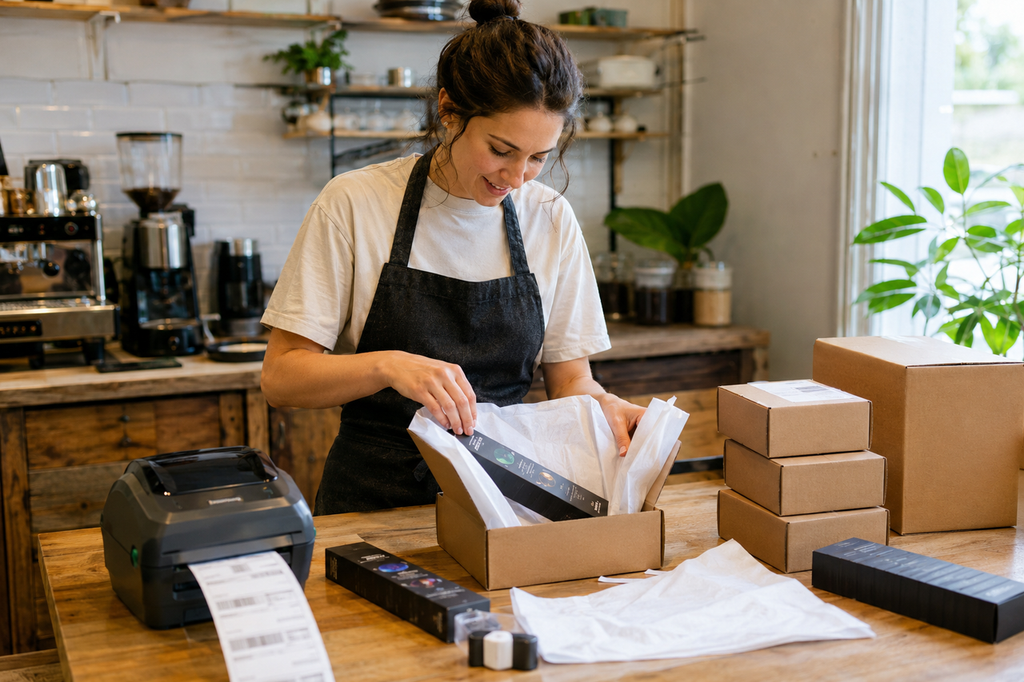
Label rules differ. In the EU, the European Commission’s prepacked food labeling overview lists information such as the food name, ingredients, allergens, net quantity, date marking, and necessary storage or use instructions. Exact requirements and exemptions depend on the product and country.
In the United States, the FDA Food Labeling Guide explains federal labeling principles and notes specific treatment for plain coffee and nutrition labeling. Claims, flavors, added ingredients, company size, sales route, and state rules can change the position. Neither source is a worldwide template.
Build a finished-product file covering, as applicable:
- product name, ingredients, and allergen review;
- net quantity, lot code, date, and storage conditions;
- responsible-business and origin details where required;
- online information shown before purchase;
- food-contact evidence for capsule, coating, lid, ink, and adhesive;
- supplier traceability, shelf-life study, batch records, and retained samples;
- complaint, withdrawal, recall, and change-control responsibilities;
- approved environmental and compatibility claims.
HACCP-based controls and systems such as ISO 22000, FSSC 22000, BRCGS, or IFS may be relevant to the supplier, market, or buyer. Check the facility, product, and process scope. A certificate on a factory wall does not approve the finished label, every material, or the café’s compostability claim.
Freshness evidence needs similar care. Nitrogen flushing may help limit oxidation, but nitrogen purity at the source is not residual oxygen inside the sealed product. SANEU’s guide to nitrogen packaging and residual-oxygen control explains the difference.
Launch Through the Café Before Chasing Every Channel
Use the shop as a small launch laboratory. Brew the capsule for customers where practical. Give staff one clear explanation: what coffee it contains, which system it fits, how it tastes, and where the used capsule should go locally.
Place a limited number of boxes near checkout. Add a QR code for brewing guidance and feedback. Offer a bundle with the café’s beans or a gift set, but record the capsule product separately. Otherwise, a popular holiday hamper can make weak everyday demand look healthy.
Online sales add reach and costs. Model picking, card fees, failed deliveries, shipping subsidies, returns, and support. Subscriptions help forecasting only after buyers have reordered.
Hotels, offices, and corporate gifts are another application. They may prefer different box counts, case packs, service terms, and price points. Wholesale to nearby stores introduces distributor or retailer margin, barcode needs, delivery windows, and possibly tougher documentation.
For the first 90 days, track:
| Metric | Decision question |
| Full-price sell-through | Does it move without permanent discounting? |
| Sample-to-purchase rate | Does tasting create a sale? |
| Compatibility complaints | Is the system clear and performance reliable? |
| Second purchase | Has curiosity become a habit? |
| Cash-to-cash cycle | Can the café fund the next order comfortably? |
Scale when full-price sales, repeat purchases, quality, and cash all look healthy. Fix the product if people like the idea but report thin coffee, slow flow, confusing instructions, or the wrong pack size. Stop if paid demand remains weak or inventory needs constant discounting. Yep, stopping a weak SKU is also good product management.
When Should a Coffee Shop Consider Filling In-House?
Outsourcing is not a beginner’s embarrassment. It can remain the right model for years because it converts factory work into a purchased service.
Consider an internal line only when repeat volume is stable, co-packing limits are hurting the business, the SKU mix benefits from smaller or faster runs, and the café or roastery can manage food safety, people, maintenance, utilities, materials, QC, and downtime. Compare buying equipment with a second supplier or hybrid model before committing capital.
SANEU’s guide to when in-house Nespresso-compatible filling makes sense covers that later decision. The capsule brand should prove itself first. A machine cannot create demand; it only produces inventory faster.
Conclusion
A coffee shop can turn its name and coffee into an own-brand Nespresso Original-compatible capsule range. The lowest-risk route is usually simple: confirm that customers own the right system, start with one or two well-tested coffees, outsource the first production, and keep custom packaging exposure under control.
The café’s reputation may earn the first sale. Reliable extraction, clear compatibility, sensible pricing, and easy reordering earn the second. That second sale is the one that tells you whether the capsule is becoming a business rather than a branded keepsake.
Frequently Asked Questions
Can a coffee shop legally sell its own Nespresso-compatible capsules?
Generally, yes, subject to the laws and rights in the sales market. The product must meet applicable food, packaging, labeling, business, and trademark requirements and should not imply that it comes from or is endorsed by Nespresso.
Does a café need permission from Nespresso to sell compatible capsules?
Do not assume one answer applies worldwide. Third-party sellers often use trademark wording to explain compatibility, but the presentation must not create confusion about source or affiliation. Have the intended packaging reviewed for each important market.
Do compatible capsules work in both Original and Vertuo machines?
No. Original and Vertuo use different capsule formats and brewing technologies. A product developed for Original machines will not work in Vertuo machines. State the exact compatible system prominently on the box and product page.
Can a co-packer put a coffee shop’s own beans into capsules?
Many co-packers can work with customer-supplied roasted coffee, green coffee, or an approved formula. Capabilities differ. Confirm grinding, development trials, coffee ownership, transport, minimums, leftover material, traceability, and finished-product specifications in writing.
What MOQ should a small café expect?
There is no dependable universal MOQ. Separate minimums may apply to the roast, filling run, capsule color, printed lid, carton, and case. Ask for the complete MOQ stack and the cash required for every component.
How much does it cost to launch a café-branded capsule product?
It depends on customization, materials, development, testing, packaging, volume, freight, market requirements, and sales channel. Calculate samples, artwork, printed components, landed inventory, selling fees, promotions, and working capital—not only the filling price.
Is aluminum, plastic, or compostable better for a café brand?
No material wins everywhere. Compare extraction, barrier, seal, cost, food-contact evidence, certification, storage, collection, recycling or composting access, and brand position in the actual market. Support every environmental claim with relevant evidence.
Do private-label coffee capsules need nitrogen flushing?
Many commercial capsule producers use nitrogen to help control oxidation. The necessary process depends on the coffee, material, seal, distribution, and validated shelf life. Specify residual oxygen in the sealed product rather than nitrogen-source purity alone.
What information belongs on a coffee capsule box?
Requirements depend on the market and product. Common areas include the food name, ingredients and allergens where applicable, net quantity, lot and date marking, storage/use instructions, responsible-business details, and supported compatibility and environmental statements.
Should a coffee shop outsource production or buy a filling machine?
For an unproven product, outsourcing usually limits capital and technical risk. Consider equipment only after repeat volume, SKU needs, quality goals, lead-time problems, facility readiness, staffing, and cash flow justify owning the production process.