
Coloca tres cajas de café una al lado de la otra. Puede que parezcan casi idénticas. Sin embargo, detrás del cartón podrían esconderse tres negocios muy diferentes.
Una marca puede optar por una mezcla ya preparada y agregarle su logotipo. Otra es dueña de la especificación del café, pero contrata a una fábrica para que lo produzca. Una tercera tuesta sus propios granos y alquila la línea de producción de cápsulas de otra empresa. Estos acuerdos suelen denominarse «marca privada», «OEM» y «coenvasado».
«Por lo general» es la palabra clave. Los proveedores de café no utilizan estos nombres de manera consistente. Así que olvídate de la etiqueta por un momento. La pregunta que hay que hacerse es: ¿Dónde termina tu trabajo y dónde empieza el de tu pareja?
En primer lugar, estos nombres no son descripciones estándar de puestos de trabajo
OEM, marca propia, empaque por encargo, fabricación por contrato y tostado por contrato son términos comerciales abreviados. No son descripciones de puestos universales con límites fijos.

Un tostador puede llamar “marca privada” a una mezcla exclusiva hecha a medida. Otro utiliza el término «marca privada» únicamente para el café de catálogo que se vende bajo diversas marcas. Algunos envasadores externos solo se encargan de envasar el café terminado en bolsas o cápsulas. Otros se encargan de adquirir los granos, tostarlos, molerlos, envasarlos, probarlos, almacenarlos y coordinar el transporte.
Por lo tanto, dos cotizaciones con el mismo título pueden abarcar trabajos diferentes. Una puede incluir el café, las tapas, las cajas de cartón y las pruebas. Otra puede abarcar únicamente el llenado y el sellado.
Consulta el contexto más amplio coffee capsule business models si también estás considerando la opción de marca blanca o la producción propia. A continuación, compararemos tres modelos de entrega.
Otra distinción más: el término “OEM de café” también puede referirse a una fábrica que fabrica máquinas de café para otra marca de equipos. En este contexto, se refiere a la producción subcontratada de productos de café —granos enteros, café molido, bolsas, monodosis y cápsulas— y no al diseño de máquinas de espresso.
Qué suele significar la fabricación de café por contrato (OEM)
En un acuerdo de café OEM, la marca le proporciona al fabricante un resumen del producto o una especificación detallada. El fabricante desarrolla un producto reproducible a partir de esa información.
El pliego de condiciones puede definir el origen del café en grano, la mezcla, el tueste, el molido, la dosis, el formato de la cápsula, el empaque, el perfil sensorial deseado y el mercado de destino. El socio fabricante (OEM) puede adquirir las materias primas, realizar pruebas, fabricar, empaquetar, inspeccionar y documentar el producto. Es como pedirle a una cocina industrial que prepare tu platillo a gran escala. La propiedad de las notas de la receta final sigue dependiendo del contrato.
Los productos OEM ofrecen una mayor diferenciación que los productos de catálogo, pero la creación de muestras y los materiales personalizados implican más trabajo. La marca debe aprobar el sabor, el diseño gráfico, las especificaciones y los cambios.
El modelo OEM suele ser una buena opción cuando
- la marca cuenta con un posicionamiento claro del producto y una previsión realista;
- un minorista o importador necesita un tueste, molido, cápsula o empaque a medida;
- El comprador puede gestionar las especificaciones, las muestras y las aprobaciones.
El hecho de que sea un producto OEM no significa automáticamente que todos los elementos sean únicos. Un tueste personalizado puede seguir utilizando una cápsula y una caja estándar. A menudo, eso es lo más sensato. Invierte el presupuesto destinado a la personalización en aquellos aspectos en los que los clientes puedan saborear, ver o apreciar la diferencia.
Lo que suele significar el café de marca propia
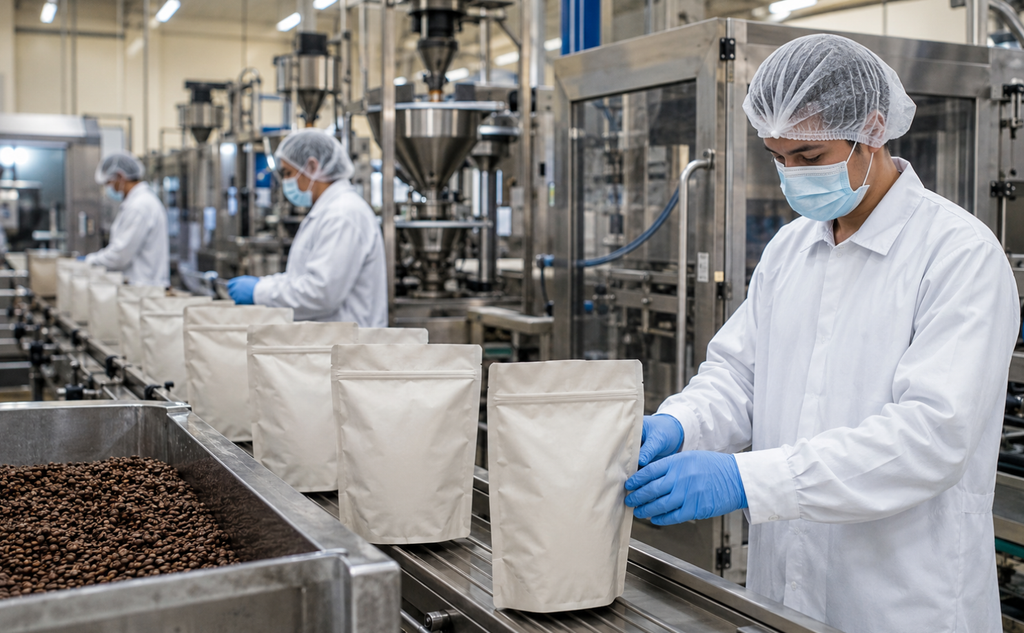
La marca propia suele partir de algo que el fabricante ya sabe cómo producir. El comprador selecciona un café o una plataforma de producto validada, le agrega su marca y elige entre un menú de opciones autorizadas.
Un grupo hotelero podría optar por una mezcla propia, una bolsa con válvula de 250 gramos y una etiqueta personalizada. Un minorista podría seleccionar un tueste medio del catálogo del proveedor. Una nueva marca de cápsulas podría elegir un café de calidad comprobada y una estructura compatible con K-Cup, para luego personalizar la tapa y la caja.
Dado que el café y el proceso ya existen, los lanzamientos pueden ser más sencillos. La contrapartida es el control: podría aparecer un café similar bajo otra marca, a menos que se establezca por escrito la exclusividad.
Algunos tostadores llaman «marca privada» a una mezcla personalizada. Está bien, pero pregúntate qué es lo que la hace exclusiva: ¿la receta, el lote de granos, el tueste, el territorio, el empaque o solo el diseño gráfico?
Guía de SANEU sobre fabricación de cápsulas compatibles con K-Cup de marca propia muestra cómo incluso una cápsula de marca sigue dependiendo de las decisiones relacionadas con la taza, el filtro, la tapa, el café, el llenado y el sellado.
La marca propia suele ser una buena opción cuando
- una marca quiere evaluar la demanda antes de iniciar un desarrollo a medida;
- una cafetería, un hotel, un proveedor de material de oficina o una tienda ya cuenta con su público;
- La rapidez y la sencillez son más importantes que una receta exclusiva.
Qué suele significar el «co-packing» de café
En sentido estricto, un copackador toma un producto que ya existe y lo convierte en unidades listas para la venta. Tú le suministras café tostado u otra materia prima acordada. El copackador lo llena, lo sella, lo codifica, lo etiqueta, lo empaqueta en cajas y, tal vez, lo paletiza.
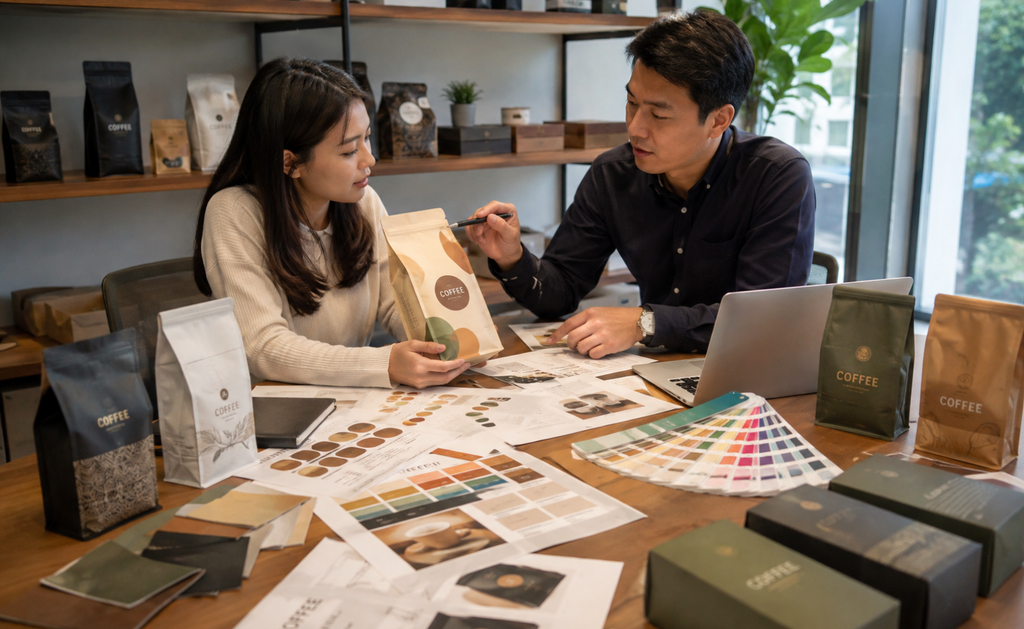
Las empresas de café suelen utilizar el término en un sentido más amplio. Un “copackador” también puede tostar granos verdes por contrato, molerlos según las especificaciones de las cápsulas, adquirir los empaques, realizar pruebas de calidad y almacenar los productos terminados. También es posible que escuches los términos «cofabricante», «fabricante por contrato», «tostador por contrato» o «tostador a comisión».
El ejemplo más claro es el de un tostador especializado que cuenta con una mezcla reconocida, pero no dispone de equipo para cápsulas. El tostador suministra su café y establece los estándares sensoriales. Un socio se encarga de molerlo, llenar las cápsulas, inyectar nitrógeno en el envase, sellar las tapas, revisar las unidades y empacar las cajas. De esta manera, el tostador conserva la identidad de su café sin necesidad de adquirir una línea de llenado.
El co-packing suele ser una buena opción cuando
- ya tienes un café, una receta o un perfil de tueste que ha demostrado su calidad;
- La demanda de cápsulas es real, pero aún no es suficiente para justificar una línea de producción interna;
- necesitas capacidad de empaque, capacidad de sobrecapacidad, otro formato o una copia de seguridad regional.
Comparación entre OEM, marca propia y empaque por encargo
La tabla siguiente muestra patrones comunes, no definiciones legales. Un proveedor puede combinar elementos de los tres.
| Punto de decisión | Fabricación de café para terceros (OEM) | Café de marca propia | Envasado por contrato de café |
| Punto de partida | Resumen de la marca o especificaciones detalladas | La plataforma actual de café o productos del fabricante | Café terminado o semiacabado de Brand’s |
| Control de fórmulas típicas | Definidos por la marca o desarrollados conjuntamente | Por lo general, está bajo el control del fabricante; la exclusividad varía | Por lo general, controlados por la marca |
| Abastecimiento de café | Fabricante, marca o ambos | Por lo general, el fabricante | Por lo general, la marca, aunque el socio puede colaborar |
| Tostar y moler | Fabricado según las especificaciones acordadas | Seleccionado de entre las opciones disponibles | Suministrado por la marca o procesado según sus especificaciones |
| Adquisición de empaques | A menudo gestionados por el fabricante | Por lo general, gestionado por el fabricante | Gestionada por la marca, gestionada por el socio o compartida |
| Personalización | Alto | De baja a media, a veces alta en el ámbito de la industria del café | Precio elevado para el café suministrado y el paquete elegido |
| Esfuerzo de desarrollo | De medio a alto | Bajo a medio | Medio; es posible que aún se necesiten pruebas de línea |
| Comportamiento del MOQ | A menudo se caracterizan por el uso de materiales y desarrollos personalizados | A menudo es menor cuando se utilizan insumos de reserva | Depende de la configuración de la línea y de las cantidades de material suministradas |
| Rapidez de lanzamiento al mercado | Por lo general, más lento | Por lo general, más rápido | Medio, si el café y el empaque están listos |
| Carga de trabajo de la marca | Decisiones sobre productos, aprobaciones, pronósticos, ventas | Marca, autorizaciones, inventario, ventas | Suministro de café, coordinación del empaque, especificaciones, ventas América Latina (es-419) Español |
| Ventaja principal | Diferenciación sin ser dueño de una fábrica | Ingreso sencillo al mercado | Disfruta de tu café mientras alquilas capacidad de producción |
| Riesgo principal | Costo de desarrollo y dependencia de los proveedores | Diferenciación débil o exclusividad poco clara | Problemas de programación y de la cadena de suministro con múltiples participantes |
Aquí te presento un consejo práctico. Si solo tienes una marca y un público objetivo, busca opciones de marca propia. Si tienes un concepto de producto detallado y necesitas a alguien que lo fabrique, busca opciones de fabricación por contrato (OEM). Si ya tienes el café y necesitas que lo empaquen a gran escala, busca opciones de coenvasado.
Luego, verifica el alcance. Sí, ese último paso sigue siendo más importante que el atajo.
El mejor modelo puede variar según el tipo de café
Un proveedor que se destaca en la fabricación de bolsas con válvula podría no ser el socio adecuado para las cápsulas. El formato del producto influye en el equipo, los materiales, los controles de calidad y la tirada mínima viable.
| Formato de café | Lo que debe encargarse de hacer el socio de producción | Modelo que suele ajustarse | Preguntas que los compradores olvidan |
| Bolsas de granos enteros | Tostado, desgasificación, pesaje, llenado de bolsas con válvula, sellado, codificación | Private label, OEM, or contract roasting | Who approves bean substitutions between crop years? |
| Ground coffee bags | Roast, grind control, oxygen/moisture barrier, filling, sealing | OEM or private label; co-packing if coffee is supplied | How is grind variation checked between batches? |
| Drip bags | Grind, filter filling, inner sealing, outer barrier pouch, cartoning | OEM or specialist co-manufacturer | Does the supplier validate hanging, flow, and filter seams? |
| Cápsulas compatibles con K-Cup | Cup/filter compatibility, dosing, rim cleaning, nitrogen, lidding, brew tests | OEM or capsule co-packing | Who buys the filtered cup, lid, and retail carton? |
| Cápsulas compatibles con Nespresso | Capsule geometry, fine grind, compaction, foil seal, extraction tests | OEM or specialist co-packing | Which brewer models and markets are included in compatibility testing? |
| Instant coffee sticks or sachets | Powder handling, moisture protection, dosing, stick sealing, coding | Private label or OEM | Who owns the instant base and flavor system? |
Whole-bean programs are relatively forgiving because the consumer performs the grinding and brewing. That does not make them simple, but the package has fewer interfaces with a proprietary brewer.
Capsules are less forgiving. Coffee, particle size, dose, headspace, filter, lid, and capsule geometry all influence the cup. A partner must understand both food production and packaging mechanics. The industrial coffee capsule production guide shows the sequence from coffee preparation through filling, oxygen control, sealing, inspection, and cartoning.
Product range matters, too. A private-label supplier may offer five coffees in one standard bag but only two in capsules. A co-packer may accept your coffee yet lack secondary packaging for variety packs. An OEM may develop the product but outsource printed cartons. Ask about the full finished case, not just the unit leaving the filler.
Flavored coffee introduces allergen and cleaning questions, especially when milk powders, nut flavors, cocoa, or functional ingredients share equipment. Decaffeinated products need identity and cross-contact controls. Certified organic products require an approved handling chain. The correct model is the one whose real facility can support the claim—not the one whose brochure has the nicest row of icons.
The Materials Handoff Changes the Real Deal
The product is not just “coffee.” Each input creates an owner, purchase order, lead time, and possible delay. A bean product may need a laminate bag, valve, label, and carton. A capsule needs coffee, cup body, filter, lid, ink, retail carton, and shipping case.
Materials add another layer. Aluminum offers a strong oxygen and light barrier. Polypropylene offers production flexibility, with performance depending on its structure. Compostable formats require careful checks around sealing, certification, storage, and local disposal.
El Guía de materiales de empaque para K-Cup explains why the cup, filter, and lid must be treated as one system. A good lid on the wrong rim is still a bad package.
A capsule is not a cup with a nice sticker
Capsule geometry must fit the brewer. Grind and dose affect extraction. The sealing layer must match the rim and equipment settings. Barrier performance and residual oxygen affect storage. The agreement should therefore say who approves brand-supplied lids, material substitutions, and late packaging.
Custom printing often sets the MOQ. A line may accept a modest pilot while the lid supplier wants a far larger run. Stock components and digital labels can leave less cash sleeping in a warehouse.
Cost, MOQ, and Lead Time: What Moves the Numbers?
There is no reliable universal price or MOQ for any of these models. The number depends on the least flexible part of the job.
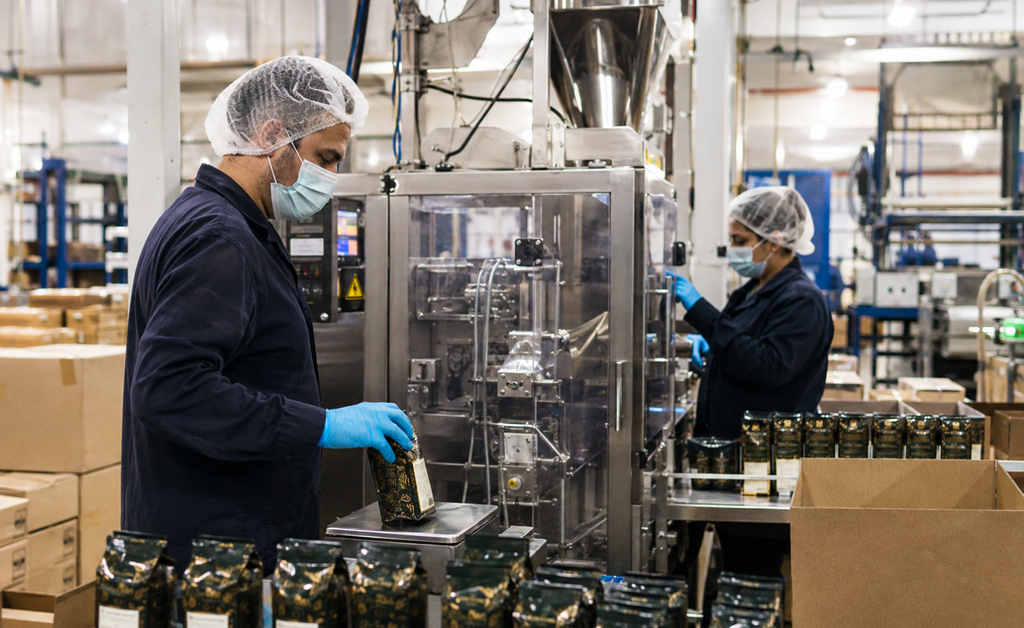
Cost layers include coffee, roasting, grinding, packaging, setup, cleaning, inspection, coding, cartoning, storage, testing, and freight. Custom work may add samples, artwork tooling, molds, or change parts.
Separate three numbers when comparing quotes:
- Development cost: samples, trials, formulation, artwork setup, and validation.
- Recurring unit cost: coffee, materials, manufacturing, inspection, and routine packing.
- Working-capital cost: deposits, unused printed stock, storage, freight, and inventory waiting to sell.
Private label often moves faster because it reuses an established product. OEM custom inputs extend the calendar. Co-packing moves efficiently when coffee, packaging, and specifications are ready. Ask for separate development and repeat-order timelines, plus the event that starts the clock. “Four weeks” sounds lovely until you discover it has not started.
How to Compare Supplier Quotes on the Same Basis
Before comparing prices, convert every proposal into the same scope. Otherwise one supplier is quoting a finished retail carton while another is quoting a sealed capsule at the factory door.
Build a simple quote sheet with these fields:
| Quote field | What to record | Por qué es importante |
| Product specification | Coffee, roast, grind, dose, format, pack count | Prevents a cheaper but different product from winning |
| Included materials | Coffee, capsule or bag, lid, label, carton, case, pallet | Exposes items the brand must buy separately |
| One-time charges | Development, trials, print setup, tooling, artwork checks | Separates launch cost from repeat production |
| Production charges | Per unit, per kilogram, per batch, setup, cleaning | Shows how cost changes with run size and SKU count |
| Quality checks | Sensory, weight, seal, oxygen, compatibility, external laboratory work | Confirms whether testing is included or merely available |
| Condiciones comerciales | MOQ, payment, lead-time start, storage, overrun tolerance | Shows cash and inventory exposure |
| Delivery basis | Factory gate, port, delivered warehouse, duties excluded | Makes landed-cost comparison possible |
Then model at least three volumes: the minimum run, the expected repeat run, and a conservative annual total. Include all SKUs. A low per-unit price can hide a large packaging commitment for each flavor.
Ask how normal production overrun and underrun are billed. Printed material counts and actual filled units rarely land on the exact same number. Also ask what happens to coffee and components after a short run. Are they returned, stored, used on the next batch, or written off?
Finally, compare payment timing. A supplier asking for a large packaging deposit six months before sale creates a different cash burden from one holding common materials and billing finished units. Both can be fair. They are simply not the same offer.
Sampling and Pilot Runs: Where the Supplier’s Claims Meet Reality
A sample produced by a laboratory or roast team proves that somebody can make a few good units. A pilot proves that the proposed process can make them on commercial equipment. Those are different milestones.
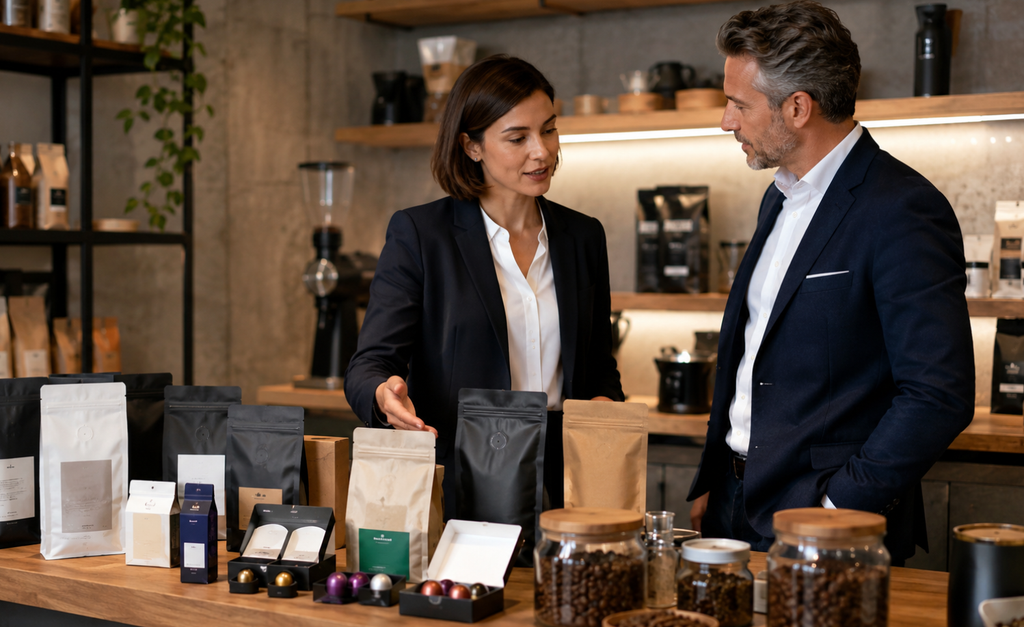
For a private-label product, sampling may be straightforward: taste existing coffees, select the best fit, and confirm the final package. Even then, evaluate the product after normal shipping and storage. A fresh hand-delivered sample can hide a weak valve or damaged seal.
An OEM project usually needs several approvals. First comes the sensory direction. Then the coffee and package are tested together. Artwork, claims, coding, case pack, and pallet pattern follow. The final approved “golden sample” should be tied to a written specification. Memory is not a quality system, even when the roast master has a very good memory.
A co-packing pilot must answer operational questions:
- Does the coffee feed consistently through the dosing system?
- Does the grind create dust or contaminate the sealing rim?
- Can the line hold the target fill-weight tolerance at planned speed?
- Do lids seal across the normal material and temperature range?
- Does the finished unit brew correctly on the agreed machines?
- Can coding, cartoning, case packing, and traceability run as planned?
Agree on pilot acceptance criteria before the line starts. Otherwise the brand may judge taste while the co-packer judges only whether the machine ran.
Keep retained samples from the pilot and first commercial lot. Record settings, material lots, coffee lots, test results, and approved deviations. If a later batch tastes different, these records help separate bean variation from roast, grind, dose, oxygen, or storage problems.
The pilot also tests the relationship. Notice how quickly questions are answered, whether bad news travels early, and whether the factory documents small failures. A supplier that calmly explains a rejected seal sample may be safer than one claiming every trial was perfect.
Quality, Food Safety, and Standards Do Not Transfer Automatically
Outsourcing production does not outsource the brand’s reputation. A consumer will call the name printed on the box, not the factory shift supervisor.
For U.S. sales, the FDA’s food-business guidance covers registration, manufacturing practices, labeling, records, and preventive controls. Applicability varies. “FDA registered” is not “FDA approved.”
ISO 22000 sets food-safety management requirements. Buyers should check a certificate’s site, scope, version, and expiry. ISO itself does not certify factories.
Retail customers may also request SQF, BRCGS, organic, Kosher, Halal, or other evidence. Requirements vary by market and channel. Ask what is necessary before approving packaging claims.
For coffee, the quality plan should also cover:
- approved beans and packaging;
- roast, sensory, grind, and fill-weight limits;
- seal, leak, oxygen, and brewer-compatibility tests;
- coding, traceability, shelf-life methods, and retained samples.
The interaction matters. Nitrogen packaging for coffee capsules helps only when flushing, barrier materials, exposure time, and sealing work together. A high-purity gas supply cannot rescue a leaking lid.
Who Owns the Formula, Artwork, Tooling, and a Bad Batch?
Ownership questions feel boring during a friendly sample call. They become very exciting when a batch fails or a partnership ends.
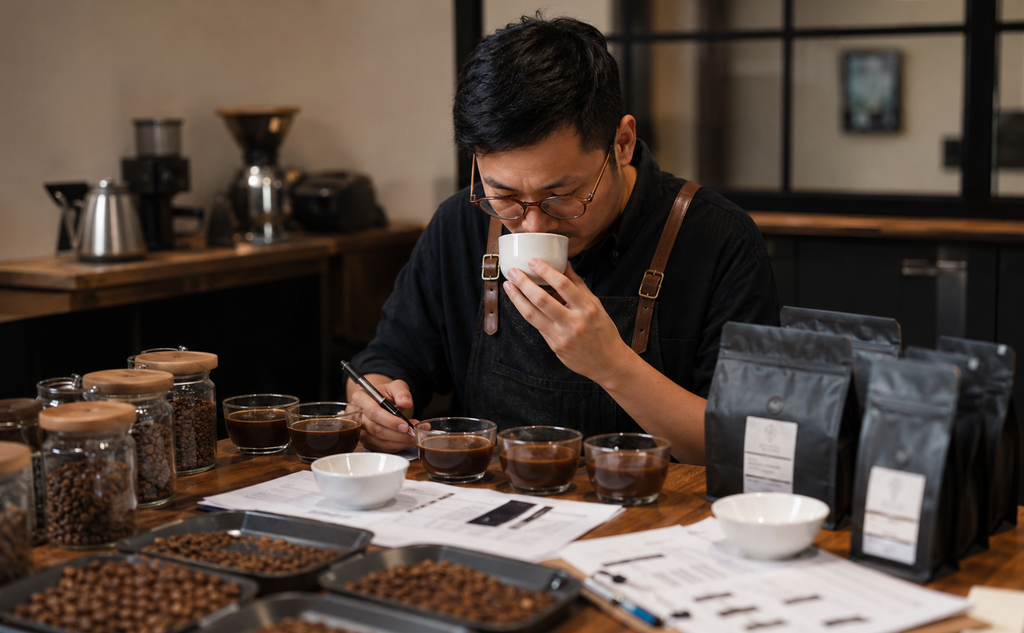
The agreement should identify who owns the blend, roast profile, process notes, artwork, printing plates, tooling, test results, and production records. It should also control subcontractor access and similar products for other brands.
Define change control. Can the manufacturer substitute beans from another origin, a different film, or a new capsule resin? Which changes require written approval? What happens if the original input disappears?
Then deal with the awkward warehouse shelf. Who owns unused branded lids and cartons? Can they be returned, transferred, destroyed, or charged as obsolete stock? Assign responsibility for failed goods, rework, credits, withdrawals, and recalls. An NDA does not replace a manufacturing agreement and product specification.
Choose the Model From What You Already Have
Choose from today’s real assets, not the future company in a pitch deck.
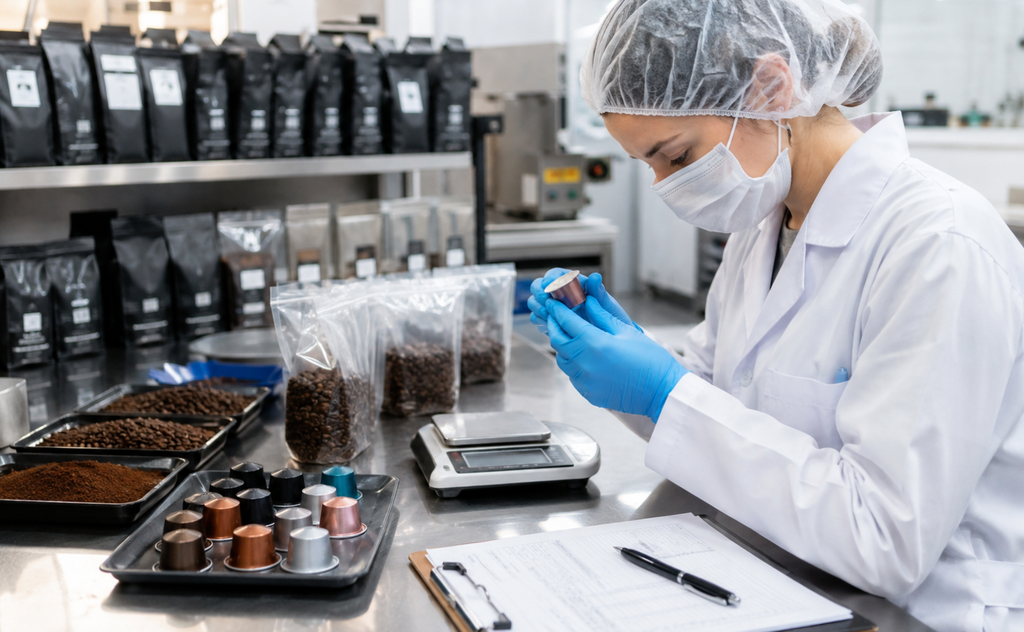
You have a brand idea and an audience
Private label lets a hotel, gift business, or retailer test whether customers reorder before funding a unique supply chain.
You have a flavor direction but no factory-ready specification
An OEM or customized private-label partner can turn “smooth, chocolatey, not bitter” into beans, roast, grind, dose, and measurable limits.
You have a proven roast or blend
A specialty roaster can keep roasting while a co-packer produces bags, pods, or capsules. Capsule opportunities for independent U.S. roasters explains how a pilot can test reorders before an equipment decision.
You have stable repeat volume and outsourcing pain
Compare outsourcing with operators, utilities, maintenance, space, quality staff, scrap, inventory, and downtime—not only machine price. Coffee capsule filling machines show possible output and process scope, but capacity is not demand.
You already run a capable factory
OEM work can use spare capacity, but it adds client service, confidentiality, short runs, changeovers, and customer-specific records. Machines alone do not win contracts. Reliable operations do.
El National Coffee Association’s Spring 2026 highlights report that 66% of U.S. adults drank coffee in the past day. That supports the category, not one brand’s forecast. A pilot is worth more than a huge slide-deck number.
One Coffee Launch, Three Very Different Workflows
Imagine a brand wants to launch a ten-count box of medium-roast, Nespresso-compatible capsules. The front of the box could look the same under all three models. The work behind it would not.
Under an OEM arrangement
The brand begins with a target: a balanced espresso with cocoa notes, moderate intensity, a specific retail price, and a nine-month launch window. The OEM proposes coffees, develops roast and grind options, selects compatible capsules and lids, produces samples, and turns the approved version into a manufacturing specification.
The brand still has work. It must approve taste, artwork, claims, price, forecast, and acceptable substitutions. It may also need to appoint a local importer or regulatory adviser. The factory executes the physical production, but it cannot decide what the brand promises customers.
This workflow suits a buyer that knows the desired market position but does not already own a capsule-ready coffee specification.
Under a private-label arrangement
The supplier already offers a medium-roast espresso capsule. The brand tastes it, chooses a lid color, supplies artwork, and selects a carton from available formats. Development focuses on branding and confirmation rather than building the coffee from zero.
That can remove months of back-and-forth. It also means the product’s foundation belongs to the supplier. Another company may sell a similar capsule unless the agreement grants exclusivity. The brand should ask whether the supplier may change beans, roast settings, capsule materials, or factories without approval.
This workflow suits a buyer that wants a credible product on the shelf and can differentiate through its audience, service, bundle, or route to market.
Under a co-packing arrangement
The brand or roaster supplies an approved roasted coffee. The co-packer checks how it behaves after grinding, confirms dose and extraction, validates the capsule and lid, runs a pilot, then fills and packs commercial orders.
Now the brand controls more upstream work. It must deliver enough coffee and packaging at the right time. If the coffee’s bulk density changes between roasts, the filler may need adjustment. If a lid supplier misses a shipment, the co-packer’s reserved slot may disappear.
This workflow suits a roaster that wants its own coffee in a new format but does not want to operate the format-specific packaging line.
The point is simple: the customer-facing product may look identical, while procurement, technical work, cash exposure, and daily coordination sit with completely different companies.
Common Mistakes and Better Fixes
| Error | Why it hurts | Better move |
| Choosing by the supplier’s label | Two “co-packing” quotes may cover different work | Compare a line-by-line responsibility matrix |
| Comparing only unit prices | Coffee, materials, testing, freight, and storage may be excluded | Compare landed cost at the same specification and volume |
| Printing packaging before the pilot | A material or artwork change can make stock unusable | Validate product, package, and legal copy before the large print run |
| Leaving substitutions vague | Flavor, seal performance, claims, or compliance can drift | Require notification and approval rules for critical inputs |
| Accepting a certificate at face value | It may cover another site, process, or expired period | Verify the issuing body, site, scope, standard, and date |
| Ignoring exit inventory | Branded lids and cartons can trap cash after a supplier change | Define ownership, disposal, and transfer terms in advance |
| Buying a line after one large order | A temporary peak can leave expensive idle capacity | Model conservative repeat volume, changeovers, labor, and full line cost |
Run a paid pilot, too. It reveals powder flow, seals, flavor drift, records, communication, and the factory’s response when something goes wrong.
A Sensible Growth Path Is Often Hybrid
A company does not marry one model forever. It may test private label, move to OEM after finding repeat buyers, co-pack capsules, and later internalize its highest-volume format.
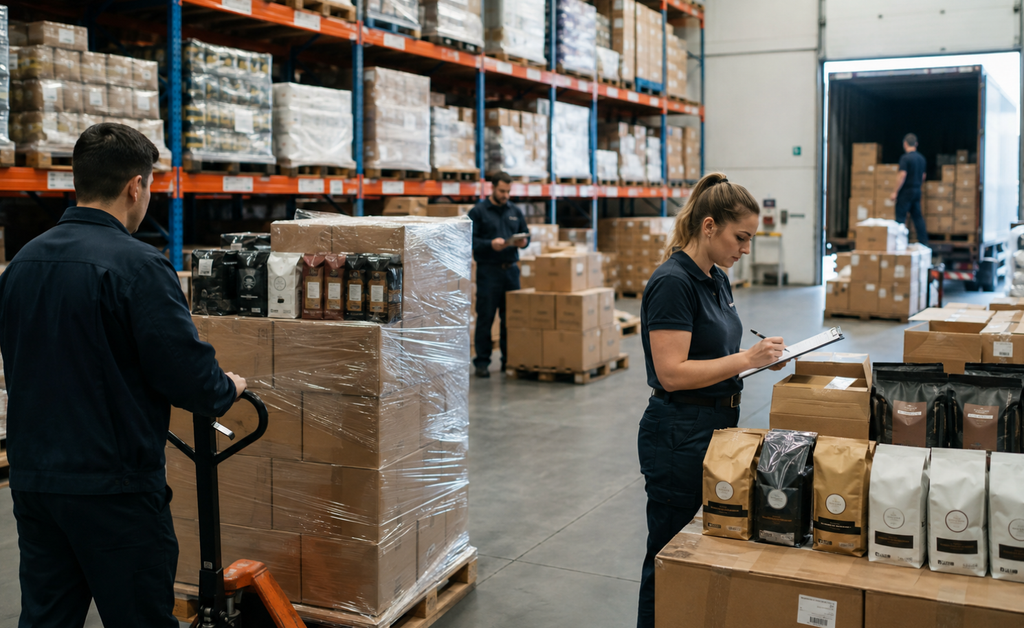
Outsourcing can still cover seasonal peaks, another region, a backup line, or materials the internal equipment handles poorly.
There is no graduation badge for owning more machinery. The right model is the one that gives enough control without creating more fixed cost and operational complexity than the business can feed.
Conclusión
OEM, private label, and co-packing describe different starting points, but the words are not reliable enough to choose a supplier by themselves. Map who supplies the coffee, who develops the specification, who buys each packaging material, who tests the product, and who owns the result.
Private label suits a simpler market test. OEM suits a differentiated product brief. Co-packing suits a brand or roaster that already owns the coffee and needs production capacity. Put the scope in writing, approve a real pilot, and compare complete landed costs. That is less glamorous than choosing a box design. It also prevents far more expensive surprises.
Preguntas frecuentes
Is OEM coffee the same as private-label coffee?
Not usually. OEM starts from the brand’s agreed specification; private label usually starts from the manufacturer’s existing coffee. Since usage varies, confirm ownership, customization, exclusivity, and responsibilities.
What is the difference between a coffee co-packer and a contract roaster?
A pure co-packer packages coffee that already exists. A contract roaster roasts to an agreed profile and may also pack it. Many companies perform both jobs.
Can I supply my own coffee beans to a co-packer?
Often, yes. It may accept roasted coffee, green beans, or a nominated supplier, subject to food-safety documents, process suitability, packaging compatibility, and setup quantities.
Who owns the coffee formula or roast profile?
The contract decides. Record ownership, permitted use, confidentiality, exclusivity, access to production notes, and what happens when the relationship ends.
Which coffee manufacturing model normally has the lowest MOQ?
Stock private-label products often start lower, but no rule is universal. The roast batch, line setup, printed package, capsule order, or storage policy may set the minimum.
Is private-label coffee cheaper than OEM coffee?
It often has lower development cost. For long-term economics, compare quality, packaging, volume, setup, storage, freight, unsold materials, and expected selling price.
How long does an OEM or private-label coffee launch take?
Private label can move faster with stock inputs. OEM may need sourcing, sample rounds, custom materials, tests, or tooling. Request separate development and repeat-order schedules.
Can a co-packer produce K-Cup- or Nespresso-compatible capsules?
Yes, with the correct equipment, tooling, materials, controls, and experience. Confirm the brewer system, geometry, grind, dose, lid, seal, nitrogen process, tests, and carton before the pilot.
What food-safety documents should I request?
Ask for applicable registrations, certificate scope, food-safety controls, traceability, recall procedures, allergen controls, supplier approval, test methods, and sample batch documents.
When should a coffee brand bring production in-house?
Consider it when volume is stable, outsourcing limits control, and conservative economics support the operation. Include people, space, utilities, maintenance, quality, inventory, downtime, and secondary packaging.

 English
 Spanish
 Arabic
 Russian