A roaster reads 2% oxygen on a freshly sealed bag. The coffee tastes good. Then a private-label buyer asks for less than 1% in a capsule. So, which number is the ideal one?
Both might be sensible. Or neither. A percentage without a coffee, a package, a test time, and a shelf-life promise is like calling a kitchen “hot.” Hot enough for toast, or hot enough to burn it? Let’s give the number a job.
For many nitrogen-flushed roasted-coffee packs, around or below 2% fresh-pack headspace oxygen is a useful development starting point. Some suppliers discuss 3%; selected premium ground-coffee and capsule projects aim below 1%. Those are project targets, not a worldwide coffee-packaging law. The ideal level is the one your line can repeat and your shelf-life tests can defend.
A Useful Starting Point: 2% Is Common, but It Is Not a Rule
In its coffee residual-oxygen discussion, packaging-equipment supplier Rovema recommends no more than 3% and says some contract buyers request 2% or lower. It also reports much lower readings achieved by particular customers using a closed gas-flushing system. That’s useful field experience. It isn’t a legal limit, and those results don’t describe every bagger, bean, or capsule.
Here is a better way to read the familiar numbers. Each row describes an illustrative fresh-pack development band, not a shelf-life grade.
| Fresh headspace O₂ target | When it may be worth exploring | What it does not prove |
| Around or below 3% | A looser starting benchmark for a separately validated coffee-bag program | Official compliance or a promised flavor lifetime |
| Around or below 2% | A more demanding starting point for nitrogen-flushed retail packs or buyer specs | That beans and capsules need identical limits |
| Below 1% | A stricter goal for selected ground-coffee, drip-sachet, or capsule projects | That the product will stay premium on a warm shelf |
| Near 0.5% | A challenging, controlled starting condition for a particular system | That 0.5% is achievable on every line or remains unchanged |
If grounds pick up oxygen during filling, a beautiful reading in an empty pouch won’t help. Nor will chasing 0.5% if a weak seal lets air back in. Make the band earn its place through testing.
Which Oxygen Are We Talking About?
Headspace percentage is not total oxygen exposure
Residual oxygen is usually the oxygen concentration in the gas sampled from a sealed pack’s headspace. If you’re new to the measurement, see what residual oxygen means in a coffee capsule. The number is a percentage of the sampled gas, not the entire oxygen inventory around every coffee particle.
Here’s a simple, deliberately rough comparison. At the same pressure and temperature, 1% oxygen in a 100 mL gas headspace represents about 1 mL of oxygen gas. In a 5 mL headspace, 1% represents about 0.05 mL. That arithmetic leaves out air trapped among grounds, gas dissolved or bound elsewhere, and later oxygen ingress. Still, it shows why a bag and a small pod can share a percentage without sharing the same oxygen exposure.
Food-grade nitrogen can displace air during modified-atmosphere packaging (MAP). But 99.9% nitrogen purity does not mean 0.1% oxygen in the finished pack. Air can hitch a ride in the coffee bed, hopper, or sealing zone. Check the pack.
The test clock starts at sealing
“2% oxygen” needs a timestamp. Is that immediately after sealing, after the coffee has rested, at warehouse release, or six months into retail storage? Write down the sampling interval and temperature. Keep them consistent.
Fresh coffee releases carbon dioxide; oxygen can react with coffee. Either may lower the measured percentage early on. Later ingress through material or a leaky seal may raise it. In valved bags, gas movement complicates the picture. Measure a series, not one old reading.
Let the Coffee and the Sales Route Choose the Target
Whole beans in valved bags
Whole beans still give off CO₂ after roasting. A one-way degassing valve can let pressure escape while the bag remains closed, but the bag structure, valve fitting, and seals must perform together. A café selling freshly roasted beans locally over a short, documented turnover may choose a different validated target from a supermarket brand shipping the same beans across several climate zones.
Warm stockrooms and slow-moving bags still matter. Don’t demand less than 1% solely because a spec sheet calls it “premium.” Taste the coffee at the stated end date.
Grounds, drip sachets, and capsules
Grinding exposes more coffee surface to air and speeds the loss of aroma and CO₂. The Specialty Coffee Association’s coffee-staling literature review connects oxygen, grind, temperature, moisture, and volatile loss. It also warns that older studies use different coffees and sensory methods. In other words, don’t copy a dramatic shelf-life multiplier from one experiment onto your roast.
A drip sachet may have a porous inner filter plus a sealed outer pouch. Test the protective outer pack. A ground-coffee can may have a large free headspace but a strong body and vulnerable closure. K-Cups and Nespresso-compatible capsules are small portions with little free gas, a coffee bed that can retain air, and a cup-to-lid seal that has to survive handling and brewing-machine use.
For some premium pods or long-distance retail programs, the case for why some capsules target below 1% is strong. It’s a demanding process goal, though, not a certificate that flavor will survive any shelf. Run a real sensory study with the actual coffee.
Low at the Start, Low Enough at the End
Nitrogen flushing changes the starting atmosphere. The packaging material and closures control what happens next. Think of flushing as closing the windows before a rainstorm. If the roof leaks, the dry floor is temporary.
Foil laminates and aluminum capsule cups often offer strong oxygen and light barriers. Metallized films, coated recyclable structures, EVOH-containing multilayers, and some high-barrier plastics can also be useful, depending on their design and conditions. Compostable structures vary widely; their label alone says little about oxygen or moisture protection. A sealant layer must make a sound bond to the lid or bag seam. Heat, humidity, pinholes, coffee dust on a capsule rim, and worn valve fittings can undo a promising lab result.
See the practical trade-offs between aluminum and plastic capsule materials when selecting a cup. Compare the formed, filled, sealed package, not just a flat material sample.
| Pack or material choice | Where later oxygen can appear | Check before setting the limit |
| Foil bag with degassing valve | Valve joint, heat seal, pinhole, repeated handling | Headspace trend, valve function, seam integrity |
| Coated or multilayer plastic bag | Film transmission, seam, damage in distribution | Film OTR/WVTR plus finished-pack tests |
| Aluminum or high-barrier capsule | Lid/rim seal, crease, puncture, imperfect overwrap | Cup-lid leak and aged headspace readings |
| Drip filter with outer sachet | Outer pouch seam or inadequate barrier | Test the outer protective pack and brewed aroma |
One peer-reviewed study of recyclable-film coffee pods makes the timing point nicely. Its experimental packs started around 0.5% headspace oxygen; early readings fell, and measured oxygen reached up to 0.93% after 12 months at 25 °C in the studied system. The researchers also tracked moisture and oxidation. These were flat coffee pods in protective film, not formed cup capsules. Their results cannot promise a year of flavor for another coffee or format.
Film oxygen transmission rate (OTR) and water-vapor transmission rate (WVTR) help shortlist materials. Neither accounts for every imperfect production seal. Shelf-life tests need the whole pack.
Set a Defensible Limit in Five Moves
Write the product promise
Start with the product people will actually buy: roast style, whole or ground, grind size, package format, fill weight, bag or cup and lid, intended markets, storage conditions, and best-before window. Define a sensory acceptance point. A trained panel, a consistent brew recipe, and a fresh control sample make “still tastes good” less fuzzy.
If a buyer has a written O₂ limit, capture its sampling method and timing. A contract number isn’t a universal coffee rule.
Pick a provisional fresh-pack band
Try around or below 2% for a nitrogen-flushed program when it fits the format and buyer expectation. Explore below 1% for a demanding ground-coffee or capsule promise where the process can sustain it. Or test a looser band for a short-turnover whole-bean program. These are trial choices, not our house standards.
Don’t set the release ceiling equal to the single best reading from a machine demo. If one capsule measures 0.4% while the next twenty hover at 1.8%, your process is closer to 1.8% than 0.4%. Eh, the beautiful sample doesn’t run the factory.
Define exactly how and when to test
Use a calibrated headspace analyzer. A needle and septum may suit a large bag; a tiny capsule can draw in room air when punctured poorly. Optical methods help if the sensor and pack are compatible. Agree on sample preparation, timing, temperature, and instrument checks.
For the format-specific mechanics, measure oxygen in K-Cups and Nespresso capsules using a documented procedure. Record individual results and the location or lane they came from. Don’t repeatedly wait and retest a failing sample until oxygen uptake gives you a prettier number.
Challenge the pack on its real route
Keep fresh and aged samples from the same production trials. Test normal storage first, then justified heat or humidity challenges; accelerated aging does not convert neatly to real shelf life. Include transport damage where relevant.
At each checkpoint, pair O₂ with leak and seal results, moisture where relevant, and brewed sensory checks. If the curve looks good but coffee tastes flat, investigate aroma loss, grind, heat, and roast.
Approve release and action limits
Write a quality plan: individual-pack ceiling, sample count per lot and lane, acceptable spread, test interval, and action on a miss. Separate a target from an action limit. Hold a lot when a confirmed sample exceeds its validated release ceiling. Derive values from trials and buyer agreements.
Keep retention samples and an end-of-shelf-life criterion. If a pack passes day one but fails month four, revise the barrier, seal, or promise. A low first reading can’t vote for the whole carton.
When 0.5% Costs More Than It Earns
The last half-percent can be expensive: more nitrogen, a better-enclosed hopper, slower filling, or a different lid. Recyclability goals narrow material choices without removing the need for a barrier. Slower lines cost more per pack.
Picture two hypothetical projects. One roaster sells whole beans through its own stores with a measured short turnover. Another exports ground-coffee capsules for a long retail shelf. They shouldn’t inherit the same oxygen target just because their logos look equally fancy. Validate each against its route and flavor promise. If the stricter target delivers a clear sensory or buyer benefit, pay for it. If it doesn’t, don’t worship the decimal.
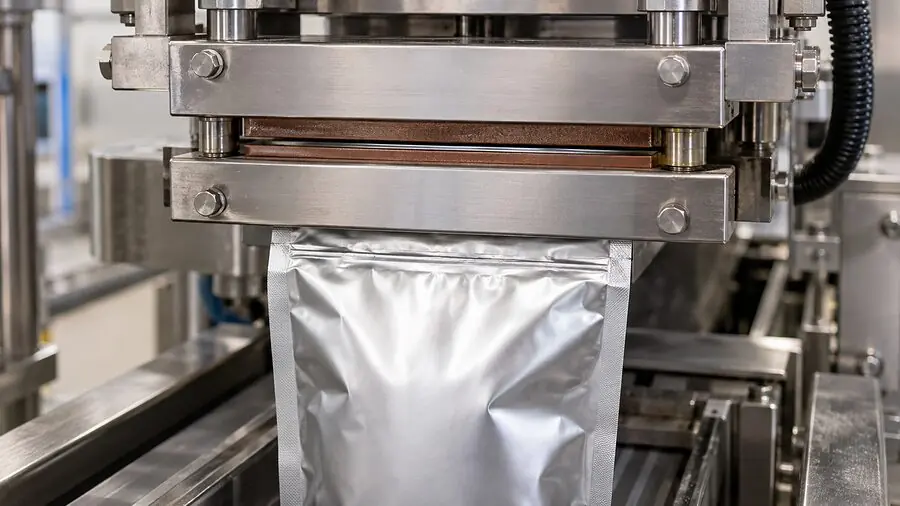
A Machine Trial Should Prove the Limit, Not Just Quote It
Trial your coffee, fill weight, pack, lid, and intended speed. Sample every lane, including startup and stop/restart. Define test timing before seeing readings. Watch seals and rejects; one leaky lane can hide behind a beautiful average.
For K-Cup projects, check the gas path and lane-to-lane behavior on the proposed K-Cup filling machines. For compact Nespresso-compatible cups, use the actual geometry and lid during trials of Nespresso filling machines. Document acceptance at the factory test and again after installation. Sales-demo readings are not the same thing as steady-state production capability.
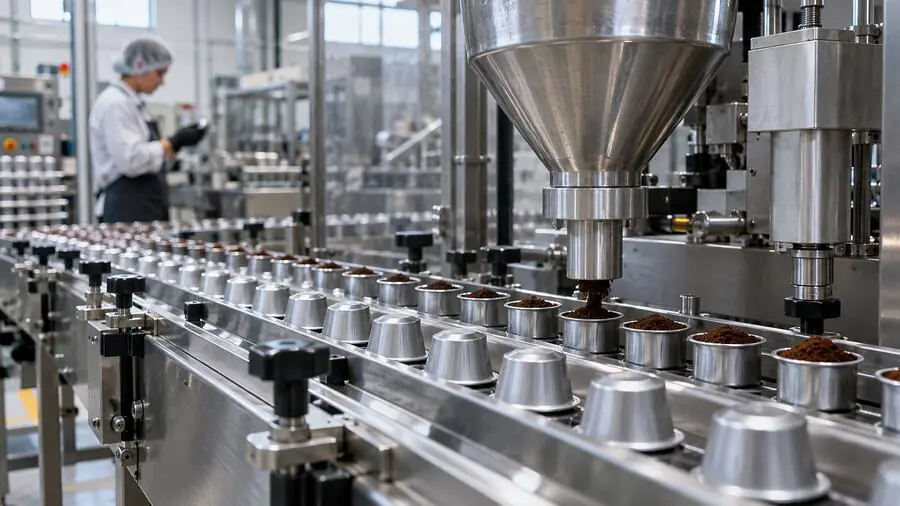
When a Batch Misses: Read the Pattern
Don’t just turn up nitrogen and hope. Sort readings by lane, pack age, and defect type first.
| Reading pattern | Likely questions to investigate | First sensible check |
| Most fresh packs read high | Trapped air, gas flow, open hopper, sampling error | Verify instrument and flush path |
| One lane reads high | Local nozzle or seal problem | Inspect that lane’s rim/seam and settings |
| Fresh packs pass; aged packs rise | Barrier, valve, seal, transport damage | Compare leak tests and aging trend |
| Aged oxygen falls unexpectedly | CO₂ dilution, oxygen uptake, changed headspace | Confirm method and track other quality measures |
Hold suspect lots under your written plan. Recheck equipment, sample handling, and pack integrity before changing a release limit. For capsule-line fault patterns, coffee capsule technical support can help connect the gas settings to actual sealing and sampling behavior.
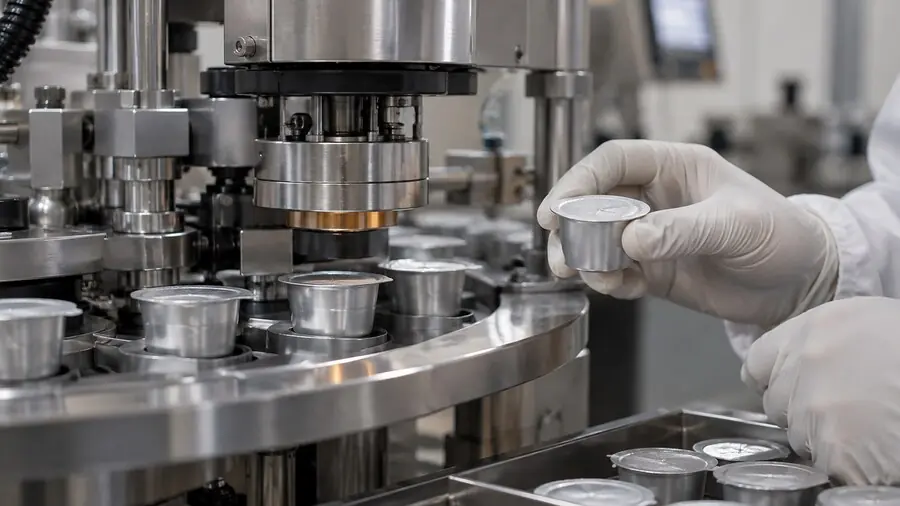
Standards and What They Do Not Set
ASTM F2714-08(2021) is a test method for headspace oxygen using fluorescence decay. It requires an appropriate sensor inside the package and optical access to it; it’s not a plug-and-play method for every opaque aluminum pod. ASTM D3985-24 addresses oxygen transmission through plastic film or sheeting. ISO 15105-2:2025 addresses film/sheet gas-transmission measurement. Add suitable seal and leak tests for the finished format.
None of those methods sets a worldwide coffee requirement of 1% or 2%. Check customer specifications and applicable rules for the intended market. Also, low oxygen protects quality; it isn’t a food-safety kill step. Coffee drinks with milk or other added ingredients need a separate safety assessment, not a borrowed roasted-coffee number.
Conclusion
So, what’s the ideal oxygen level? Often, below 2% is a reasonable fresh-pack trial target. Below 1% may be justified for a tougher capsule or ground-coffee brief. Around 3% might still work for a different product with evidence behind it. But the useful answer is a written, repeatable limit tied to the real coffee, pack, line, and sales route—and confirmed when the customer actually opens it. The number matters. Its backstory matters more.
FAQs
Is 2% oxygen good enough for coffee packaging?
It can be a practical fresh-pack starting point for nitrogen-flushed coffee. Whether it is good enough depends on the format, sensory target, packaging integrity, and shelf-life results. State when the 2% is measured.
Does premium coffee packaging always need below 1% oxygen?
No. Below 1% is a stricter goal for selected products or buyer contracts. Premium flavor also depends on coffee quality, barrier, seals, temperature, and storage time. Test the brewed product, not just the gas.
Is a 3% headspace reading an automatic failure?
Only if it breaches your validated release limit or customer specification. Some equipment vendors discuss 3% as a loose ceiling, but no universal coffee rule makes every 3% pack a failure.
Should whole beans and ground coffee use the same target?
Not automatically. Grinding increases exposed surface and changes degassing. Package headspace, valves, retail route, and intended shelf life differ too. Set and validate separate targets where those differences matter.
Does 99.9% nitrogen mean 0.1% oxygen in the sealed pack?
No. Nitrogen purity describes the supplied gas. Air can remain in grounds, equipment, and the pack before sealing. A finished-pack headspace test tells you what the process actually delivered.
When should oxygen be measured after sealing?
At a defined interval after sealing and again at planned storage checkpoints. Use the same method and temperature for comparable samples. A reading taken immediately and one taken days later answer different questions.
Can oxygen readings fall while the package is aging?
Yes. Coffee can consume oxygen, and released CO₂ can change the percentage. A falling number alone does not prove that aroma, moisture, or overall freshness improved.
What’s the difference between residual oxygen and OTR?
Residual oxygen is a measured concentration in a pack at a particular time. OTR describes oxygen passing through a tested material under defined conditions. Neither measure alone captures every leak in a finished coffee pack.
Will an aluminum capsule guarantee low oxygen?
No. Aluminum can provide a strong barrier, but a poor lid seal, rim contamination, or damage can still admit air. Measure the filled, sealed capsule at release and after storage.
How can a roaster prove its oxygen limit at full speed?
Run actual coffee and packaging at intended speed, test every lane over time, and include stop/restart samples. Agree on sampling, maximum readings, and defect limits before the trial; repeat acceptance after installation.