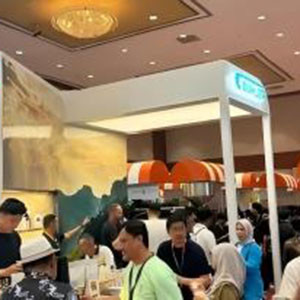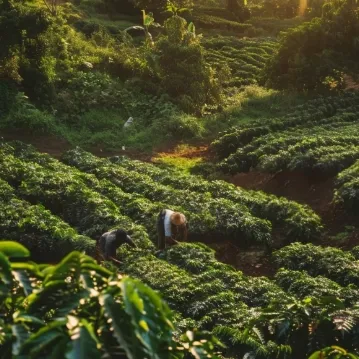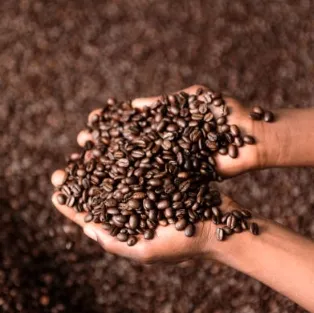
A capsule that sells well in a Singapore office pantry may flop in a Philippine grocery store. A premium Bali coffee can look perfect for tourists, then struggle with marketplace shipping costs. Same region, very different job.
That is the first thing to get right. Southeast Asia is not one Nespresso-compatible capsule market. It is a group of countries with different machine ownership, incomes, channels, coffee habits, import rules, and waste systems.
The opportunity is still interesting. Local roasters have real coffee stories, café audiences, digital sales channels, and hospitality relationships. But the sensible route is not “launch across ASEAN.” It is to win one use case in one market, prove that people reorder, then expand.
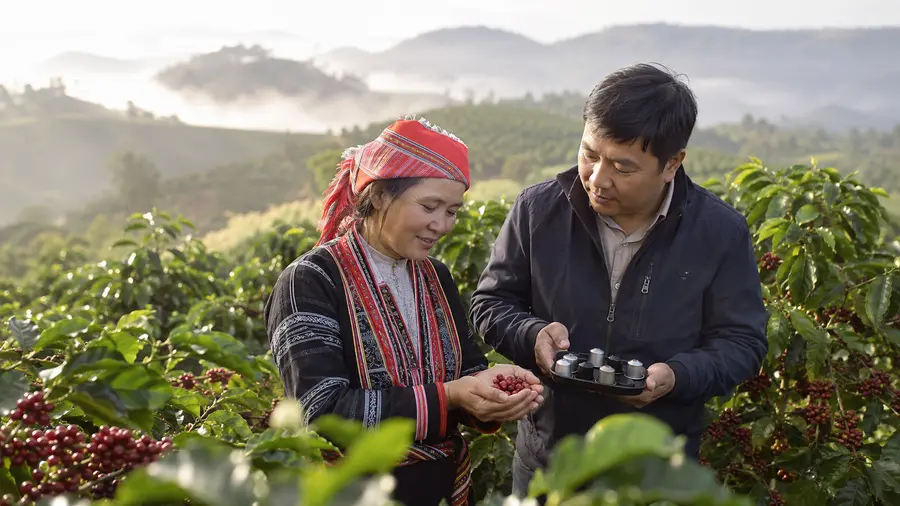
Here, “Nespresso-compatible” means a third-party product developed for the Nespresso Original system. It does not imply affiliation, authorization, sponsorship, or endorsement by Nespresso.
The Opportunity Is Real, but It Is Not Evenly Distributed
Southeast Asian brands can enter this category from several directions. A Vietnamese roaster may build around fine Robusta and milk drinks. An Indonesian brand may turn a recognized regional coffee into a premium home espresso. A Thai café group can extend its house blend into hotel rooms. A Singapore business may start with offices, gifts, and online subscriptions.
The supply side is unusually rich. The International Coffee Organization’s Coffee Report and Outlook shows Vietnam and Indonesia as major producers in Asia and Oceania during the reported period, while Laos, Thailand, the Philippines, and Timor-Leste appear at smaller scales. That diversity can support everyday blends, specialty offers, and limited releases.
Still, coffee production is not capsule demand. Singapore grows little coffee, yet a premium office or at-home opportunity may exist. Vietnam produces a lot of coffee, but that fact alone does not tell us how many households own an Original machine or what price they will pay per capsule.
The best brand advantages are closer to the customer:
- café visitors who already know the coffee;
- an online audience that buys beans or drip bags;
- relationships with hotels, offices, or distributors;
- a local origin or drinking occasion people recognize;
- the ability to sample products and hear complaints quickly.
Those assets reduce launch uncertainty. They do not remove it.
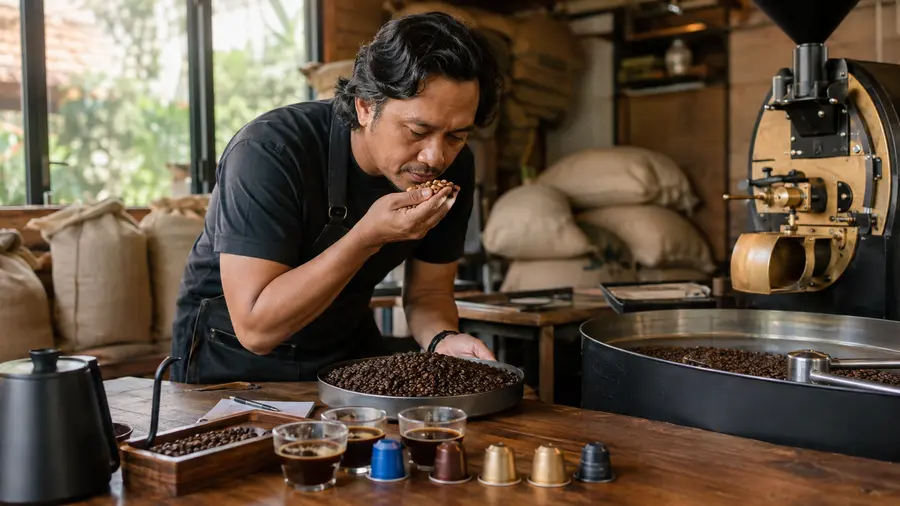
Score the First Country Before Designing a Regional Box
There is no honest universal answer to “Which Southeast Asian country is best?” A large population may have a small relevant machine base. A smaller market may have stronger premium retail, office coffee, or e-commerce demand.
Build a country scorecard before approving artwork. Start with evidence of Original-machine use. Survey existing customers. Review marketplace machine listings, capsule assortments, ratings, and buyer questions. Speak with appliance retailers, office suppliers, hotels, distributors, and co-packers. A paid preorder is stronger evidence than a social-media poll.
Then compare the competitive shelf. Record pack sizes, normal selling price, promotion frequency, origin language, material claims, review complaints, and which products disappear from stock. Sold-out can mean demand. It can also mean poor supply, so ask around.
| Country-screening factor | Evidence to collect | What it changes |
| Original-machine presence | Surveys, listings, reviews, retailer and B2B interviews | Addressable user base |
| Competitive shelf | Brands, prices, pack sizes, claims, complaints | Product position |
| Channel access | Cafés, marketplaces, offices, hotels, distributors | Launch route |
| Supply route | Co-packer access, import lead time, customs, warehouse | MOQ and cash exposure |
| Local requirements | Registration, label, importer, food-contact and claims | Launch timing |
| Climate and waste system | Storage, delivery, collection, composting | Materials and secondary pack |
Country examples should remain hypotheses until tested. Singapore or Malaysia may support a premium or office-led offer. Thailand may combine local roasting, tourism, hotels, and domestic e-commerce. Indonesia, Vietnam, and the Philippines can bring origin, café, and marketplace strengths at larger geographic scale. Each also has different logistics and price realities.
Do not print one regional carton because the map looks tidy. Language, responsible-business details, registrations, claims, and importer information may change across borders. So may the product that customers actually want.
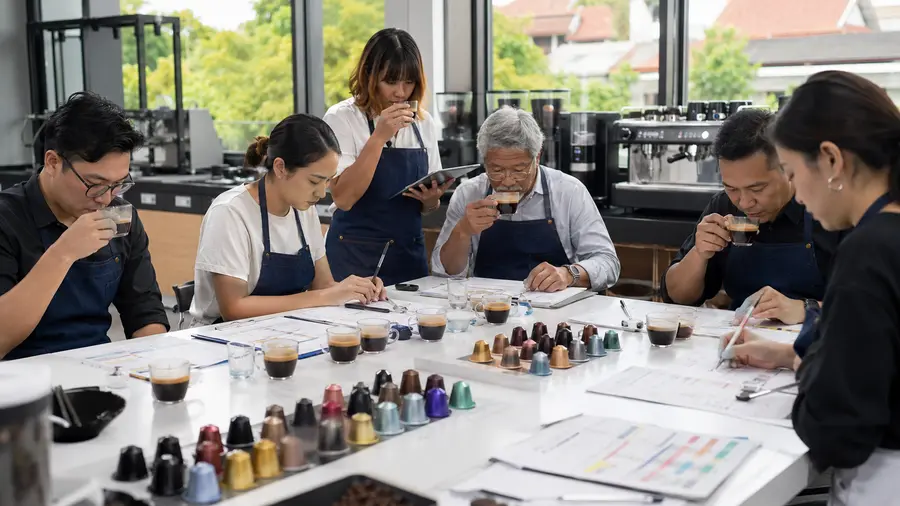
Choose the Customer Job, Not Just the Country
A brand does not sell a “market opportunity.” It sells a small cup of coffee that solves a job.
For café regulars, that job may be bringing the familiar house espresso home. For an office manager, it is keeping a pantry stocked with something reliable. A hotel wants easy room service, tidy cases, and few complaints. A tourist may want a compact gift that tastes connected to the place they visited.
There are more distinctive options too. A bold capsule can support an iced milk coffee recipe. A traceable origin can serve curious specialty buyers. A curated regional set can work for gifts or overseas customers who miss familiar flavors.
| Customer job | Possible offer | Operational consequence |
| Bring the café home | House blend in a small retail pack | Sampling and simple reordering |
| Discover a local origin | Traceable single origin or regional blend | Strong evidence and supply continuity |
| Stock an office or hotel | Core blend plus decaf | Larger packs, cases, service, and forecasts |
| Buy a regional gift | Curated origin or beverage set | Premium presentation and seasonal stock |
| Make milk or iced coffee | Bold capsule with a tested recipe | Extraction and serving guidance |
One product can reach several channels, but the same pack may not fit them all. A ten-count box works at a café counter. An office may want 50 or 100 capsules with simple identification. A distributor needs case efficiency, barcodes, margin, and stable replenishment.
Pick the job first. Otherwise, the team spends weeks debating capsule colors while nobody knows why a customer would reorder.
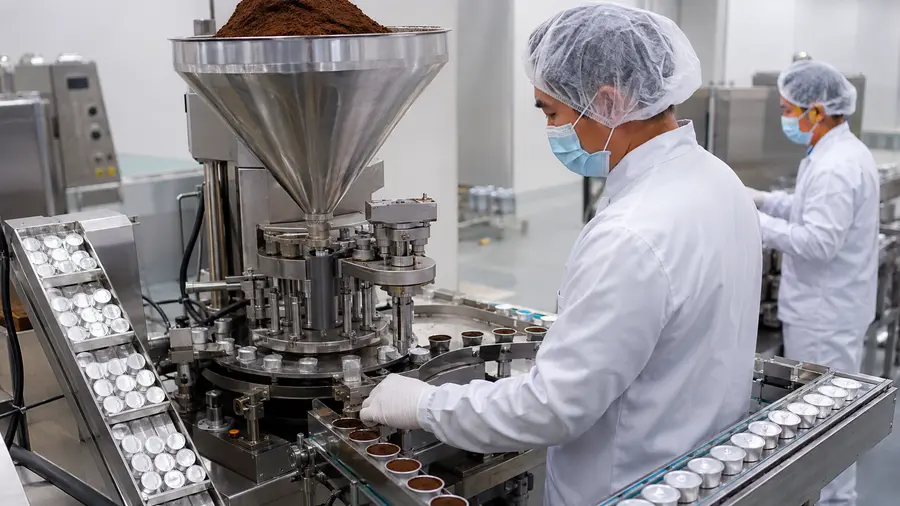
Build a Small Product Architecture for Original-Compatible Machines
Define the system before the flavor
Original and Vertuo are not interchangeable. The official Nespresso FAQ confirms that the two systems use different capsules. Professional is another scope again.
State “compatible with Nespresso Original machines” where appropriate. Define the machine models used for testing, intended beverage volume, and any known exclusions. A capsule entering a brewer does not prove good puncture, flow, extraction, ejection, or seal performance.
Lead with the coffee brand, origin, and taste. Use the Nespresso name only to explain compatibility, and include an appropriate non-affiliation statement. Avoid logos or presentation that may confuse buyers about who made the product.
Start with one to three useful products
A practical first range may include an everyday, milk-friendly blend and one regional signature. Decaf can be useful for hotels and offices if demand and supply support it. A rare Liberica or micro-lot may work better as a limited release than a permanent volume SKU.
Six launch products look impressive in a presentation. They also create six forecasts, six artworks, several component minimums, scattered reviews, and slow stock. Keep the first shelf small enough to learn from.
SANEU’s guide to turning Southeast Asian coffee origins into capsule products covers the deeper work of translating Robusta, wet-hulled Arabica, Thai highland coffee, Philippine Liberica, and other regional coffees into capsule extraction. In short, develop the roast, grind, dose, and beverage together. Do not simply grind the bagged-coffee recipe finer.
Choose the capsule and secondary pack together
Aluminum can provide strong barrier performance and a familiar premium cue. The coating, matching lid, sealing behavior, deformation, and local collection route still need checking.
PP or another barrier-plastic construction may offer cost and mechanical flexibility. Ask what the exact structure does and which food-contact evidence covers it. A resin name alone does not prove barrier performance or local recyclability.
Certified compostable capsules can create a credible niche where certification, storage, sealing, and a real composting route line up. “Compostable” is not magic dust. A capsule thrown into general waste does not receive the end-of-life story shown on the box.
| Material route | Possible advantage | Local question to answer |
| Aluminum | Barrier and premium presentation | Is the collection claim realistic in this market? |
| PP or barrier plastic | Cost and structural flexibility | Does the exact structure protect coffee and enter local sorting? |
| Certified compostable | Differentiation in the right system | Do storage and disposal conditions match the certificate? |
Review Original-compatible empty capsule options only after the market, product, line, and claim are clear. In hot and humid distribution, the outer wrap, pouch, carton, adhesive, transport case, and consumer storage guidance may matter as much as the capsule body.
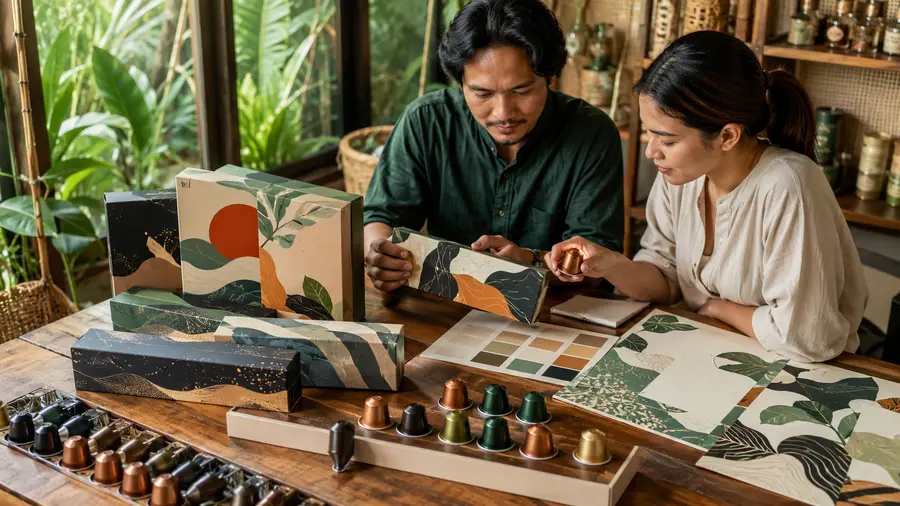
Select a Production Model That Fits the Evidence
Supplier terminology varies, so define responsibilities in writing. Ask who supplies and owns the coffee, capsule bodies, lids, artwork, cartons, test results, leftover components, and finished stock.
White label is the fastest test. The product already exists, and the brand changes. It limits differentiation, but that may be fine when the main question is whether customers will buy capsules at all.
Private label adds control over coffee, component, appearance, and pack. It also adds development time and a stack of minimum orders. Co-packing can preserve the brand’s coffee or approved formula while a partner owns the filling line.
In-house filling offers scheduling and process control. It also brings operators, utilities, sanitation, QC, maintenance, spare parts, downtime, and working capital. The machine is one piece, not the business.
| Production model | Best first use | Main trade-off |
| White label | Fast demand test | Limited distinction |
| Private label | Branded product without owning a line | Development time and MOQ stack |
| Co-packing | Keep the brand’s coffee or formula | Scheduling and partner dependence |
| In-house filling | Proven recurring demand | Capital and full operational responsibility |
Compare routes through the coffee capsule business models rather than assuming factory ownership is the final level of success. When several companies participate, clarify OEM coffee manufacturing responsibilities before samples and artwork move around.
Local production may shorten feedback and replenishment. Importing from a qualified partner may provide better capability or lower early complexity. Compare total landed cost, lead time, customs, technical support, freshness, control, and cash—not the filling price alone.
Match the Route to Market With the Unit Economics
DTC gives the brand customer data, bundle freedom, and space to tell its story. It also brings advertising, picking, payment, delivery, and customer-service costs.
Marketplaces offer traffic and fast price discovery. They also create direct price comparison, platform fees, campaign discounts, review management, and pressure to subsidize shipping. A product can sell briskly and still make little contribution.
Café retail uses trust and allows sampling. The café-led capsule demand test is especially useful when a brand already has regular customers. Yet shelf space is small, and baristas need a clear explanation of the target machine and coffee.
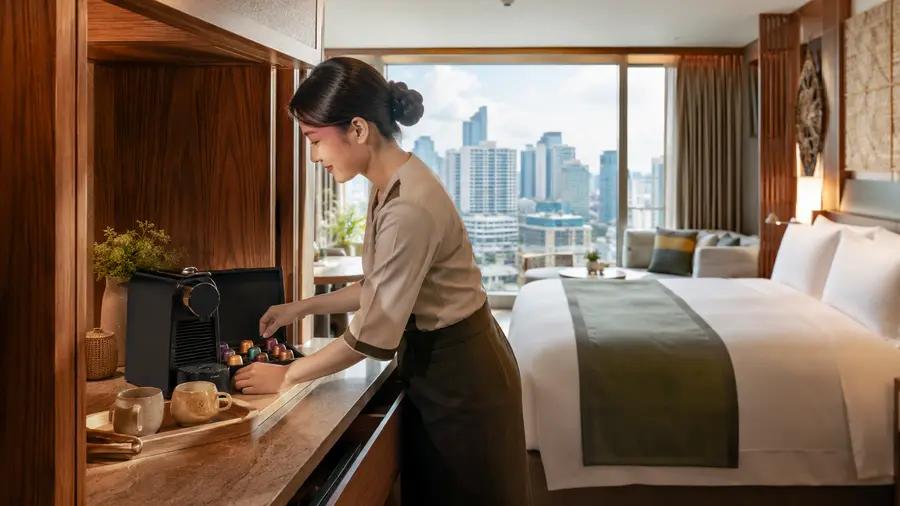
Hotels and offices may produce steady reorders. Their needs are less glamorous: dependable brewing, clear identification, sensible cases, decaf, delivery schedules, credit terms, and fast complaint handling. Gifting and tourism can support premium packaging, but seasonality can leave expensive printed cartons behind.
| Channel | Opportunity | Cost or risk often missed |
| DTC | Story, bundles, and customer data | Acquisition, picking, and delivery |
| Marketplace | Existing traffic and price discovery | Fees, discounts, comparison, and reviews |
| Café retail | Sampling and trusted audience | Staff training and shelf space |
| Office or hotel | Repeat B2B demand | Sales cycle, credit, service, and cases |
| Distributor or retail | Wider reach | Margin, listing terms, returns, and cash cycle |
| Gift or tourism | Strong presentation value | Seasonality and obsolete packaging |
Work backward from a plausible selling price. Deduct applicable tax treatment, marketplace or retailer margin, payment fees, promotions, fulfillment, shipping, returns, samples, distributor margin, and landed product cost.
Then examine the MOQ stack. Coffee, standard capsule bodies, custom colors, printed lids, cartons, cases, and production setup can all have different minimums. The least flexible piece controls the cash commitment. Yep, it is often the pretty printed part.
Engineer Freshness for the Real Southeast Asian Supply Chain
The capsule, lid, coffee, seal, gas process, and secondary packaging work as one preservation system. A strong barrier cannot repair stale coffee. Nitrogen cannot repair a weak seal.
Set a capsule-specific roast, grind distribution, dose, and coffee-bed target. During production, monitor fill variation, coffee on the flange, seal conditions, wrinkles, peel behavior, and leakage. Test the finished capsules across an agreed group of Original machines.
Record puncture, flow, extraction time, beverage weight, taste, grounds in the cup, deformation, and ejection. Keep approved and failed samples. They are useful when a customer later says, “This batch feels different.”
If nitrogen flushing is part of the process, measure the sealed result. Nitrogen-generator purity is not the same as residual oxygen inside the finished capsule. SANEU’s guide to nitrogen packaging and oxygen control explains that distinction.
Shelf-life work should reflect the actual product and distribution route. Consider the factory, warehouse, port, courier van, marketplace fulfillment center, hotel storeroom, shop shelf, and consumer kitchen. High heat and humidity can expose weak barriers, soften cartons, affect adhesives, and speed quality loss.
Accelerated tests can identify risk, but they should not create a convenient expiry date by themselves. Use a documented protocol, retained samples, real-time checks, lot traceability, change notification, and complaint procedures.

Clear Each Country’s Rules Before Printing a Regional Carton
ASEAN has regional cooperation, but it does not operate as one national food authority. The ASEAN General Guidelines on Food Contact Materials are a useful reference for harmonization. They do not replace each country’s laws, implementation, registration, labeling, import, and enforcement requirements.
For every market, identify the responsible food business and local importer where required. Check product registration or notification, label language, product name, ingredients, allergens where relevant, net quantity, lot and date marking, storage, business details, origin wording, barcodes, claims, customs classification, and online information.
The food-contact file should cover the exact capsule body, coating, lid, sealing layer, ink, adhesive, and relevant pack components. General “food grade” wording is not enough. Ask for traceability, supplier-change control, complaint support, and the quality-system scope required by the buyer or market.
HACCP-based controls and certifications such as ISO 22000, FSSC 22000, BRCGS, or IFS may support supplier qualification where relevant. They do not approve the finished product, label, or claim automatically.
Review trademark presentation too. “Compatible with Nespresso Original machines” describes intended function; it does not make the brand a Nespresso partner. Substantiate recyclable, compostable, biodegradable, organic, local, direct-trade, farmer-benefit, and carbon claims. A green-colored box is not evidence. Bit awkward, but true.
Prove One Market in 90 Days, Then Choose the Next Move
Start with one country, one customer job, one main channel, and one to three products. Use production-representative samples. Build a waitlist or take paid preorders. Run a limited commercial batch with pass/fail thresholds agreed before launch.
| Metric | Decision question |
| Full-price sell-through | Does demand exist without permanent promotion? |
| Second purchase | Has curiosity become a habit? |
| Compatibility complaints | Is the product and system wording reliable? |
| Contribution margin | Does the channel pay after selling costs? |
| Stock age | Are MOQ and SKU count sensible? |
| Cash-to-cash cycle | Can the brand fund the next order? |
Also track sample-to-purchase conversion, review themes, refunds, delivery damage, complaint closure time, and acquisition cost. Separate a weak product from a weak channel. Good capsule, wrong audience happens. So does strong interest with terrible shipping economics.
Enter a second channel when the first product has reliable extraction and repeat demand. Enter a second country only after repeating the machine-base, price, partner, logistics, climate, and regulatory checks.
Consider equipment when recurring volume, scheduling pressure, SKU needs, quality control, labor, facility readiness, and cash justify the complete production system. Use a structured Nespresso-compatible filling-machine business case before a fast brochure output becomes the investment plan.
Conclusion
Southeast Asia offers several Nespresso-compatible capsule opportunities, not one regional formula. Start with a country scorecard, a defined Original user, one customer job, a narrow range, and a low-risk production route. Then prove extraction, tropical shelf protection, compliance, channel contribution, and repeat purchase.
Origin and local coffee culture can earn attention. Reliable brewing, clear value, easy reordering, and healthy economics earn the second sale. One good market becomes a platform for growth. Six weak launches are just six piles of cartons, and nobody needs that headache.
Frequently Asked Questions
Which Southeast Asian market has the best opportunity for compatible coffee capsules?
There is no universal winner. Compare evidence of Original-machine use, target-customer spending, capsule prices, channel access, competition, local partners, logistics, climate, regulations, and waste infrastructure. A paid one-market pilot is more reliable than a regional forecast based on population.
Do Nespresso-compatible capsules work in both Original and Vertuo machines?
No. Original and Vertuo use different capsules and brewing systems. Most independent compatible projects target Original machines. State the exact system on the specification, sample, product page, sales sheet, and retail box. Professional machines are another separate scope.
Which Southeast Asian coffee origins work well in capsules?
There is no automatic best origin. Fine Robusta can provide body and intensity. Indonesian Arabica may offer texture and spice. Thai Arabica or Philippine Liberica can support distinctive products. The actual lot, roast, grind, dose, capsule, and target drink determine performance.
Should a regional coffee brand manufacture capsules locally or use a co-packer?
Use a qualified co-packer or private-label partner when demand is uncertain or internal capability is limited. Consider local or in-house production when recurring volume, control, lead-time benefits, staff, quality systems, maintenance, facility readiness, and cash support the complete operation.
Which capsule material is best for hot and humid Southeast Asian markets?
No material wins everywhere. Aluminum, barrier plastic, and certified compostable systems have different barrier, sealing, cost, presentation, and disposal considerations. Test the complete capsule and secondary pack under realistic storage and distribution conditions before approving shelf life or claims.
What MOQ should a new private-label capsule brand expect?
MOQ depends on the supplier and specification. Coffee, capsule bodies, custom colors, printed lids, cartons, master cases, and production setup may each have separate minimums. Ask for the entire commitment and leftover-component rules, not one attractive capsule quantity.
How can a brand keep capsule coffee fresh in tropical distribution?
Start with fresh coffee, a suitable barrier, a qualified lid and seal, controlled oxygen where required, protective secondary packaging, documented storage, and a realistic shelf-life study. Test the route through warehouses, couriers, retail, hospitality storage, and consumer kitchens.
Should a brand launch through marketplaces, cafés, hotels, or offices first?
Choose the channel where the brand already has trust, access, and measurable demand. Cafés are good for sampling. Marketplaces offer reach. Offices and hotels may reorder. Compare contribution after fees, shipping, discounts, credit, service, returns, and channel margin.
Are food-label and capsule-packaging rules the same across ASEAN countries?
No. Regional guidelines may support harmonization, but national requirements and enforcement differ. Check food registration, labels, language, responsible-business details, importer duties, food-contact evidence, trademark wording, claims, customs, and online-sale information for every destination country.
When should a Southeast Asian coffee brand buy its own filling machine?
Consider equipment after repeat demand is proven and in-house production solves a measured problem such as lead time, scheduling, SKU flexibility, quality control, or co-packing cost. Include operators, utilities, QC, maintenance, spares, downtime, materials, and working capital in the decision.